


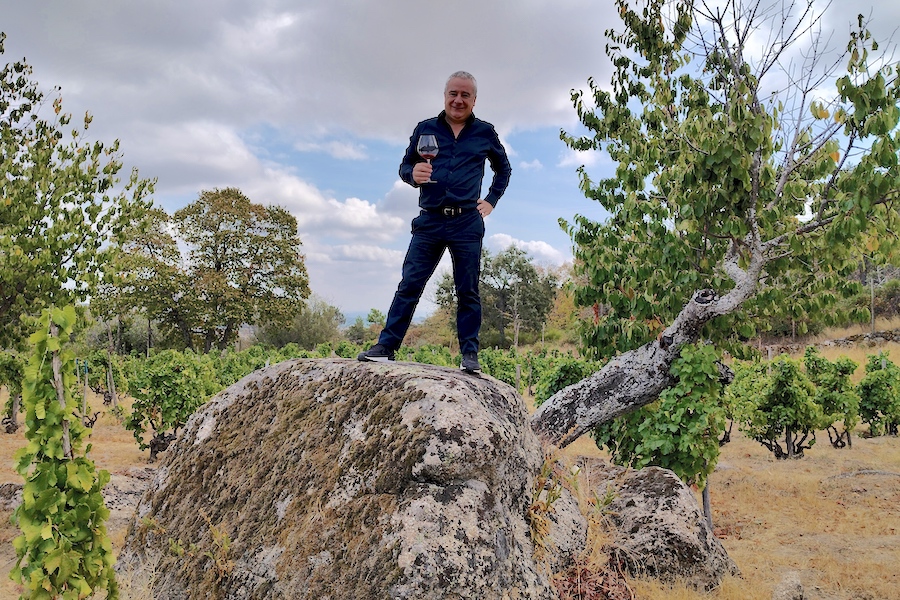
Quim Vila started out selling fruit, cheese and wine in his family's grocery shop in Barcelona's Born district 45 years ago. Through a combination of intelligence, instinct, shrewdness and the right people around him, he has turned Vila Viniteca into a thriving business employing almost 400 people and spanning several areas of the wine trade.
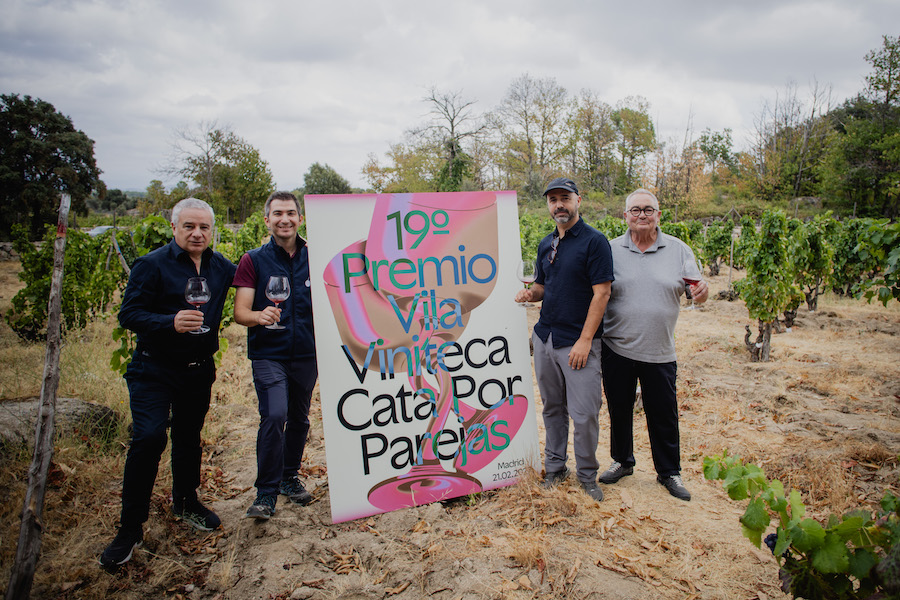
It also has its own competition, the famous Vila Viniteca Blind Tasting Competition for Pairs, whose next edition will take place in Madrid on 21 February 2027, with €50,000 in prize money.
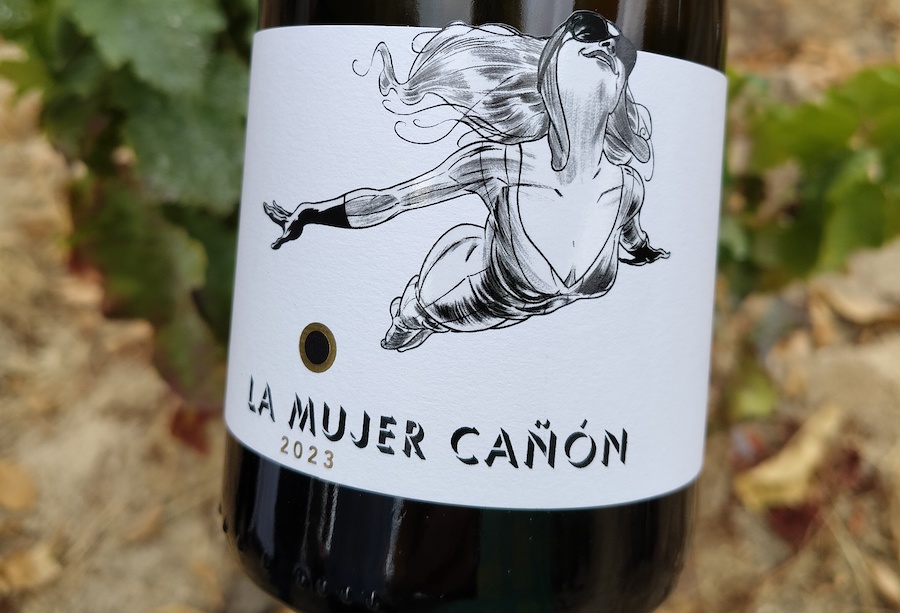
Alongside several shops in Barcelona and Madrid, Quim Vila is also behind Spain's largest wine distributor, founded in 1993 with his business partner and friend Francisco ‘Siscu’ Martí, owner of the Ca N’Estruc wine estate in Esparreguera. Together, they run Uvas Felices, a company that oversees wine production across 10 Spanish DOs, including Rueda, where they make their ubiquitous Verdejo El Perro Verde, and Gredos, where they produce El Hombre Bala and La Mujer Cañón and recently opened their own winery.
This interview was conducted before Luis Gutiérrez was appointed Director of R&D and Innovation at Vila Viniteca. Following the announcement, we contacted Quim Vila to ask how the former The Wine Advocate critic would lead “the development of new projects, innovation and research in wine”, and what he would bring to the business.
This was his response: “This is a position that has actually existed since 2017. Among other responsibilities, the R&D and Innovation team coordinates and manages the content of all our catalogues, prepares and updates technical information, and organises tastings and staff training. It also drives and takes part in innovative projects such as the Vila Viniteca Tasting Panel, launched in 2017, and our collaboration with elBullifoundation on the Bullipedia Sapiens del Vino project. Luis will bring knowledge and experience, as well as plenty of ideas and enthusiasm.”
This interview has been edited for clarity and length.
After all these years in the business, what does a wine need to make it into the Vila Viniteca portfolio?
The family business was founded in 1932 by my grandparents. Back then, my grandfather and later my father sold wine and spirits both in the shop and to restaurants, but we have never dealt in bulk wine. Our selection has always been a little eclectic. We have never followed a particular line, but the first requirement has always been that we like the wine ourselves.
In terms of how it tastes?
Exactly. You taste the wine and think: ‘This is delicious.’ Later, when we started distributing wines, it was not just about liking them. We also looked at the potential of the project and felt a certain excitement about the people behind it. We started working with Álvaro Palacios with his very first vintage, 1989; with Pago de Carraovejas, with the 1992 vintage, its second — virtually all of the first had been sold through its restaurant — and with Terras Gauda very early on. With many wineries, including Peter Sisseck and Daphne Glorian, we started with their first vintage. The process was more or less the same each time: I like the wine, I think this producer has the potential to do something really good, we get on well and we decide to back them.
Has the way you choose the wineries you work with changed?
No. We still follow the same philosophy, and increasingly so. We want to work with wineries and people we like. It's true that our portfolio is now very extensive and we cannot add much more, but we continue to buy from and work with people we believe in. Our shops are a different matter: if there is no distribution agreement involved, we will buy any wine we like.
Between wine and spirits, you have around 11,000 references. Can you maintain a personal approach with such an extensive catalogue?
We have a lot of wines — around 9,000 references — but that figure also includes wines we buy from other distributors because a customer asks us for them. We have always believed we should offer that service, even if someone wants just a single bottle.
Do distributors in Spain generally get on well with one another?
I think so, in general, despite the fact that we are competitors.
To what extent is a major distributor such as Vila Viniteca responsible for shaping what people drink in Spain today?
There isn’t any individual or company that dictates drinking trends or tastes in Spain today. When we started working with Álvaro in Priorat, I suggested to a Barcelona distributor, which no longer exists, that they should take on Clos Mogador. Another distributor already had a good wine in Clos de l'Obac, while another was handling Clos Martinet. I told them: “If more of us are talking about and selling Priorat, it will benefit everyone.”
In that sense, you open a door to the market, but ultimately tastes are shaped by a combination of professionals: distributors, sommeliers, critics and the specialist press. It is the result of many different factors in a highly fragmented sector.
Is that fragmentation a good thing?
Of course. Diversity is what makes the sector successful. I think Spain needs more wineries. We currently have around 3,800–3,900, and we should at least double that number. It would give us greater diversity and more people promoting Spanish wine abroad: more young people talking about their wines from Rioja, Ribera del Duero, Priorat, Empordà or wherever they happen to be. That is our biggest handicap: we need more winegrowers.
Who has the greatest power to set the rules of the game today: a large winery, a small producer with a wine in high demand, or a major distributor with a portfolio such as Vila Viniteca's?
Trying to impose conditions is not a good approach, because we all want relationships to last for many years and to work well for everyone. A winery that treats its distributors badly has little future, just as a distributor who treats a winery badly while selling its wines does. Distributors are the link between the wine and the customer who is going to drink it.
I think it is about sharing and working together. A small winery often lacks a broader understanding of the market, and that is where a distributor can help.
Has that changed over the years?
Multinational spirits companies tend to operate in a much more rigid, structured way. The wineries we distribute are family businesses, not large corporations answerable to shareholders or listed on the stock market. Our relationships are with people.
Some wineries complain, though, that they are so small within a large portfolio like yours that they sometimes feel neglected.
That can certainly happen: you can be a very small player within a large organisation. But I think every winery has to make itself known. Distribution can help, but the winery also needs to showcase its own personality. How? By inviting sommeliers and restaurants to visit its winery and vineyards, building personal relationships and giving people a face to put to the name, as well as a story they can pass on to their customers. These days, it is difficult to sit at home waiting for people to come and buy your wine and expect it to sell.
Do smaller distributors have an advantage over larger ones in that respect?
They can offer a more tailored, bespoke service. But size matters less than the underlying philosophy. There are good and bad distributors, whatever their size. It is the management that decides which direction to take.
Distributors evolve over time. Many have been around for 20 or 30 years, but some wines have disappeared too. Wines that were once highly sought-after are no longer around.
Can you think of any examples?
Years ago, we sold a lot of Navarra rosé brands. They are probably still selling today, but our customers no longer ask us for them. There are wine styles and brands that were once very famous or prestigious but now tend to be sold to high-volume customers or in supermarkets.
It is also interesting to see how some popular wine brands have held their prices because otherwise customers would stop buying them. They were special wines years ago but have since become mainstream. They have focused more on volume than value, and once you go down that route, it becomes very difficult to build value again.
Is that because they no longer believe in their products, or because they are more focused on short-term results?
They are large companies where financial results often take precedence, so the focus is on the short term. Other wineries, such as Murrieta, are looking to build a legacy, continue a tradition and reposition their brand even further upmarket. Another example is Alma Carraovejas and what it has achieved over the past three years with Pago de Carraovejas and its other brands, pursuing a more ambitious positioning while maintaining substantial production volumes. They could simply have been content to generate cash, because the wine sells anyway, but they have chosen to go further and make it better.
What I find disappointing is that Spain does not have a winery like Antinori in Italy, with entry-level wines already approaching €20 and, at the other end of the scale, brands selling for €400–500. Apart from Vega Sicilia and a handful of other cases, we don't have Spanish wineries producing substantial volumes of wines priced above €100.
What are the key ingredients for success in this business?
Financial management and customer relationships are extremely important, especially today. But above all, if wine doesn't drive you mad with enthusiasm, do something else. Wine has to be your life, not just your job. It is not the sort of business where you can say: ‘I close the door and spend the weekend doing my own thing.’ There might be a tasting or a winery visit at the weekend, or it might be the only opportunity you have to get out and visit a producer. It is a way of life.
I understand that attitude when you own the business, but do you find it difficult to recruit people with the same level of commitment?
We do. But most of our salespeople are sommeliers, winemakers or persons who have worked in hospitality or in the vineyards, and who are passionate about wine. If I want to sell some of the best wines on the market, I need a team of enthusiasts who can explain them to customers, who are increasingly knowledgeable themselves.
In fact, with all the information available today, customers sometimes know that a winery is about to release a wine before we do. Having so much information available is hugely positive for everyone, but as a salesperson you have to be very well trained.
It must be a challenge, particularly as most young people today are looking for a better work-life balance.
That is the reality, and we have to adapt. We need to accommodate people's desire for work-life balance and allow them to work remotely. Obviously, it depends on the job: if you work in a shop, you cannot work from home, and if the shop opens on Saturdays and on some Sundays over Christmas, you must be there. But we do make it possible for many people to work from home one day a week, or even for a whole week.
I like the idea of being able to meet face to face and give people a hug, but I also understand that there is often no need to catch a train or plane just to attend a meeting.
What major changes have you seen in Spanish wine since you started out?
Years ago, we talked about brands and ageing periods, because those were the things that commanded a premium: the older the wine, the longer the ageing, the higher the price. Today, the focus is on the vineyard, the place and the landscape, and I don't think there is any going back. Practices that once seemed unusual, such as organic and biodynamic viticulture, are now almost essential, or will be before long. There is also a growing emphasis on using fewer oenological products and intervening less in the winemaking process. Many years ago, the winemaker was often referred to as ‘the chemist’, because they were the person who fixed things. Now the focus is on the winegrower. That is a much more radical change.
Another interesting development is the democratisation of wine, and I think this will be one of the legacies left by Robert Parker, a man I admire. He has been heavily criticised, but he brought about a real and irreversible change by showing that an unknown wine could be better than an established classic, or that a newcomer could make better wine than the traditional names everyone had always relied on.
Today, a young winemaker who has worked at three wineries can set up a small project and produce a wonderful wine, and people are willing to buy it and pay what it is worth. There is no longer any need for that young producer to come from a family with three generations of winegrowing behind it. That has been a hugely important change. The same applies to wine regions. Obviously, it will be harder for a young producer starting out in an area that is not highly regarded among wine enthusiasts, but there are examples to provide encouragement. We should applaud these young people.
France has managed to turn certain vineyards and villages into highly desirable locations with considerable economic value. Why does Spain still struggle to build the same narrative around origin?
Things are changing. Look at Priorat: they have done an incredible job, classifying villages, vineyards and individual plots. Above that, there is a higher classification that takes into account the age of the vines and the market value of the wine. That is important, because you might have a 100-year-old vineyard and want it to be included in the classification, but if the market does not value your wine, that is another matter.
I mentioned Priorat, but the same example, strongly supported by the Palacios family, is being repeated in Bierzo. I think this is only the beginning. You cannot create a history in five years. We simply need a little more time and to make sure things are done properly.
And what about Cava de Paraje Calificado?
Cava de Paraje designations, or wineries that effectively declare themselves a single estate, strike me as poorly thought-out initiatives driven by commercial considerations.
I was in Mâcon recently and was amazed by how, in just 10 years, they have managed to establish Premier Cru classifications, bringing together major wine merchants and small growers. These things do not happen overnight. There has to be a collective commitment, followed by proper work on geology and detailed research.
Could this approach work in historic regions such as Rioja or Jerez?
It is not easy, because Rioja has many small producers as well as large companies. In Jerez, the problem is not classification but getting people to drink Jerez. I don't know of any wine as good as a Lustau, a Tío Pepe or a Fino La Ina that costs so little. The world's sommeliers, the Regulatory Council and the rest of us talk about Jerez all the time, but apart from the manzanillas and finos consumed at the ferias, and the handful of us who actually drink them, people simply don't drink Jerez.
Which wine regions do you think are commercially undervalued?
Without a doubt, Jerez. I remember a conference where Juanma Bellver, who was still Lavinia's director at the time, said: ‘Jerez is like vodka: it's always the next big thing, but it never quite gets there.’ It makes you laugh, but it is actually rather sad that this should be the case.
The sparkling wines of Penedès are also worth far more than they sell for. I am a great supporter of Corpinnat, and I think the people behind it have shown enormous courage, particularly the older generation. These were the wineries with the greatest prestige within Cava, yet they decided to leave and back their own territory. Today, many Corpinnat wines, along with some Cavas and Classic Penedès, are wonderful wines at bargain prices. Sparkling wines such as Turó d'en Mota, Gramona Celler Batlle and Mestres don't cost €200, yet there are more than 200 Champagnes on the market priced above that figure. It is also about championing what we have, defending it and believing in our own wines.
The wine trade has been talking for years about bringing wine closer to younger consumers. How do you see the situation?
Many years ago, 10 friends from the wine world and I founded the Association of Young Friends of Wine, first in Catalonia, then across Spain and eventually internationally. We were in our twenties, and our aim was to promote responsible, informed wine consumption among young people.
We were received by all sorts of people, from the President of the Catalan Government and the President of the Galician Government to Spain's current king, who was then Prince of Asturias. We even received letters from the Pope in Rome. I don't know whether we made any difference, but years later people are still drinking less wine, and young people remain just as distant from it.
Wines are better than ever, but fewer people are drinking them.
It is something we have to adapt to. In my grandfather's generation, wine was part of everyday life. Today, it is more about celebration, sharing, culture and travel. I think that is the direction we need to take.
It is not easy, because we are moving towards a society where leisure is increasingly individual. Entertainment can be tied to a screen rather than to spending time with other people. And if people spend a month fasting or take medication to lose weight, their appetite and desire to drink can diminish too. But I think our job is to recommend good wines, and I believe there is an audience for them.
Have you noticed a fall in turnover?
We are growing a little, but obviously not as much as we would like. We need to work harder and find new customers who can get excited about wine.
Do scores of 95 or 100 points still generate sales?
In the past, when there were only two or three critics setting the agenda, scores could put a wine on the international map, particularly if it achieved 100 points. A score of 95 could also help sell a well-priced wine in the United States.
Wine shops in the English-speaking markets have always used scores. We have never displayed them in our shops, although we do include them online because we believe they help many people browsing the internet get an idea of a wine's quality or a winery's style. I think Robert Parker still carries considerable weight in Spain, as do the Peñín Guide and Suckling in Asia.
Are consumers less loyal to particular wines these days?
Yes. Over the three decades or so we have been in business, customer loyalty has changed. In the past, people would buy two or three cases of the same wine. Today, it is very difficult to have customers who are that loyal. People like trying more things, and that is another of the changes the wine world has undergone.
How will artificial intelligence affect the wine world?
You search online for information about a wine and find three websites telling you exactly the same thing, and all three have got it wrong. Reliability is the big problem at the moment. AI pulls information from here and there, and its answers are often inaccurate. But I think it will improve over time and help us save time, particularly with repetitive tasks.
Could the day come when Vila Viniteca’s online shop is no longer necessary because you sell everything through ChatGPT and Anthropic?
I don't know yet, but many businesses will change and others will disappear. We are very open to this new world, and we spend our time thinking about what the next step should be. Although, going back to the basics, I still wonder whether AI will ever be able to make wine.
Will we ever see Vila Viniteca organising a blind tasting competition for artificial intelligences?
It could happen. In 2017, we set up a tasting panel made up of members of our team. The idea was to learn how to assess parameters such as acidity, alcohol and aromas, and rate them according to their intensity. It was a project that took almost three years, involving a group of 14 or 15 tasters who tasted wines once a week. The results were assessed by a specialist market research company.
It was very interesting because we examined many of the assumptions we have in the wine world and saw how perceptions can change. One example was the serving temperature of white wine. The widespread belief is that if a white wine is served very cold, its aromas become more difficult to appreciate. But our panel found that some whites were actually more aromatic when served very cold.
Will AI be able to do that? How will it combine all the different perceptions that we humans experience? Analytically, you might have a wine with wildly high volatile acidity, yet you taste it in a particular context and think it’s incredible. We will have to see whether AI can learn to make that kind of judgement.
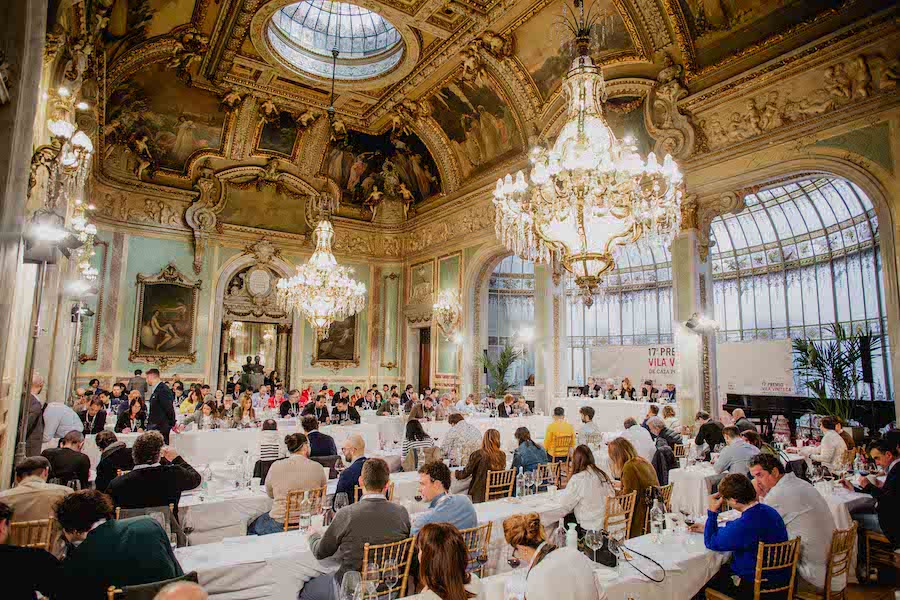
The Vila Viniteca Blind Tasting Competition in Pairs has become one of the annual highlights of the wine calendar. What explains the success of the format?
I think there are several reasons. First, the participants have a great time. Then there are the wines, which I think are very good. And thirdly, the prize money is extremely attractive.
Why haven't more people copied the format?
There are others doing similar things. One of our importers in Mexico even told us they wanted to organise something along the same lines. And here in Spain, we are delighted: there are team competitions and some distributors also organise tastings. All of this helps spread wine culture. We don't have to be the only ones doing it; that would be a shame.
Have you considered expanding the competition or hosting more editions?
For the time being, it is our most special event of the year. We obviously have a fantastic time organising it, but events are not our line of work. Our business is selling wine.
What does a quality restaurant expect from a distributor today?
Pretty much the same as always: reliable delivery, fair pricing and, above all, good wine.
Are restaurants asking for more wines by the glass or more staff training?
Vila Viniteca has been providing training and organising tastings for restaurant teams for as long as I can remember. Today, if you want to distribute wine, you need to know what you are offering, because customers are very knowledgeable.
Don't you think there is still a great deal of room for improvement when it comes to wine education?
There is an enormous amount still to be done, of course. But I think there has been a dramatic change in Spain overall, because customers themselves are now demanding higher standards from restaurants and wine shops. As a professional, you have to spend your time reading, visiting wineries, tasting and learning. Otherwise, you are out of touch.
You also export the wines you produce. Is this an area of the business where you are looking to grow?
Exports account for 5% of our sales. It is a very difficult market, and every country has its own particularities. But going abroad has also helped us understand what we can and should do here at home, and what we should avoid.
Going to New York with a suitcase and pouring your wines for people opens doors and broadens your horizons. A bar there might have a Greek wine by the glass for a week, then replace it with a Rueda. You realise that we need to work together, because our competition is not another Rueda or another Rioja. Our competition is the rest of the world. I believe Spanish wines have a future, but we need to get our act together. We need more wineries.
Does the government help?
No, but neither does it in France, where the Loi Évin is a disaster and wine advertising is not allowed. We have to fight our own guerrilla war and work alongside our colleagues, regardless of government support or subsidies. Today's leading Spanish wine producers are people with enormous talent, but above all, they have tremendous drive.
Does Vila Viniteca have a growth ceiling?
No. We have always thought big.
Could you expand further in terms of the number of wines you stock or the number of shops?
Why not? Siscu and I enjoy what we do.
Do you have a succession plan for Vila Viniteca?
We have our daughters, and we are showing them the ropes. They seem to like the business. Ana [Siscu's daughter] has been making wine for many years. My daughter is 24 and is studying marketing in Paris. A few years ago, she didn't drink wine; now she enjoys it.
She goes out with her friends there, and they have wine in the middle of the afternoon.
How do you see the future of Spanish wine?
Young people need to leave their comfort zones and take the plunge with small projects and great wines. When the Priorat revolution took place, followed by the emergence of new wines in Ribera del Duero and then Rioja, people knew very little about individual plots and had no clear idea of which grape varieties worked best in each location. Today, we have a history and a body of knowledge to build on. It is now up to the younger generation to drive the next revolution in fine wine.
Photo 2: Abraham Caro Marín. Photo 3 and 5: Vila Viniteca. Other photos: Yolanda Ortiz de Arri

Author
Yolanda Ortiz de Arri
A journalist with over 25 years' experience in national and international media. WSET3, wine educator and translator
Previous Post

