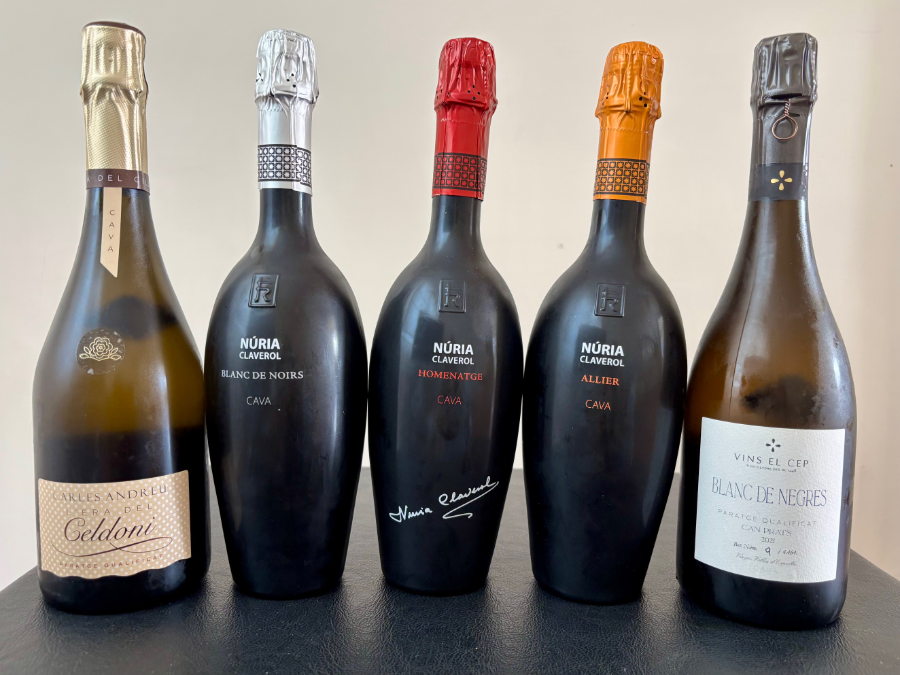
Cava has added five new sparkling wines to its top single-vineyard category, Cava de Paraje Calificado (CPC). The newcomers are produced by three wineries, one of which, Carles Andreu, is based outside Penedès, Spain's largest Cava-producing region. L’Era del Celdoni becomes only the second single-vineyard cava from Conca de Barberà (within the Serra de Prades subzone), following Codorníu's El Tros Nou. The other two producers are Vins El Cep, which already had a CPC for its Claror brand, and Sumarroca, which makes a strong entrance into the category with three sparkling wines.
Located in Subirats, Sumarroca applied for Cava de Paraje when the category was launched in 2017. However, low yields meant that the winery had to buy wines, thus failing to meet the requirement to vinify 85% of the total base wine. The latest regulations, approved in October 2025, provide an alternative route to qualifying for Cava de Paraje. Under the new criteria, 50% of a winery's production must be Cava de Guarda Superior (Reserva, Gran Reserva and Cava de Paraje Calificado), and at least 50% of the cava produced on site must be made from base wines fermented in-house. Producers must also demonstrate an established "track record of prestige" spanning at least 10 years.
Javier Pages, who will step down as president of the DO Cava in June 2026 after eight years in the role, regards CPCs as one of the cornerstones of his tenure. "These cavas must meet a number of strict requirements to ensure that they come from a specific vineyard and are subject to rigorous auditing."
What stands out most in this latest wave of approvals is the growing prominence of international grapes. Sumarroca contributes a Chardonnay, a Pinot Noir blanc de noirs and a Xarel·lo. Meanwhile, Vins El Cep has earned certification for a Pinot Noir vineyard, also destined for a blanc de noirs. By contrast, Carles Andreu brings something genuinely new to the category with the first CPC made entirely from Parellada, a variety that until now had only played a significant supporting role in blends such as Ferrer Wines' CPCs, Can Sala and Vinyes de Can Sala.
Although Pages supports the use of international varieties when they contribute to quality, he believes they are likely to face greater challenges. "Wine experts tend to favour local grapes because of their perceived uniqueness and authenticity. This external pressure will likely result in more high-end cava being made from local varieties in the future,” he says.
Spain's Ministry of Agriculture has ratified all the new Parajes, and the wines have passed the tastings conducted by an independent panel of professionals comprising Masters of Wine Almudena Alberca, Pedro Ballesteros and David Forer, alongside Catalan wine journalist Ramon Francàs. The same ministerial decree also approved the extension of the Vallcirera site, owned by Art Laietà d' Alta Alella in Tiana, within the Serra do Mar sub-zone.
Carles Andreu CPC L’Era del Celdoni 2017
Although first released with the 2011 vintage, this cava has not been made every year; for example, 2013 and 2015 were skipped. The first two vintages included Macabeo and Chardonnay in the blend, but since 2014 it has been made exclusively from Parellada. Supporting this delicate variety makes perfect sense in what is arguably the coolest region for Catalan cava production. Parellada remains widely planted in vineyards over 40–50 years old and was once the dominant white variety in Conca de Barberà until Macabeo gradually displaced it during the 1980s, when growers were paid according to alcohol potential.
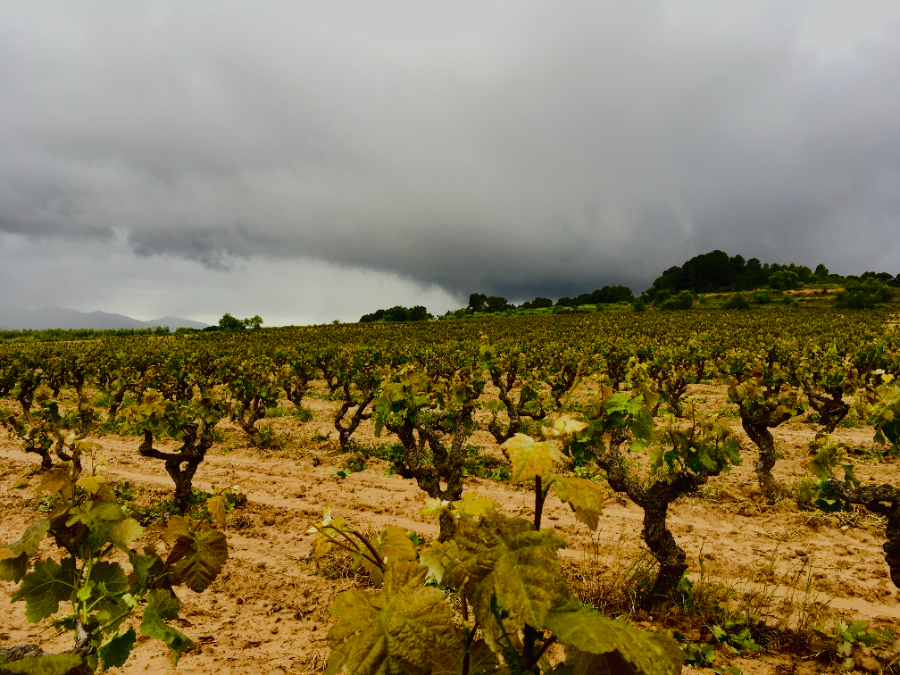
The Paraje Calificado L’Era del Celdoni covers just two hectares and is planted entirely with 50+-year-old Parellada vines in clay-limestone soils rich in carbonates and strewn with pebbles. The site combines several terraces at the highest point, a south-east-facing slope, and a flatter lower section. The CPC comes from the hillside part, the most ventilated and healthiest area, where overnight humidity evaporates quickly thanks to excellent sun exposure. The vineyard was purchased around 60 years ago by the grandfather of Bernat Andreu, the current head of the winery. "Celdoni is our family nickname. Between the 17th and 18th centuries, three successive first-born sons in the family carried the name," explains Andreu.
Founded in 1991 in Pira (Tarragona), Carles Andreu is the only privately owned winery in Conca de Barberà almost entirely devoted to cava, which accounts for 85% of production. The estate holds the Elaborador Integral (Integral Producer) seal, meaning that all grapes destined for its cavas — now totalling 120,000 bottles — are pressed and vinified on site.
With 85 hectares under vine, the winery has ample fruit to cover its needs and can therefore be highly selective even in short harvests. Any surplus grapes are taken to the local cooperative. Since 2021, all of Carles Andreu's vineyards have been certified organic –a timely move given that the Regulatory Board requires all Cava de Guarda Superior wines to be organic from 2025 onwards.
Despite its reputation as a warm vintage elsewhere in Spain, 2017 was relatively cool in Conca de Barberà. Rainfall was slightly above average and the relatively early harvest, which began on 13 September, yielded grapes with excellent acidity. This is the most delicate of the five new CPCs, offering notes of aniseed, butter and toast, which evolve into fresh citrus tones. Round and with subtle bubbles, it progressively sharpens and gains definition thanks to its superb acidity. It will be interesting to see its evolution in the bottle over the next three to four years.
Ageing: 97 months
11.5% abv.
3,459 bottles
Disgorgement: 09/03/2026
Subzone: Serra de Prades
€35
Score: 94
Vins El Cep Blanc de Negres 2021 CPC Can Prats
Also carrying the Elaborador Integral seal, Vins El Cep brings together four families with adjoining properties around Espiells. While the winemaking partnership began in 1980, the families have been growing grapes since the 15t century, with ownership passing down through successive generations. Together, they farm 130 hectares and produce 250,000 bottles of cava and 100,000 bottles of still wine.
What sets them apart is that they produce only Cava de Guarda Superior, which requires vines to be at least 10 years old. Early adopters of organic viticulture, they started conversion in 2001, which gave them access to international markets that now account for 75–80% of sales. One of the estates is also certified biodynamic by Demeter.
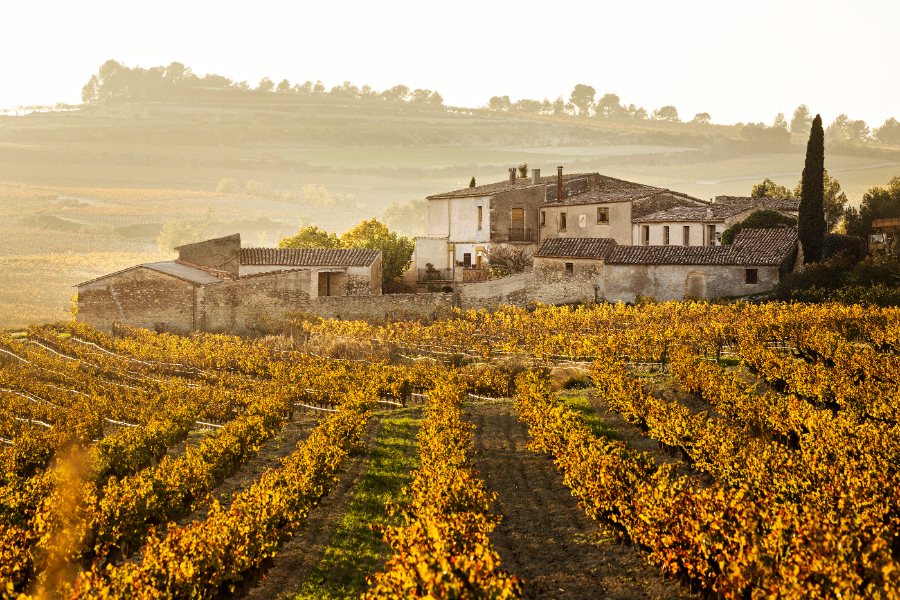
Vins El Cep featured in the debut group of CPCs approved in 2017 with Claror, its premium sparkling wine aged for eight years and made from the traditional blend of Xarel·lo, Macabeo and Parellada. At that time, 2.6 hectares were classified, comprising vines planted in the 1960s and 1980s at the Can Prats site. The new approval adds a further 1.8 hectares of Pinot Noir planted in 1990 at La Vinya del Soler, within the same site.
The estate farms 12 hectares of Pinot Noir. The first vines were planted in the late 1980s thanks to Joan Esteve's experience in California. Esteve, a member of one of the owner families, is currently managing director of Codorníu's Raimat. His sister Maite, today at the helm of Vins del Cep, admits to being torn between Pinot Noir and Xarel·lo. "Pinot Noir provides elegance and length. We harvest it a little early so we can extend ageing and produce a vibrant cava. If I had to choose between Chardonnay and Pinot Noir, I’d pick Pinot Noir,” she says. She also challenges the idea that Pinot Noir copes worse with drought and climate change than other varieties, although she stresses the importance of irrigation at crucial stages such as veraison.
The winery’s Blanc de Noirs from Vinya del Soler has been rebranded as Vins del Cep Blanc de Negres CPC Can Prats. "It's a vineyard with naturally low yields. We've always loved the acidity and balance it delivers," explains Maite, who also notes how well the variety performs in the site’s airy, sandy soils of calcareous origin.
Only the free-run juice is used to make this sparkling wine, representing just 30% of the total yield. Around 15% of the wine is aged in French oak barrels for six months to add roundness to the palate. Then, the final blend undergoes four further years of ageing. This is the freshest and most youthful of the new CPCs, with attractive aromatic intensity, generous fruit and subtle toasted notes. It is medium- to full-bodied with a pleasant vinous character and nicely integrated bubbles, adding a rounded mouthfeel while retaining a pleasant salty note and citrus acidity on the finish. This is a juicy, finely textured, gastronomic cava.
48 months under lees
12% abv.
4,648 bottles
Disgorgement: December 2025
Subzone: Valls d’Anoia-Foix
€28
Score: 94
Núria Claverol Homenatge 2016 CPC Santa Creu de Creixà Finca Paretes
Of the three cavas that Sumarroca has added to the CPC category, this one has the longest track record on the market. It has been produced since the 2004 vintage using grapes from the oldest vineyard on the large Sumarroca estate, located beneath the chapel of Santa Creu de Creixà, which lends its name to the seven-hectare Paraje, halfway between Piera and Sant Sadurní d’Anoia. Crossed by a small stream, the vineyards are found on flat land, slopes and in an area surrounded by woodland. Each of the three wines in the Núria Claverol range that are eligible to carry the CPC seal comes from a different area within the site. The brand is a tribute to the wife of Carles Sumarroca, founder of the winery, from her three children.
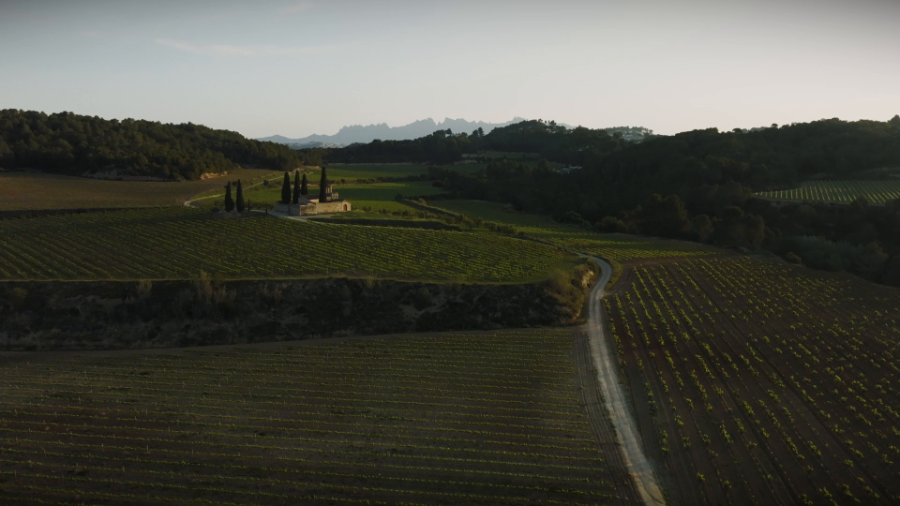
The grapes for Homenatge come from Finca Paretes, an old goblet-trained Xarel·lo vineyard planted in the central section of the site on slightly loamier soils. A ravine running eastwards towards the river brings notable freshness to the site.
According to winemaker Óscar Llombart, "2016 was the first year of drought, with higher-than-average temperatures. However, it followed the cool and rainy 2015 vintage, so quality was very high."
Despite eight years on the lees, the wine retains a bright lemon colour and showcases notes of ripe citrus fruit, toasted bread, brioche and dried herbs. Full-bodied and creamy on the palate, it combines volume, multi-layered flavours and remarkable length.
Ageing: 8 years
12% abv.
14,541 bottles
Subzone: Valls d’Anoia-Foix
€65
Score: 94
Núria Claverol Blanc de Noirs 2016 CPC Santa Creu de Creixà Finca Rosendo
Finca Rosendo is located at the most elevated point of the estate, surrounded by woodland which provides shade in the late afternoon. The fairly deep, calcareous soils are rich in fossils and retain water effectively.
Part of the Núria Claverol range since the 2013 vintage, the wine was previously a blend of Chardonnay and Pinot Noir. According to Llombart, working exclusively with Pinot Noir makes it more challenging to produce in every vintage. Firstly, the yield of the must is lower than it would be for a rosé. "We only use around 35–40% of the juice, sometimes even less in warm vintages. Despite cooling down and pressing at a low temperature, if the grapes are too ripe, they release colour quickly and you have to stop pressing. That’s why there is more variation between vintages.” Sumarroca’s technical director also mentions that harvest dates for this variety have moved earlier, from mid- to early August.
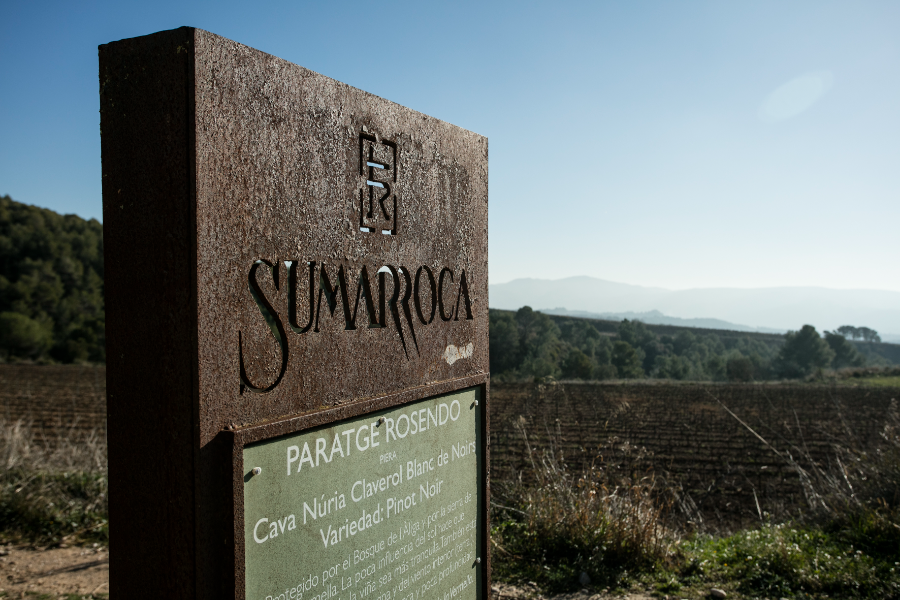
This golden cava with a faint copper hue is dominated by toasted notes yet retains notes of red fruit. It is somewhat more restrained than the Xarel·lo bottling, offering less creaminess on the palate, yet providing some juiciness and fruit notes that lead to a slightly austere, bitter finish. According to Llombart, future releases may see shorter ageing to preserve greater energy and freshness.
Ageing: 8 years
12% abv.
5,000 bottles
Subzone: Valls d’Anoia-Foix
€39
Score: 92
Núria Claverol Allier 2016 CPC Santa Creu de Creixà Finca Cols
Finca Cols is located on a terrace of the Anoia River in the lowest part of the Santa Creu de Creixà site. While the soils resemble those of Finca Rosendo — deep and with good water absorption — its most distinctive feature is its longer winter dormancy period. This vineyard struggles to warm up given its sheltered location, which protects it from the wind and sun in the early morning hours. Chardonnay, which accounts for 100% of this cava, performs very well here and ripens more slowly than in other parts of the Sumarroca estate.
Like the Blanc de Noirs, Allier joined the Núria Claverol range in the 2013 vintage and is not produced every year. Only a third of the base wine (30–35%, depending on the vintage) is fermented in oak barrels, where it remains for a month before blending and being bottled with the liqueur de tirage in winter. The harvest dates for Chardonnay are similar to those for Pinot Noir, but Llombart finds that both varieties retain acidity more effectively than the locals Macabeo, Xarel·lo and Parellada.
This deep golden Chardonnay is restrained, with generous toasted notes and nutty and candied fruit aromas. Opulent and creamy on the palate, with fine, well-integrated bubbles, it is a balanced cava with a cleansing bitterness on the finish, and the complexity resulting from its extended ageing.
Ageing: 8 years
12% abv.
5,000 bottles
Subzone: Valls d’Anoia-Foix
€41
Score: 93
The Sumarroca CPCs we tasted were not yet labelled as such, although officially certified bottles will soon be available on the market. Unlike the current range, all three will now be sold as Brut Nature. Residual sugar levels were always rather low, but the estate had preferred the term 'Brut' to 'Extra Brut'; with the wines now fully within Brut Nature parameters, it felt only natural to adopt this designation.
For now, disgorgement dates will not appear on the labels, although the topic remains under discussion internally. For extended-ageing sparkling wines, this information can be especially valuable, allowing consumers to choose how mature they want to enjoy the wine.
Producing around 900,000 bottles of cava annually, Sumarroca has moved away from private-label production to focus on its own brands. It still makes the Exhibition Cava for The Wine Society, the world’s oldest wine club, based in the UK. The winery owns 270 hectares of vineyards, most of them on a large estate nestled between Sant Sadurní and Monistrol d’Anoia that was acquired from Marqués de Monistrol in 1999 and subsequently renamed Sumarroca. The winery sources 85–90% of its grapes from its own vineyards, except in years of severe drought or significant yield drops.
Cava de Paraje Calificado, the full list
This is the updated list of all existing CPCs, following the latest additions and the withdrawal of La Capella after the departure of Juvé & Camps from DO Cava to join Corpinnat. The producer's name is shown in bold and the cava or cavas it produces within this category are listed below, along with the name of the site and the grape variety or varieties used to make them.
Art Laietà d’Alta Alella – Serra de Mar
Mirgin Exeo Paraje Calificado Vallcirera. Pansa Blanca (Xarel.lo), Chardonnay
Mirgin Opus Paraje Calificado Vallcirera. Chardonnay, Pansa Blanca
Carles Andreu – Serra de Prades
L’Era del Celdoni Paraje Calificado. Parellada
Codorníu – Several areas
Ars Collecta Paraje Calificado La Fideuera (Valls d’Anoia Foix). Xarel.lo
Ars Collecta Paraje Calificado La Pleta (Pla de Ponent). Chardonnay
Ars Collecta Paraje Calificado El Tros Nou (Serra de Prades). Pinot Noir
Ferrer Wines – Valls d’Anoia Foix
Can Sala Paraje Calificado. Xarel.lo, Parellada
Vinyes de Can Sala Paraje Calificado. Xarel.lo, Parellada
Pere Ventura – Valls d’Anoia Foix
Gran Vintage Paraje Calificado Can Bas. Macabeo, Xarel.lo
Sumarroca – Valls d’Anoia Foix
Núria Claverol Homenatge Paraje Calificado Santa Creu de Creixà. Xarel.lo
Núria Claverol Blanc de Noirs Paraje Calificado Santa Creu de Creixà. Pinot Noir
Núria Claverol Allier Paraje Calificado Santa Creu de Creixà. Chardonnay
Vins El Cep – Valls d’Anoia Foix
Claror Paraje Calificado Can Prats. Macabeo, Xarel.lo, Parellada
Blanc de Negres Paraje Calificado Can Prats. Pinot Noir
Compared to other premium cavas, such as Reserva and Gran Reserva, CPC regulations are significantly stricter. Grapes must be hand-harvested, yields are capped at 8,000 kg/ha compared to 10,000 kg/ha and acidification and increasing the alcohol content are not permitted. Base wines must have a minimum acidity of 5.5 g/l, compared to 5 g/l, and a minimum pH of 3.3, compared to 3.4. The maximum yield is 0.6 hectolitres per 100 kg, compared to 1 hectolitre per 150 kg. Finally, CPCs must be aged for at least 36 months, against 30 months for Gran Reserva.

Author
Amaya Cervera
A wine journalist with almost 30 years' experience, she is the founder of the award-winning Spanish Wine Lover website. In 2023, she won the National Gastronomy Award for Gastronomic Communication
Previous Post