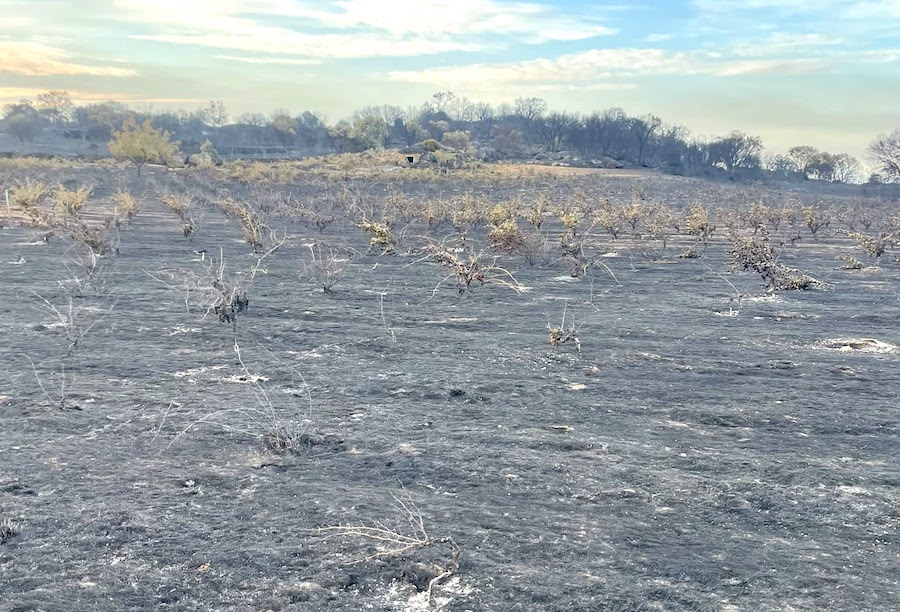
"Devastation", "sadness" and "horror". These are the words most frequently used by residents, growers and winemakers across the provinces of Ávila and Madrid to describe the impact of the wildfires that have become Spain's worst forest disaster since records began. More than 70,000 hectares have burned and almost 90,000 people were evacuated or confined to their homes.
With the Burgohondo fire in Ávila still not fully under control, more than 45,000 hectares already destroyed in the province and a fourth heatwave of the year setting in, there is little sense that the crisis is over.
"No one is celebrating yet. If the wind picks up again, everything that's been saved so far could still burn," say Doreen Auerbach and Cristian Martín of Vino y Se Quedó, artisan microgrowers farming a couple of vineyard parcels in Cebreros.
The DO Cebreros has yet to produce an official assessment of the damage, but preliminary figures point to 180 hectares of vineyard damaged in Cebreros, 12 ha in El Tiemblo, 5 ha in El Barraco and just over 1 ha in Burgohondo, all within the fire perimeter. Even so, the impact on both the landscape and tourism is already clear —the province welcomed 143,011 rural tourists last year, almost 14% more than in 2024— and attention is now turning to the 2026 harvest.
"We're worried about this year's crop because there's so much smoke and ash. From the fires of 2021 and 2022 we know neither is good news for the vines, but this time the scale is far greater," says Marta Burgos, technical director of the DO Cebreros. "We've amended the harvest regulations so that fruit from the affected vineyards will be vinified separately and the resulting wines will be clearly identified," she says. With the Albillo Mayor harvest about to get underway in early August, three wineries have already confirmed that they will not make white wine this vintage, she adds.
Although an overall assessment is still impossible, reports from individual producers are emerging. Bernabeleva, in San Martín de Valdeiglesias, is among the wineries hardest hit. Although owner Juan Díaz Bulnes had still not been able to inspect all of his vineyards yesterday, a forest firefighter confirmed that one of his plots, planted with Albillo, Garnacha and olive trees, had been destroyed, along with Carril del Rey, the vineyard that produces one of Bernabeleva's single-vineyard Garnachas.
"At least Viña Bonita, which celebrated its centenary last year, appears to have survived," he says. "We were planning to start picking Albillo on Thursday, but we don't even know if there's any fruit left. We have more than 50 vineyard parcels, and it's still too early to know what can be saved."
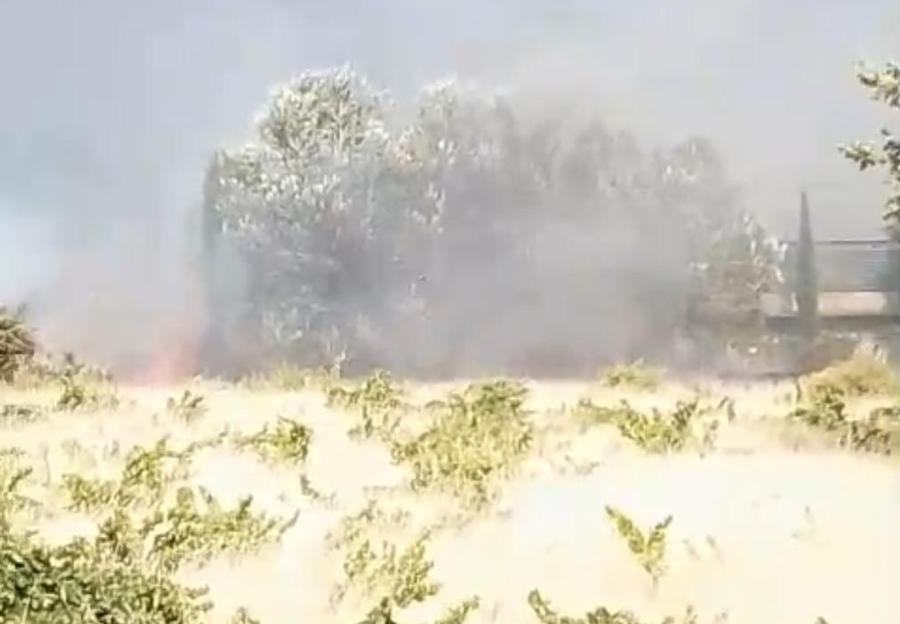
The winery itself (pictured above) also suffered damage. Harvest crates, stacked and ready for the vintage, melted in the heat but acted as a barrier that helped stop the flames. The press survived, although the destemmer was damaged and part of the office was destroyed. "We're now waiting for instructions from the insurance company. If we can get the water and electricity back on, we'll make whatever wine we can," said a resilient Díaz Bulnes.
The fires have also affected some of the region's most historic vineyards. Amanda Barnes wrote in The Drinks Business that part of San Gregorio vineyard, owned by Adrianna Catena, Alejandro Vigil and Gearóid Lane's El Reventón project, has burned. The site, home to some vines planted in the 1920s, has suffered significant damage. Lane told the publication that the team was "heartbroken", while reaffirming its commitment to Gredos. Another confirmed casualty is one of the vineyards belonging to Chuchi Soto, founder of Soto Manrique and manager of the local cooperative winery, who is still waiting to assess the condition of his remaining plots.
A wave of solidarity
Despite his losses at Bernabeleva, Díaz Bulnes is keen to highlight the solidarity shown by fellow producers. Even before knowing the extent of the damage to their own vineyards, several Gredos winemakers offered him grapes and winery space to help salvage the vintage. Prado Rey in Ribera del Duero has also offered its support, while Masketa wine bar in San Sebastián is already organising a charity tasting for September.
One of those lending a hand is Rubén Díaz of Viñadores de Gredos, who has offered part of his crop to Bernabeleva. Díaz farms 12.5 hectares between Cebreros and San Bartolomé de Pinares and also buys grapes from local growers. He says that the Albillo vineyards in the south of Cebreros have been almost completely destroyed, along with much of the Chasselas used to make his Doré wine.
"Fortunately, the Garnacha has come through well. In the slate vineyards north of the village, the fire didn’t reach the vines," says Díaz, who watched the flames come within 100 metres of his winery in Cebreros. His concern also extends to members of the local cooperative. "There are growers whose entire financial year depended on selling their Albillo. Right now, that income has simply disappeared."
Living in Cebreros himself, Díaz describes a community still dealing with the aftermath. "There's a real sense of unease. Everything smells of smoke and you can barely see the sun through the haze. Yesterday, the wind changed to the south and islands of vegetation that had escaped until then started burning too."
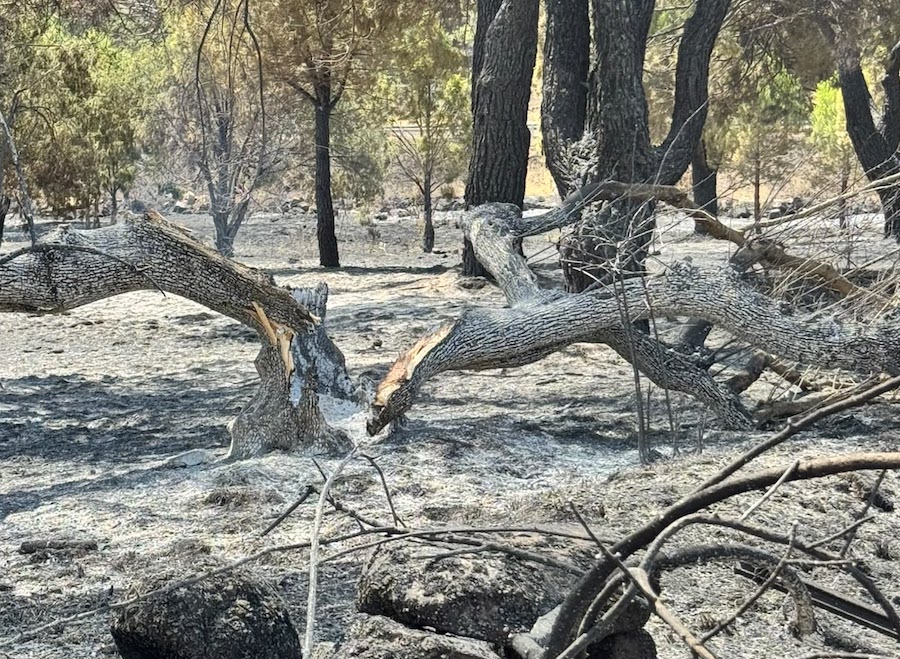
Like many local residents, he praises the work of the firefighters but believes the disaster should prompt a rethink of forest management. "We need new protocols, more investment in managing the forests and less bureaucracy. Controlled burns and vegetation clearance are so tightly regulated that many people simply give up." (Photo below by Indiano)
What about the quality of the grapes?
Not every producer has suffered direct losses, but almost none will escape the consequences of the fires.
At Pegaso, Telmo Rodríguez's Gredos project, only La Manca vineyard has been directly affected, with the surrounding pine forest destroyed by the flames. As elsewhere, keeping vegetation clear around the vineyard helped prevent more serious damage, leaving only the outer rows with scorched leaves and shoots caused by the intense heat. The slate and granite vineyards remain untouched, although the winery warns that "smoke, ash and extreme temperatures will inevitably influence both the harvest and the winemaking."
Indiano has also managed to save most of its vineyards, albeit only just. "We're devastated, even though we're among the newest projects in the area," says Charly Gotchac, who runs the estate with Maca Nogara.
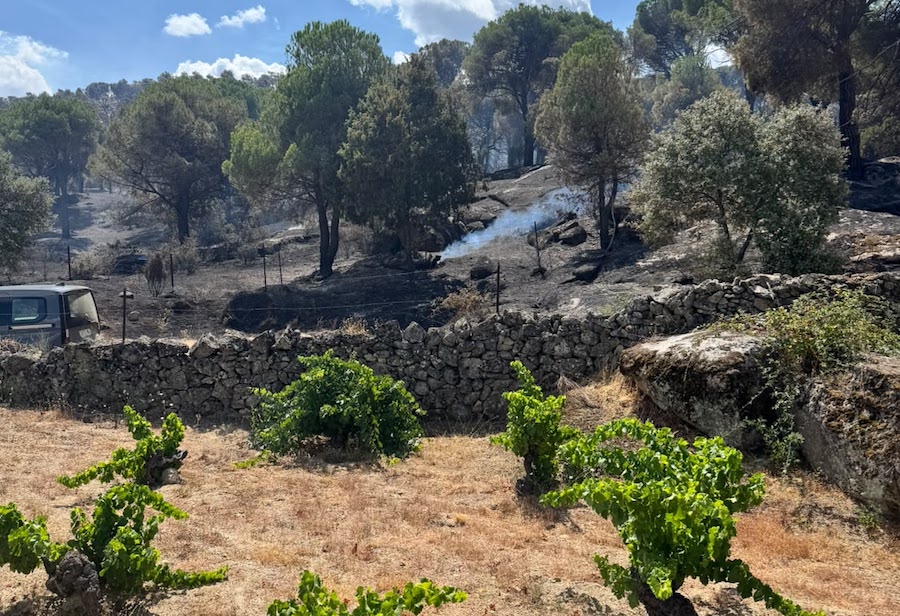
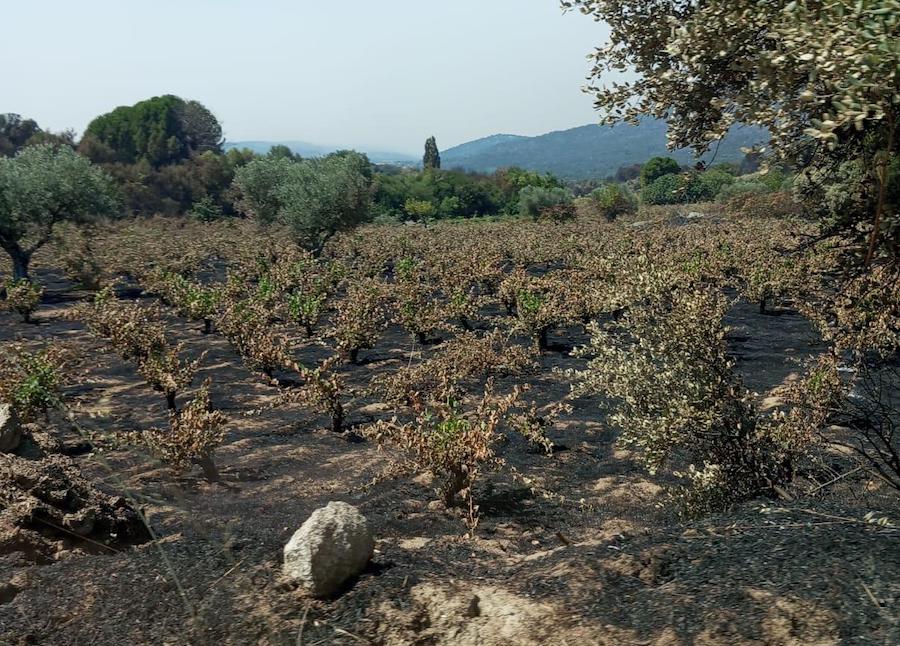
The fire came to within just 100 metres of the winery in Cebreros. Some vineyard edges were scorched, while in others the flames burned the surrounding vegetation (pictured above) before stopping where they reached well-maintained vineyard boundaries. For Gotchac, the biggest question now concerns grape quality.
"I think the impact will depend very much on how far the grapes had ripened. Albillo, which is almost ready to pick, won't respond in the same way as Garnacha, which has only just begun veraison and has been exposed to less smoke and heat. For that reason, Indiano plans to vinify every parcel separately. "We'll follow the evolution of must and wine individually. If they don't develop smoky characters, we'll decide later where they fit in the final blends. Fortunately, only a small number of vines were directly affected."
In Burgohondo, Emmanuel Campana and Carmen de la Pascua of Domaine Dexaie also experienced the fires first-hand. "It was terrifying. We had to evacuate our home and Maca and Charly took us in. When we returned to the winery in Navaluenga, the situation was better than we'd feared. Vast areas of mountainside have burned, but there's still some green forest left. Thankfully, the fire stopped before reaching our vineyards in Navarrevisca."
"Farming is caring"
Fernando García of Comando G was finally able to inspect their Alto Alberche vineyards yesterday and Tiétar Valley today. While the outcome was better than expected, he believes the fires will still have a major impact on this year's vintage. In Villanueva de Ávila, where veraison has yet to begin, he is relatively optimistic. Even more so in Las Rozas de Puerto Real (Las Umbrías comes from here), where there's very little smoke and the fire didn't reach the village. Conditions are very different in El Tiemblo, however, where active hotspots remain and the surrounding pine forest has been completely destroyed.
"We've saved around 90% of the vineyard, although we were worried because we use regenerative farming and maintain a permanent cover crop," García explains. Even so, he says that the 100-metre vegetation-free perimeter they maintain around the vineyards played a crucial role in slowing the fire.
The greatest loss is likely to be Las Iruelas, Comando G's only wine from slate soils. García expects to lose the vintage because of smoke taint, something the winery experienced after the Cadalso de los Vidrios wildfire in 2019.
"We already knew it was going to be a small crop because of poor fruit set, probably around 50% down. Losing Las Iruelas —around 3,500 bottles— is a major blow because it's one of the wines that helps pay the wages of our 16 employees."
Beyond the financial impact, the fires have reopened old wounds. "It was even more severe than Cadalso. Seeing the flames so close, the firefighters and everything covered in smoke takes us straight back to those dark days.In García's view, the consequences extend far beyond the vineyards. "It's an environmental, landscape and tourism disaster."
His experience has also reinforced a conclusion shared by many growers across Spain. "Time and again these fires show that well-managed vineyards don't just survive —they're among the most effective firebreaks."
He believes increasingly destructive wildfires are the result of rural depopulation, the decline of extensive livestock farming, the build-up of forest biomass and climate change. "We need to support primary agriculture, and every one of us helps decide its future through the choices we make as consumers."
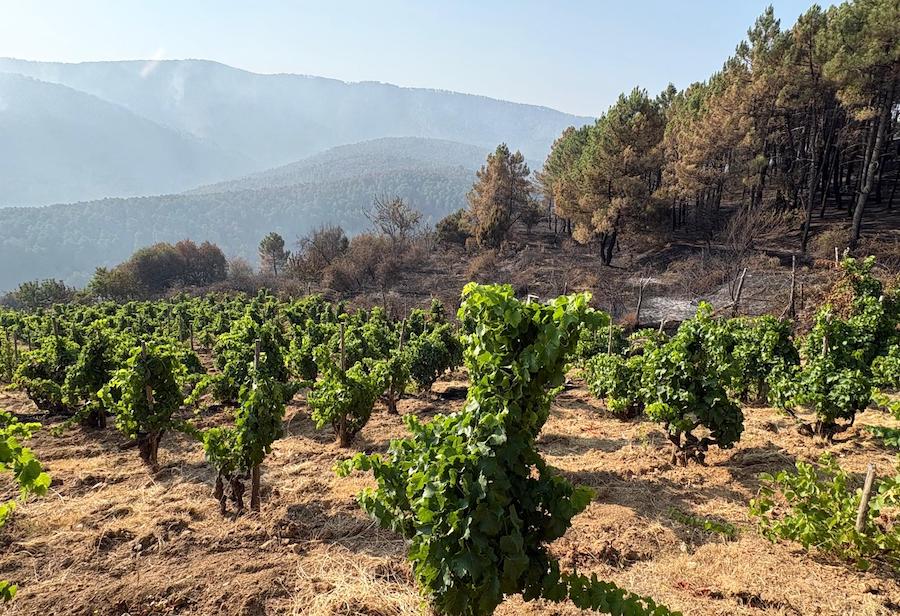
Following the Cadalso fire in 2019, Comando G joined other local growers in calling on the Madrid regional government to restore the landscape through native reforestation, the recovery of historic vineyards and the rebuilding of traditional dry-stone walls. Some of those measures were implemented —around 700 hectares were replanted with holm oaks and oaks, while the speed of forest cleaning response has improved in both Madrid and Ávila, according to García— but he believes more needs to be done.
Together with Juanan Martín of Rico Nuevo and other Gredos producers, Comando G is now preparing a new set of proposals for the authorities, including subsidies for forest clearance (currently available only to owners of more than 30 hectares of woodland), support for mountain vineyard planting and funding for the restoration of dry-stone walls. "Farming is caring," García says simply. It is the message that underpins their proposal —and, he believes, one of the most effective ways to reduce the risk of future catastrophic wildfires.
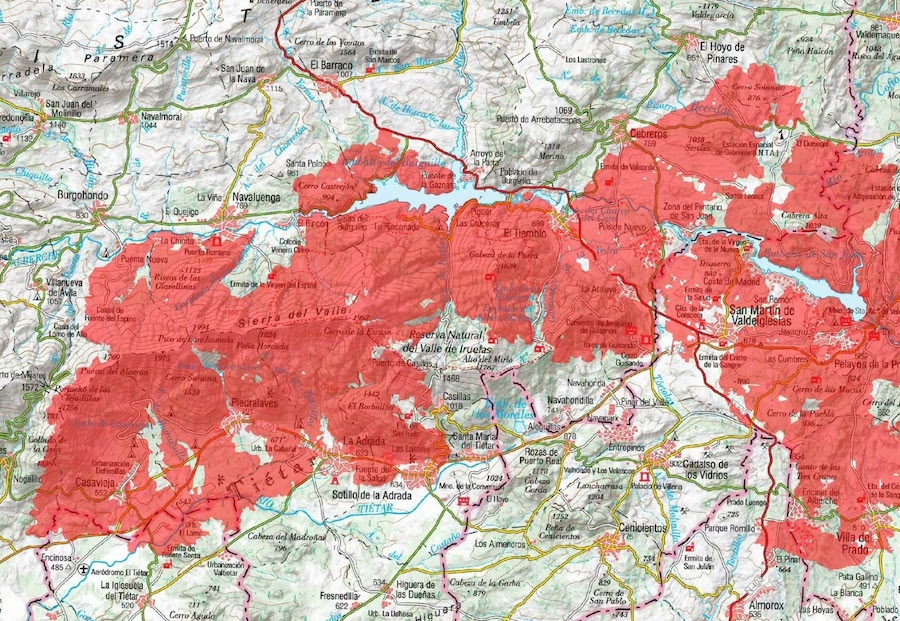
Below in red, the burned area after the wildfires in Gredos.

Author
Yolanda Ortiz de Arri
A journalist with over 25 years' experience in national and international media. WSET3, wine educator and translator
Previous Post