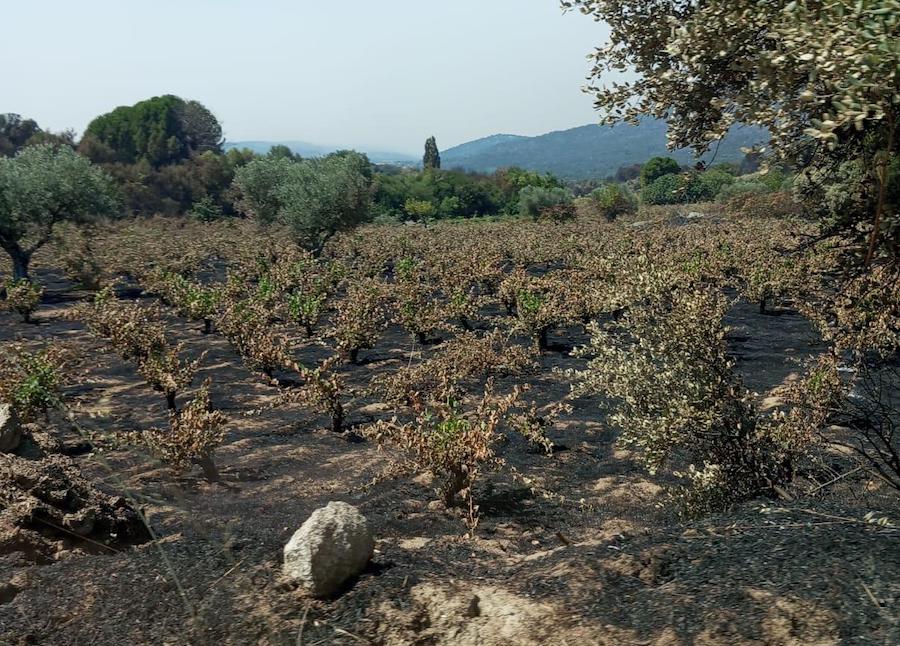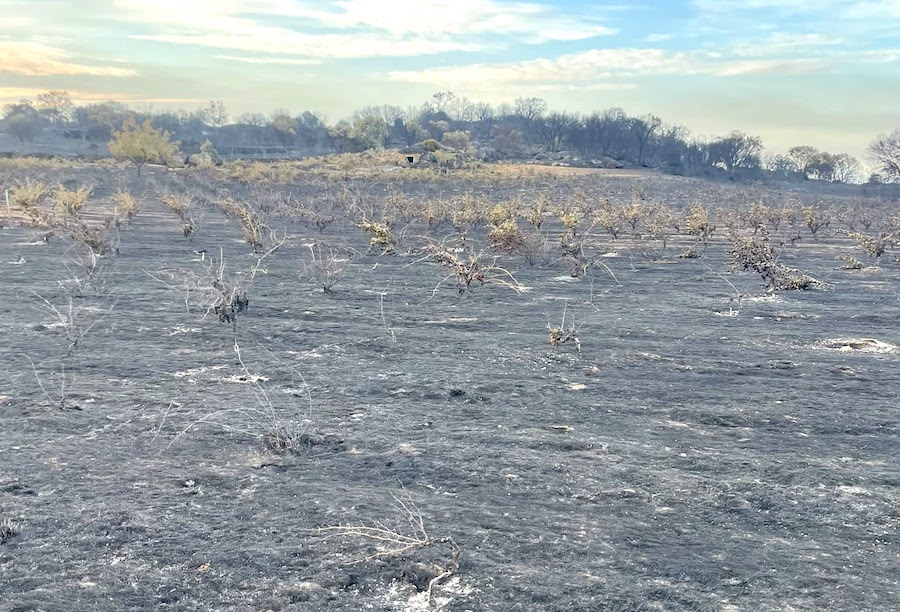
While Gredos continues to count the cost of the devastating wildfires of recent days, another of western Spain's great wine landscapes has also been badly affected. In Arribes del Duero, on the border between Zamora and Portugal, the fire has scorched 11,000 hectares, forcing the evacuation of 14 small villages and a lockdown for the residents of Fermoselle —a historic village with one of the region's richest winegrowing traditions— for several days.
Among the affected communities is Formariz, where José Manuel Beneitez and Liliana Fernández of El Hato y El Garabato farm 12 hectares of vineyard. "It's been an incredibly difficult few days. Our village was surrounded by flames, but thankfully everyone here is safe. Some farming buildings have burned, but the houses are still standing," says Beneitez. While relieved that no lives have been lost, he believes the scale of the disaster cannot be understated. "We're grateful for that, but this fire is a tragedy for the whole region." Alvar de Dios, whose vineyards lie in the northernmost part of the Arribes DO, escaped without any damage, although several villages near Villadepera, where he farms, were evacuated.
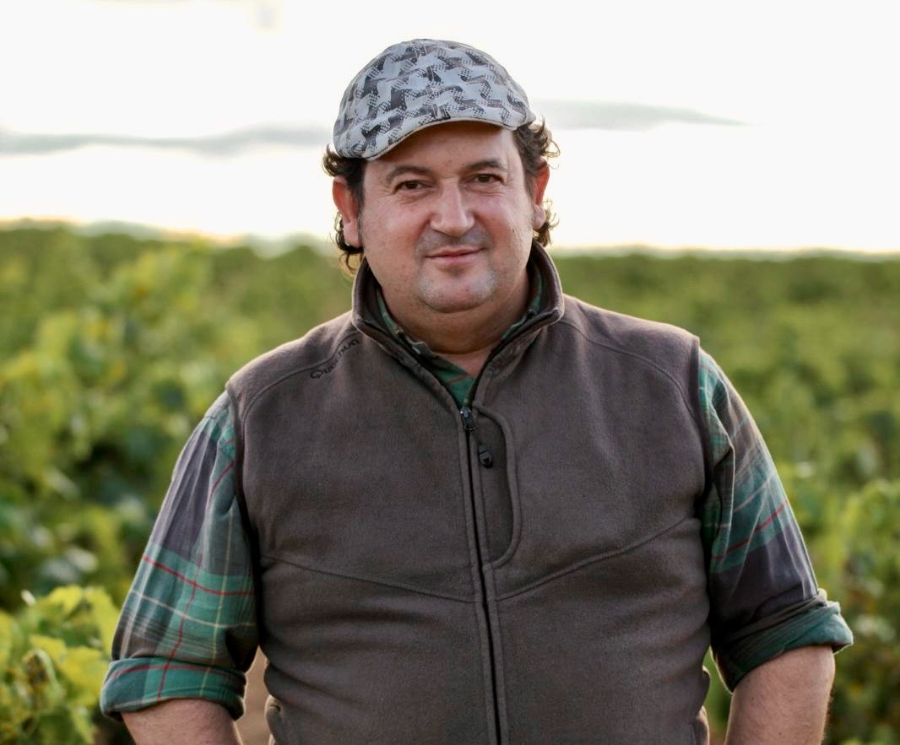
Another grower to suffer direct losses is Thyge "Chus" Benned of Frontio, who has lived and made wine in Fermoselle since 2016. The Danish winemaker recalls that the village was hit by a major wildfire in 2017, when around 2,800 hectares burned, but says this year's blaze has been far more severe. "We're safe, but this isn't new to us. This one has been much worse than the one nine years ago. The wind drove the flames forward at incredible speed, surrounding entire villages," he explains. "We only got our electricity back today [31 July]."
Benned has lost three of his 20 vineyard parcels. Among them is a 1.5-hectare old-vine Garnacha vineyard that supplied fruit for Rød, one of the winery's most distinctive wines.
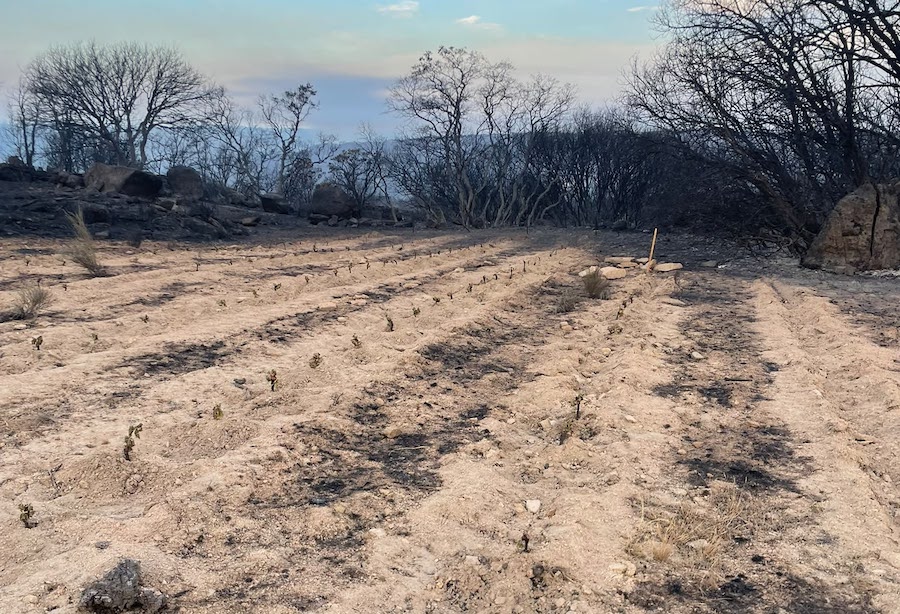
"It's a vineyard I won't recover for at least the next 10 years," he says. A recently planted 0.45-hectare parcel and another smaller old vineyard have also burned, while several other sites suffered damage around the edges. "The vines are resilient, and I think some of them will recover, although I don't have much experience of dealing with wildfire."
The Danish-born grower says the fire has also made him reflect on his vineyard management. "Most people here like their vineyards to be spotless, almost like a beach. I always keep some natural cover crops to prevent erosion and encourage biodiversity. But in an uncontrollable wildfire like this, it's clear that it doesn't help." Another challenge, he adds, is that many vineyards are surrounded by holm oak woodland and dense vegetation, making them much harder to protect once wind-driven flames take hold.
Verasion under way
Unlike Gredos, where many Garnacha vineyards had yet to reach veraison, grape ripening in Arribes is already well advanced. Benned therefore fears that smoke taint could compromise fruit quality in a vintage that was already expected to be small after severe hailstorms in May.
"We were planning to start picking in a couple of weeks but, honestly, I've never felt less like harvesting. Even so, I know that once I see the first boxes of grapes, some of the excitement will come back."
He believes the speed at which the fire spread was the result of strong winds, extreme heat and an increasingly difficult landscape to manage. Following the 2017 fire, a land consolidation programme was launched, but he believes preventive measures remain insufficient. "Where there used to be vineyards, there are now holm oak forests. Firebreaks haven't been created and many access tracks haven't been improved, so firefighters can barely get in by land and have to rely on helicopters."
Asked about government compensation, Benned remains cautious. "There are so many requirements and so much paperwork. I'll be happy when I actually see the money in my bank account. Until then, I'm just grateful that my family, my home and the winery are safe. We haven't suffered as badly as Bernabeleva or many of the producers in Gredos, and when you work in nature, you know that wildfire is always a risk."

Author
Yolanda Ortiz de Arri
A journalist with over 25 years' experience in national and international media. WSET3, wine educator and translator