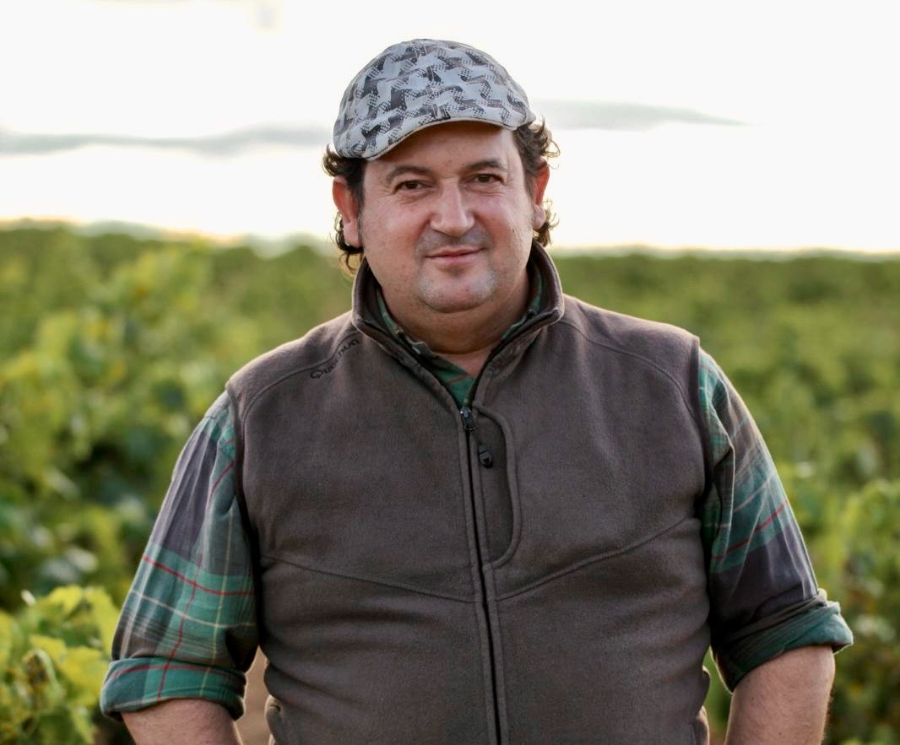
For those of us who didn't know he was battling cancer, Benjamín Romeo's death at the age of 61 on 17 August came as a profound shock. Born in San Vicente de la Sonsierra (La Rioja), he played a pivotal role in shaping modern Rioja.
Romeo belonged to a generation of winemakers and producers who shook up the region in the 1990s and 2000s, alongside figures such as Marcos Eguren, Miguel Ángel de Gregorio and Juan Carlos López de Lacalle. He began his career at Artadi alongside López de Lacalle, serving as technical director until 2000, when he left to focus on his own project.
Unlike most of his contemporaries, Romeo began by focusing on his top wines. His first was La Cueva del Contador in the 1996 vintage, a genuine garage wine produced in an ancient cave in the old bodegas district of San Vicente de la Sonsierra, just beneath the castle's clock tower. This was where wine was once stored, counted —hence the name Contador, used both for the winery and some of its wines— and sold. The first vintage of Contador, his most iconic red, followed in 1999 and quickly established itself amongst Riojas highest rated wines.
Wines for the long haul
The 2004 and 2005 vintages of Contador received two consecutive 100-point scores from The Wine Advocate, bringing international recognition to the wine. At the time, the American magazine was at its peak, with Jay S. Miller responsible for its Spanish coverage. The magazine's founder and hugely influential critic, Robert Parker Jr., had already awarded 98 points to the 2000 and 2001 vintages. His review of the 2000 vintage read: "The absurdly priced [it sold for $260 in the US in 2003, and today fetches $430, whilst in Spain it is priced at around €400], but magnificent 2000 Contador is an unfined/unfiltered, 100% old vine (60–80 years) Tempranillo cuvée made from frightfully tiny yields. Anyone who manages to get hold of a bottle will have a wine that borders on perfection.” The Wine Advocate has continued to award high scores to Romeo's wines. The highest ratings from its current Spanish reviewer, Luis Gutiérrez, went to Contador 2016 and 2018, both of which scored 98 points.
The 2016 Contador was among the wines selected for the Rioja centenary gala dinner earlier this year. Expressive and powerful yet still far from its peak, it demonstrated the distinctive slow evolution of Romeo’s wines.
According to Alberto Fernández Bombín, who has distributed Romeo’s wines in Madrid since the start of the project, his age-worthy wines typically go through a very expressive, almost floral phase during their first two years, before entering a more restrained period and eventually opening up again with renewed energy several years later.
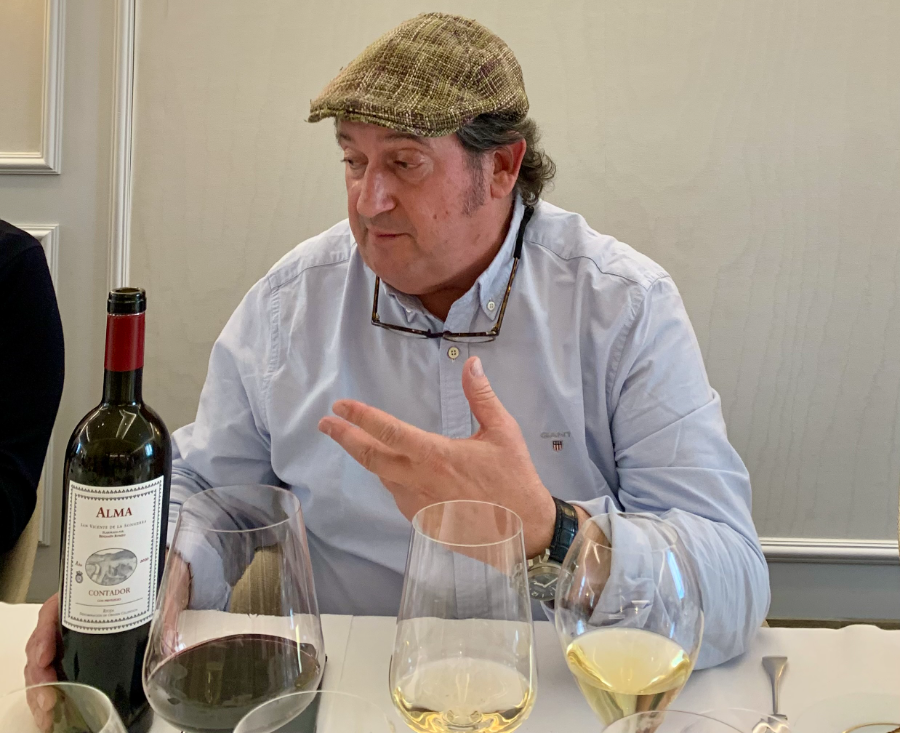
Romeo's last public appearance was at a vertical tasting of Contador held at Etxebarri restaurant in Axpe, Bizkaia, last July, alongside family, close professional associates and friends. The tasting highlighted the ageing potential of his wines. Eleven vintages of Contador were sampled, ranging from the inaugural 1999 to the 2025 vintage, currently being sold en primeur. For Josep Roca, sommelier and co-owner of El Celler de Can Roca, the common thread running through the wines was their Burgundian character, “with energy, power and freshness,” alongside recurring qualities such as "the viscous depth" and a "warm, velvety texture". Roca saw the wines as an extension of Romeo’s overwhelming personality: “They will endure for decades, revealing their powerful yet elegant style and leaving a lasting silky impression.”
A strong character
Benjamín Romeo was an extremely meticulous and perfectionist producer. A no-nonsense man with little time for formalities, he kept a close eye on every stage of production, from the vineyard to the presentation of his wines.
In an SWL article on the 2018 harvest, we reported on his double harvest technique. The first crop was picked and sold to third parties, while the best bunches were left on the vine for another two weeks to gain concentration and reach full ripeness. “I produce 320,000 kg from 50 hectares, but less than half of it ends up in my wines. To make an outstanding La Cuenta del Contador, I need to leave no more than three healthy, beautiful bunches on each vine that I am certain will ripen successfully,” he told us at the time.
According to Patxi Fernández, his childhood friend from San Vicente and the winery’s sales director since its foundation, “Benjamín was a pioneer and a visionary.” He describes him as a man of formidable character. "It was all or nothing for him. He had strong feelings about everything,” he recalls.
Quim Vila of distribution company Vila Viniteca remembers him first and foremost as "a person full of hope, always with major projects underway." According to Romeo’s son, Andrés, he maintained that spirit until the very end. Romeo approved the installation of cameras in the winery so that he could follow the harvest from hospital, and even made plans to travel by van after losing mobility in his lower body as a result of his illness. “He was a brave man, a fighter, incredibly generous, and a very good person,” says Andrés.
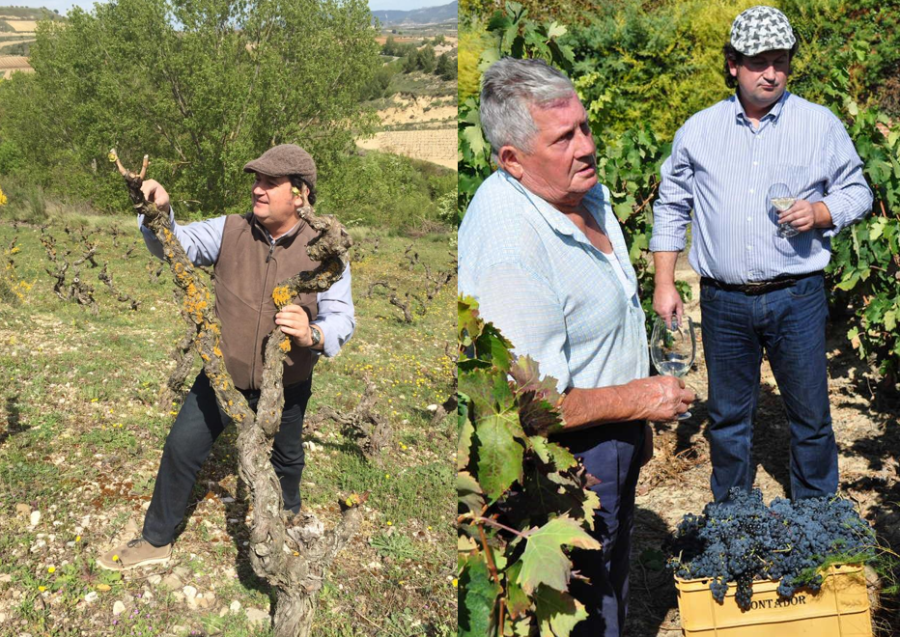
Throughout his career, Romeo dedicated one wine, La Viña de Andrés Romeo, to his father (pictured below) and, implicitly, to his son; and another one to his mother, Carmen, for whom he chose the classicism of a Gran Reserva. His latest release, Alma, sold through La Place de Bordeaux, was dedicated to his daughter, now 10 years old.
Putting San Vicente on the map
As well as setting new standards for style and quality, Benjamín Romeo became a source of inspiration for a new generation of Rioja winemakers. "He proved that a producer could achieve international recognition by working in a small village like San Vicente de la Sonsierra, with their own small vineyard plots and by doing things their own way," says Miguel Eguíluz of Bodegas Cupani.
"He helped to raise the profile of the village's vineyards and showed that we weren't just another area within Rioja, but had distinctive soils and terroirs with the potential to produce great wines. In that respect, he has been a great inspiration to those of us who have followed him,” he adds.
It is no coincidence that San Vicente is now home to one of Rioja’s highest concentrations of leading producers, nor that Vega Sicilia chose this village as the main location for its vineyard acquisitions in the region. Alongside long-established producers such as Sierra Cantabria and Abel Mendoza, the town has become a hub for young talent, including Miguel Eguíluz himself, José Gil and Vicky Fernández of Vignerons de la Sonsierra, Jade Gross and Eduardo Eguren. Romeo also played a key role in raising awareness of the names and features of the individual sites where he grew his grapes. Many of us first heard names like El Bombón or Gallocanta from him.
One of Romeo’s gifts to his village was La Tercera Estación, a wine bar where he could often be found by the counter. A Mi Manera rosé, for example, could only be tasted there. However, he wanted his greatest legacy to San Vicente to be Llano de la Madera (see the photo blow), an unspoilt site at 700 metres elevation with excellent potential to withstand the effects of climate change. There, he acquired just over 20 hectares of land and planted vines from massal selections of the white and red varieties he favoured for his wines. “He used to say it was a debt he owed to the village because he was able to benefit from high-quality old vineyards thanks to others planting and tending them. That’s why he wanted to launch a forward-looking project, even though he knew he wouldn’t be around to see it,” explains his 27-year-old son Andrés.
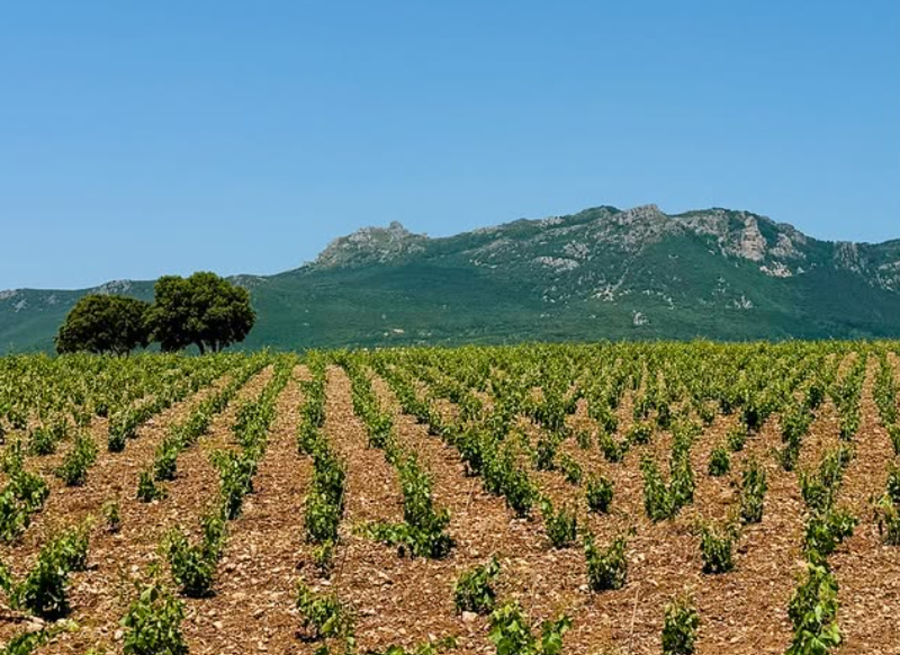
“He was absolutely thrilled with that mountain vineyard. He had been talking about it for years,” recalls Quim Vila, who visited the site with Romeo during his last trip to the winery. Romeo had intended to produce the first wine from these vines in the 2027 vintage.
A new chapter
The death of Romeo also raises questions about the long-term future of major projects so closely associated with their founders.
Much of the team that will work on the 2026 harvest has been with the winery since almost the beginning. “Everyone is fully committed, and all I have ever seen is an absolute dedication to carrying on,” Andrés explains.
Those close to Romeo, such as Alberto Fernández Bombín, speak highly of his ability to build stable and enduring teams. His own business relationship with Romeo is a case in point: it began when Contador was little more than a garage winery. “We grew together. He had offers from larger distributors, but he always appreciated the fact that we started out together when he wasn’t so well known,” Bombín explains.
“We are fully aware of how difficult it will be to fill my father’s shoes, given his unique connection with the land and his ability to read the vineyards,” says Romeo’s son, Andrés. Having completed a double degree in law and business administration, he had begun preparing for the judicial entrance exams. However, when he learnt of his father’s illness late last year, he put his studies on hold to stay by his side. "We know that one chapter is closing and another is opening in the same spirit. The immediate task is to begin the harvest and ensure the success of the project he was so excited about,” he told SWL.
Benjamín Romeo leaves behind a huge void in Spain’s wine industry, but his wines will continue to speak of him for years to come.

Author
Amaya Cervera
A wine journalist with almost 30 years' experience, she is the founder of the award-winning Spanish Wine Lover website. In 2023, she won the National Gastronomy Award for Gastronomic Communication
Previous Post
Next Post
Lipar 2024 Rosé