Every wine lover dreams of tasting Pingus, Peter Sisseck’s iconic wine. However, with a price tag comfortably exceeding €1,000, it remains beyond the reach of most. The next step down is Flor de Pingus, followed by Psi (€43 in Spain), Sisseck's most affordable red and a wine built on a very different philosophy.
Named after Sisseck's childhood nickname, Pingus is made from 4.5 hectares of old vines grown on two plots with highly specific soils in La Horra (Burgos). Psi, by contrast, is a blend of grapes sourced from various villages across Ribera del Duero.
All of Sisseck’s wines are produced in understated facilities. The barrels used for Pingus and Flor de Pingus rest behind the whitewashed walls of a modest winery in Quintanilla de Onésimo, Valladolid. Meanwhile, the vats, foudres and barrels required to produce Psi’s annual output of 350,000 bottles occupy a series of 1980s brick warehouses on an industrial estate on the outskirts of Aranda de Duero in Burgos.
Previously at Bodegas Antídoto, María Luisa Carretero, known as Lula, has headed the Psi project as technical director since 2021. Her arrival has coincided with a shift in philosophy towards vineyard ownership and an increasingly meticulous selection of the estate’s most distinctive and promising batches. Under this new approach, Sisseck now believes that Psi has the potential to become the most exciting project of his career, eclipsing even Pingus –his single-vineyard wine and, in his own words, an “ego wine”– and Flor de Pingus, which has gradually evolved into a village wine from La Horra. Fittingly, Psi takes its name from the 23rd letter of the Greek alphabet (ψ), which also corresponds to the initials of its creator.

Saving old vines
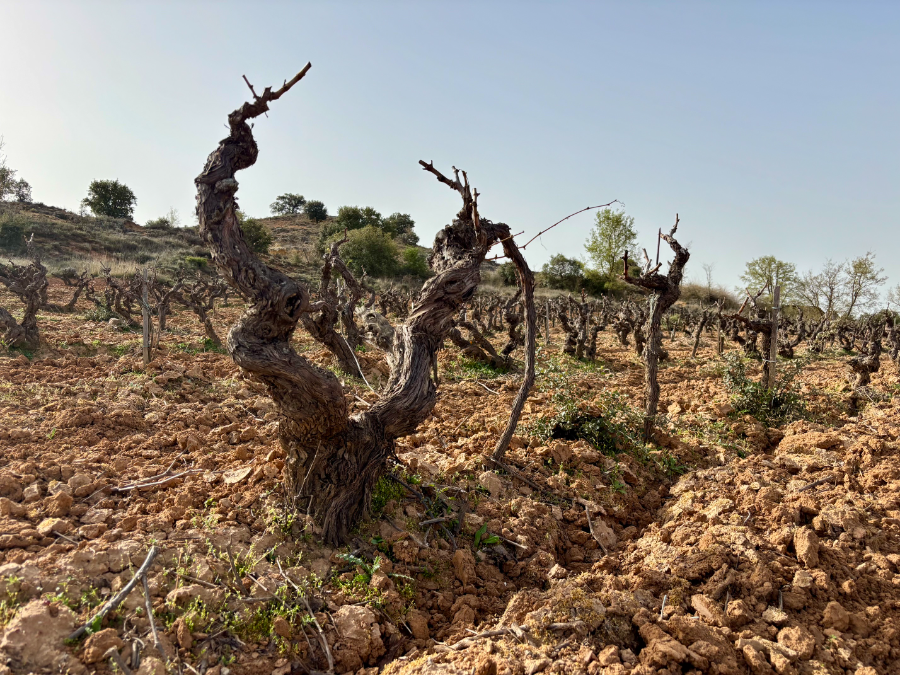
Psi was born out of Sisseck’s response to the land consolidation carried out in La Horra in 2006, which resulted in more than 50 hectares of old vines being uprooted. “That was outrageous,” recalls the Danish producer, nearly two decades later. The episode prompted him to launch a project aimed at safeguarding the region’s traditional vine stock offering growers a fair price for their grapes. “Old vines are difficult to farm. They cannot be mechanised and produce half the yield. With so few economic advantages, the temptation to uproot them is very strong,” he says. “I realised that, in a region like Ribera, without zonification or much of a wine culture, but with a long-standing winegrowing tradition, old vines invariably indicated the best sites. That was yet another reason to preserve them.”
To develop Psi, Sisseck teamed up with Pablo Rubio, a winemaker and agricultural engineer with previous experience in the area. Rubio mapped the DO using aerial photographs from different periods, as well as topographical surveys and plot maps from various public bodies. The work made it possible to identify the traditional vineyard sites and pinpoint the best locations in various villages. "We quickly realised that most of the old vineyards belonged to cooperatives, so if the project was to succeed, we had to help them preserve that heritage," Sisseck explains.
The first Psi wines were vinified in the cooperatives themselves. Armed with their own pumping equipment, the technical team soon earned the nickname ‘the hose lads’.
Rare Wine & Co., the US importer of Dominio de Pingus, presented the project with the following words: “Peter hopes to give growers the tools with which to have better vineyards and make better wine. But the idea of the wine is just as interesting: to find the soul of Ribera del Duero by using techniques —including long, gentle macerations and virtually no new wood— that will maximize transparency. The first vintage, 2007, is as subtle, delicate, and compelling as anything seen in modern Spain.”
What is Psi like today? Although the model of purchasing selected grapes from cooperatives remains in place, the winery began acquiring its own vineyards in 2021. "The nearly 90 hectares we now own, spread across 300 plots, have totally transformed the project. We used to work with 500 growers, whereas now we have to do much of the vineyard work ourselves. Hiring staff and purchasing machinery has increased the average cost per kilo of grapes, but it has also allowed us to be more selective with the plots we work with. After all, not every old vineyard is necessarily better. The mass selections carried out 80–100 years ago did not always use the best plant material," notes Sisseck.
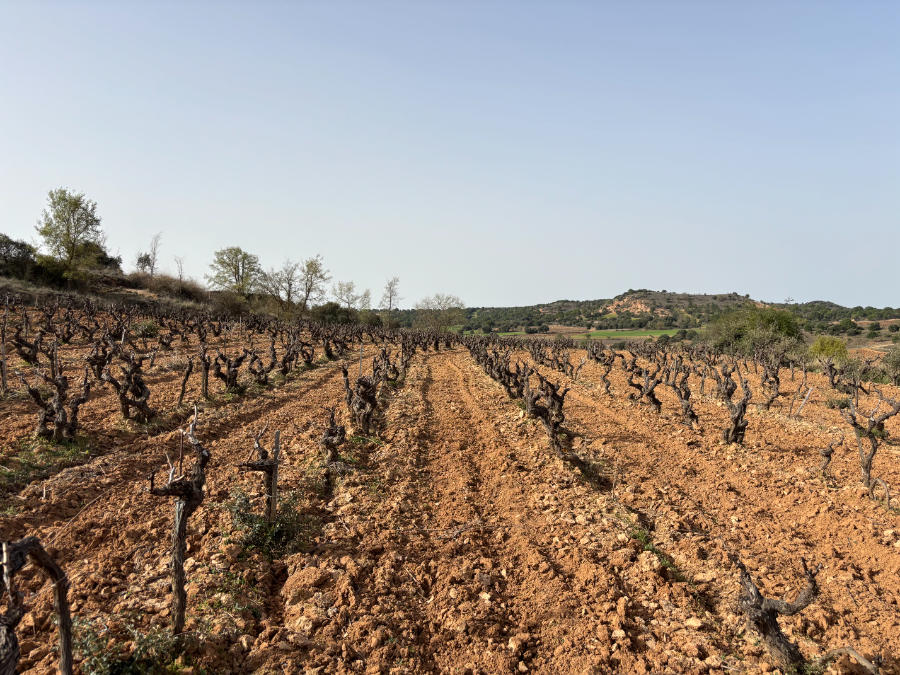
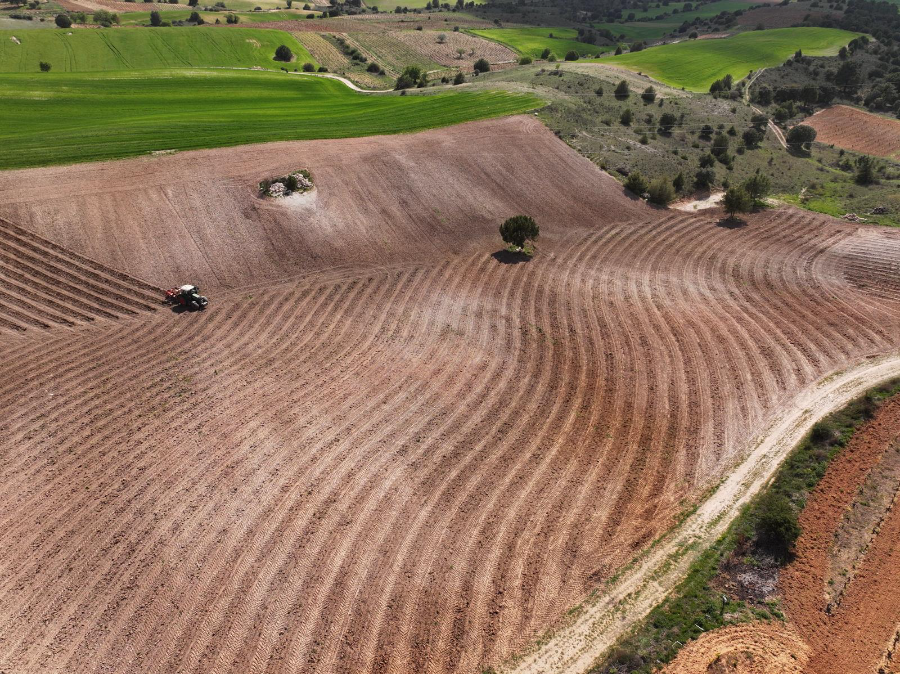
Some of these new vineyards have been acquired by exercising purchase options on leased plots, or by purchasing land from growers with no one to succeed them. The estate has also established new plantings, including 5.5 hectares of Garnacha and Tempranillo in Peñaranda de Duero (Burgos), shown in the image below. Taken by Sisseck himself during planting in May 2025, the photograph illustrates the use of the keyline system, in which the vines follow the natural contours of the terrain to reduce erosion and maximise rainwater retention.
The Gumiel de Izán-Peñaranda alliance
After almost two decades of experience, the team now has a much clearer understanding of the contribution each village makes to the final blend. Peñaranda, where Psi owns 36 hectares while continuing to work closely with the local cooperative, together with Gumiel de Izán, where it now owns 18 hectares and also maintains its collaboration with the cooperative, now form the backbone of recent vintages.
“Gumiel de Izan is rich in springs and ground water. The well-drained, predominantly sandy and clay soils give the wine a more supple mid-palate. By contrast, Peñaranda has less organic matter and much more limestone,” explains Lula Carretero.
One of the highlights of visiting Psi is the opportunity to taste the wines from these and other villages separately, especially in the 2025 vintage. Following abundant rainfall and a cooler summer than in 2024, it produced high-quality grapes despite the challenges posed by mildew. The comparatively lighter-bodied wines from Gumiel de Izán, with restrained ripeness, red fruit character, good acidity and herbal nuances, complement the more reductive profile of Peñaranda, whose wines are distinguished by their sapid character and chalky tannins. Some of the wines from this village also display a delicate floral quality that is almost ethereal. According to Carretero, Peñaranda's old vineyards also contain a higher proportion of white grapes, which are incorporated into the blend whenever the vintage allows.
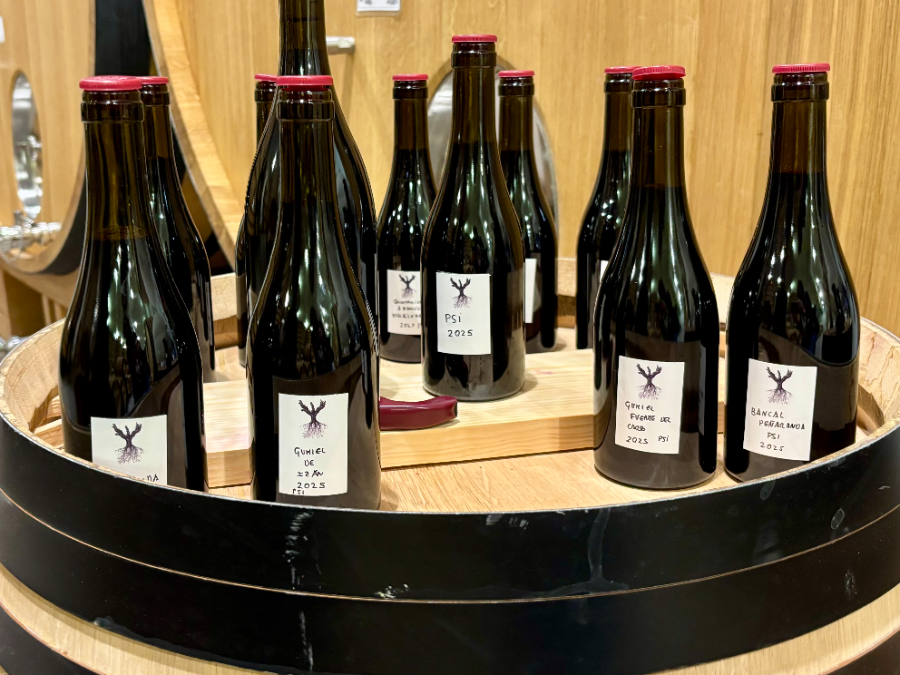
The Gumiel de Izán-Peñaranda blend, accounting for 70% of the final wine, results in a Ribera with moderate structure, notes of red fruit, and chalky tannins on the finish. The remaining 30% adds further layers of complexity from many other villages. In Burgos, Tubilla del Lago, one of Ribera del Duero’s largest concentrations of old vines, where yields are significantly lower than elsewhere, provides much of the wine’s concentration. In 2025, hailstorms reduced yields to just 1,500 kg/ha, compared with the usual average of 2,500–3,000 kg/ha in old vines. Zazuar, where Psi owns six hectares spread throughout the village, offers a highly balanced and elegant expression of Tinto Fino, combining liveliness with gentle tannins. At the other end of the spectrum, Baños de Valdearados delivers a more powerful, classic style of Ribera, with generous fruit, tannins, alcohol and greater ripeness.
Soria also plays a modest role in the blend. The winery owns almost three hectares in Langa de Duero and also sources grapes from Quintanilla de Tres Barrios and Villálvaro. While Sisseck has always been wary of the naturally high tannic load found in the easternmost section of the DO, Lula, drawing on her experience at Bodegas Antídoto, is a great advocate of the area’s energy and depth. The sample I tasted from Soria, although somewhat rustic and austere, had plenty of character, combining an exuberant burst of fruit with an attractive finish.
Another key ingredient in Psi is Garnacha. “We started using Garnacha to soften the tannins,” says Sisseck, distancing his approach from specialist regions such as Priorat. "I don’t think Ribera is naturally suited to producing single-varietal Garnacha reds, but thanks to its softer tannins and lower pH, it brings valuable balance to the wine.” Lula agrees: "Garnacha adds acidity, a pleasant mouthfeel, and nice fruit expression. It buds early, which makes it more vulnerable to frost, and it ripens slowly.”
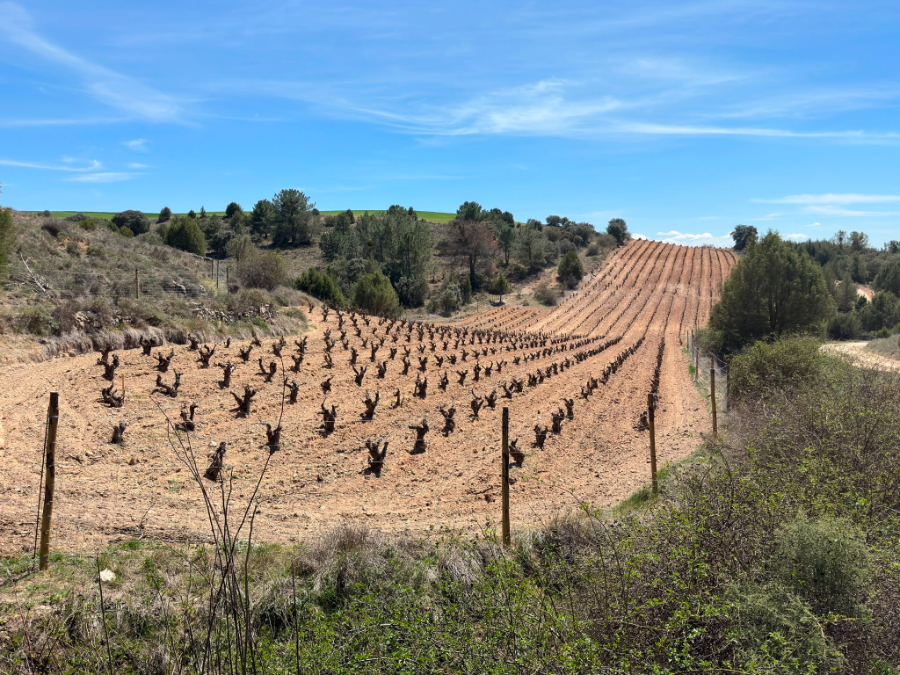
The Danish winemaker finds Garnacha from Ribera rather rustic, so despite having two mass selections of local clones, the team also uses plant material from Vitis Navarra, Spain's flagship nursery. New Garnacha plantings (3.5 hectares between Peñaranda and Gumiel de Izán) seem like a sensible choice. As Lula explains, Garnacha is now harder to find in Ribera del Duero than Albillo Mayor. The variety accounted for 5% of Psi's 2025 harvest and will make up 2% of the 2025 Flor de Pingus blend.
Oak vats, foudres and barrels
Winemaking has also undergone significant changes. "We used to follow a Bordeaux-inspired philosophy without really questioning whether it was the best way to express Ribera. We’ve learnt to pick earlier and ferment at lower temperatures to achieve the freshness and fine tannins that had previously been lost. We also pump over much less than we used to and are very careful with extractions,” says Sisseck.
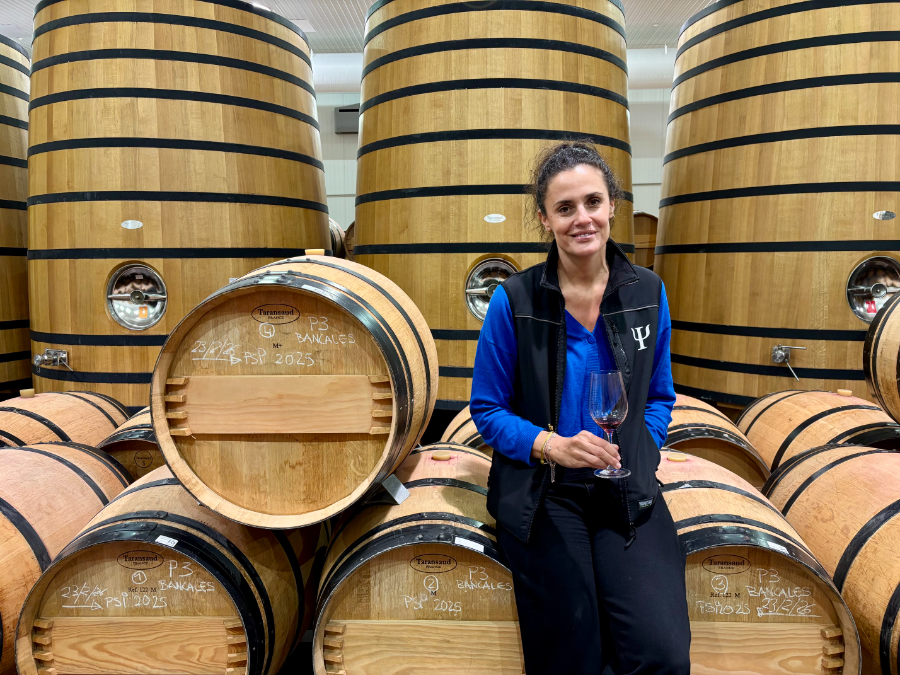
For Lula (pictured below), restrained ripeness also depends on careful temperature management during fermentation. Keeping it around 22°C helps avoid extracting compounds that can leave the wine tasting tired. “Old vines ripen earlier,” she explains, noting that the vineyards they work with average between 70 to 80 years of age. “We extract at the start of fermentation; once it’s finished, we leave the skins to macerate for two or three weeks without raising the temperature or extracting any more. We’re also experimenting with devatting after fermentation.”
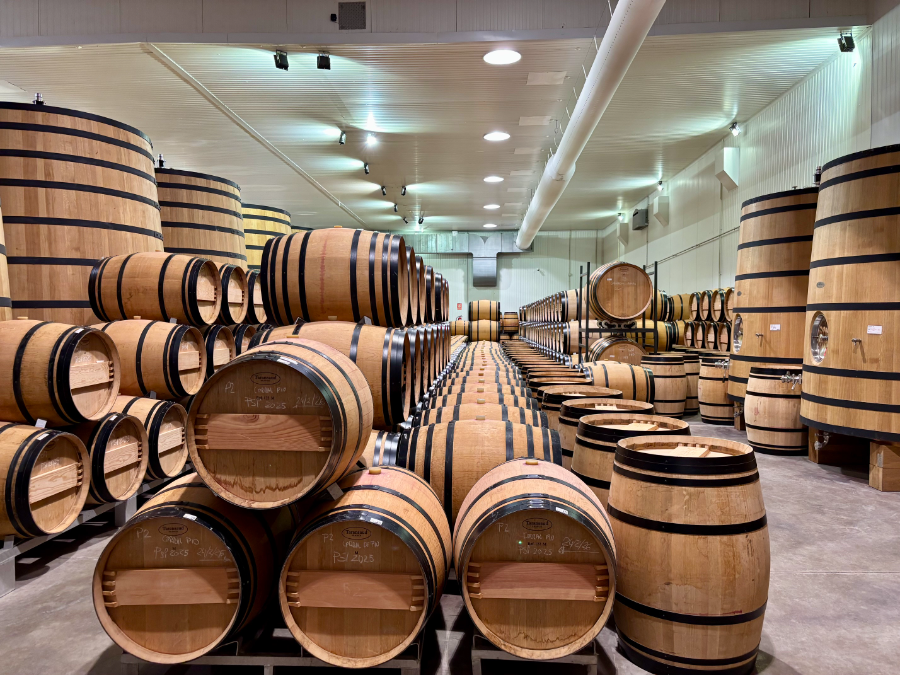
The ageing process is also carefully monitored. While the aim is for every wine to spend some time in each type of oak vessel (vats, foudres and barrels), the sequence depends on the character of each lot. The more approachable wines remain longer in vats or foudres, while those requiring greater oak influence start the ageing in barrels. "Vats don't contribute structure and provide a rather vertical, straightforward ageing process, whereas foudres result in softer, more enveloping textures," notes Lula. Ultimately, only 30–35% of the ageing is done in barrels, with the remaining 65–70% carried out in large vessels. In 2021, the winery began using 600-litre barrels.
A Gran Reserva and other wines in the pipeline
After almost 20 years with just a single Psi release, the range is about to expand with the launch of a 2016 Gran Reserva, due to reach the market this autumn. Its price has not yet been disclosed. Much like Vega Sicilia Único, the idea is to release the wine a decade after the harvest. Sisseck, however, has opted for a longer period in oak: 48 months in barrel, compared with 24 months for Único, followed by further ageing in vats to reach a total of 56 months in oak before bottling. "I'm looking for a deep transformation through slow oxidation, which makes the wine very stable. The style is closer to a tawny port than a vintage port, and it’s my tribute to Rioja’s great historic wines.”
Among his favourite classic Riojas are the Burgundy-shaped bottles that traditionally contained some Garnacha, particularly Viña Real and Monte Real. Similarly, Psi Gran Reserva includes 20% Garnacha. After years of championing terroir, Sisseck now sees himself pursuing something closer to a winemaker’s wine.
“For a long time, I objected to Rioja blends because nobody knew where the grapes came from. Telmo [Rodríguez], Álvaro [Palacios] and I became obsessed with vineyards, but the idea of making the best possible wine without using the same vineyard every year was always there too. This Gran Reserva is my attempt to revitalise that concept. Now that everyone is making single-vineyard wines, I just wanted to do something different,” says Sisseck.
PSI's potential doesn't stop there. “Pingus and Flor de Pingus are already clearly defined wines. But Psi is a regional, widely available Ribera that is sold at an affordable price and can be complemented with quality village or single-vineyard wines with a solid track record,” explains Sisseck. "I’m not the sort of person who releases irrelevant stuff."
There is no sense of urgency. Psi has been producing an old-vine white since 2022, but variations in quality between vintages have so far persuaded the team not to release it commercially. At present, Zazuar, a small village west of Peñaranda, is a promising candidate for a future village wine. Although it is not among Ribera del Duero’s best-known villages, the elegance of its Tempranillos is captivating. I also tasted a couple of impressive single-vineyard reds from Gumiel de Izán and Peñaranda. The next step in Sisseck’s agenda is a new winemaking space that will enable him to pay greater attention to detail. Who knows what might come next?

Author
Amaya Cervera
A wine journalist with almost 30 years' experience, she is the founder of the award-winning Spanish Wine Lover website. In 2023, she won the National Gastronomy Award for Gastronomic Communication
Previous Post