Widely recognised as one of Europe’s key wine markets, Switzerland’s importance to Spain goes beyond its relatively small population. With just nine million inhabitants, the country has the world’s highest average private wealth, according to UBS’s Global Wealth Report. Combined with relatively high per capita consumption, this purchasing power makes Switzerland an attractive destination for mid- to premium-Spanish wineries.
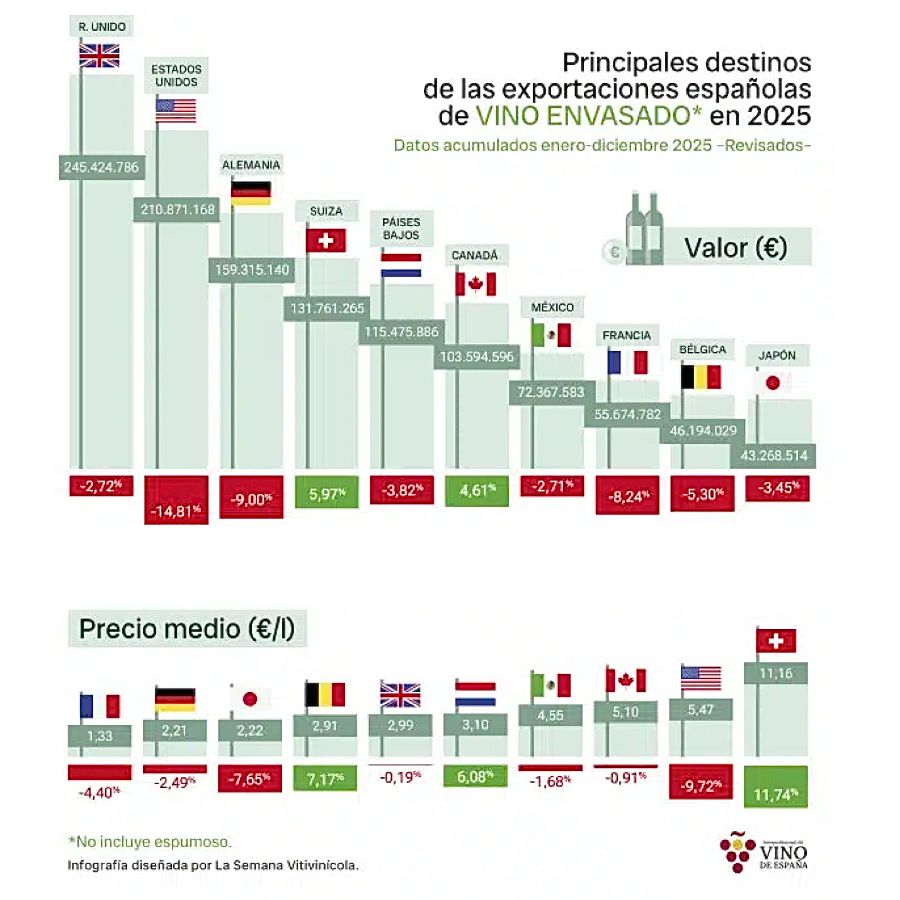
Switzerland has long been a leading destination for DO Ribera del Duero both in terms of volume and value. Even more significantly, no other foreign market pays more for Spanish wine. In 2025, according to Interprofesional del Vino de España (OIVE), Spanish wineries achieved an average export price of €11.16 per litre for bottled still wines —well ahead of the United States, in second place at €5.47 per litre. Overall, the country was Spain's fourth-largest export market by value for bottled still wines.
Could Switzerland —outside the EU, yet at the heart of Europe— be an unlikely Isla Bonita for Spanish wine?
The short answer is yes, but only up to a point. There are also limits to this positive picture. Last year, Spanish wine imports fell by 15% in volume and 3% in value, according to ICEX’s Swiss office in Bern. Switzerland’s engagement with the so-called New Spain is also still in its early stages, with most sales concentrated in a handful of regions and wine styles. Spanish white wines play only a minor role, accounting for 11% of value in 2025, while reds dominated with 84%.
Preference for bold red wines
This strong focus on reds is closely linked to a particular taste profile. “When it comes to foreign red wines, the vast majority of Swiss consumers prefer full-bodied, oak-aged reds,” explains Master of Wine Ivan Barbic. “Switzerland already produces its own light, fresh reds from varieties like Pinot Noir or Gamay, which is why people look abroad for something different.”
Barbic is a buyer at Bataillard, a long-established wholesaler and importer that supplies around 600 specialist retailers as well as grocery chains like Spar. Its portfolio spans the entire price spectrum, from affordable Spanish white wines used to prepare cheese fondue to premium wines from La Rioja Alta, Bodegas Arzuaga and Alto Moncayo.
Barbic says this premium segment remains rooted in traditional styles. “Barrique-aged Riojas remain popular, especially from top producers like Muga, Roda, and La Rioja Alta.” Overall, he identifies three firmly established regions: Rioja, Ribera del Duero, and Priorat. “Beyond these, Levante reds have gained a foothold, for example those from Juan Gil in Jumilla and Bodegas Volver in Alicante.” Seeing further potential in southeast Spain and the Monastrell variety, Bataillard recently partnered with Bodegas Luzón from DO Jumilla.
The success of these Spanish reds also depends on which part of Switzerland they are being sold, as Barbic points to significant differences between the country’s regional markets. Switzeland has four official languages, with German-speaking communities accounting for around 65% of the population and French-speaking communities for around 25%. “In French-speaking Switzerland, people prefer locally produced wines. Those looking for foreign reds often opt for Bordeaux, Rhône or Burgundy. In German-speaking Switzerland, by contrast, Italian wines are the top choice, followed by Spanish ones.”
The picture is more limited when it comes to whites, where only DO Rueda has really established itself. Last year, Switzerland was the fourth-largest export market for Spain’s leading white wine region. “You can find Rueda in grocery stores, specialist shops, and by the glass in many Zurich bars,” says Barbic, whose company Bataillard works with Rueda producer Valdecuevas. Other Spanish whites, such as Albariño, struggle by comparison. “Because of our national variety, Chasselas, Swiss people are used to low-acidity whites and often dislike high acidity. German Riesling struggles to gain broad popularity and remains a niche choice for connoisseurs —and that is even more true of Albariño.”
Ribera del Duero remains strong; traditional Rioja drops
Moving from an off-trade wholesaler to an on-trade specialist, a somewhat different picture emerges. Carlo Wismer, head buyer at distributor Vinothek Brancaia, says wines from the Levante regions sell well in retail because they offer good value for money. "Yet, apart from leaders like Casa Castillo, they have little presence in upscale restaurants because the prevalence of entry-level labels in supermarkets has resulted in a lack of prestige.”
Brancaia generates 85% of its business from the hospitality sector. “In high-end restaurants, Ribera del Duero is by far the most popular Spanish region,” says Wismer. Brands such as Emilio Moro perform consistently well, alongside smaller boutique wineries in its portfolio like Mélida Wines.
At the same time, Wismer acknowledges a decline in demand for Rioja Reservas and Gran Reservas. “This style is losing ground in modern, upscale restaurants, except for super-classics like Castillo Ygay and Viña Ardanza,” he says. “Reservas from lesser-known brands are no longer in high demand.” Figures from DOCa Rioja bear this out: exports to Switzerland fell by 11% in volume in 2025, while Reserva exports plunged by 22%.
In response, Wismer has expanded his portfolio to include Rioja winery Artuke. “Less oak, less concentration, perhaps concrete ageing and more freshness: I see clear growth potential for these kinds of Spanish wines in the Swiss restaurant scene.”
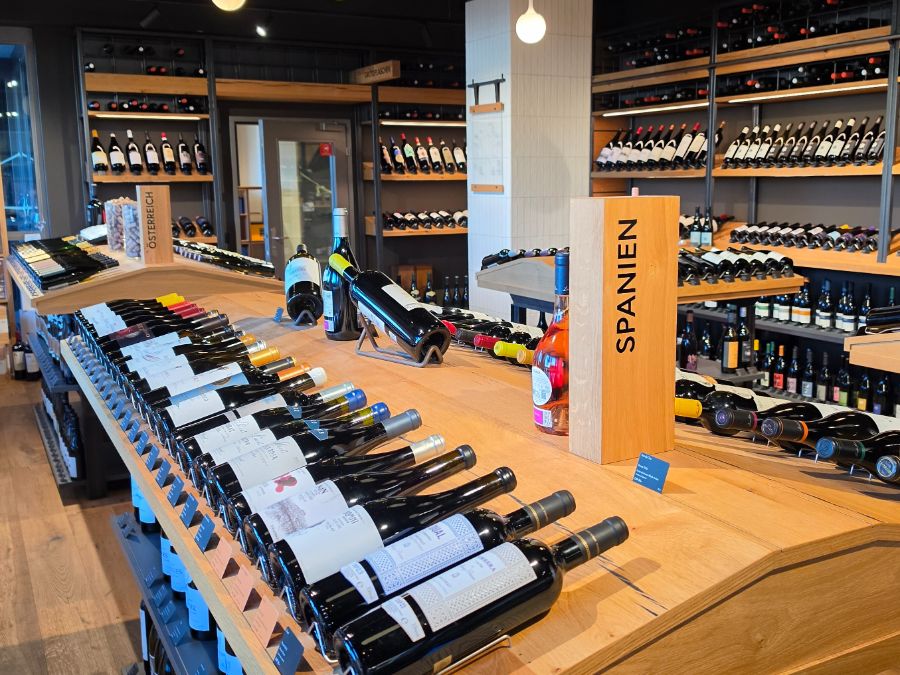
Wismer, an ICEX-certified Spanish Wine Educator, wants to bring more new-style Spanish wineries into his portfolio, provided they meet certain criteria. Authentic storytelling, a defined style and a clear philosophy are crucial, he says. Availability is another key factor. “A few years ago, there was a brief craze for Godello, but it didn’t last.” Although the variety suits Swiss tastes, Wismer points out that “only small quantities reach Switzerland, so there is no real market penetration, and consumers lack a clear understanding of what Godello is.”
New Spain as a popular niche
Although varieties like Albariño, Godello, Garnacha and Mencía have yet to break through, virtually every Spanish region and wine style is available there. According to OIVE, Switzerland was in 2025 one of only three countries worldwide to import wines from more than 1,000 Spanish producers. With 1,277 wineries, it ranked third, behind the US (1,488) and UK (1,301). Among more than 2,000 licensed wine importers, Casa del Vino has been a pioneer since the 1990s. In French-speaking Switzerland, distributor Pamisa has an excellent portfolio, spanning from Galicia to Gredos and the Canary Islands.
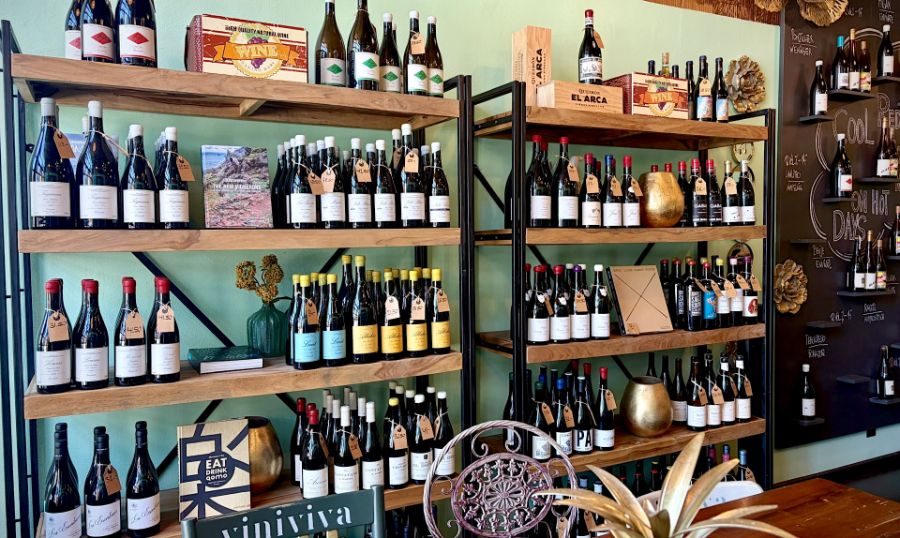
Another New Spain specialist is Viniviva, wine shop in northern Zurich owned by Andreas Brunnegger. Almost 30% of his 320 wines are from Spain, making it the leading country in his portfolio. “When I started in 2015, I wanted to offer something with a sense of place and a distinctive character,” says Brunnegger, a former sommelier. “It happened naturally that Spain became such a strong presence.”
His journey began with Envínate in Tenerife. “When I tasted their wines, I was blown away because their profile was unlike anything else,” says Brunnegger, who built his selection around them. Today, he offers some of Spain's most acclaimed wines, including those from Bodega Cerrón, Luis Pérez and Cantalapiedra. His clientele consists largely of younger consumers who are open-minded and always looking for something new, Brunnegger notes. Even so, he has to do a great deal of explaining about these projects. “Most Swiss consumers feel confident about Rioja, Ribera del Duero and Priorat. But when you present unfortified white wines from Andalusia or red wines from Galicia, that’s completely new territory for almost everybody.” Once his customers taste these wines, however, they almost always won over, he says.
Fine dining: Spain loses ground to local wine trend
While urban niche retailers are finding success with New Spain, a more challenging picture emerges at the five-star Grand Hotel Victoria-Jungfrau in the Bernese Alps. “We have noticed less demand for Spain,” says head sommelier Torsten Noack. The wine list at his Michelin-starred restaurant, Radius, boasts 1,200 cuvées and has repeatedly been named Switzerland’s best by Vinum magazine. Although it features high-profile producers like Ossian, Telmo Rodríguez and Vall Llach, the Spanish section lags far behind the Swiss, French and Italian selections.
“Spain remains popular among the older generation, who order classics like Vega Sicilia and Roda,” Noack says. However, younger guests and international visitors are increasingly opting for Swiss wines. This shift is not confined to Spain. “The New World is having an even harder time,” the sommelier notes, adding that only France and Italy remain unaffected, with demand for their wines stable or increasing.
Given Spain’s strong positioning and the quality of its wines, Noack sees the slowdown less as a failure on the part of producers and more as part of a broader change in consumer trends. “Younger guests have Spain on their radar,” says Noack. “They simply don’t think to drink it when in Switzerland —they choose something local instead.”
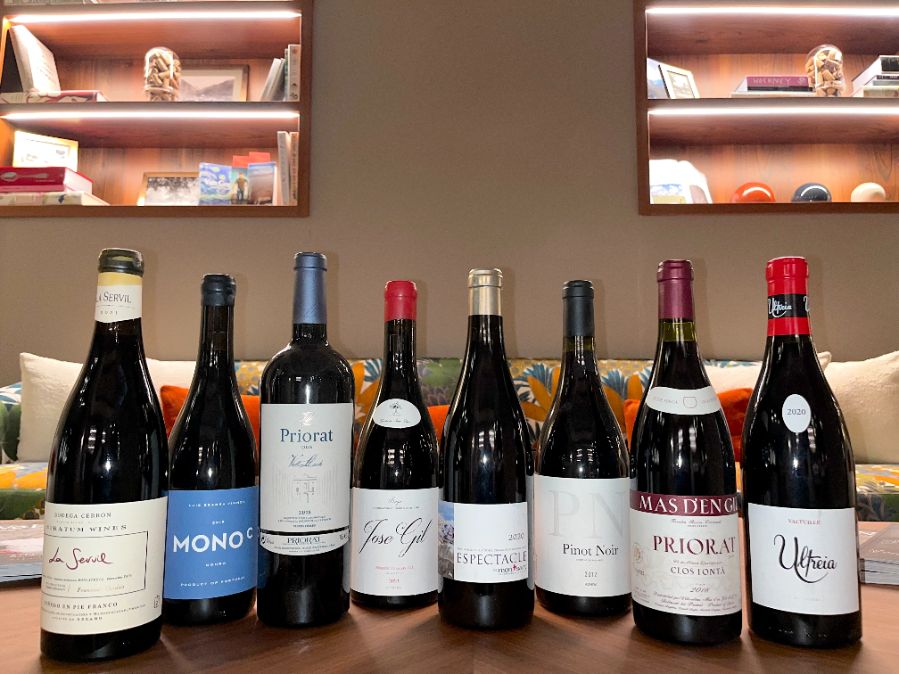
To counter this and showcase contemporary styles, Noack has introduced wines from Raúl Pérez, Rodrigo Méndez, Bodega Cerrón and José Gil. “These producers must be sold proactively; guests do not order them of their own accord,” he says. Asked what might prompt guests to choose such Spanish wines spontaneously, Noack jokes: “We would probably have to remove the Swiss and French wines from the list.” More seriously, his proactive approach aims to establish Spanish wines in set menus. “We recently included Raúl Pérez’s Ultreia in our international wine pairing, and it was a real hit.”
Beyond major brands, recommendations are vital
Sommelière Angela Hug also advocates active selling. At her gourmet restaurant, Le Petit Cheval inside the Hotel Wysses Rössli, about one-third of the wine list is devoted to Swiss wines. Yet she is also a great fan of Spain, having visited its wine producers for many years. “I find its many facets extremely exciting for example, the wines from the northwest.”
Hug explains that she avoids major Spanish premium brands such as Aalto, known to virtually everyone in Switzerland, preferring instead to offer more singular wines from producers like Suertes del Marqués in Tenerife and Michelini i Mufatto in Bierzo. “You really have to sell them through recommendations or integrate them in food pairings,” she says. Even Spanish whites, which are highly underrepresented in Swiss fine dining, get a chance. “They are great food companions. I regularly include whites from Dominio do Bibei in Ribeira Sacra or a Garnacha Blanca from Mas Doix in Priorat in pairings.”
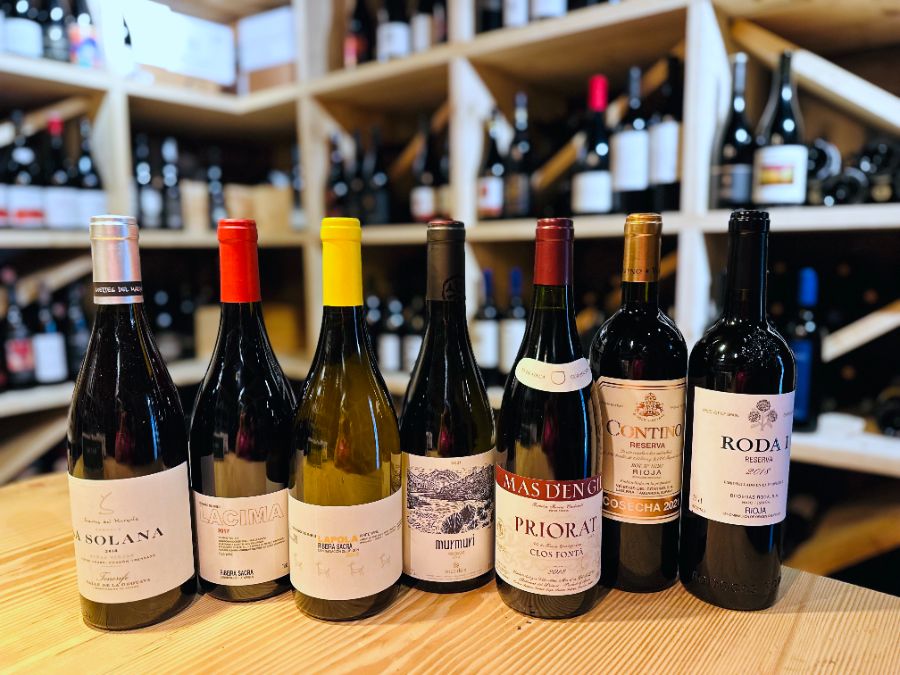
The sommelière and her partner manage three additional hotels and restaurants, where they boast strong sales of Spanish wines by the glass, including long-standing house wines from Menade in Rueda and Exopto in Rioja. “Spain offers sensational value for money, which is ideal for house wines, whereas Swiss wines are too expensive for this purpose.”
Structural disadvantages for Spain
Wine educator Roger Graf is another Spain aficionado, but he is well aware of the country’s current limitations. Graf teaches sommelier courses for Switzerland’s largest hospitality association, focusing on Italy, Spain, Portugal and the Mediterranean. His students’ perception of Spain is dominated by the reds of Ribera del Duero and Rioja. “They are also somewhat familiar with Priorat and Verdejo, but their general knowledge of Spain is far less extensive than that of Italy and France.”
Graf points to the strong presence of Italian cuisine as a key factor. “Virtually every Swiss village has an Italian restaurant, introducing guests naturally to Italian wines and lifestyle.” Spain, by contrast, lacks a strong culinary presence —a structural disadvantage that makes it harder to build emotional connections with consumers.
Graf also notes that Spain’s two best-known regions are both dominated by Tempranillo, whereas Italy’s and France’s top areas represent a much wider range of styles and varieties. “Wine enthusiasts know Spain is changing, but most consumers still view the country as essentially one-grape: Tempranillo.”
Will a shifting Spanish identity pay off in the long run?
To give his students a broader perspective, Graf showcases wines from producers such as Domaines Lupier in Navarra, Nin-Ortiz in Priorat, Sierra de Toloño in Rioja and Mesquida Mora in Mallorca. “The students are completely surprised, saying they would never identify these as Spanish in a blind tasting,” he recalls. “People still associate Spain with opulent reds with vanilla notes. No one links the freshness and purity of Sierra de Toloño with Rioja.”
Graf thinks it will take time for Spain to shake off these old stereotypes, pointing to Priorat’s shift from opulent, ripe reds towards more elegant, refined wines. “This stylistic evolution requires explanation, which is one reason why Priorat wines are not selling as well today as in previous years,” he notes. “Swiss people became familiar with Priorat through that opulent style. Now, it’s almost as if you have to rediscover the region all over again.”
Nevertheless, Graf believes Spain’s move towards freshness and finesse will pay off in the long run, pointing to a gradual change in Swiss drinking habits. “Amarone, the epitome of opulence and concentration, is no longer selling nearly as well as it used to,” he says. “Even though Switzerland remains a market for bold reds, things are slowly shifting.” Carlo Wismer of upscale gastronomy distributor Brancaia shares this optimism. “Compared with Italy, France and Austria, Spanish wines offer the greatest growth potential, because so much is still undiscovered and the new styles align with contemporary tastes.”

Author
Thomas Götz
Thomas Götz is a wine journalist, blogger and educator based in Spain and Germany. He has been writing about Spanish wines for various German wine magazines since 2016.
Previous Post