The first article in this series on the state of Spanish wine in Germany examined the vast volume of bulk wine crossing the borders each year. This second instalment turns to the mid-range and premium segments, where the picture is far more complex.
Spain continues to lag behind several European competitors in these higher-value markets. However, a slow, gradual shift is under way as more German importers, sommeliers and specialist retailers begin to recognise the diversity and depth of Spain’s wine regions, grape varieties, climates, soils and styles, which range from classic to funky, from bold to elegant, and from charming to razor-sharp acidity.
Spanish wines have earned a reputation for offering excellent value at every price point, which can be a significant advantage in Germany's notoriously price-sensitive market. Klaus Herrmann, founder of the leading trade magazine Wein+Markt, echoes a widely held view in the German wine sector: "For the same price, Spanish wines are almost always superior to French or Italian wines, whether entry-level, medium-range or high-end. Spain no longer has to fear anyone."
Lack of prestige
Nevertheless, when it comes to mid-range and premium wines, German consumers are far more likely to choose Italian or French bottles. "It’s the lack of prestige. Spain must work on its image and do a better job communicating its new styles and avant-garde," says Toni Aguado, B2B sales manager at wine distributor Pinard-de-Picard. Aguado imports some of Spain’s most exciting producers, including Envínate, Bodegas Cerrón, Esmeralda García, Telmo Rodríguez and Cinco Leguas. However, he finds Spanish fine wine much harder to sell than Burgundy, Barolo or German GG. "Spain offers Cru-level quality at the price of village wines from other countries, and yet the wines are difficult to sell. This is due to the lack of awareness in Germany about the new developments in Spain," says Aguado.
Germany’s ongoing economic crisis, with no growth for three years, further complicates the picture, explains Aguado. "Consumption is more selective. Most Spanish wines fall behind because they lack prestige. Every bottle requires active selling." Despite this, he recently listed vigneron Clos Lebai. "We can offer it to customers asking for Ribera del Duero, and also to those looking for elegant wines, as it is an elegant type of Ribera."
Daniel Varela, co-owner of Viniberica wine distribution, cites historical reasons for Spain’s lag in the premium segment: "France and Italy have served the German premium market for 70 years, whereas Spain has only done so for 20. It will take another 20 years for Spain to establish itself beyond the classic regions of Rioja and Ribera del Duero. But it is only a matter of time, because the wine quality is outstanding."
Not just bold reds anymore
Varela works with around 50 Spanish wine producers, selling mainly to high-end restaurants, as well as online and through a retail shop. "Germans typically associate Spain with bold reds and ask for Rioja," he says. "But sommeliers and wine aficionados have embraced Spain’s broader offerings and are enthusiastic about the new styles. Some Garnachas are so elegant and fresh that even Pinot Noir producers struggle to compete."
He has identified growing interest among German sommeliers in three areas. "Some new styles of still white wines sell really well, such as the unfortified UBE wines of Ramiro Ibañez in Jerez and the old-vine Verdejos of Cantalapiedra, which can be an alternative to white Burgundy." Varela also mentions new wave Garnachas, citing Bodegas Frontonio in VT Valdejalón and Venus La Universal in DO Montsant. The third area is aged wines. "Producers like Can Ràfols dels Caus, Remelluri and Roda have impressive libraries of older vintages that sommeliers admire and which are also affordably priced."
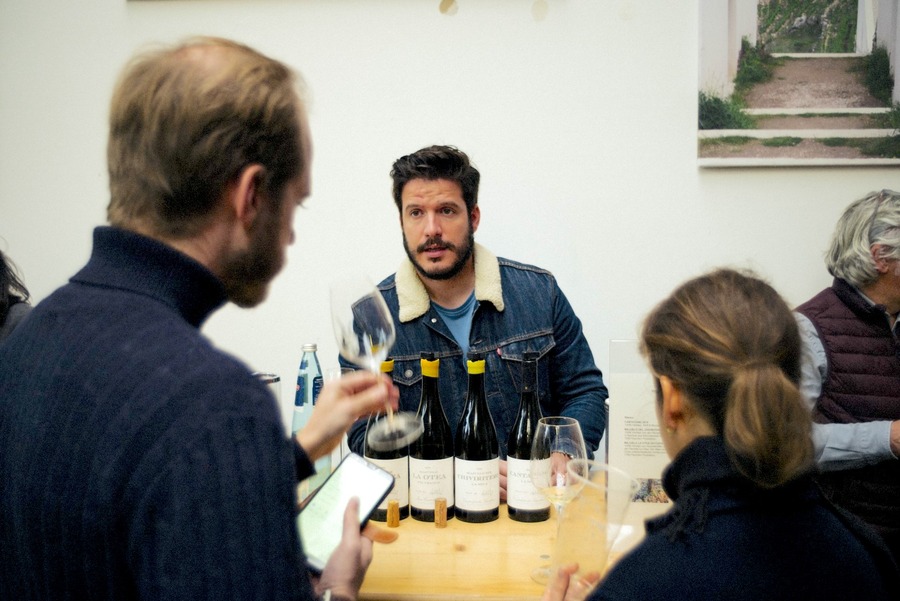
A prime example of Spain’s fine wine potential is Herder Zehn, a wine bar in Freiberg owned by Master of Wine Janek Schumann. He caters to discerning clients willing to spend money on wine. "Most guests are open to exploring different regions, grape varieties and styles. Spain excels here, with fascinating projects right across the country, even on the islands", Schumann explains.
Whites on the rise
With over 20% turnover share, Spain performs well above average at Herder Zehn thanks to throrough groundwork. Schumann often invites Spanish producers and regularly organizes wine tastings focused on the country. Interestingly, Spanish whites outsell reds at his bar. "Galician whites excel across all grape varieties and regions, while unfortified whites from Andalusia are also in demand. We also serve Raventos i Blanc’s blanc de blancs by the glass as a great alternative to Crémant."
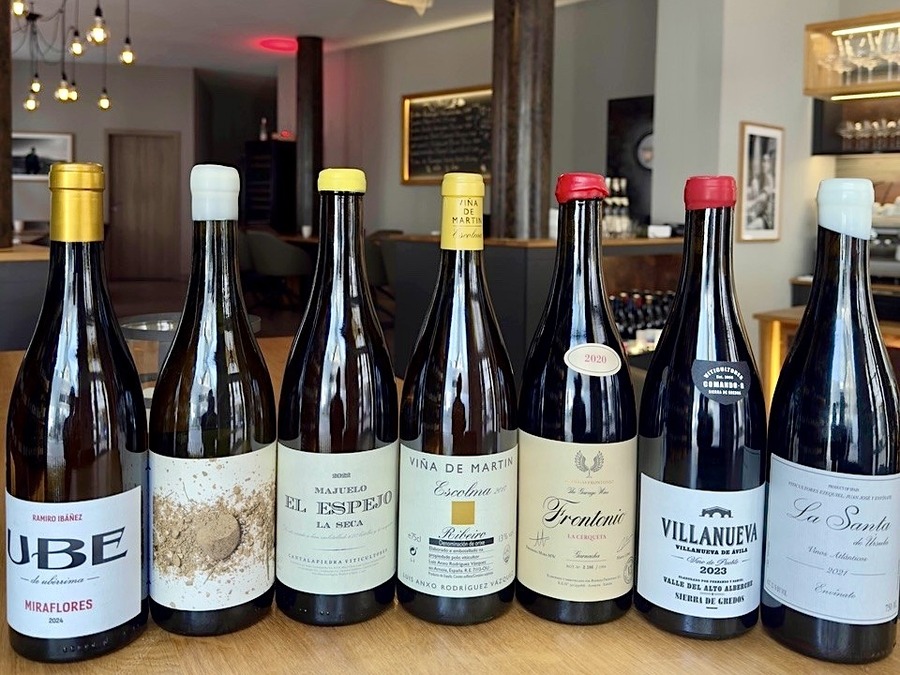
White Riojas, however, struggle in comparison, Schumann notes. "Maybe it's because they are often restrained in fruit expression and more structured, which some customers may find difficult. "He also mentions that some guests hold prejudices against Rioja and are therefore reluctant to try new producers. "Garnacha is more popular, especially Priorat. Some knowledgeable guests also opt for a bottle of Comando G in Sierra de Gredos or Frontonio in Valdejalón. So it’s not tied to a single region."
Other gourmet restaurants are also incorporating 'New Spain' producers into their wine lists. As these names are little known in Germany, they require the recommendation of dedicated sommeliers, such as Stella Marie Fischer at Veronika restaurant in Berlin. Fischer says that wines from López de Heredia Viña Tondonia are particularly popular among her guests, as are those of Vega Sicilia in Ribera del Duero and Pintia in Toro. She adds: "Some guests, however, are cautious about Spanish wines, thinking they are too bold. That’s why we also focus on lighter, elegant styles, like those of Jorge Olivera in Aragón and Raúl Moreno in Jerez, both red and white. Connoisseurs find these wines extremely exciting."
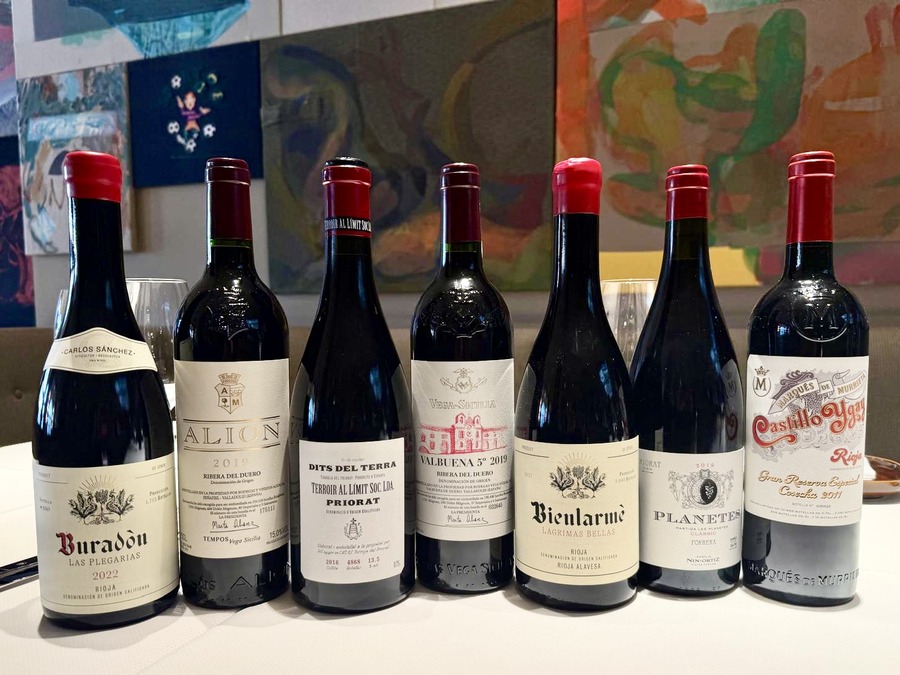
At the Grill Royal restaurant in Hamburg, head sommelier André Nykodym balances classic and new Spain. He regularly serves famous wines such as Castillo Ygay to guests, but he also offers Buradón Blanco from Carlos Sánchez by the glass. "It needs explaining, as white Rioja is not well known in Germany. But once guests try it, they love it, especially with seafood." The best-selling Spanish reds include Valdemonjas in Ribera del Duero, Terroir al Limit and Nin-Ortiz in Priorat, plus Carlos Sánchez in Rioja. Nykodym adds: "Some guests still associate Spain with cheap, jammy reds they may have drunk on holiday there. I always tell them that this is no longer the case; the new generation is producing more elegant, almost Burgundian wines."
Rioja Reserva leads the mid-range
Obviously, there is a considerable gap between Spanish wines sold in the high-end on-trade and those available in supermarkets, many of them bottled in Germany. Much of this middle ground is covered by major online retailers such as Vinos.de (part of Hawesko group, one of Europe's largest wine retailers) and Silkes Weinkeller. While these also offer premium wines such as Pingus, Sorte O Soro and Clos Mogador, most of their sales fall within the €8-25 price range.
"We are noticing a slight decline in sales of Spanish wines, whereas Italian wines are growing," says Katja Felke, CEO of Silkes Weinkeller. Founded in 1999 as an online shop for Spanish wine, the company has evolved into a major e-commerce retailer with an international portfolio, also running the Meravino online shop and the B2B platform Vino Commerce. Felke describes how Germany’s economic woes are influencing purchasing habits: "People consume less, therefore the wine trade is reluctant to try new things. At the moment, we all compete for customers —and promoting well-known Italian brands and regions attracts significantly more new ones."
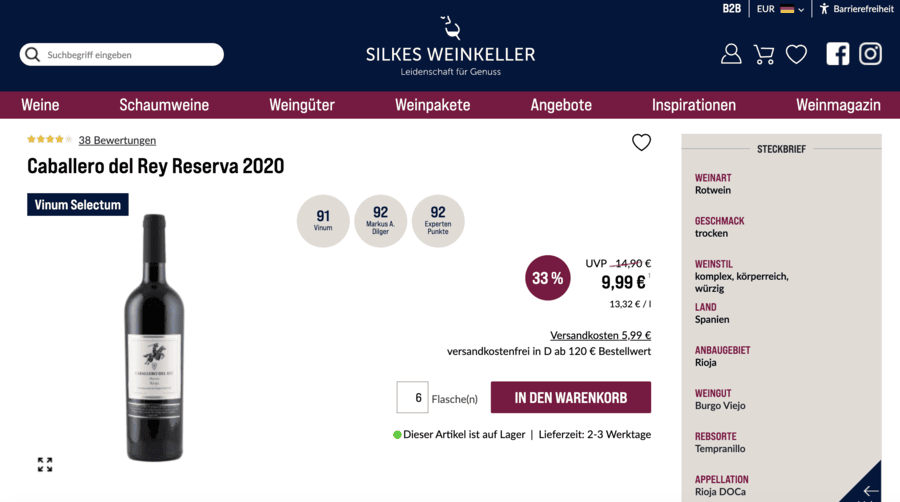
Nevertheless, Felke says some Spanish wines, especially Rioja and its Reserva category, remain in high demand. Top-sellers include Cune Viña Real Reserva and Caballero del Rey Reserva, a private label produced by Bodegas Burgo Viejo in Rioja Oriental for Silkes Weinkeller.
The Crianza category, on the other hand, is declining. "Since many Reservas are inexpensive, customers prefer to spend slightly more and opt for Reserva, which enjoys a better reputation." German consumers also seek bold, fruity reds offering good value. "We promote Monastrell from Jumilla as an alternative to Italy’s Primitivo. Jumilla is therefore growing in popularity, and we receive many repeat orders, for instance for Juan Gil wines." As for whites, Rueda is the leading region, with Basa Blanco from Telmo Rodríguez a popular choice. Meanwhile, Rías Baixas has also seen solid recent growth. "Everything else from Spain is rather subdued," Felke adds.
Spain needs compelling storytelling
SWL received similar feedback from other German mid-price retailers, who report Rioja and Reserva are the top-selling region and category, with some Levante and Ebro river regions also contributing thanks to fruity, good-value reds.
Large parts of Spain, however, remain a blank slate for most German wine consumers. Felke notes: "Regions like Sierra de Gredos and grape varieties such as Mencía and Godello are special but niche. We promote these wines as authentic and full of character, telling the story of rediscovered vineyards and passionate vignerons. Some customers respond to this emotional storytelling."
This shows that Spain needs to create new, engaging narratives for its wines, which is challenging given its vast diversity. The country boasts 105 Protected Designations of Origin and internationally acclaimed wines, while simultaneously producing huge volumes of cheap white bulk wine and is often perceived as the land of bold, inexpensive reds. Yet this contrast presents Spain with an opportunity: unlike far better-known France and Italy, it still has abundant hidden potential to surprise and impress German wine lovers.

Author
Thomas Götz
Thomas Götz is a wine journalist, blogger and educator based in Spain and Germany. He has been writing about Spanish wines for various German wine magazines since 2016.

Previous Post