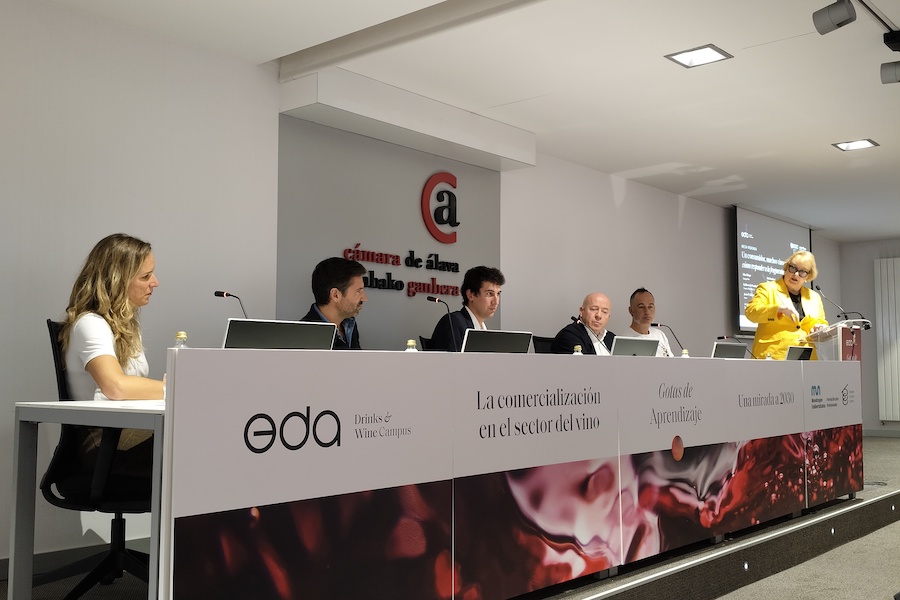
The future of wine and how it will be sold took centre stage at a new edition of Gotas de Aprendizaje, hosted last week in Vitoria-Gasteiz by EDA Drinks & Wine Campus, the education centre backed by Basque Culinary Center and several Basque institutions. Sarah Jane Evans MW acted as master of ceremonies and moderated a panel discussion entitled “One Consumer, Many Wines: How to Respond to Fragmentation in 2030.”
The debate gathered Guillermo de Aranzabal Bittner (La Rioja Alta, S.A.), Alba Abiega (formerly at Tesla, now with her own project in Ribera del Duero), Arturo Villanueva (BIBA Ardoak, a wine merchant specialised in Basque wines), Richi Arambarri (Vintae) and Javier R. de Galarreta (Araex). The discussion revolved around a shared diagnosis: the market is splintering, consumption is falling, and the trade needs new tools to stay connected to the consumer.
For Javier R. de Galarreta, understanding who actually buys wine is the essential starting point. “Without knowing the buyer, you can’t organise the offer,” he warned. He also stressed that the alcohol-free segment will be unavoidable and called for stronger outreach: “Spain’s perceived value remains lower than that of other countries; we need to tell our story better abroad.”
Arturo Villanueva argued that fragmentation, far from being a threat, creates opportunities for producers who work with a clear identity. He highlighted wine’s cultural weight and its ability to resonate with contemporary sensibilities: “We need to explain to younger generations that wine isn’t just another drink; it’s culture, place and values.” Rebuilding community, he said, is part of the challenge: “We must restore the social fabric in rural areas. We’ve put too many barriers around wine.”
Offering the perspective of a new winery in Ribera del Duero, Alba Abiega called for greater clarity: fewer brands and more recognisable messages. Her own project, which started with a single wine and will soon include two more now ageing in the cellar, aims to avoid excessive segmentation. “We prefer a small number of labels with shared elements that clearly identify us.” She also underlined the wine distributors’ role as a guide in reaching consumers: “We work in 360 degrees; looking after the entire value chain is crucial.”
Guillermo de Aranzabal detailed La Rioja Alta S.A.’s premiumisation strategy, anchored in 13 brands —“more than enough”, he said, for the niche they target. He mentioned El Camino, their recently launched €100 red under the Torre de Oña label, as an example of a simple philosophy: “Let people drink less, but drink better.” The margins from premiumisation, he noted, are reinvested in stronger commercial control both in Spain and abroad. In the US, the group now operates its own warehouse in California to enable a more direct relationship with customers. Their private wine club, which accounts for 25% of direct-to-consumer sales, shows how valuable that connection has become.
Richi Arambarri also emphasised emotional ties with brands but added a note of concern: “The biggest threat to wine today is the demonisation of alcohol. Consumption will keep dropping over the next five years.” Even so, he sees room for optimism: “The great thing about wine is its diversity. Every winery must look inward and find its own path. Premiumisation is a natural evolution.” He also criticised the administration: “The market wants small, singular projects, but the obstacles are huge.”
Before the roundtable on consumer fragmentation, the programme included a panel discussion on the most common mistakes in wine marketing messages. The speakers —featuring Adolfo Fernández of Bodeboca; Alba and Sofía Atienza of Lacrima Terrae; sommelier and educator Alberto Ruffoni; and Philippe Eberlé, managing director of Primeras Marcas—explored how strategies, communication and trends shift in an ever-changing landscape. It was moderated by the author of this piece.
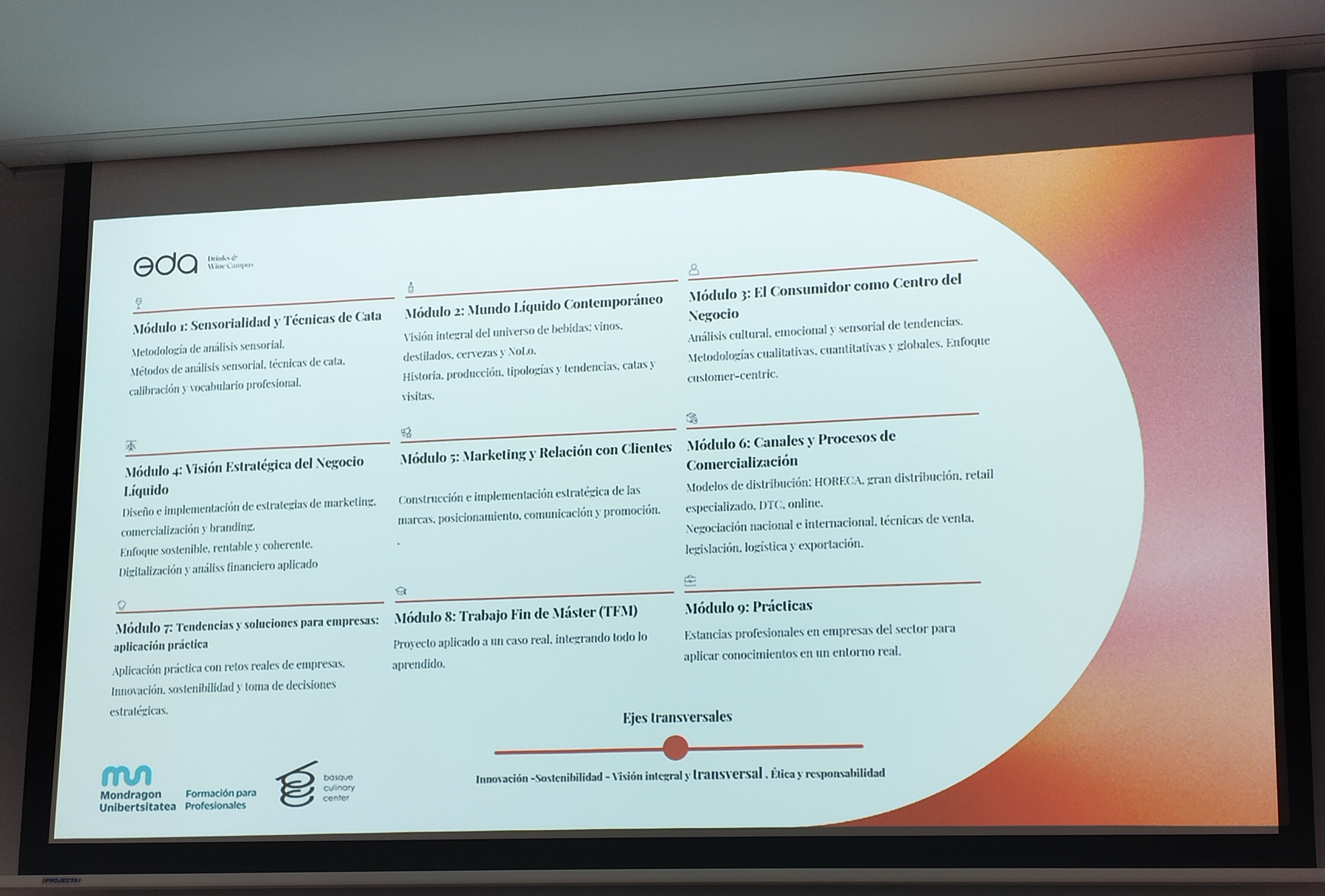
The day also included remarks from Leonardo Martín of Michael Page on the professionalisation of teams, and the announcement of the future Master’s in Wine & Beverage Marketing, Sales and Business, due to launch in 2026 in San Sebastián and later in Vitoria once EDA’s new premises —still under construction— open their doors. The programme will be coordinated by Ana López-Cano, who stressed its mission: “to train professionals with strategic vision, real market knowledge and the ability to execute with good judgement in an increasingly complex sector.”

Author
Yolanda Ortiz de Arri
A journalist with over 25 years' experience in national and international media. WSET3, wine educator and translator

Previous Post

Next Post
Ochenta y Siete Cubos Pampolat 2023 Red