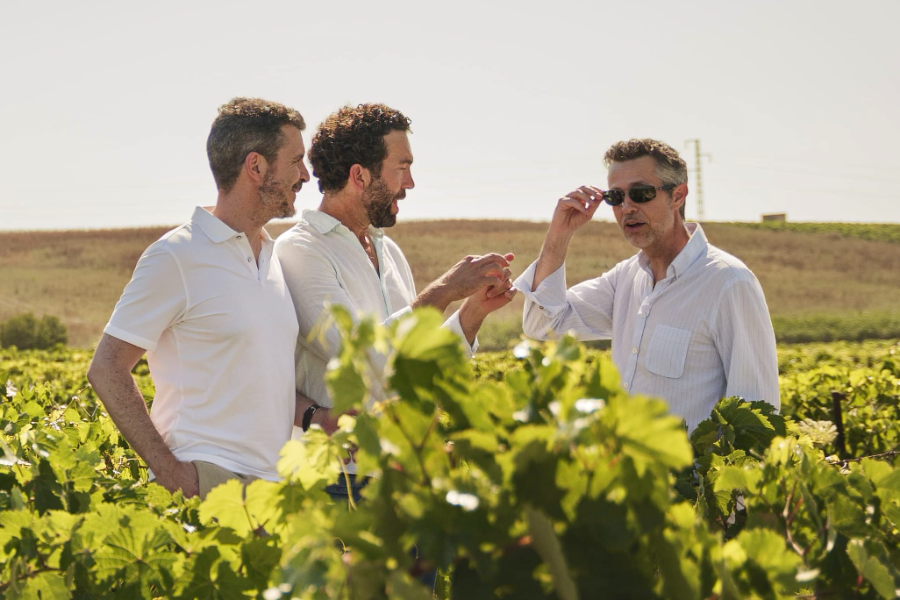
The García family group, whose roots lie in Castilla y León, has acquired David Léclapart’s shareholding in Muchada Léclapart, the Sanlúcar de Barrameda-based winery founded in 2016 by Alejandro Muchada and the renowned biodynamic Champagne grower.
While the partnership may appear surprising at first glance, given the difference in scale and geographical distance between the two estates, they share a strong commitment to biodynamic viticulture. Biodynamics has been at the heart of Muchada Léclapart since its inception in 2016, while Mauro began its own conversion in 2015, culminating in the certification of 280 hectares of vineyards three years ago.
“We have always admired Alejandro’s wines, but when we got to know him, we realised we shared many of the same values and sensitivities,” says Alberto García of Mauro. Having acquired a 50% stake following Léclapart’s departure for family reasons, the García family intends to maintain continuity and preserve the winery’s original name.
A viticultural meeting of minds
The connection between the two parties began at a biodynamics conference organised by Entheos Bio at Bodegas Peñalba López in Ribera del Duero in April last year. A few weeks later, Mauro’s production director, David Cancela, and winemaker Andrea Vuelta visited Muchada Léclapart, where they learned of Léclapart’s intention to leave the project.
Alberto and Eduardo García, the second generation at the helm of a group with interests in Ribera del Duero, Toro, Bierzo and Rioja, visited Alejandro in May. Alberto then took advantage of a previously scheduled trip to Champagne to discuss the matter directly with Léclapart.
“The whole transaction was completed in just six weeks in a very natural, fluid and organic way,” says Alberto.
“For me, it was essential that any new partner worked biodynamically because that is the foundation of everything I do,” explains Alejandro Muchada, who visited his future partners’ vineyards in Castilla y León before the agreement was signed. The human dimension was equally important. “Eduardo and Alberto are honest, humble people with strong values, and I believe they will help consolidate the work we have been doing over the past decade.”
Muchada also appreciated the García family’s willingness to remain equal partners. “Others wanted 51%,” he notes. Equally important was their decision not to alter the project. “They like the winery as it is and understand why we want to continue working on an artisanal scale. At the same time, they have a traditional distribution network, so it will be interesting to introduce more people to the world of Spanish white wines and the Sherry region.”
“In the same way that figures such as Peter Sisseck, Dirk Niepoort and Marcelo Retamal are already here, outside voices bring fresh ideas, technical expertise and access to distribution to the region.”
Alberto García echoes that sentiment. “David Léclapart was the inspiration and founder, and Alejandro continues in that tradition. We are not coming here to change anything but to learn and build on what has already been achieved. We like the style of the wines —unfortified, without flor, and respectful of Palomino’s subtle character.”
From reds to whites
For anyone who has followed the García family’s trajectory over recent years, Mauro’s arrival in the Sherry region may not seem quite so unexpected.
Having consolidated its flagship estates, Mauro in Castilla y León and San Román in Toro, the family’s subsequent ventures have all favoured quality over scale: Garmón in Ribera del Duero (65,000 bottles), Baynos in Rioja (15,000 bottles) and Valeyo in Bierzo (25,000 bottles, including Mauro Godello once it enters the appellation from the 2026 vintage).
The family has often established itself in new regions through local partners and collaborators. In Rioja, for example, Tom Puyaubert of Bodegas Exopto played a key role during the project’s formative years. In Bierzo, the family partnered with Gregory Pérez, acquiring a 30% stake in Bodegas Mengoba.
Their relationship with the French-born producer dates back to the time when Pérez studied alongside Eduardo García in Bordeaux. Gregory later worked at Luna Beberide in Bierzo during the period when the García family partnered with the winery on the red wine Paixar.
“When you move into other regions, it is important to recognise your limitations,” says Alberto. “It helps to have a vineyard base, an existing structure and the reassurance that the project is in capable hands.”
The investment in Muchada Léclapart also strengthens the García family’s position in the white wine category, adding a new origin to the white wines they already produce in Rioja, Toro and Bierzo from Viura, Malvasía Castellana and Godello respectively.
“We were motivated more by our admiration for the project than by any strategic considerations,” Alberto explains. “But it fits naturally with what we do. We already make a great deal of red wine, and this aligns perfectly with our vision of site-driven whites made from indigenous varieties, with ageing potential and complexity.”
After leasing an additional hectare in 2025 to offset production losses caused by drought, Alejandro Muchada and his team of three now farm five hectares of traditional Palomino vineyards in Sanlúcar de Barrameda, of which 2.5 hectares are owned by the estate.

Author
Amaya Cervera
A wine journalist with almost 30 years' experience, she is the founder of the award-winning Spanish Wine Lover website. In 2023, she won the National Gastronomy Award for Gastronomic Communication
Next Post
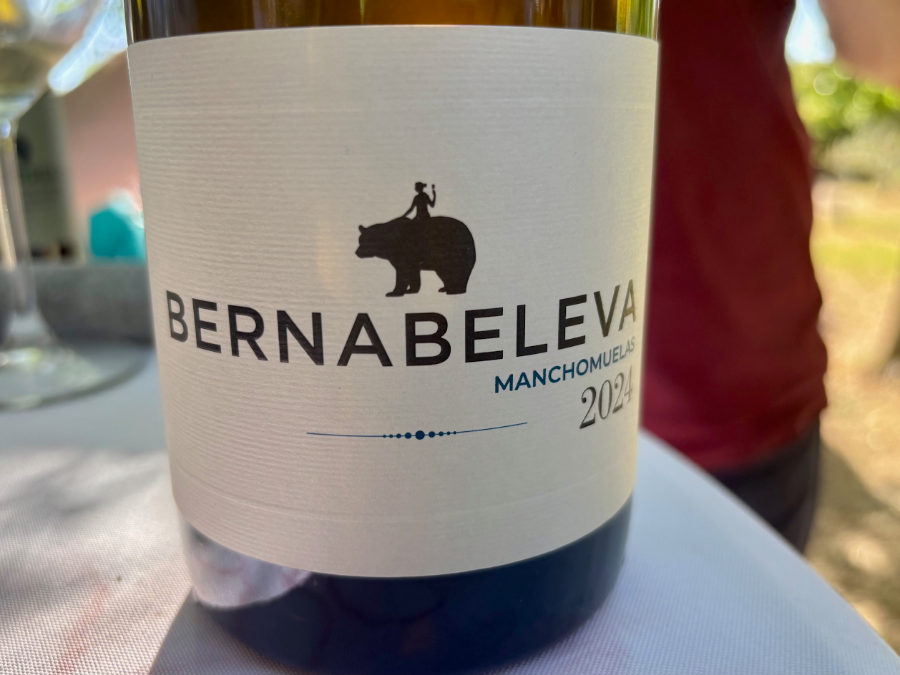
Bernabeleva Manchomuelas 2024 White