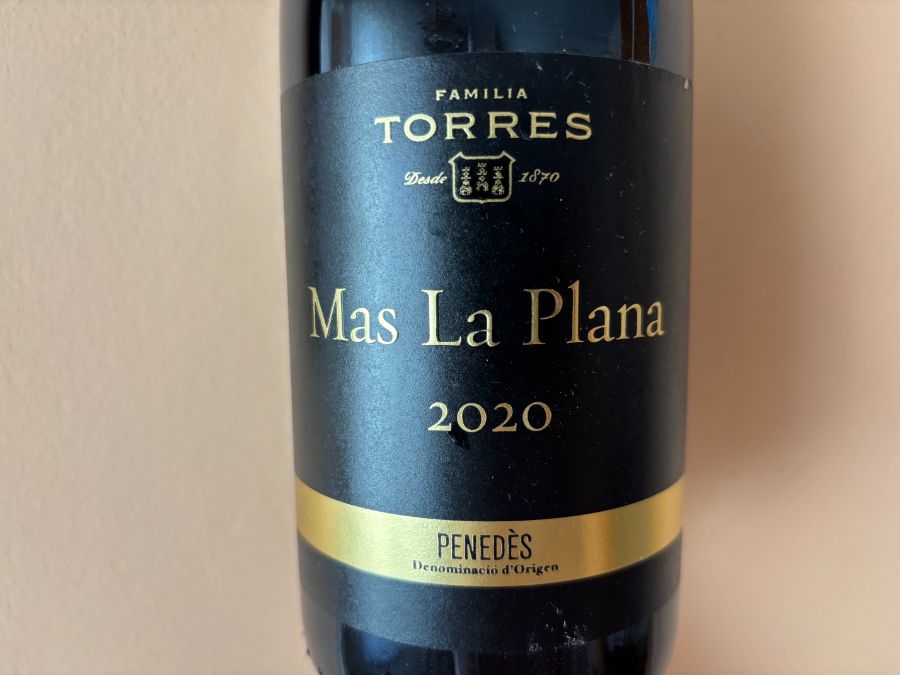
While it may not be the best time for international grape varieties in Spain, classic names such as Mas La Plana –the country’s most internationally renowned Cabernet Sauvignon– continue to deliver wonderful complexity and elegance. The 2020 vintage, marking 50 years since the wine’s debut, deserves a place on this year's Christmas drinking list.
The anniversary provides an ideal opportunity to revisit the history of Torres' most iconic brand from Penedès. Alongside Jean Leon –now also owned by Torres– Mas La Plana was the first modern Cabernet from Catalonia to gain international recognition.
Just as Sassicaia —the celebrated Bordeaux blend made by the Incisa della Rocchetta family in Bolgheri, Tuscany— triumphed over wines from around the world in a blind tasting organised by British magazine Decanter in 1978, the first vintage of Mas La Plana took top honours at the Wine Olympics, hosted by French publication Gault & Millau in Paris the following year. These wine competitions, which flourished in the wake of the famous Judgement of Paris in 1976, when the finest reds from Bordeaux and California went head-to-head, helped boost the standing of Bordeaux-style reds from both Europe and the New World.
The inaugural 1970 vintage of Mas La Plana was released under the name Gran Coronas Black Label Gran Reserva and labelled 'dry'. Conceived and developed by Miguel A. Torres, the fourth generation of the family to join the business in the 1960s, it was also the winery's first single-vineyard wine. Planting began in the mid-1960s and continued until 1979. Winning the Wine Olympics was a remarkable achievement for a red made from young vines. Today, Mas La Plana covers 29 hectares, farmed using organic and regenerative practices.
Initially, small percentages of local grape varieties were blended with Cabernet. The first vintages included small amounts of Cariñena and Ull de Llebre (Tempranillo), while the 1975 vintage saw the addition of 10% Cabernet Franc. The wine eventually became a pure Cabernet Sauvignon.
In the 1970s, yields ranged from 50 to 60 hectolitres per hectare. Maceration lasted two weeks, followed by six months in new American oak barrels and further ageingt in seasoned oak until it reached 18 months in total. Alcohol levels in this decade did not exceed 12.5% abv; the wines relied largely on acidity and had a distinctive aromatic character.
In the 1980s, yields fell and longer maceration times were introduced. French oak barrels gradually replaced American oak, becoming dominant by the early 1990s. During this period, alcohol levels rose above 13% abv, a trend that continued until they reached today’s 14.5%. The 2000s probably produced the most opulent, fully ripe vintages, reflecting the prevailing style of the time. Subsequently, extraction was moderated and the amount of new oak reduced. Larger ageing vessels, including foudres, were introduced, and some batches are now aged in stainless steel tanks. Since the late 2000s, Mas La Plana and the family's other estate wines have been produced at the Waltraud winery.
The 2020 vintage was fermented in 10,000-litre vats and aged for 18 months in French oak barrels and foudres. The year of the pandemic saw generous spring rainfall and moderate summer temperatures, punctuated by a few heatwaves that accelerated the harvest. Storms in August necessitated careful selection in the vineyard, resulting in a smaller crop.
This is an especially refined Mas La Plana, with notes of ripe redcurrant and Mediterranean woodland. More intense than powerful, it displays ripe tannins with a silky texture, and an excellent aromatic depth. It can therefore be enjoyed now although it has the structure to age gracefully. Above all, it stands out for its elegance and length.
14,5% abv.
€82
136.861 bottles
Score: 94

Author
Amaya Cervera
A wine journalist with almost 30 years' experience, she is the founder of the award-winning Spanish Wine Lover website. In 2023, she won the National Gastronomy Award for Gastronomic Communication