Beyond the high walls and watchtowers of Puerto III, one of Spain’s largest prisons, the Áspera family embarked on an exciting new chapter in 2007 when they bought the old Olivar de Forlón estate in Balbaína Baja. Located seven kilometres from the Atlantic, on the road between Jerez and Rota, the property once belonged to Peter Furlong, a British merchant who grew olives and vines here in the 18th century.
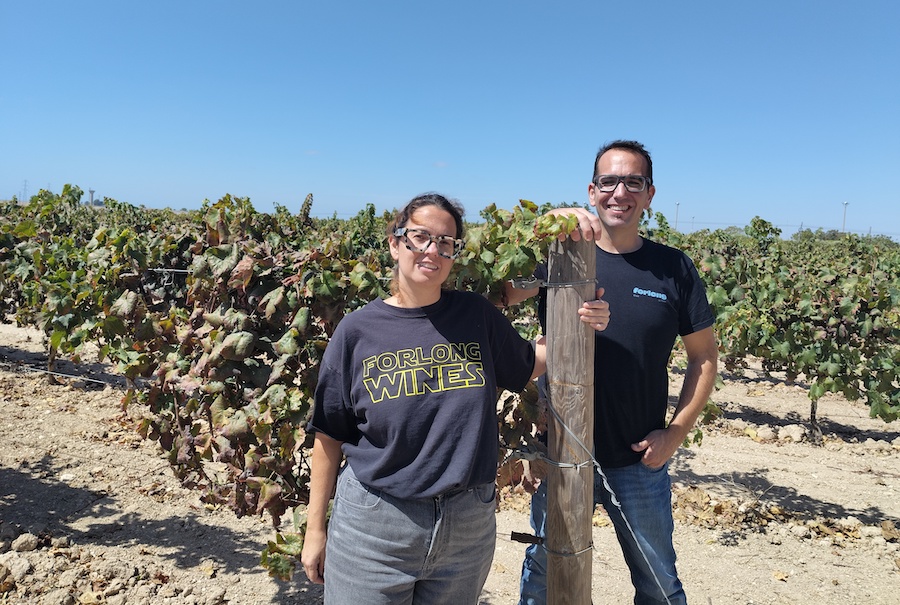
“When we arrived, Peter Furlong’s old vineyard house was in ruins. All that remained was the big walnut tree by the car park, the laurel tree and a couple of olive trees. Everything you see now is what we’ve planted since,” says Alejandro Narváez, raising his voice above the roar of Harrier jets from the nearby Rota Naval Base as they fly over the estate. He owns the property with his life partner, Rocío Áspera. The seven-hectare vineyard forms part of a historic pago in Balbaína Baja that once covered some 300 hectares.
Rocío’s father, advised by Manuel Bustillo, a viticulturist and technical specialist at the Rancho de la Merced research station, planted one hectare with as many as 16 different varieties, from Palomino and Chardonnay to Merlot and table grapes. At first, it was little more than a hobby. Neither Alejandro, who had studied marketing, nor Rocío, a business graduate, nor her father, who worked in real estate, expected to make a living from vines. But their first experimental winemaking venture in 2009 sparked their interest, prompting the couple to study oenology and learn the trade.
What began as a weekend pastime has become one of the most dynamic wine projects in El Puerto de Santa María. Forlong now produces around 80,000 bottles a year, with a dozen labels spanning whites, reds, sparkling wines and bottlings inspired by traditional styles. All fall under the Vino de la Tierra de Cádiz geographical indication. Rocío spent four years learning alongside Willy Pérez, while Alejandro headed to France, his mother’s homeland. He worked first at Château d’Aydie in Madiran, south-west France, before moving to Bordeaux in 2012 for two years at Smith-Haut-Lafitte in Pessac-Léognan.
Reds before whites
Having worked with varieties such as Sauvignon Blanc in France, Alejandro returned to El Puerto convinced that white wines should be central to the project. The market, however, had other ideas. Beyond the traditional wines of the Jerez region, attention was focused on Cádiz reds.
The first white-wine trials coincided with Rocío’s time working with Willy Pérez, who was also heavily involved in red wines at the time. One early experiment, a blend of Palomino and Pedro Ximénez that foreshadowed today’s Forlong Blanco, was submitted for a blind tasting with Luis Pérez, Willy’s father, and José María Mateos, then director of the Jerez Oenology Station. Both liked it and encouraged the couple to pursue the idea, championing Palomino as a grape capable of producing distinctive white wines in their own right, rather than serving solely as the base for fortified wines.
Despite their conviction, whites took a back seat to reds during Forlong’s early years. Some initial planting decisions reflected fashion more than the suitability of particular varieties to the Balbaína vineyards. “We still have Syrah and Merlot planted today, but they were fashionable at the time,” Alejandro admits. Both remain in the range.
They also made rosé in 2014, when the style was still unusual in Cádiz. “I can’t say I drank every one of those first bottles, but I did get through a few,” Alejandro jokes. Tastes have changed considerably since then. “Since Covid, demand has grown to the point where we almost double rosé production every year. Look how fashions change!”
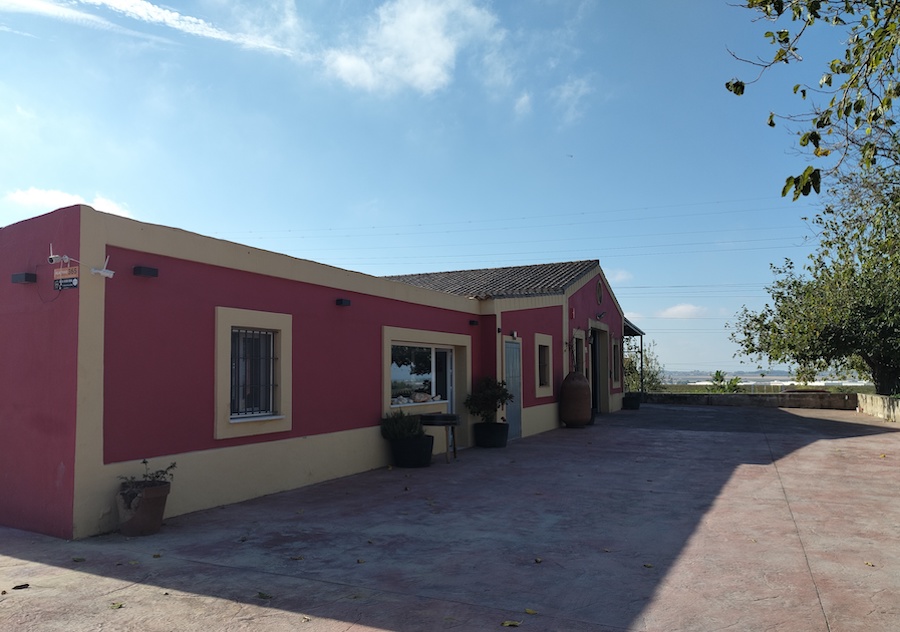
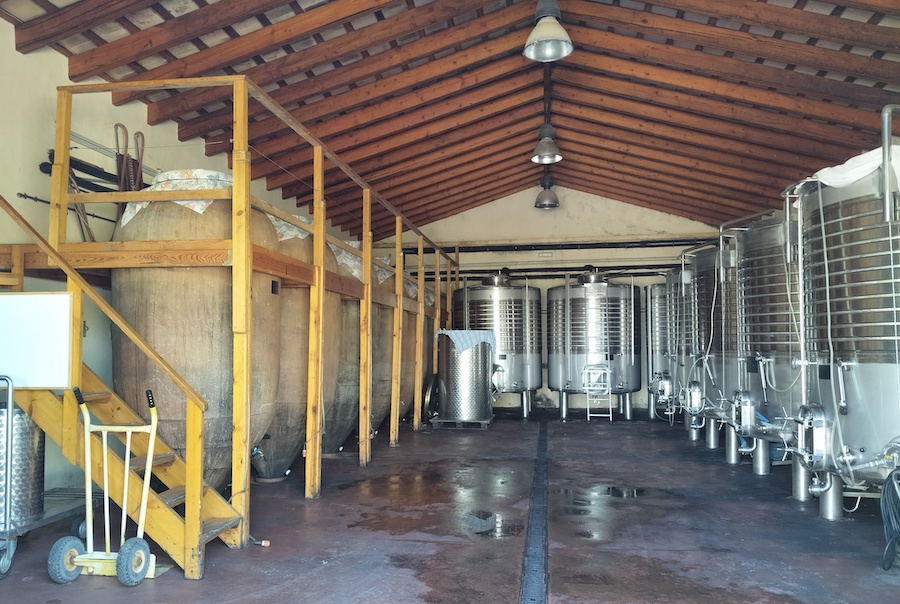
Meanwhile, the winery itself was taking shape. In 2014, they began making wine in Peter Furlong’s old vineyard house, which they effectively rebuilt from scratch. They excavated around 250 sq m for an underground ageing cellar and reconstructed the building, which now houses the office and winemaking facilities. For the roof, they reused Oregon pine beams from the nearby Rota Naval Base, where American servicemen had used the timber as telephone poles until the 1980s.
The first vintages amounted to barely 3,000 bottles. The aim was always to grow enough to make the business viable without losing control of the vineyards and winery. Although the facilities can handle up to 150,000 bottles, production remains voluntarily constrained by the supply of their own grapes. In 2026, one of their largest harvests, they processed around 110,000 kg. Favourable weather and four new hectares coming into production helped, as did Sasha, the couple’s dog, who keeps rabbits from digging holes in the albariza soils.
Learning to work with the land
Forlong’s evolution has involved a gradual search for identity in the vineyard, shaped by trial and error. Influenced by what he had learnt in France, Alejandro allowed spontaneous vegetation to grow between the rows during the first year, believing it would encourage soil life. It soon became clear that the approach was unsuitable for the site. “In the second year, when I saw the vines struggling, I realised it wasn’t going to work here and we had to change it. The soil had become so compacted that we couldn’t even get a cultivator into it,” he recalls.
They now alternate grass-covered rows with cultivated ones, sow grasses to improve soil balance and have learnt to manage problems such as chlorosis, common in Balbaína’s calcareous soils. They have also revived the traditional aserpia, a system of trenches that captures rainwater, and developed their own approach to powdery mildew. Rather than increasing treatments, they devised a tractor attachment that cuts and pulverises the top layer of albariza. The resulting fine powder is sprayed over leaves and bunches to form a protective film. The vineyard is now healthier and more balanced, but the improvement has taken time. “You achieve all this by being patient and understanding where you are,” says Alejandro.
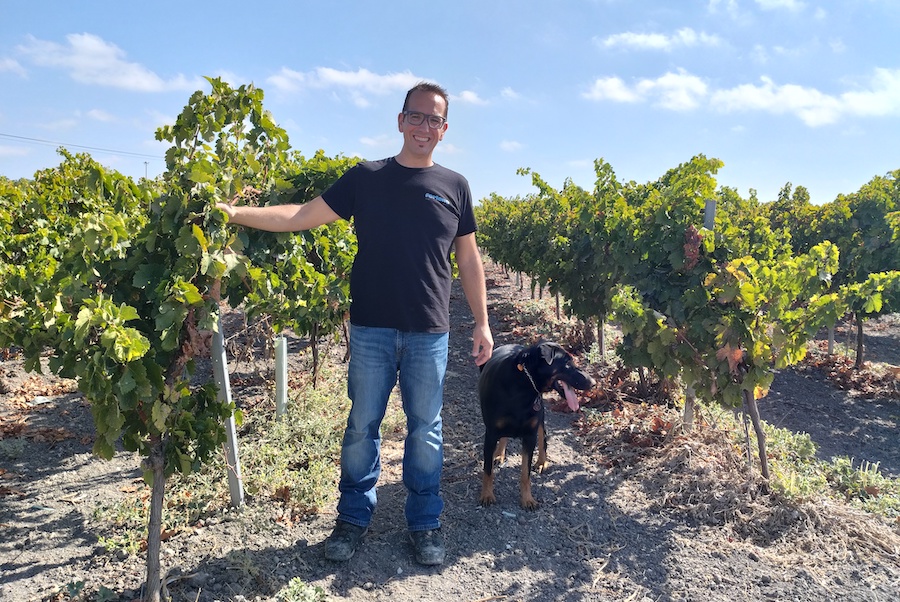
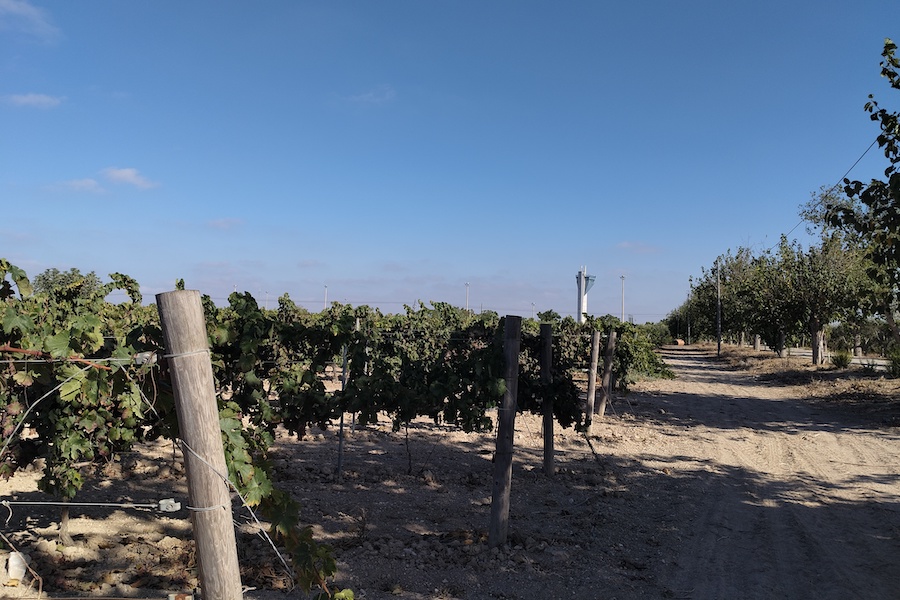
The vineyards are farmed organically, with some biodynamic practices. Seven hectares lie in Balbaína Baja, where surface lustrillo soils contain a mixture of iron and silica. Another seven hectares are in Balbaína Alta, at the Las 14 estate, where coarse albariza and some barajuela predominate. The greater day-to-night temperature variation here delays ripening and produces grapes with lower potential alcohol than those grown closer to the ocean.
All the vines are trained on trellises, which accommodate the region’s traditional vara y pulgar pruning system and help prevent shoots snapping in the strong Levante wind. Trellising could also make mechanisation easier in future, something the couple are considering after struggling to find enough pickers for the 2026 harvest. “We were lucky it didn’t get hot; otherwise, we wouldn’t have picked even a quarter of the crop,” Alejandro says. Machines would not solve every problem, however. “We don’t have the capacity to process that much fruit all at once.”
Palomino at the heart of the range
Forlong’s varietal diversity is partly a legacy of those early plantings, but it also reflects the couple’s interest in local grapes: Palomino, represented by three different clones; Tintilla de Rota; Perruno, which they trialled as a separate wine in 2026; and Pedro Ximénez, which returns to the Forlong Blanco blend in the 2026 vintage after several years as a single-variety wine.
With around 28,000 bottles, Forlong Blanco (€12) accounts for almost a third of the winery’s output. The aim is to make an accessible white without sacrificing the saline character and texture imparted by the soils of Balbaína Baja. Bringing Pedro Ximénez back into the blend also reconnects with the winery’s earliest bottlings. “People who knew us from the beginning kept asking us to put PX back in,” Alejandro explains.
Mon Amour (3,000 bottles, €21) offers a more French-inspired expression of Palomino, sourced from the first vineyard planted on the Forlong estate. It ferments in French oak barrels and spends a year on fine lees. Alejandro experimented with bâtonnage in the first vintage but abandoned the practice. “We felt it masked too much of the wine’s sapidity, which is what gives it freshness. Since then, we’ve always left the lees undisturbed.”
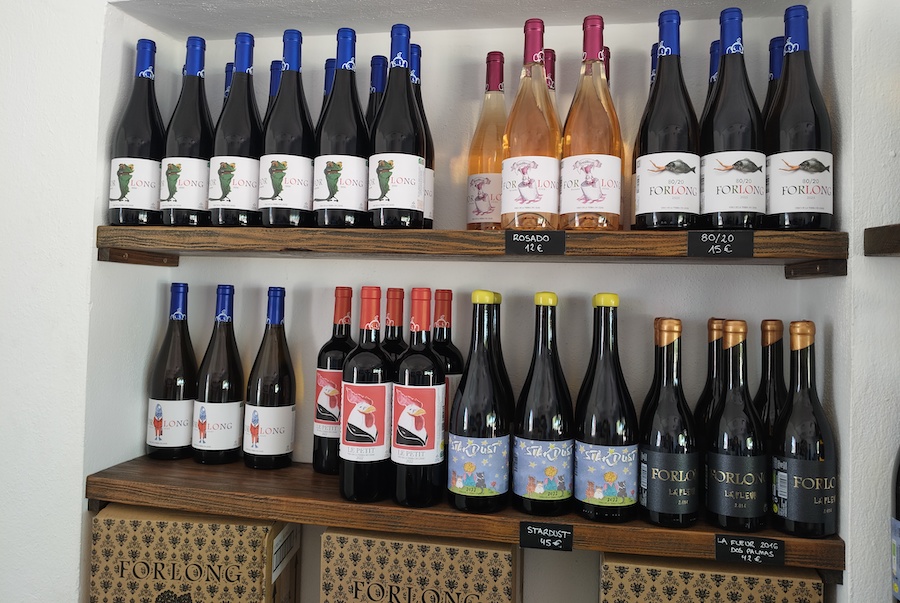
The range’s most unconventional wine is 80/20 (2,000 bottles, €15), an orange wine made from Palomino, macerated for around 40 days with Pedro Ximénez skins in amphorae. It is bottled unfiltered and without added sulphites. The name dates to the first vintage, when 80% of the Palomino was skin-macerated and 20% was not. Although all the grapes are now macerated, they decided to keep the name and the label. The latter was designed by Rocío’s brother, an artistic photographer, who represented the original proportions with a playful image of a gilthead seabream eating a Barbie doll. “It’s a natural orange wine, and people who buy this bottle generally know what they’re getting into,” Alejandro says.
Amigo Imaginario (2,800 bottles, €21) also comes from Palomino, in this case from the roughly 70-year-old Corrales vineyard in Balbaína Alta. The grapes originally went into Forlong Blanco, until Alejandro recognised their potential for something different. After around 30 days of skin maceration in stainless steel, the wine spends two years in old Oloroso casks, combining the fruitier character of an orange wine with the oxidative notes of barrel ageing.
The future of this vineyard is uncertain, however. Low yields and the difficulty of working the site make its grapes almost four times as expensive to produce as those from Balbaína Baja. “I love the area, but we’ve spent years working the soil to encourage more leaf growth. We even spent a fortune on fertiliser, but the soil is very calcareous,” Alejandro says. He is now considering buying another old vineyard in the area, whose grapes he used during the project’s early years and considers more balanced.
Tintilla and beyond
Reds remain part of the range, although they have evolved in style and now sell less readily than they did in the early years. Petit Forlong (18,000 bottles, €12) is the entry-level red, made mainly from Syrah with 10% Tintilla. The Syrah is picked early to retain freshness and acidity, then spends six months in amphorae and another six in used 225-litre French oak barrels. The aim is to encourage micro-oxygenation without allowing the oak to dominate. “Petit Forlong is a democratic, easy-drinking red, made to be enjoyed from an ice bucket on the terraces of Cádiz,” Alejandro explains.
Merlot, by contrast, has proved less suited to the local climate. “It’s a variety I’ve worked with extensively, but it doesn’t do well here. It suffers badly in the hot Levante wind and can shrivel within a couple of days.” The remaining vines go into Forlong Assemblage (6,000 bottles, €15), a more classical-style red blending 60% Merlot with 40% Tintilla. It is not made every year and spends 12 months in 225-litre barrels. Tintilla supplies the blend with nerve and freshness.
Tintilla also features in two other reds. Forlong Tintilla (4,000 bottles, €21) is a single-variety wine aged for six months in amphorae and a further 12 months in French oak. It is made only in warm vintages, when the grapes achieve greater concentration. In years dominated by the Poniente wind, such as 2021 and 2024, the alternative is Terracotta (6,600 bottles, €18), aged solely in amphorae and showing a more primary, floral and spicy profile. Both wines draw on Tintilla’s natural acidity, a valuable asset in a warm area such as Balbaína.
Rosé and bubbles
Forlong Rosado (6,000 bottles, €12) is harvested at just 11.5% potential alcohol, low for Tintilla de Rota, which typically reaches 13.5–14%. As the variety has deeply coloured skins, only the free-run juice from the first hour of pressing is used to achieve a pale rosé. Alejandro highlights its sapid character, alongside notes of fennel and lantana, a shrub widespread in the area.
The winery also makes a sparkling rosé from Tintilla de Rota exclusively for Aponiente, Ángel León’s acclaimed restaurant in El Puerto. The project dates back to 2016 and produces around 1,200 bottles a year.
Forlong Burbuja (3,500 bottles, €21) is their ancestral-method sparkling wine, made from Palomino grown in Balbaína Alta, although the 2026 vintage will also include fruit from Balbaína Baja. The idea of making sparkling wine has roots both in the region —Pedro Domecq was exporting it in the late 19th century— and in Alejandro’s family. His French grandfather, an agronomist, handled international sales for Champagne Pierre Gimonnet.
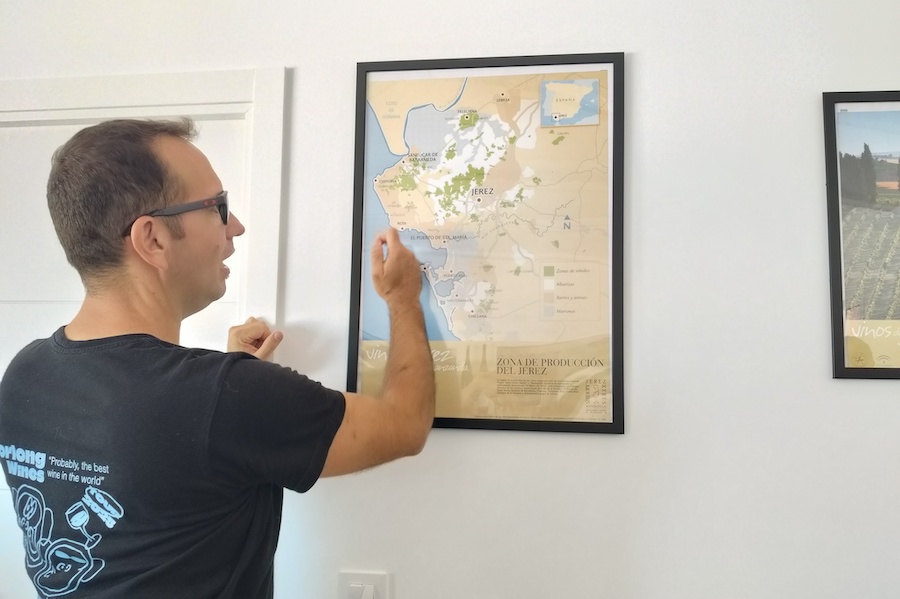
Around 2016, Ale Muchada, who had worked with sparkling wines at Alba in Sanlúcar, offered to teach them how to make their own. They have produced it every year since. The ancestral method comes with risks, as bottles can explode during fermentation. “There’s the Tejero* shot, which has stayed in the ceiling for posterity,” Alejandro jokes, pointing to the mark left by one such mishap. They disgorge the bottles from February or March onwards to achieve a finer style. The result is a light sparkling wine with white-flower notes and a sapid freshness.
A nod to tradition
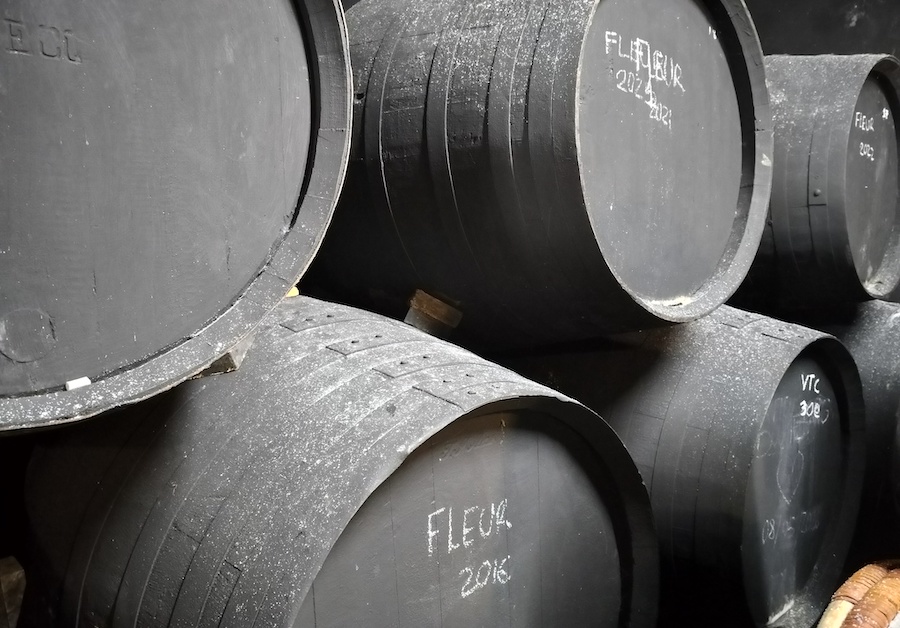
The range also includes wines that draw directly on the traditions of the Jerez region. La Fleur (1,700 bottles, €42) is made from Palomino grapes dried in the sun for two days until they naturally reach 15–16% potential alcohol. The must ferments in casks and develops a veil of flor during static ageing. In essence, it is a vintage fino, although the winery has chosen not to seek DO Jerez status for it.
Since the first vintage in 2015, Forlong has selected its finest, most delicate wines for this line, following the spirit of the traditional palmas classification. The current release, the 2016 vintage, was bottled after six years of ageing and is regarded at the winery as a Dos Palmas. They hope to explore biological ageing further and eventually release a Tres Palmas. Alejandro remains realistic about the economics, however. “I’d love to make more wines like these, but we still need to get the business onto a more comfortable footing,” he admits.
Another wine connected to the region’s renewed interest in vinos de pasto is Stardust (1,200 bottles, €38), a saline Palomino with smoky notes associated with the lustrillo soils of Balbaína Baja. It spends a year in Jerez casks filled to the brim to prevent flor from developing. Rocío and Alejandro accept the Vino de Albariza designation promoted by the Jerez regulatory council, but they also defend the term vino de pasto, historically used for lower-alcohol wines intended to accompany food. “History is what it is, and we can make a case for it. I think that’s important,” Alejandro says.
From El Puerto to the world
Forlong is well received by restaurants and wine bars in Cádiz and is even stocked by the American supermarket at Rota Naval Base. Its reach extends much further, however: the winery sells elsewhere in Spain and exports around half its production. The United States is its leading export market, followed at some distance by Japan.
Wine tourism offers another opportunity in a province that attracts 2.9 million visitors. Until recently, it was a marginal activity at Forlong, but the winery has begun investing in it, with a car park, tasting room, estate olive oil for sale and a dedicated host, Carla, who welcomes visitors throughout the year except during harvest.
The breadth of the range —perhaps too broad, Alejandro admits— is an advantage when showing visitors around. “We welcome people from all over the world. Forlong Blanco is our mainstay, but many have never tried an orange wine, let alone one from Jerez, so we like being able to offer them that diversity.”
*The name refers to Antonio Tejero, the leader of Spain’s failed coup attempt of 23 February 1981, during which gunshots were fired in parliament.

Author
Yolanda Ortiz de Arri
A journalist with over 25 years' experience in national and international media. WSET3, wine educator and translator
Previous Post