Can a cooperative carve out a niche in the high-end wine market? After seven to eight years of vinifying its most special plots separately, San Alejandro in Calatayud has released Loma Franca, a range designed to showcase the parcel that best expresses the vintage or a particular feature deemed worthy of highlighting each year.
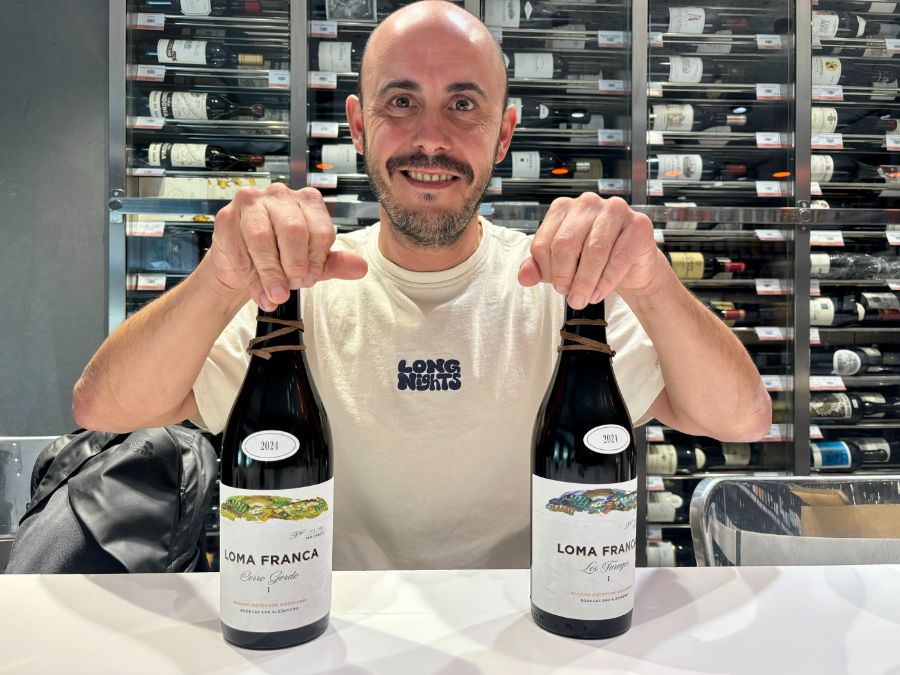
Its partnership with Frontonio has played a significant role in this journey since the producer moved its Cuevas de Arom project from Campo de Borja to San Alejandro’s facilities in Miedes, Zaragoza. In fact, it was only after tasting the cooperative’s historic archive of single vineyard wines that had never been released that Fernando Mora and Mario López were convinced to embark on this collaboration. “These special vineyards never actually became part of any wine until they arrived,” says Juan Vicente ‘Juanvi’ Alcañiz (pictured below), who has been the cooperative’s technical director for 14 years.
All the Cuevas de Arom cuvées (around 30,000 bottles), together with the single-vineyard wines and Clos Baltasar (5,000 bottles), an old-vine mountain Garnacha from Sierra de la Cruz, partially vinified with whole bunches, are produced in separate facilities designed to handle small volumes. At €16, Clos Baltasar was until recently the cooperative’s most expensive wine.
Currently, 20 vineyards are vinified separately. Two are used for Cuevas de Arom's single-vineyard reds, Os Cantals and Tuca Negra. The rest are ageing in vats, casks, stoneware amphorae or large barrels in a new cellar named Atelier, which was inaugurated this year. The idea behind Loma Franca is to select one white and one red plot each year, which will be released under the name of the plot accompanied by the phrase Parajes Históricos Singulares (unique historic sites). As well as reflecting a distinctive feature of the vintage, the aim is to showcase the diversity of soils, elevation and vineyard age over time.
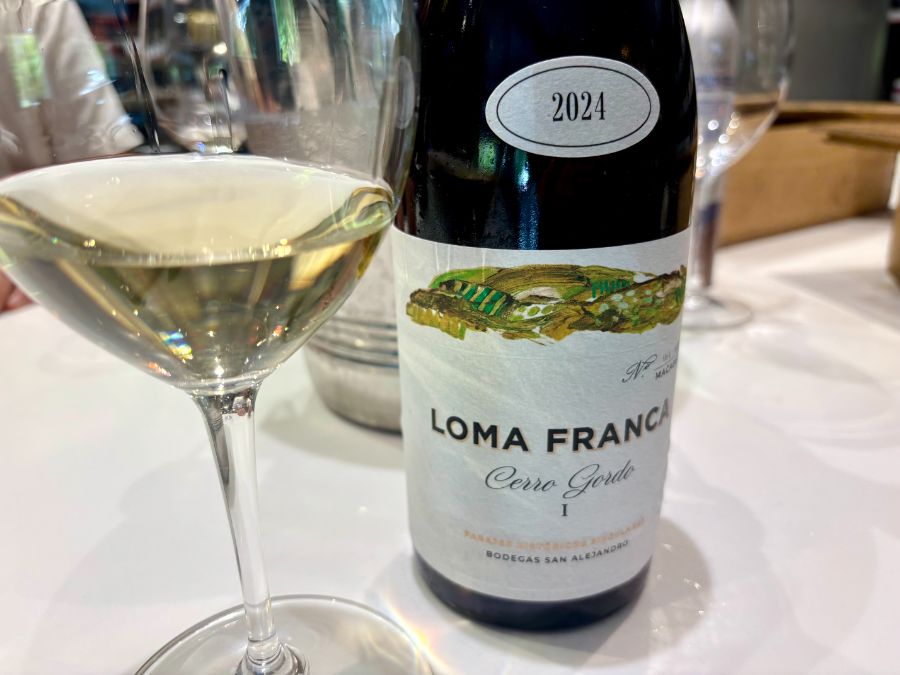
Loma Franca makes its debut with a red Garnacha from Los Tarugos, one of the cooperative’s coolest plots and one of the few to retain freshness in a hot year like 2024, and the white Macabeo (Viura) which is our wine of the week.
This wine comes from a 0.8-hectare, goblet-pruned plot in Cerro Gordo, sitting at 847 m elevation in Miedes, where San Alejandro is located. Planted in 1987, the vineyard belongs to one of the company’s employees. It faces east and is rooted in relatively heavy, deep clay-limestone soils.
Interestingly, San Alejandro has sought to showcase its finest white vineyards on a regular basis, given their decline following the growing popularity of red varieties in the 1990s and 2000s. Out of the nearly 1,000 hectares managed by the cooperative, only 77 are planted with white varieties, all of them Macabeo.
Once the whole bunches are pressed, the must is fermented and aged for eight months in 500-litre French oak barrels, followed by a further four months in stoneware amphorae.
This wine benefits from some aeration, revealing generous white fruit and fresh citrus notes, as well as subtle toasty hints. On the palate, it is expansive, with a long, saline finish. It will be interesting to see how it develops in bottle and to compare it with other notable Macabeo wines currently being produced in Aragon.
Admittedly, the price may deter some consumers, but San Alejandro has taken inspiration from some of Italy’s most renowned cooperatives, such as Produttori del Barbaresco in Piedmont and Terlano and Tramin in Alto Adige, perhaps the region with the highest concentration of high-quality cooperatives in the world. It’s about time that Spanish cooperatives proudly showcase these unique vineyards to the world.
13% abv.
650 bottles
90 €
Score: 94

Author
Amaya Cervera
A wine journalist with almost 30 years' experience, she is the founder of the award-winning Spanish Wine Lover website. In 2023, she won the National Gastronomy Award for Gastronomic Communication
Previous Post
Next Post
Can wine writing still pay the bills?