Andrew Jefford, a columnist for Decanter and The World of Fine Wine, is a highly respected wine writer who has been unusually transparent about his income. Since 2011, he has publicly disclosed his earnings, and since 2013 he has divided them into various categories: journalism, consultancy, wine tastings and judging fees; authorship, royalties and photocopying fees; lecturing, education and tour guiding; and photography and voice-over fees. In just over a decade, the share of his income derived from journalism has fallen from almost 45% to barely 25% in 2025, with significant lows in 2023 (16%) and 2024 (19%).
A few days ago, Amanda Barnes MW, a writer and journalist specialising in South American wines and editor of The Circle –the online magazine of the Circle of Wine Writers, an international association of which both Yolanda Ortiz de Arri, editor of SWL’s English edition, and I are members– reported these figures.
In the latest issue of The Circle, in a piece about how to survive as a wine writer, Jefford told Barnes that, adjusted for inflation, he now earns less than half what he did in 2000. “Those considering a career in this field should think again, unless they have secondary sources of income,” he advised.
Barnes herself wrote candidly about her experience: “Ever since my first jobs in journalism, I remember writing for free. As a young journalist, I accepted that I needed to do a fair share of unpaid work to gain experience, build a portfolio and, occasionally, get my foot in the door of a new publication. The trouble is that, with the rates of pay for wine writing today, I may as well still be doing some of my work for free.” Barnes is hardly your run-of-the-mill journalist. After becoming a Master of Wine in 2025, she self-published The South America Wine Guide in 2021 and, in 2024, won the 67 Pall Mall Award for Best All-Round Global Wine Communicator.
In her column, she concludes that the future of making a living as a wine writer probably lies not in writing itself, but in the authority, expertise, audience and identity that good writing can build.
Internet and the 2008 crisis
How did this situation come about? The current fees clearly do not cover the time and effort involved in the work: visiting producers and wine regions, researching, conducting interviews to cross-check different views, and ultimately summarising all this into valuable, engaging content.
The profound changes that the media has undergone since the advent of the internet were exacerbated by the 2008 financial crisis. Advertising revenue dried up, and online revenues failed to make up for the losses in print, forcing companies to cut costs.
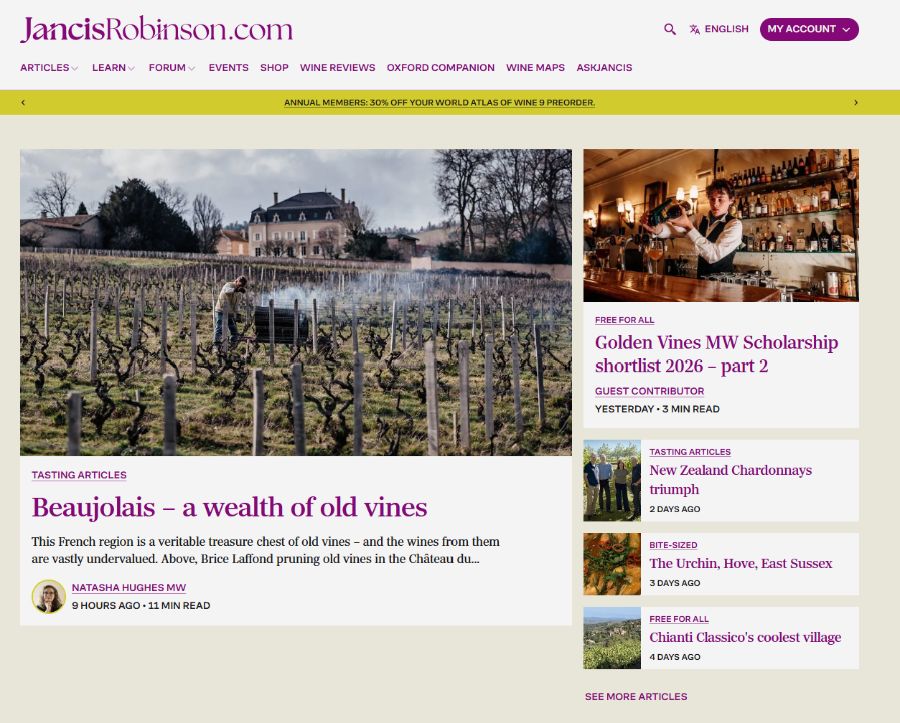
Back then, many British newspapers either dismissed their wine columnists or significantly reduced the space devoted to wine, limiting coverage to brief recommendations. Although there were notable exceptions –Jancis Robinson remains very active at the Financial Times and has just published an article on how wine has changed over a 50-year career– the internet allowed many voices, some more authoritative than others, to set up their own blogs or websites and engage directly with readers and wine enthusiasts.
In 2008, Mike Steinberger, then wine columnist for Slate, wrote an article for The World of Fine Wine entitled Everyone a critic: The Future of Wine Writing. In it, he announced the end of the Parker era, deeming it impossible for a critic to achieve such influence ever again. This, he argued, would make way for a far more fragmented and noisy landscape, where “every wine amateur with a computer and Internet Access can share his or her self-declared expertise with the world.” This democratisation has given consumers a stronger voice. The best example is Cellar Tracker, a wine cellar management programme which has become the world's largest repository of wine tasting notes, as well as a vibrant community of enthusiasts united by a shared passion.
Steinberger also highlighted trends such as specialisation, as the world of wine grew bigger and more diverse, and the emergence of new distinctive voices, such as Jamie Goode, backed by his scientific background, and Alice Feiring, who is renowned for her advocacy of natural wines. Both continue to run successful blogs.
Most specialist magazines that have survived to the present day, such as Wine Spectator in the US and Decanter in the UK, have online platforms and generate significant additional revenue from events, tastings and wine competitions.
The local picture
Spain’s daily media never paid much attention to wine, nor have they employed wine experts as columnists. Most contributions were limited to basic wine recommendations, such as those written for many years by wine importer and distributor Quim Vila in El Periódico de Catalunya. Meanwhile, in Madrid, El Mundo capitalised on the intellectual curiosity of Víctor de la Serna to create elmundovino, a website that was instrumental in fostering a passion for wine and marked an era in wine writing –Luis Gutiérrez, the current Spanish wine critic for The Wine Advocate, wrote his first articles there. Ramón Francàs can pride himself on being the only wine journalist in Spain on the staff of a daily newspaper at La Vanguardia. My own section, Historias de vinos (Wine stories), in El País Semanal, allows me to explore a subject and offer three recommendations that are not the focus of the article but arise from it.
Wine magazines, however, suffered badly. Unlike in the UK or US, one distinctive feature of the Spanish market is that major publishing groups never showed much interest in wine. Most wine magazines were set up by companies within the industry itself. Andrés Proensa is a case in point. Founder of the eponymous guide and of Planetavino, one of the most interesting wine magazines still in print today, Proensa was also the first editor of Vinos de España, published from 1996 to the mid 2010s. The magazine was founded by a group of professionals who had previously worked at G+J España, the Spanish subsidiary of the German publishing group of the same name, which was part of the media giant Bertelsmann. G+J handled distribution, but not printing. According to Proensa, this was because “at that time, the group wasn’t interested in anything with a print run of fewer than 60,000 copies”. At its peak, Vinos de España printed 12,000 copies. The Spanish publishing market has always been relatively small, and wine magazines have proved less resilient there than in neighbouring Portugal.
A couple of years ago, José Peñín, founder of Guía Peñin, examined the history of wine publications in Spain. In another article he tells the story of his own Sibaritas, which began life as a quarterly supplement in the men's magazine Futuro and was later published by Peñín's company. For me, working at Sibaritas was an invaluable learning experience. I got my start in the world of wine there and went on to become editor-in-chief. Its closure in 2009 was therefore particularly sad for me. By then, I had joined Todovino wine club, where I launched an online magazine —a sign of how times were changing, even though the company itself did not survive the effects of the crisis.
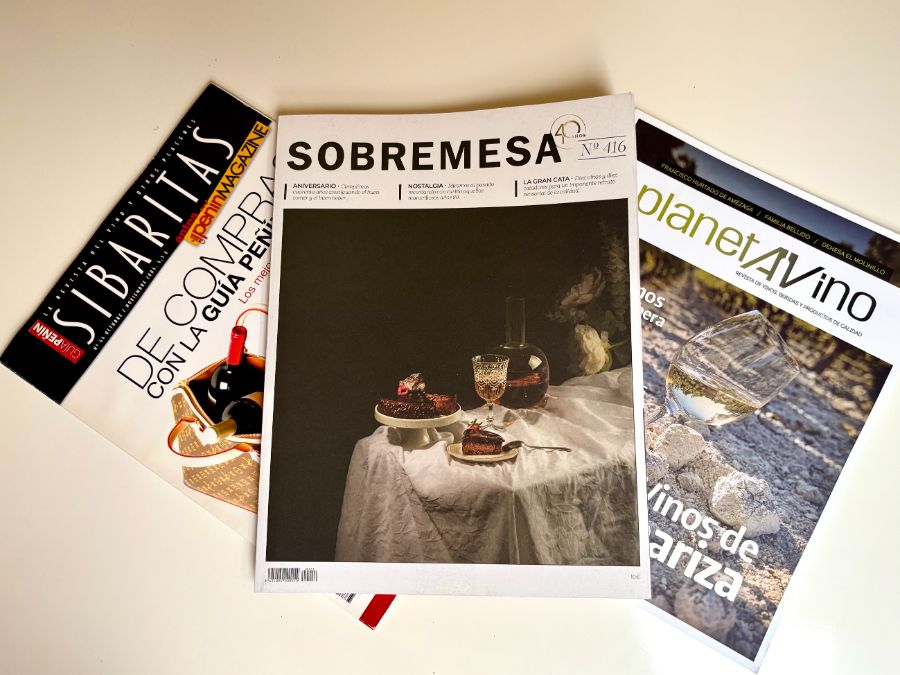
A more recent and widely discussed closure was Sobremesa in 2024, a wine and food magazine published by Vinoselección wine club, to which I contributed for several years. One of the first actions taken by Cvne, a major Rioja producer, after acquiring the company was to stop publishing it.
As the wine media in Spain has gradually lost ground, “the field is now dominated by lifestyle magazines such as Tapas, Gentleman and Esquire, where wine takes up a small portion of their pages”, Peñín wrote in his article. The issue with many print and online publications –and with a significant proportion of the content currently posted on social media, notably on Instagram– is that what appear to be recommendations are actually disguised advertising. The distinction between editorial and paid content is increasingly blurred.
Lately, the need to produce large amounts of content to attract readers and generate clicks has resulted in a major rise in wine-related articles in the online versions of mainstream newspapers and periodicals. This trend has been fuelled by new storylines and movements that appeal to a wider audience, such as natural wine, climate change, and the increasing diversity of wines available. Against this backdrop, the Vocento Group, which owns ABC, El Correo and many other regional newspapers, has made a significant move by acquiring two major Spanish food fairs, Madrid Fusión and San Sebastián Gastronómica, while launching the food and wine supplement Jantour. Similarly, El País introduced El País Gastro in 2023 to bring together and promote its content on food, cooking, restaurants and drinks.
Monetisation
This takes us back to square one. How much can a wine journalist earn writing for these media outlets? In Spain, rates for online publications range from €50 to €150 per piece. It is hardly surprising that most specialist journalists look for alternative ways to make a living, such as corporate communications, consultancy, education or hosting tastings. This inevitably creates potential conflicts of interest, so the most honest approach would be to follow Jefford's example and be transparent —if not about income, then at least about professional activities.
The fact that some journalists refuse to accept rock-bottom rates leaves room for new contributors such as sommeliers, educators or winemakers. With a steady income from other sources, they can afford to accept low pay in exchange for visibility, recognition and, in quite a few cases, a boost to their professional ego. But does this improve the quality of the content? Not necessarily. For journalists who rely on writing for a significant proportion of their income, it becomes difficult to find time for in-depth reporting when workloads increase but the pay does not adequately reflect the effort involved. Those coming from other fields do not always have the necessary communication skills. And there is a third element that is being lost along the way: editing, once a standard practice in the quality press, at least until 2008, with editors working behind-the-scenes to polish and shape a piece before publication.
Do we really need wine writers? This is a question best answered by people who enjoy reading about wine and everything around it: culture, landscape, history, people, markets, innovation, consumption and trends. The second question is how many of them are willing to pay for quality wine content in a market flooded with an ever-growing supply of all kinds of reading material. Some readers do so by subscribing to specialist publications such as Jancis Robinson, The Wine Advocate or Guía Peñín to access their tasting notes.
Today, Substack has become one of the leading platforms for monetising content, allowing writers to self-publish newsletters and communicate directly with their readers. The recent introduction of a dedicated Wine & Spirits category has increased the visibility of wine-related content.
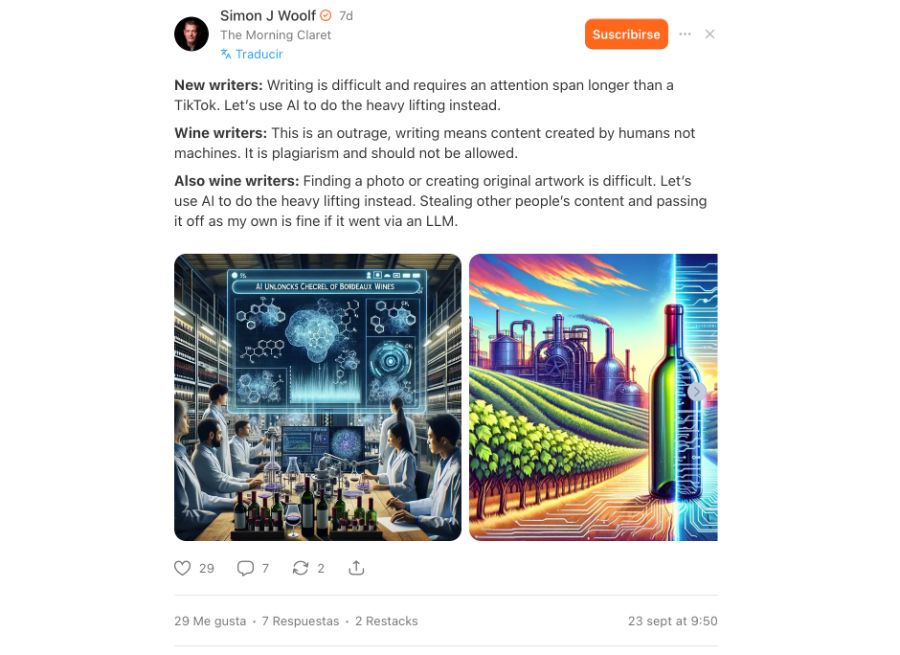
Among its contributors are well-known names such as Lettie Teague, the former wine columnist for The Wall Street Journal, Dave McIntyre, her counterpart at The Washington Post, and Alice Feiring, one of the best-known advocates of natural wine. They are joined by newer voices such as Felicity Carter, the former editor-in-chief of Meininger's Wine Business International, who writes incisively about anti-alcohol lobbies and innovation in the industry, and our contributor Noah Chichester, who is particularly passionate about Galician wines and was shortlisted for this year’s 67 Pall Mall Awards.
In an increasingly crowded landscape, publishing regularly and developing a distinctive voice are essential to gaining visibility. Miquel Hudin, a US writer based in Catalonia who runs his own website and is also active on Substack, recently wrote about the evolution of wine publications on the platform. “It seems almost everyone writing about wine (or pretty much anything in the world) has arrived in the past year to try and hack through the madness and earn a few bucks, directly from readers”. He does not see Substack as a magic solution to all the problems facing writers and journalists, but rather as “a nice add-on and an additional tool in what is a truly zany world.”
What about AI?
There is one final threat that could change wine journalism and writing completely. As well as making it possible to produce vast amounts of content quickly and cheaply, AI is transforming the way we write. Take a look at Instagram and Linkedin, or read some of the material published by certain media outlets. For now, AI is annoying rather than inspiring, although there seems to be plenty of room for improvement.
There are two particularly irritating aspects. First, its ability to produce a string of rambling remarks with very little substance. Second, its lack of critical thinking. Then there's the overall tone, which is often much closer to an advertorial than a journalistic piece.
In recent days, there has been much talk about the article that won the Best Global Wine Communicator in Short-Form Writing award at the third 67 Pall Mall Awards, widely regarded as one of the most prestigious international wine awards. There is widespread suspicion that the article was generated by AI.
Clearly, AI can be a great help to journalists when it comes to organising large volumes of information, transcribing interviews, streamlining tasks and exploring different perspectives. However, if we let it take control of the writing process, it would amount to professional suicide. One area in which we humans can still rival AI is in sharing first-hand experiences, drawing on accumulated knowledge and expertise.
Perhaps the best way to defend the purpose and value of wine journalism is to recall what Eric Asimov, wine critic for The New York Times, told Spanish Wine Lover: "You always have to remember what your role is.” As he explains, a journalist's mission is not to get people to buy more wine, but rather “to help inspire people to find what’s so pleasurable about it.”
Opening picture: Abel Valdenebro

Author
Amaya Cervera
A wine journalist with almost 30 years' experience, she is the founder of the award-winning Spanish Wine Lover website. In 2023, she won the National Gastronomy Award for Gastronomic Communication
Previous Post
Next Post
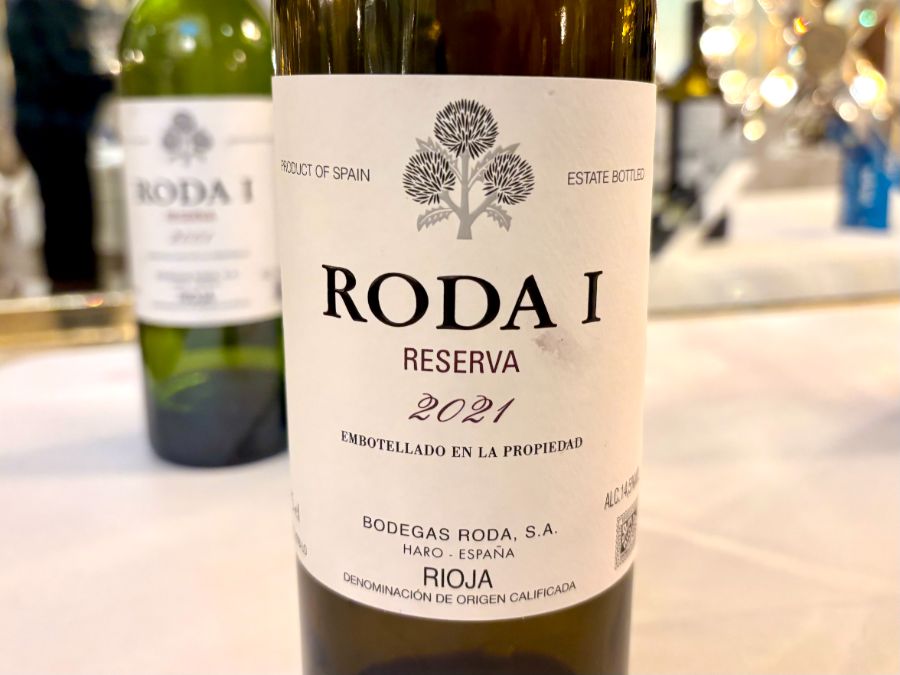
Roda I Reserva 2021 Red