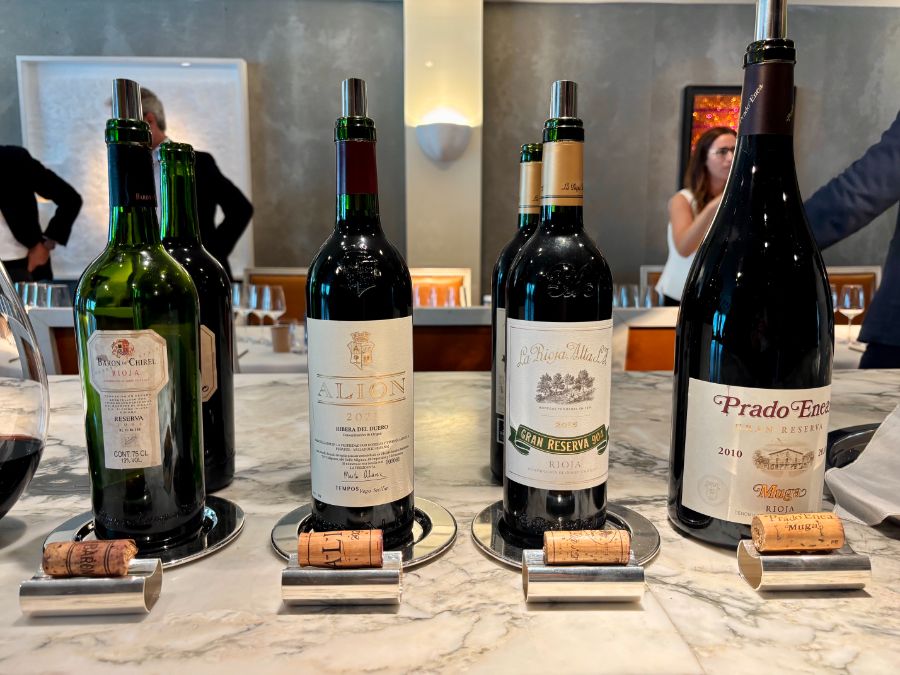
Judging by the two events we attended last week, Madrid’s wine season is opening with its sights firmly set on the top end of the market. The first was a tasting organised by Rioja's ABC (Association of Wineries for Quality), which delivered a clear message: "The future and prestige of Rioja lie in added value, vineyard care and excellence”. The second was a session hosted by EDA Drinks & Wine Campus, the wine and drinks arm of the Basque Culinary Center, entitled "Fine wine strategy: How to position our wines”. To complete the picture, Raquel Pérez Cuevas, president of the DOCa Rioja Regulatory Council and of Barcelona Wine Week, recalled during one of the panels that the central theme of the next edition of BWW (8–10 February 2027) will be wines with ageing potential.
There is a compelling reason to explore this further: amid the current decline in wine consumption and sales, the lower end of the market is being hit harder than higher quality wines. The greatest returns, meanwhile, are to be found at the top end.
The figures presented by Xandra Falcó, president of Círculo Fortuny, speak for themselves. "The luxury market is worth €1,5 trillion a year. This is equivalent to 4% of European GDP and 10% of European exports. Furthermore, 72% of luxury brands are European,” she pointed out. According to Falcó, fine wines have become part of this world, alongside gastronomy, travel and cars.
The secondary market
Vino fino (fine wine) was a common term on historic Rioja labels. It was used to distinguish higher-quality wines from those intended for everyday consumption, known as corrientes. Cía. de Vinos Telmo Rodríguez's Rioja Corriente pays tribute to this distinction.
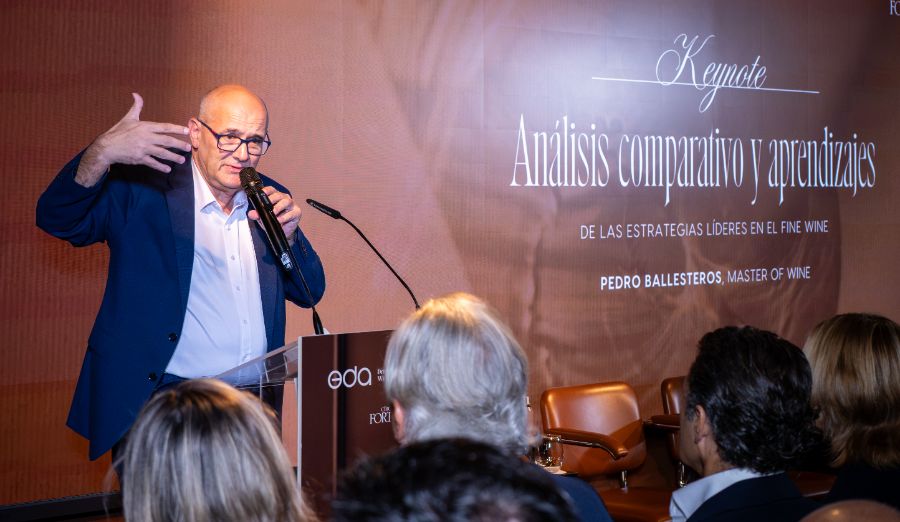
International markets introduce another dimension. Beyond recognised quality, fine wine is produced in limited quantities and can increase in value over time, making it both an investment and a tradable asset on the secondary market. This small segment has the potential to generate considerable added value. Pedro Ballesteros MW, who opened the EDA Drinks & Wine Campus session, estimates that a stronger presence for Spanish brands in the fine wine market could add €1.5 billion to the country’s wine industry. He believes Spain's natural position should be behind France, the undisputed leader, and Italy, which has successfully established brands such as Masseto, Sassicaia and Tignanello, rather than behind the US, as is currently the case. One factor in favour of Spanish wines is their proven ageing potential. According to Ballesteros (pictured below), regions such as Rioja and Ribera del Duero can hold their own alongside Bordeaux, Burgundy and Germany’s Rieslings.
However, Spanish wines only have a marginal presence on the secondary market. According to Liv-ex, the leading fine wine exchange and source of market data and analysis, Spain accounted for just 2.46% of total trade value in 2025, while the provisional figure for 2026 stands at 1.64%. Most of this activity is generated by Vega Sicilia, primarily through Único, but also Valbuena, and Alión, its second winery in Ribera del Duero. In January 2026, Spain represented 5.5% of the traded value on the platform, with Vega Sicilia accounting for around 60% of Spanish trade, Liv-ex reports. According to Tom Burchfield, Head of Market Intelligence at Liv-ex, "over the past year, every vintage of Único prior to 2012 has increased in value, led by the 2009 vintage, which was up 14.5%. The 2010 vintage rose 3% in June, while trading has returned to 2024 levels in recent months." It is worth remembering that the strong performance that year saw the century-old winery in Valbuena de Duero (Valladolid) top the Liv-ex Power 100 list —a significant milestone for a Spanish brand.
Another Spanish wine that performed well on the Liv-ex index in 2025 was Castillo Ygay 2011 Red, which ranked second behind Único 2015. In 2024, the platform highlighted La Rioja Alta Gran Reserva 904 2011 in third place and Pingus 2021 in fifth.
International exposure
In all these cases, this market standing is the result of the brand’s international reach. At the event, Pablo Álvarez of Vega Sicilia recalled that when he took over the management of the estate 40 years ago, it exported to five countries; today it exports to 150. Guillermo Aranzábal, chairman of La Rioja Alta, had a similarly striking experience: "When I joined the winery 38 years ago, there was nobody working in exports." In recent years, the century-old winery in Haro's Barrio de la Estación, has focused on defining and differentiating the styles of its Gran Reserva reds, raising their quality and prices by up to 70% , and repositioning its distribution. Even so, Aranzábal considers the Gran Reserva 904, priced at around €70–75, relatively inexpensive for the fine wine market.

Another route into this exclusive club is La Place de Bordeaux, the complex network of wine brokers and merchants built around the en primeur trade. It has expanded beyond French wines and offers access to an extensive international distribution network. Marqués de Riscal has been selling Tapias there for three years. Ricardo Diéguez, the winery’s managing director, believes it is important to be in the same market place as the great châteaux, but acknowledges that resales need to happen regularly and at a consistent price. Marqués de Riscal celebrated its return to La Place de Bordeaux —where the estate sold its wines in the 19th century— in style, with a historic tasting at its Elciego winery that included pre-phylloxera wines.
Willy Pérez, who, alongside Ramiro Ibáñez, is behind De La Riva San Cayetano, the only Spanish white on La Place, believes that simply being there is not enough. “To be successful on La Place, you must be a successful winery. Nobody is going to buy a wine here just because it’s Spanish,” he says. Pablo Álvarez Jr., from the Swiss wine auction house Baghera Wines, echoed this view: “People aren’t looking for Spanish wine at auctions. There’s a great deal of unfamiliarity with it. Spanish wineries need to make an effort to establish a presence in the world.”
What Spanish producers say
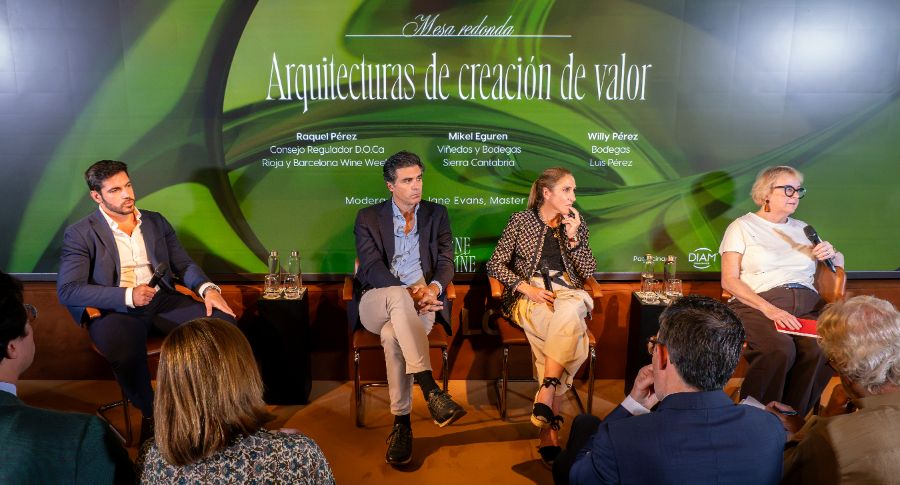
From the various panel discussions held during the event, we have picked out some of the views expressed by Spanish producers who aspire to turn their brands into fine wines or who already enjoy that status. Some of these ideas are likely to shape the future of Spanish fine wine.
“As well as making a good wine, you need to understand who you are, where you sit within the wine industry and stand up for it. Once you have a clear sense of your identity, it becomes easier to build on it.” José Ramón Urtasun, Remírez de Ganuza (Rioja).
"Wine must move away from being purely a technical product. Producers need to understand the values of their generation and translate them into flavour. We need the freedom to develop these projects and the time for them to mature. Once a group of wineries has emerged through individual efforts, achieved success and helped shape the country’s image, that will be the time to protect them.” Willy Pérez, Bodegas Luis Pérez y De La Riva.
“The fine wine market is Spain’s biggest pending issue. There is huge potential, even though the wine industry as a whole is in decline.” Meritxell Juvé, Juvé & Camps (Corpinnat).
“It's about time, patience and doing things properly every day.” Pedro Ruiz Aragonses, Pago de Carraovejas (Ribera del Duro).
"At Muga, we like to think of our distributors as an extension of our business, one that strengthens our brand." Manuel Muga, Bodegas Muga (Rioja).
"How much strategic planning is there in wineries today?’ It’s not a question of history, but of how we manage things. We need to work according to a strategy rather than treating it as something occasional.” Ricardo Diéguez, Marqués de Riscal (Rioja).
“Spain has not traditionally been known for selling expensive wines abroad. I would recommend ambition, setting clear distribution and pricing parameters and knowing what we would never do. If you commit to a strategy focused on creating value, the secondary market will eventually follow.” Jaume Vial, Gramona (Corpinnat).
"The great crisis facing the luxury market is pricing. Prices have been pushed so high that Champagne and Bordeaux have suffered. We must be very careful about what we sell, how we sell it and how much we charge for it.” Pablo Álvarez, Vega Sicilia (Ribera del Duero).

Author
Amaya Cervera
A wine journalist with almost 30 years' experience, she is the founder of the award-winning Spanish Wine Lover website. In 2023, she won the National Gastronomy Award for Gastronomic Communication
Previous Post
Next Post
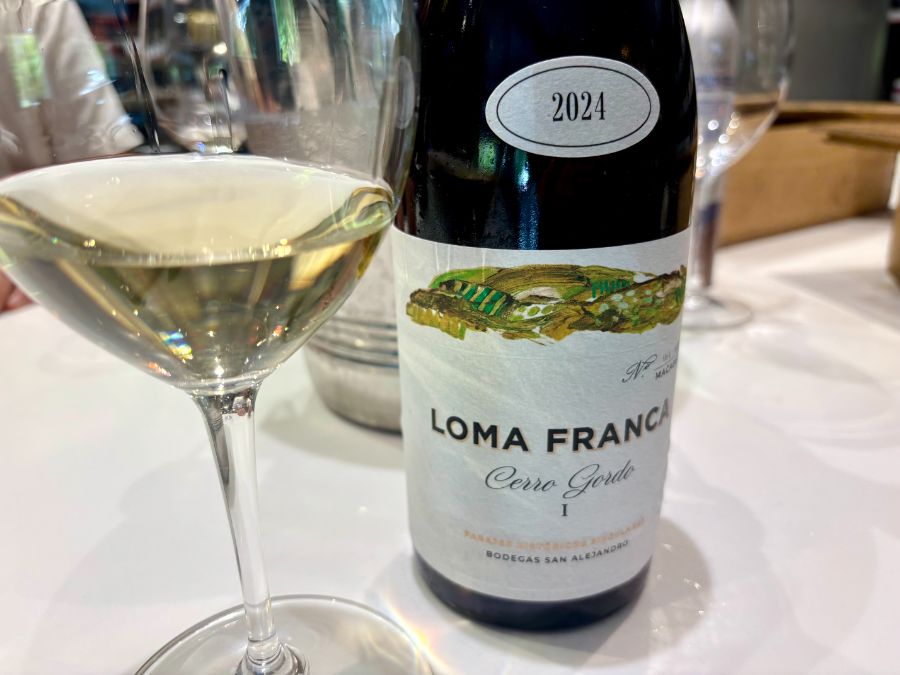
Loma Franca Cerro Gordo I 2024 White