These days, almost every wine publication starts the year by forecasting what we will be drinking over the next 12 months. Trends are identified, styles are championed and regions are put forward as ones to watch throughout 2026.
At Spanish Wine Lover, we tend to keep a close eye on developments in wine, but we rarely start the year with this kind of crystal-ball gazing. The exception was 2018. Eight years on, we have revisited those predictions to see what we got right, what we missed, and to reflect more broadly on how wine fashions emerge —and how quickly they fade.
One caveat has always guided our thinking: what critics, producers, sommeliers and merchants identify as trends does not necessarily reflect what most consumers actually drink. The ideas promoted by opinion leaders often take a long time to filter through to the wider public.
Red grape varieties
Eight years ago, we predicted that Garnacha and Mencía would emerge as the new ambassadors of Spanish red wine. It was a fairly safe call. Tempranillo had become overexposed, planted well beyond its optimal growing areas, while both Mencía and Garnacha offer a distinctive character.
Since then, the rise of Garnacha —both in number of wines and in quality— has been impressive. Beyond the now well-established narrative of Gredos, Garnacha’s resurgence in Rioja has been quite remarkable. In Navarra, it is increasingly clear that the future of the DO depends on fully embracing the variety. Meanwhile, Aragón has strengthened its position on the Spanish red wine scene thanks to high-altitude, mountain-grown Garnacha, which is now also beginning to gain traction in Somontano. In Catalonia, Garnacha has expanded beyond its traditional strongholds (Empordà, Priorat and Terra Alta), sparking renewed interest in Penedès in the wake of the prolonged drought that has affected the region. Many producers in Ribera del Duero too are discovering that Garnacha's naturally low pH can provide a valuable counterbalance to Tempranillo. To a lesser extent, southern Spain has also embraced the variety, with increasingly interesting examples emerging from Castilla-La Mancha, Málaga, Jumilla and Valencia.
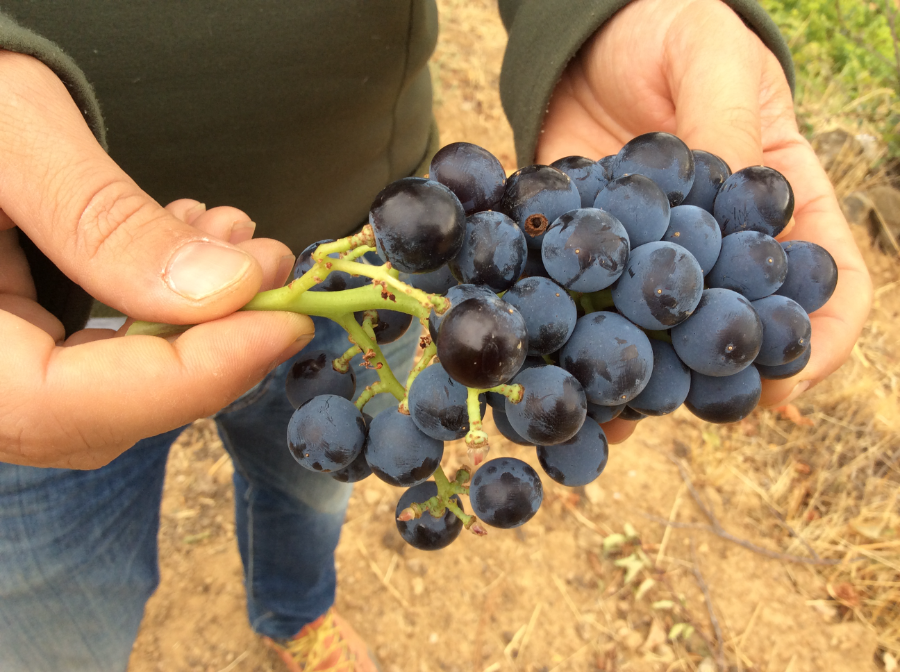
With its lower acidity but good freshness, combining wild forest fruits and earthy notes, Mencía has also consolidated its position, particularly following Bierzo's Burgundy-inspired classification. Almost half of the wineries in the DO, including nearly all the leading producers, now use village and lieu-dit designations. In 2023, the first single-vineyard wines were officially approved: La Faraona and Las Lamas, both made by Descendientes de J. Palacios.
We also argued in favour of late-ripening varieties with good acidity and/or naturally low pH. Among these, Cariñena/Mazuelo has gained visibility, supported by its established presence in Priorat, despite being highly susceptible to powdery mildew. Single-varietal Cariñena wines are now commonplace in various regions of the Ebro Valley. This variety also plays an important role in blends —it is, for instance, the only grape used alongside Tempranillo in Murrieta's Castillo de Ygay— although it cannot be considered mainstream. The same could be said of Graciano, which is appearing more frequently as a single-varietal wine in Rioja, even if it generally performs best in blends unless fully ripe. This explains its growing success further south.
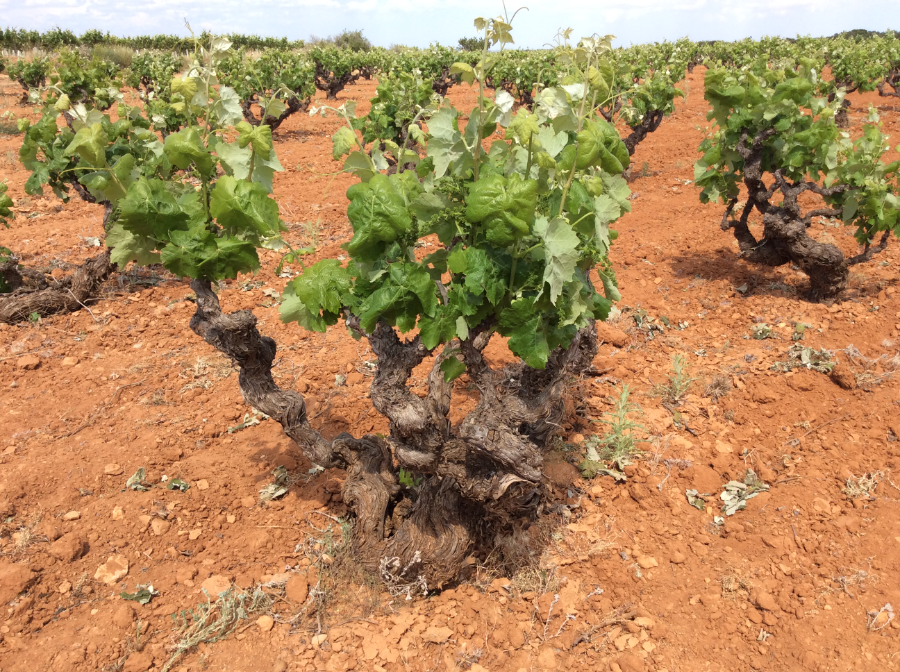
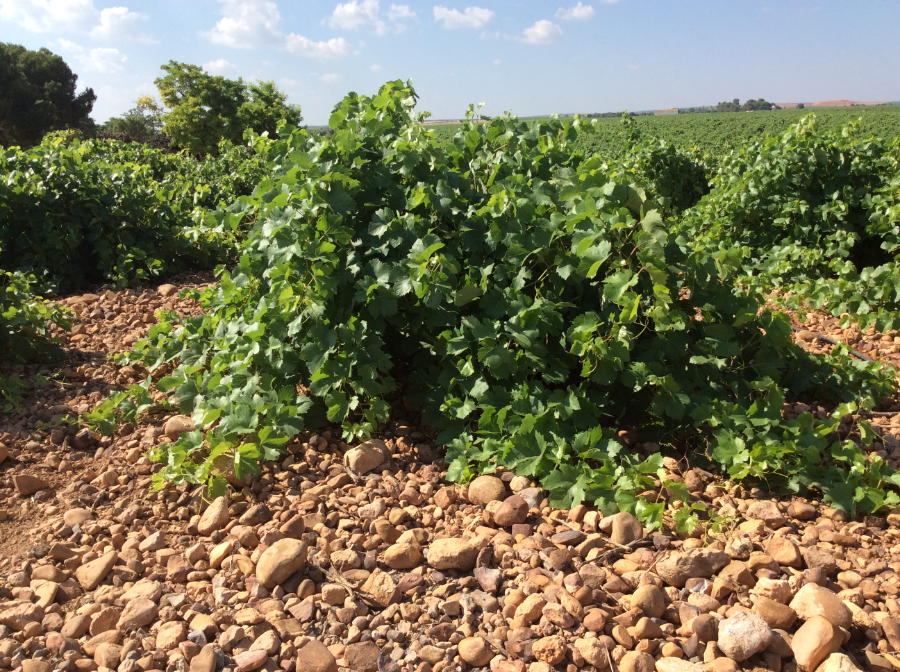
In the southeast, Bobal (vines pictured below) was one of our bets, but it has yet to fully deliver on its promise, despite its versatility for red, rosé and even sparkling wines —the latter still largely unexplored. Another variety struggling in the current era dominated by easy-drinking reds is Garnacha Tintorera: powerful, energetic and high in acidity, yet often overlooked. Moravia Agria, with its vibrant acidity and liveliness, would seem better placed, but for the time being it remains largely unknown outside connoisseur circles.
More promising are the late-ripening varieties revived in Levante, which are opening the door to a new generation of fresh, approachable Mediterranean reds. While Mandó was on our radar in 2018, Arcos —then very much a minor player— is now attracting increasing attention.
In Catalonia, Sumoll is gaining favour among leading producers such as Raventós i Blanc and L'Enclos de Peralba, though it is still unappealing to the average consumer. Often compared to Nebbiolo, Sumoll may first find broader recognition in the sparkling category, given the enthusiasm it has generated among several Corpinnat members. Its Canarian counterpart, Vijariego, is as distinctive as it is rare.
What about the red varieties that we did not mention in 2018? Despite meeting almost all the requirements expected of modern reds, Trepat from Conca de Barberà has not made it beyond its regional borders. Others, such as Listán Negro from the Canary Islands and Callet from Mallorca, remain firmly rooted in their local contexts and are rarely seen elsewhere.
The white side
In 2018, we did not specifically mention white varieties, apart from Garnacha Blanca as part of the wider Garnacha family. Since then, Garnacha Blanca has firmly established itself as the leading Mediterranean white grape variety, with a strong presence across the Ebro Valley from Terra Alta and Priorat to Rioja. In Penedès, Xarel.lo has long since shed its exclusive association with long-aged Cava and sparkling wines, as it now driving a dynamic category of still white wines.
Did we underestimate the scale of the Godello phenomenon? Possibly, although in my defence, I published an article (in Spanish) in Spain's El País Semanal in January 2021 under the headline Irresistible Godello.
Eight years ago, it was still too early to anticipate the revival of Airén, a trend that began to gather momentum in 2020 with the release of Las Tinadas, produced in Castilla-La Mancha by Bodegas Verum from old, ungrafted Airén vines (see photo below). At a more local level, aromatic varieties such as Albarín Blanco, which is mainly grown in Asturias and León; Galicia's Branco Lexítimo; and Malvasía Aromática are also worth watching. The latter has been steadily gaining ground in Penedès following the recovery of Malvasía de Sitges.
In 2018, our main recommendation for whites was to explore wines from traditionally red wine regions, such as Rioja, Ribera del Duero and Priorat. Few would have predicted back then the arrival of a white Roda I or a white Faustino I. The rise of white Rioja, particularly at the premium end of the market, has been nothing short of remarkable.
Ribera del Duero, by contrast, has followed a more uneven path. The Regulatory Board initially focused on Albillo Mayor, excluding other white varieties, although this could change in the future. Styles are not yet clearly defined, and many new releases rely on young vines. Complex, age-worthy whites coexist with more basic offerings that often lack personality. This contrasts with Priorat, where a wide range of styles coexist, from fresher wines to powerful Mediterranean styles, all marked by the distinctive imprint of the region's slate soils.
Are reds being squeezed out?
It may not be long before we start recommending red wines from regions best known for whites. Our prediction regarding the rise of Atlantic reds has proved more accurate in the northern Canary Islands than elsewhere. In Galicia, Ribeira Sacra remains the main red wine-producing area, yet climate change is increasingly evident in the form of drier summers. Will the term 'Atlantic red' soon feel outdated for describing the region?
In the other DOs in Galicia, whites clearly dominate. In Valdeorras, this is largely due to Godello's rapid expansion. In Ribeiro, whites also lead the way, although the area still produces noteworthy reds. Rías Baixas, the most Atlantic of all, is overwhelmingly associated with Albariño. Several producers who also make red wines have told SWL that they are very difficult to sell.
Nor should we ignore the 'godellisation' of Bierzo. Almost all new plantings in the area are Godello. Of the nearly 10 million kilos harvested in the 2025 vintage, over 3.8 million kilos were Godello grapes.
Other trends: pét-nats and Sherry-inspired wines
In 2018, we predicted the rise of pét-nats: lightly sparkling, easy-to-drink wines made from a single fermentation process. While pét-nats have indeed found their audience, it is the sparkling wine category as a whole that has truly cementd its place. Today, sparkling wines are an essential part of any Spanish wine lover's repertoire.
We also highlighted the growing interest in sherry-inspired wines, particularly those involving biological ageing under flor in areas where this practice was previoulsy uncommon. Since then, the flor hype has cooled, and it has become just another winemaking tool, much like skin contact, or ageing in amphorae or other vessels. Often, a touch of flor is all that is needed, without it dominating the style.
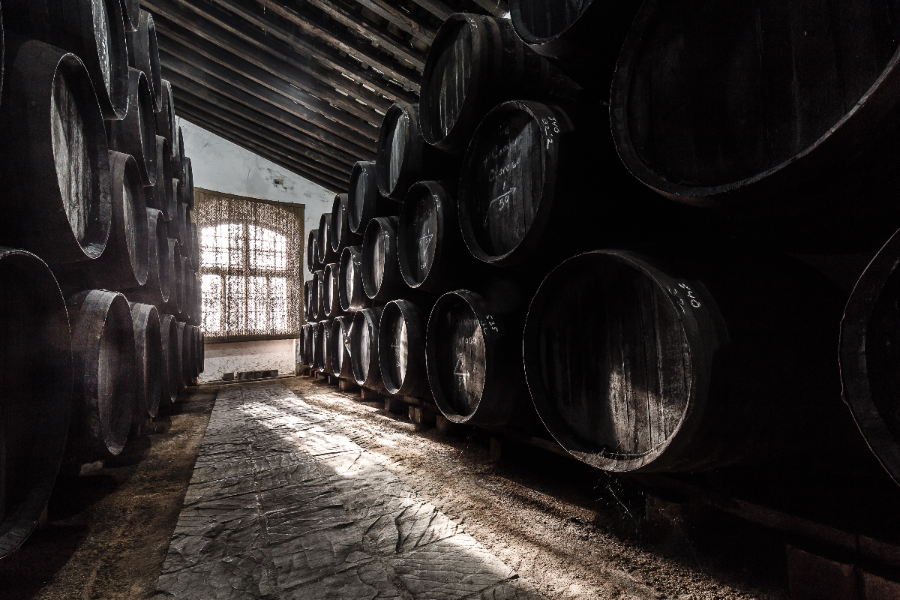
From the Sherry Triangle, we drew attention to unfortified Palomino and vinos de pasto, a category that will have its own appellation not before 2027 likely under the name Vinos de Albariza. SWL has closely followed the terroir-driven revolution in the region through the many articles written by Yolanda Ortiz de Arri. The key question now is whether these albariza whites will reach a broader consumer base.
Island wines were another of our talking points. In the Balearic Islands, the recovery of local varieties coupled with a commitment to sustainable and organic farming has revitalised a wine scene in an area under intense tourist pressure. The Canary Islands already offered remarkable grape diversity, which made last summer’s news of phylloxera-infected vines in Tenerife all the more alarming. In both archipelagos, the main obstacle remains limited distribution on the mainland, beyond a handful of established producers.
How Spanish wines are seen from abroad
Finally, one of our predictions back in 2018 was the recovery of traditional styles with an international appeal. We believed that the revival of Spanish clarete, a traditional style of rosé, could contribute to the global rosé boom, which has since lost momentum. Ultimately, Spain’s most significant contribution to the category has been oak-aged rosés, following the example set decades ago by the iconic Gran Reserva made by the López de Heredia family in Rioja. As of brisados, they have yet to define a distinctive Spanish interpretation of orange wine, though they have undoubtedly contributed to the popularity of skin-contact wines.
In recent years, the Spanish wines attracting the greatest international attention have been terroir-driven bottlings from producers who have risen to prominence over the last 10–15 years, as well as historic wineries long admired for their age-worthy wines.
Many international opinion leaders now regard Spain as the most exciting wine-producing country in the world. Rather than chasing a particular trend, perhaps the best way to sustain that momentum may simply be to safeguard the diversity and singular character of its different wine-producing regions.

Author
Amaya Cervera
A wine journalist with almost 30 years' experience, she is the founder of the award-winning Spanish Wine Lover website. In 2023, she won the National Gastronomy Award for Gastronomic Communication
Previous Post