“A great wine should speak to everyone’s heart, yet still be a pleasure for the everyday drinker,” says Fernando Ortiz, co-owner, together with Cristina Alonso, of Territorio Luthier, one of Ribera del Duero’s most daring and hard-to-classify wineries.
Few producers in the region place such strong emphasis on white wines and claretes, venture into long-aged gran reservas, blend different vintages in their reds, or explore the secrets of extended ageing. To this already unconventional approach, Territorio Luthier adds a series of deeply personal choices, including a firm commitment to Spanish oak (quercus pyrenaica).
Ortiz and Alonso thrive on new challenges and make no attempt to position themselves cautiously in the market. Their entry-level wine retails for €22 in Spain; the most expensive exceeds €1,000.
At the conceptual core of the project lies the figure of the luthier itself. “A luthier is an artisan who makes instruments and seeks harmony. That is exactly what we look for: a more elegant expression of Ribera del Duero, defined by freshness and delicacy,” Ortiz explains.
A perspective shaped by old wines
Cristina and Fernando met in the early 2000s. At the time, Fernando was looking to attract visitors to Bodega Histórica Don Carlos, a network of underground cellars excavated between the 14th and 15th centuries beneath the historic centre of Aranda de Duero. His grandfather, and later his father, had gradually acquired these subterranean spaces to house their bottle collection and give them a tourism-oriented purpose. The idea was to showcase the town’s wine history and culture, while highlighting the suitability of underground cellars for winemaking and ageing. Cristina, meanwhile, had already founded one of Spain’s first wine tourism agencies.
When she first visited the site, Cristina found it rather small. “Is this it?” she asked. Fernando did his best to sell the concept, explaining that he spoke several languages and led tastings. She challenged him to host one in Italian for a group of clients. “I wasn’t exactly fluent,” Fernando recalls, “but it all went brilliantly and we continued working together, doing things like wine vs beer pairings.” In 2009, he suggested making Ribera del Duero wines in a different way, and they launched Bodegas Fusión. For nine years they rented facilities in Quintana del Pidio, until they built their own winery in 2018, rebranding the project and developing the current range.
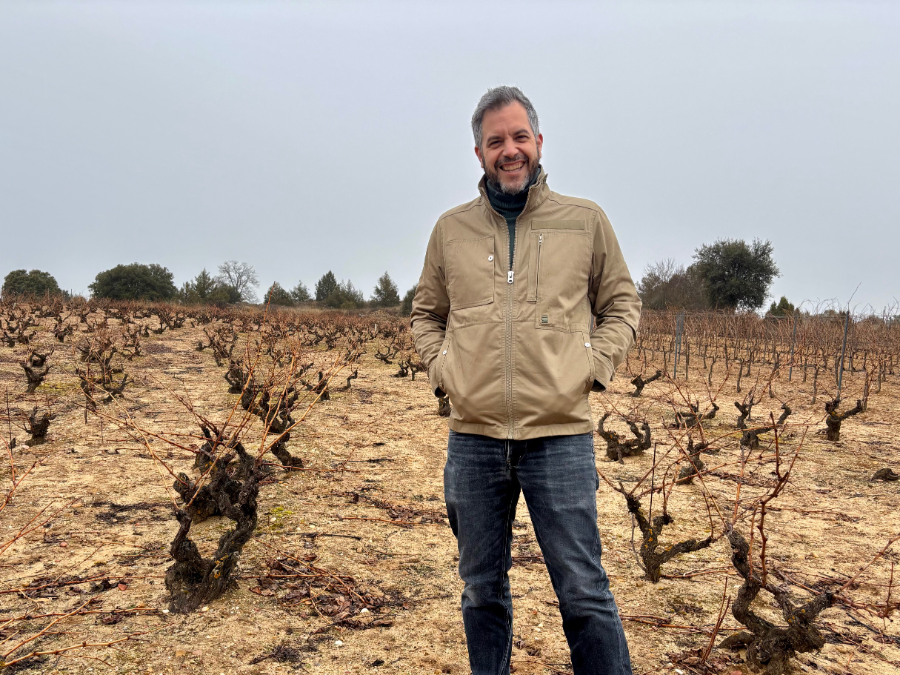
Wine had always been part of Ortiz’s life (pitured above). His father was not in the trade— he ran an agricultural supplies business— but he was a passionate wine lover and held an allocation of Vega Sicilia. His uncle, Luis Ortiz Gallo, served as an administrative representative on the provisional body that founded the Ribera del Duero Regulatory Council, travelling from village to village to persuade mayors and growers of the benefits the new appellation could bring. What now seems evident was, at the time, met with considerable scepticism.
Bodega Histórica Don Carlos, meanwhile, is far more than a tasting venue. The family owns a significant collection of historic bottles, operates a wine distribution business and runs an online retail platform. In fact, SWL’s first contact with Fernando Ortiz came through a feature on historic Rioja wines published in 2014. There is little doubt that the experience gained from tasting so many old vintages has played a key role in shaping the style and philosophy of Territorio Luthier’s wines.
Luthier’s Ribera
After studying winemaking in Rioja, Fernando spent five years working as a harvest inspector for the Regulatory Council. “One of the most interesting aspects was tasting wines in cooperatives,” he says. “For me, they are the true epicentre of any wine region.” He particularly remembers the sense of place he found in the wines of Zazuar, a village 12 kilometres north-east of Aranda de Duero, rising above 900 metres. Now it is one of Territorio Luthier’s main sources of grapes.
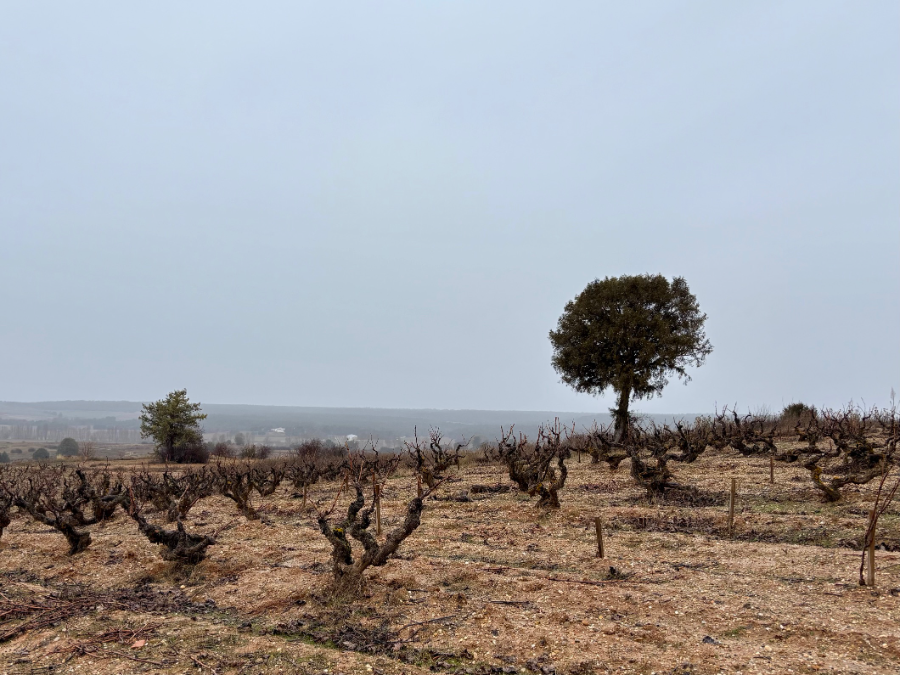
Among the area’s standout sites is Costal 20, a mosaic of tiny plots planted with very old, head-trained vines known locally as viña de palo, the term used for ungrafted parcels. Here, sandy soils over limestone bedrock have kept phylloxera at bay. The zone also retains a notable proportion of white grapes, used for Blanco de Guarda, the winery’s most ambitious white wine. For Luthier, these historic vineyards are living proof of the varietal diversity that defined Ribera del Duero in the 1940s and 1950s, when Garnacha and Bobal were widely planted alongside Tempranillo, together with a significant presence of white varieties —chiefly Albillo Mayor and Alarije, also known as Malvasía Riojana or Subirat Parent.
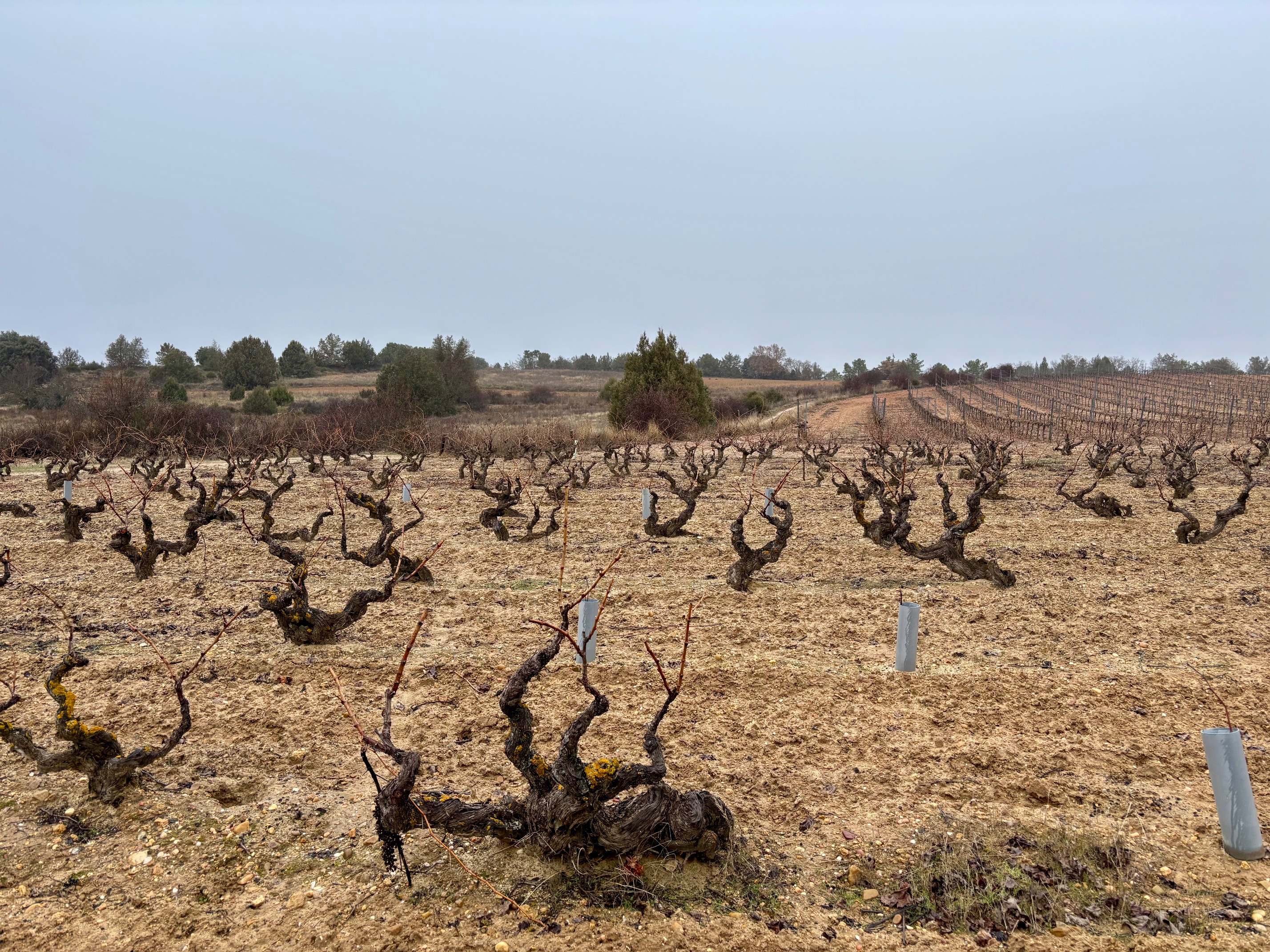
Territorio Luthier owns no vineyards of its own, with the exception of an experimental plot of recovered varieties planted in collaboration with Itacyl, the Agrarian Technology Institute of Castilla y León, and a recently planted hectare in Langa de Duero, within the province of Soria, on land that once belonged to Fernando’s grandfather.
For the entry-level Lara O. wines and the Hispania range aged in Spanish oak, grapes are sourced mainly from La Horra and Gumiel de Mercado. La Horra contributes power and roundness, while Gumiel introduces a counterpoint of freshness. The team has also identified another traditional clarete zone on the left bank of the Duero, around the village of La Sequera.
Closer to home, in Aranda de Duero itself, they champion calcareous soils —long undervalued during years when concentration and power dominated— which provide the freshness, finesse and naturally low pH levels essential to their long-aged gran reservas.
Old vines as the cornerstone
To produce around 90,000 bottles a year, Territorio Luthier relies on fruit from more than 280 micro-vineyards, 70% of them over 40 years old. The result is a complex mosaic of tiny plots that makes harvest logistics particularly demanding. “We need five or six people just to monitor ripeness,” Ortiz explains. Harvesting is usually carried out by the growers themselves, although the winery occasionally steps in.
“The main challenge with bush vines is finding people to harvest them,” he says. “Costs keep rising, yet consumers rarely appreciate this when they drink the wine.” As more wineries acquire their own vineyards, growers with old vines are increasingly struggling to sell their fruit. Territorio Luthier’s response is to build long-term relationships, agreeing an annual price that makes continued cultivation economically viable.
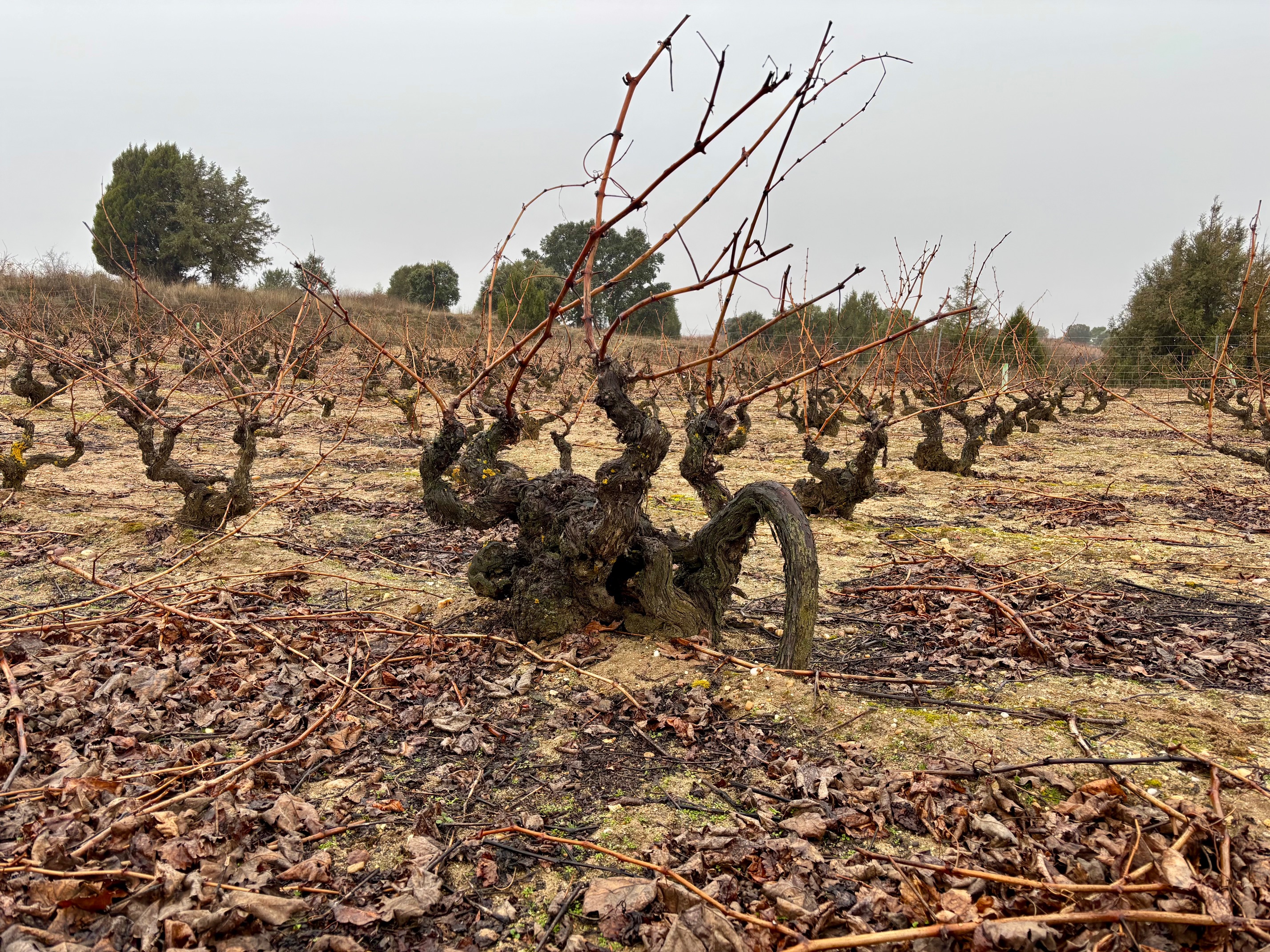
On the positive side, Ortiz points to the emergence of a younger, more professional generation of growers specialising in old vines. Other producers, including PSI, Garmón and Aalto, also actively seek out this type of fruit.
One of the most prized features of old vineyards is the presence of varieties beyond Tinto Fino. “Promoting Tempranillo as the region’s quality grape made sense at one point but it led to entirely illogical restrictions on Garnacha,” Ortiz argues. In the record-breaking hot 2022 vintage —likely the warmest in the DO’s history— Territorio Luthier increased the proportion of Garnacha (up to 20%) and white grapes (7–8%) in its reds to offset the extreme conditions.
The winery also produces a single-varietal Garnacha outside the DO, where its use is capped to 25% in reds and 50% in rosés. Aged for two years in seasoned barrels, fewer than 1,000 bottles are made, retailing at over €200. In some years, incomplete véraison requires green tips to be removed at the sorting table. The resulting wine shows excellent acidity, herbal notes and a distinctly savoury profile, with strong ageing potential.
Native oak
Another defining feature of Territorio Luthier is its long-standing commitment to Spanish oak. Used from the outset in 2009 for the flagship Lara O. red, it is now reserved exclusively for the Hispania range — a white and a red, both retailing at around €37 in Spain. The main constraint is availability, as only two cooperages currently certify the origin of this oak.
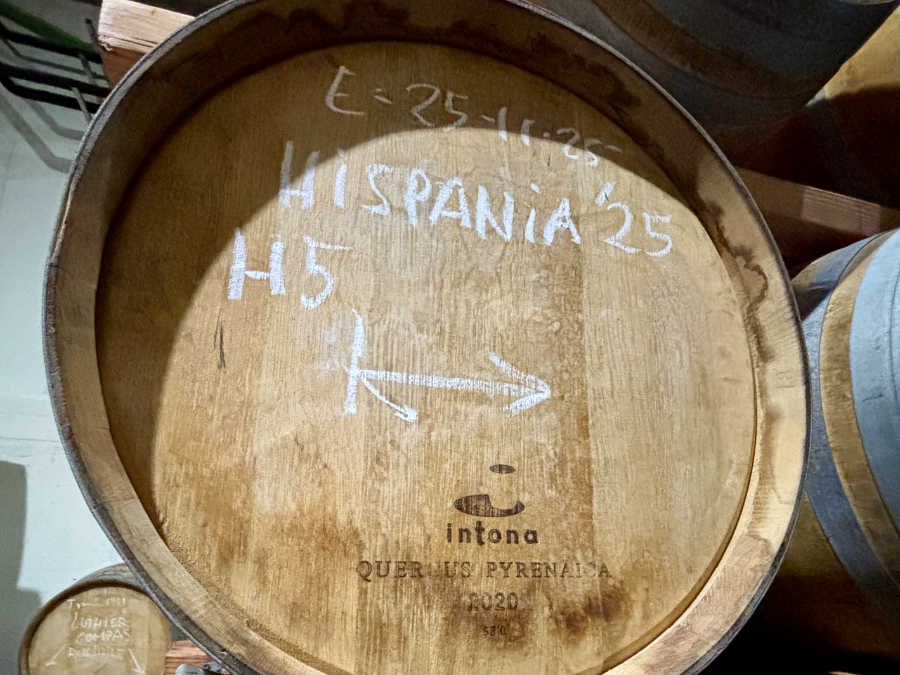
Ortiz describes Quercus pyrenaica as contributing menthol, autumnal notes, though in the Hispania wines the oak is carefully restrained, never dominating the expression. The newly released Hispania Red 2022 (just over 12,000 bottles) is succulent and nuanced, showing dried herbs, an intriguing red-fruit spectrum —pomegranate and watermelon— and subtle hints of bitter chocolate. Hispania White 2023 (just over 3,200 bottles) is fresh and precise, combining citrus and aromatic herbs with delicate dairy notes. Ortiz adds that odd-numbered vintages in Ribera del Duero tend to be livelier and more “electric”.
Notably, the Hispania wines have become Territorio Luthier’s main entry point into Michelin-starred restaurants.
Variety above all
The winery’s two remaining ranges span whites, claretes and reds. Lara O. —named after Fernando’s sister and priced at around €22— is designed for earlier drinking, with shorter ageing, while the Territorio Luthier wines, all retailing at about €60, are positioned as reservas. Freshness and savoury character define the former; the latter are built for greater depth and complexity.
Territorio Luthier Blanco de Guarda 2022 (just over 6,000 bottles) already shows emerging petrol notes and fine, bitter nuances. Clarete de Guarda 2020 combines the structure of a red with the acidity of a white, spending just over two years in seasoned American oak barrels, which Ortiz believes lend a richer, more indulgent dimension. Reserva Tinto 2020, containing 15% Garnacha and 5% white grapes and just under 7,000 bottles on release, is both restrained and expressive, driven by red fruit and a vibrant, mouth-watering tension.
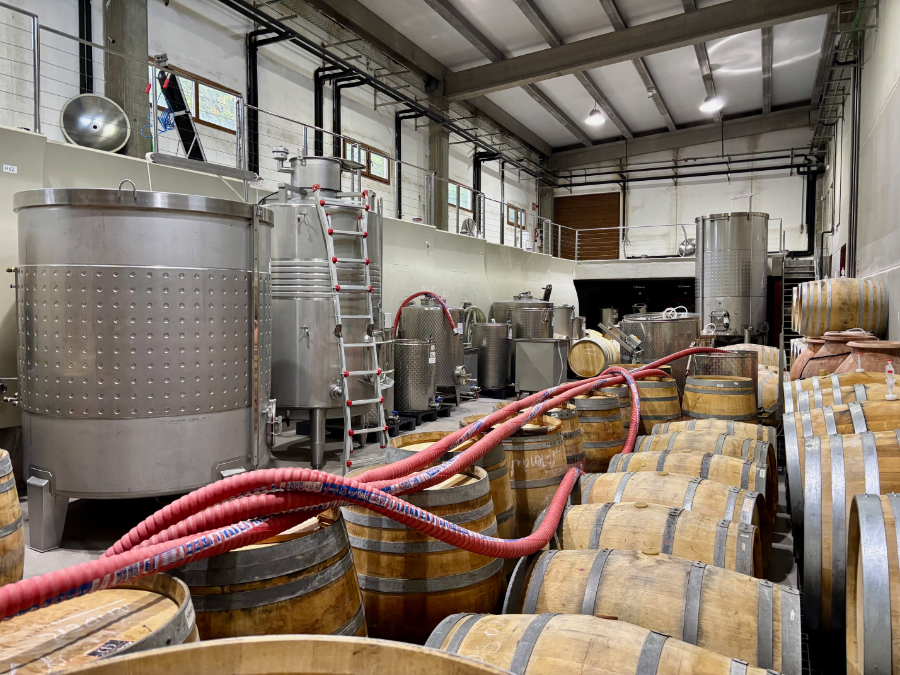
Across the range, the philosophy remains consistent, regardless of time in oak: fermentation in concrete, ageing in barrels of varying sizes and origins, followed by stabilisation in concrete for a minimum of eight months. For Ortiz, a wine that is destined to age must already be harmonious at the moment of bottling.
All wines, including the whites, undergo malolactic fermentation. Indigenous yeasts — from vineyard and cellar— are used throughout, with no additions or commercial starter yeasts. Beyond the vineyard (“the most important thing”) and the cellar (“we favour a coherent, artisanal approach, but one informed with knowledge, like a luthier”), Ortiz identifies a third pillar: microbiology —“what you can’t see”. He admits it both fascinates and amuses him. “Although we work in a fairly natural way, because we want to encourage biodiversity in every sense, we also maintain very close oversight and strict control of every stage,” he explains.
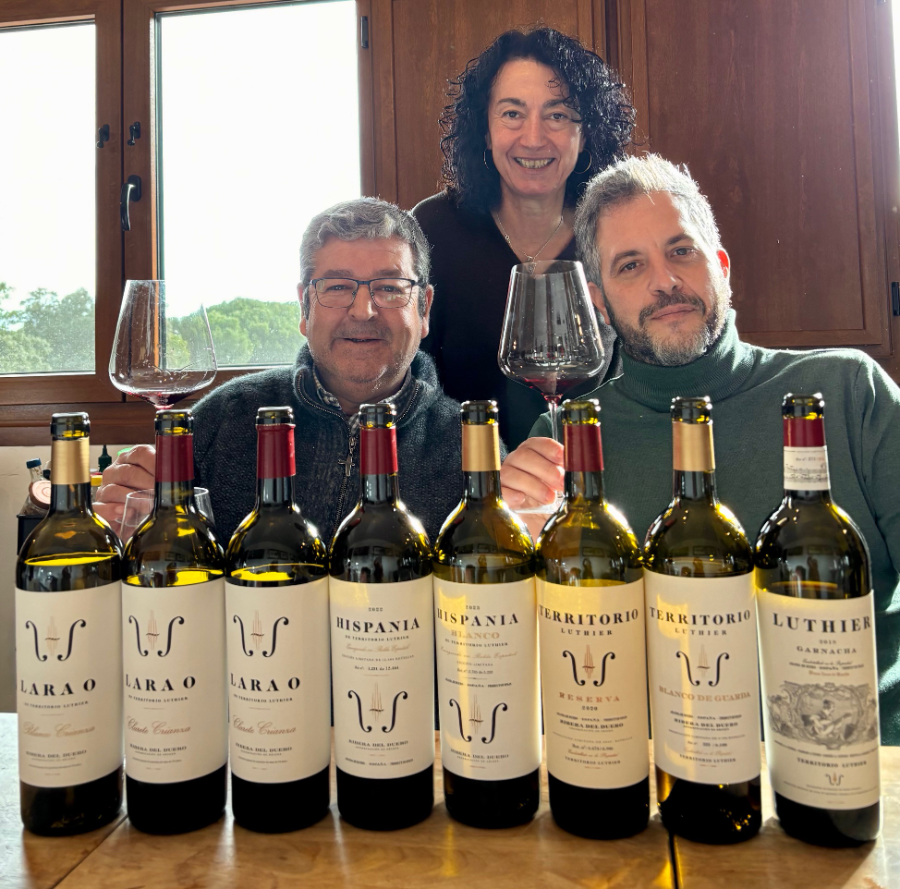
For this and other areas, the team works with several external consultants, foremost among them Jesús Madrazo (pictured below with Fernando and Cristina), former technical director at Contino, first brought in in 2012 to help define the profile of the gran reservas as true wines for long ageing.
The special wines
So far, Territorio Luthier has released four gran reserva vintages: first 2012 and 2014, followed last year by 2015 and 2016. Production is limited to around 2,500 bottles per vintage, with a deliberate release strategy of 500 bottles per year, allowing several vintages to coexist on the market. On the winery’s website, the current prices range from €229 for the 2015 and 2016, to €260 for 2014 and €320 for 2012. Garnacha remains a key component —close to 30% in the warm 2015 vintage and under 20% in the cooler 2016— alongside a proportion of white grapes.
Last year also marked the launch of the winery’s own interpretation of multi-vintage wines, known in Spain as CVC (conjunto de varias cosechas). Presented as a solera perpetua —perpetual reserve, a term borrowed from Champagne— the project draws a musical parallel through the brand Compás (the Spanish word for a musical bar), reinforcing the idea that “one note changes the melody”. The crucial distinction lies in the process: no wine from the current vintage is added. Instead, all components are pre-aged for a minimum of two years, resulting in wines with an average age of more than five years.
The Compás story begins with fruit from a Tempranillo vineyard in Olmedillo, blended with 25% Garnacha and small proportions of other varieties from the 2018 vintage, all aged in a single 500-litre barrel. In 2019, grapes from a vineyard in Zazuar were also added (another 500-litre barrel) and from a Garnacha plot in Aranda de Duero, planted with a particularly high-quality clone with glossy leaves and small bunches. After the required ageing, these components were blended with the previous year to create Compás 1, released at just over €1,000 a bottle.
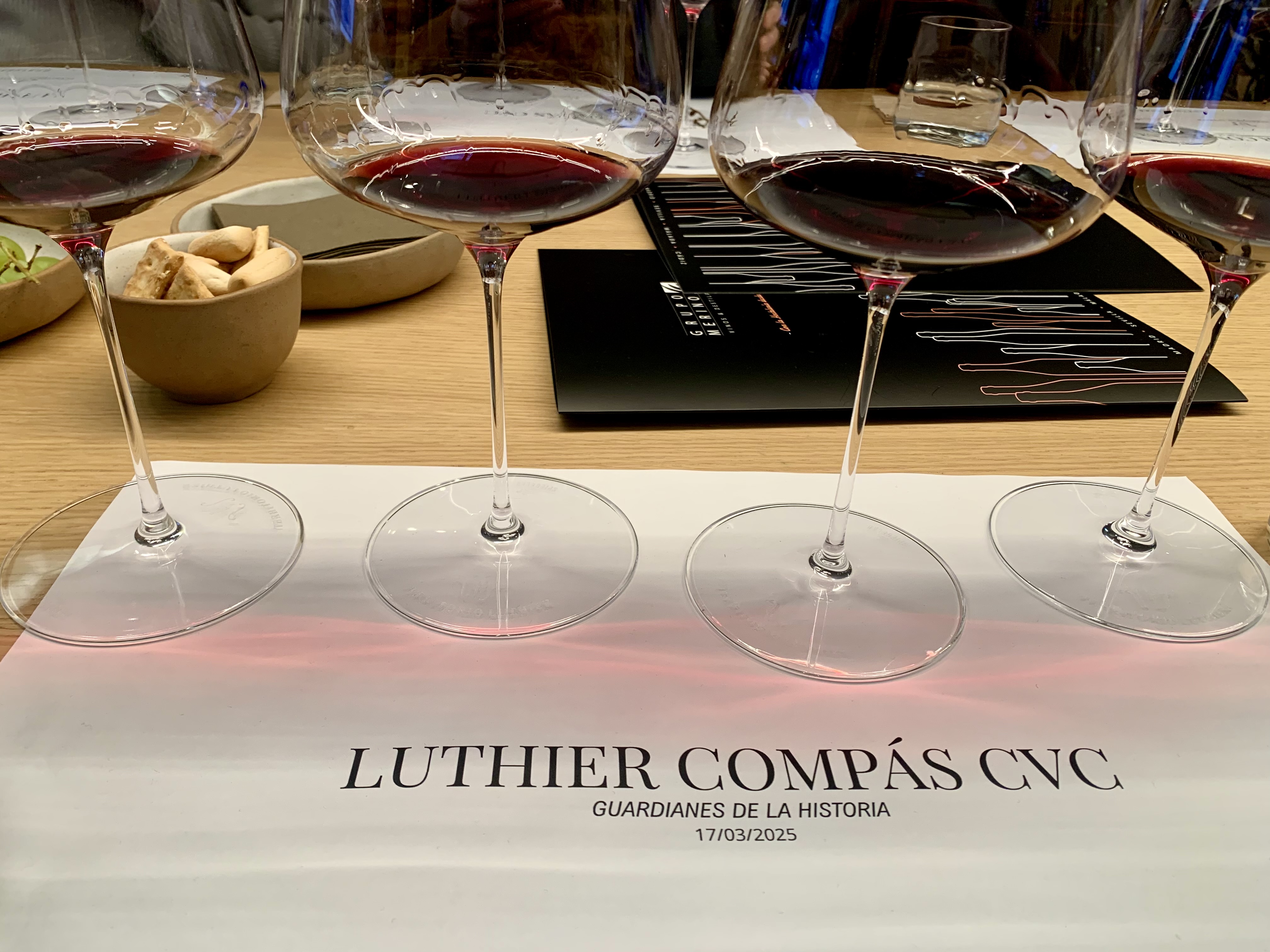
Compás 2, priced at around €900, incorporates an additional 225-litre barrel from the 2020 vintage, sourced from a Tempranillo vineyard in Aranda de Duero that also includes Garnacha Peluda, the glossy-leaf Garnacha clone and Garnacha Tintorera (Alicante Bouschet).
The quantities are minute: just 284 bottles of Compás 1 and 336 of Compás 2. With each saca, wine from a new vintage is introduced and the solera is reorganised.
How much of what’s in the bottle is audacity, and how much is simply great wine? What truly sets Compás apart from the rest of the range is a different dimension altogether: silkiness, elegance, depth and length. Within this framework, Compás 1 is more structured and profound, while Compás 2 stands out for its exquisitely refined texture, almost more reminiscent of Rioja than Ribera.
At the heart of the project is a desire to demonstrate just how extraordinary Spanish wines can be and to take pride in that achievement without arrogance. “You don’t need to be pretentious to make great wine,” Ortiz says. “It can be done without posturing. We like to bring wine closer to people in a simple way.”
One of the best ways to experience this philosophy is by attending the many events organised throughout the year —where Cristina’s touch is unmistakable— ranging from Christmas markets and gospel concerts to music-and-stars evenings, harvest camps and the occasional party.

Author
Amaya Cervera
A wine journalist with almost 30 years' experience, she is the founder of the award-winning Spanish Wine Lover website. In 2023, she won the National Gastronomy Award for Gastronomic Communication
Previous Post