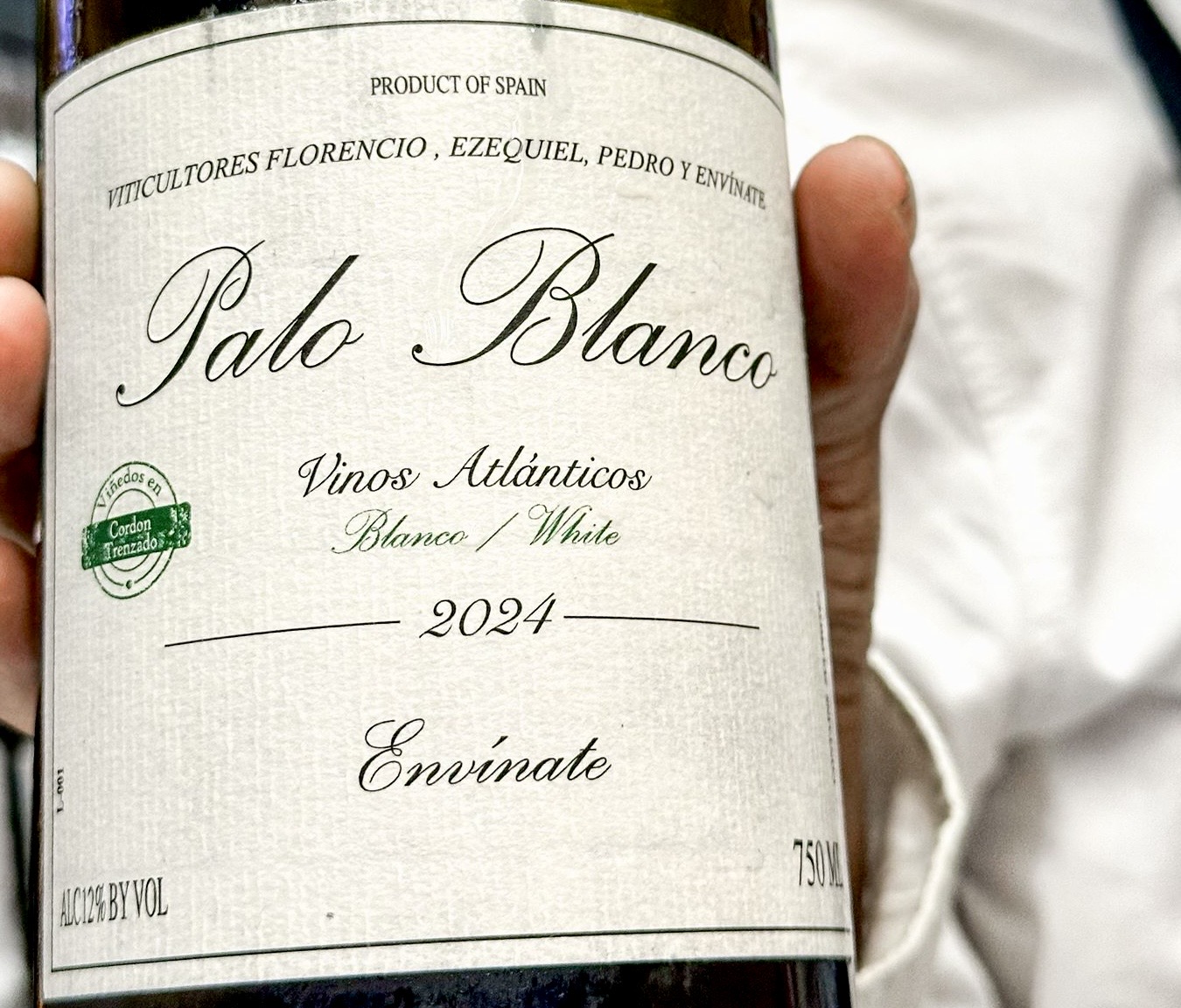
This Listán Blanco from the Orotava Valley, although labelled as DOP Islas Canarias, is one of our favourite Envínate wines. A few days ago, during the Island Wines Summit, a symposium organised by Vocento Gastronomía in partnership with the local government of Tenerife and its tourism board, I had the opportunity to visit the vineyards where it is grown.
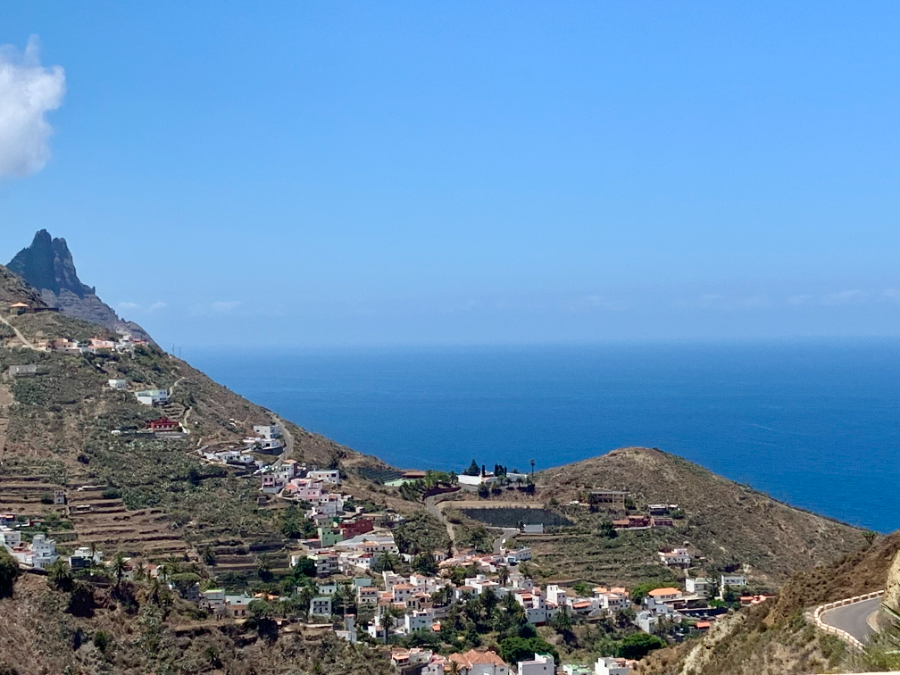
Our guide was Roberto Santana, Envínate’s man in the Canary Islands, who introduced us to the effects of the so-called panza de burra (donkey’s belly), the blanket of moisture-laden clouds pushed onto Tenerife’s northern slopes by the trade winds. While the relentless rain was rather annoying, it provided a vivid demonstration of the climatic conditions that shape this part of Tenerife, where humidity is the main viticultural challenge.
According to Santana, Palo Alto has long been regarded as Tenerife’s grand cru for Listán Blanco. The vineyards lie in a late-ripening area that delivers good acidity. The harvest usually extends into October, making these the last grapes to be picked across all of Envínate's projects in Spain, including Galicia. The soil, dark basalt rocks covered by sand, differs markedly from other parts of La Orotava, where clay is more prevalent.
Envínate farms three vineyards in this area, at elevations ranging from 600 to 650 m. The largest, Las Molinas, covers just over one hectare. Some of its grapes go into Palo Blanco Las Molinas, a single.vineyard white that retails at around €63. Most of the vines are trained using the traditional cordón trenzado system, in which the canes are braided together into long plaits supported by pitchforks. Vines trained using other systems are gradually being converted to this historical local method.
The grapes are fermented with natural yeasts at relatively high temperatures before the wine spends almost a year ageing in 25-hectolitre foudres. Palo Blanco displays the hallmark Canarian combination of struck-match reduction, but the palate is unmistakably intense, almost wild. The excellent acidity brings liveliness and energy without being sharp, thanks to a subtle creamy texture. The finish is long, saline and evocative of wet stones. The fruit is barely noticeable, yet nothing feels missing.
The Island Wines Summit also provided an opportunity to explore the breath of Tenerife wines, highlighting the remarkable diversity of its whites. This stems not only from the island’s extraordinary range of grape varieties —three aromatic varieties quickly spring to mind: Marmajuelo, Malvasía Aromática and Albillo Criollo—, but also from the many different expressions of the comparatively neutral Listán Blanco (Palomino on mainland Spain) across the island’s varied terroirs. The version from Palo Blanco is certainly one of the most remarkable.
12% abv
13,000 bottles
€32
Score: 94

Author
Amaya Cervera
A wine journalist with almost 30 years' experience, she is the founder of the award-winning Spanish Wine Lover website. In 2023, she won the National Gastronomy Award for Gastronomic Communication
Next Post
Island wines: thriving against the odds