“Island is a powerful word in a restaurant atmosphere,” says Paz Levinson, executive sommelier at Groupe Pic in Valence, France, one of the world’s most challenging markets for introducing foreign wines. At Anne-Sophie Pic’s three-Michelin-starred restaurant, where around 30% of the list is devoted to international wines, bottles from Tenerife are currently outperforming those from Rioja or Ribera del Duero.
The Argentinian sommelier believes island wines embody many of the qualities that resonate with today’s wine drinkers: local grape varieties, century-old and/or ungrafted vines, traditional training systems, volcanic soils, acidity —or at least the perception of it— moderate alcohol levels and an artisanal approach to winemaking.
Levinson was among the speakers at the Island Wine Summit, held in Puerto de la Cruz from 21 to 23 June. Organised by Vocento Gastronomía in partnership with, Tenerife's local government and Tourism Board, and supported by ICEX, the encounter brought together producers and wine experts from around the world to explore what defines island wines and identify common features. Another recurring theme was the threats facing these challenging vineyard landscapes, notably the lack of generational replacement and the growing impact of tourism.
Although wines from the host island dominated the tastings and parallel events, Mallorca was also represented. On an international level, attendants sampled wines from Azores, Madeira and Porto Santo (Portugal); Corsica (France); Sardinia, Pantelleria and Sicily (Italy); Kefalonia, Zakynthos, Tinos, Santorini and Crete (Greece); Cyprus; Bozcaada (Turkey); and even Hokkaidō (Japan) and England, the latter two represented by wines made from international grape varieties.
The conference combined presentations and technical sessions with talks focusing on geographical, historical, and cultural aspects. Visits to a number of wineries in Tenerife completed the agenda. Women, however, remained noticeably underrepresented, accounting for just two of the eight keynote speakers and only one of the ten producers/sommeliers on the stage.
A landscape of contrasts
One of the summit's recurring messages was the extraordinary diversity of island ecosystems, where a remarkable range of microclimates and elevations can exist within relatively small geographical areas.
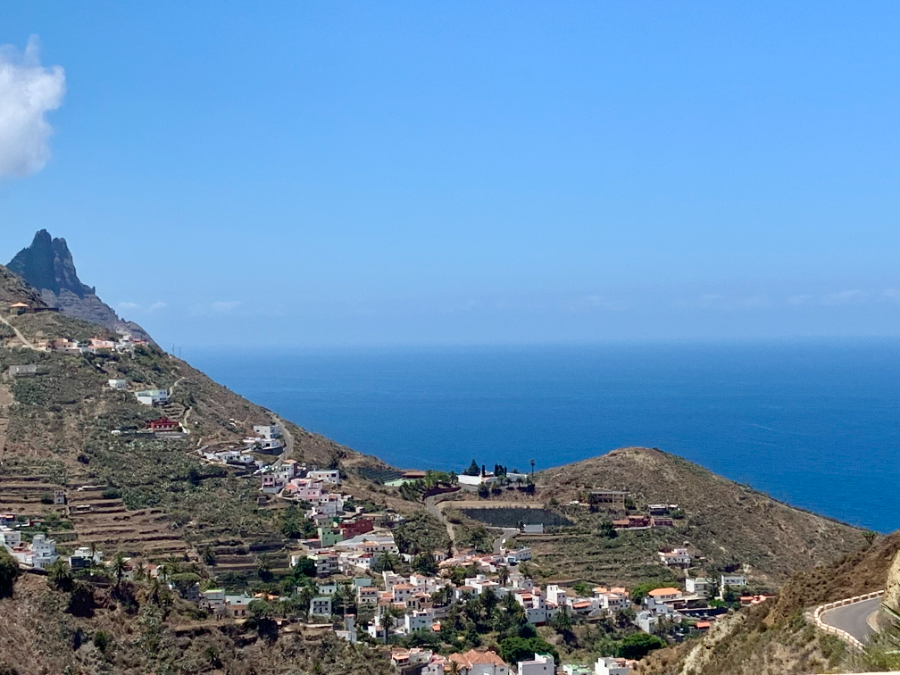
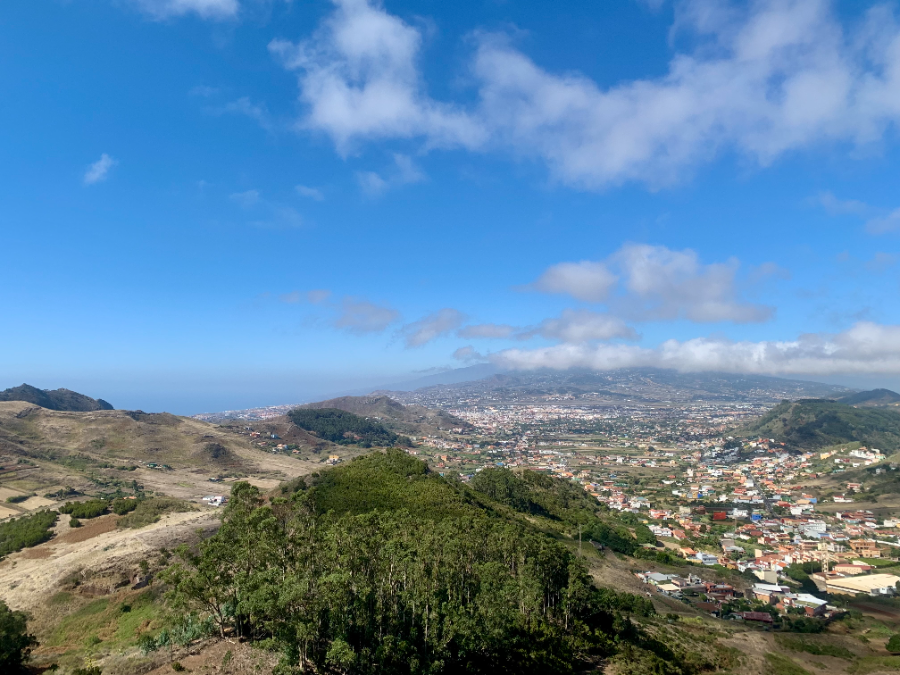
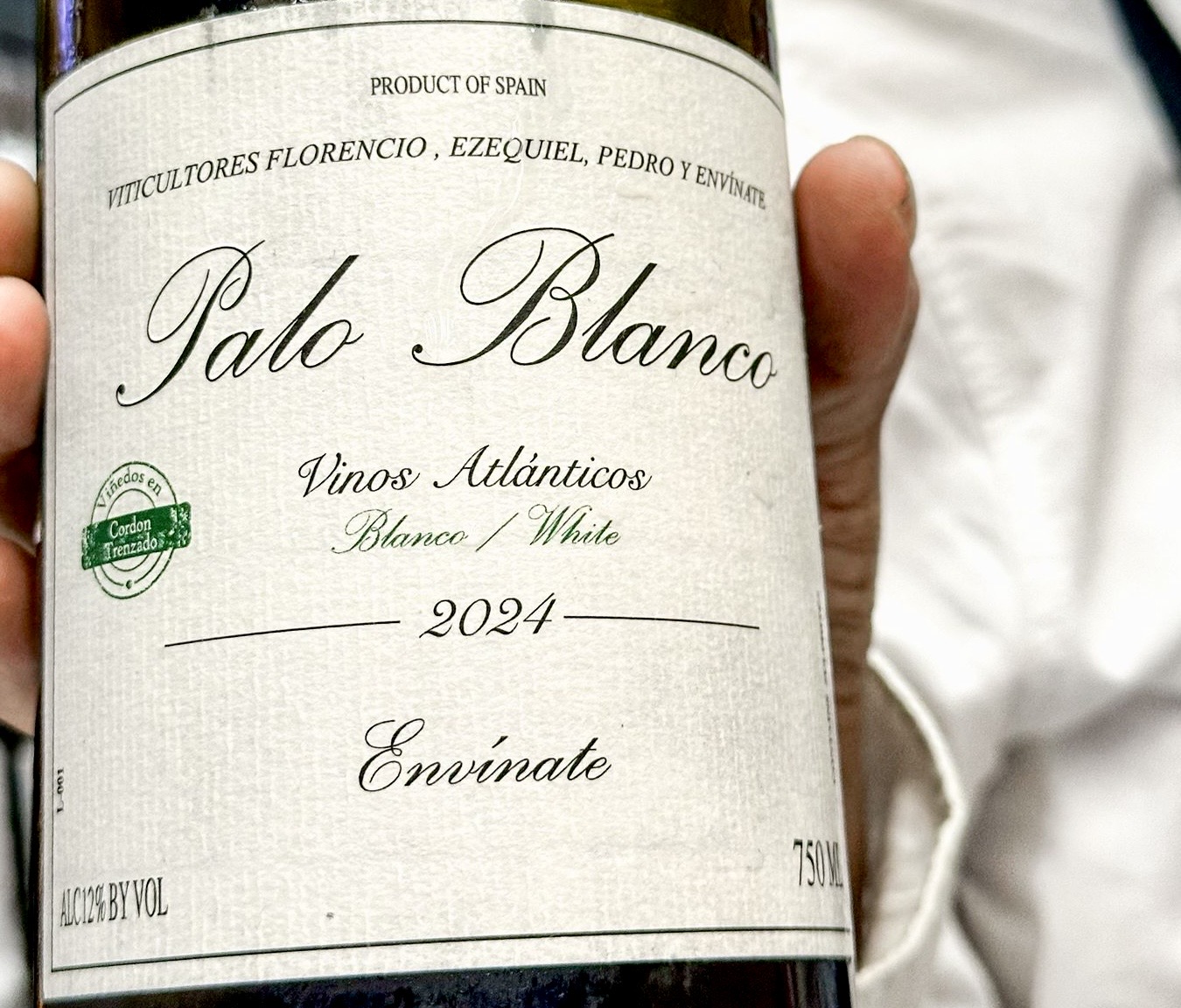
Nothing illustrated this better than the persistent rain that greeted us on our visit to Envínate's vineyards in Los Realejos, the source of its Palo Blanco white. We were almost swallowed by the panza de burra (donkey's belly) – the blanket of low cloud brought in by the trade winds that regularly covers northern Tenerife. Meanwhile, visitors in Vilaflor, in the DO Abona appellation in the south, strolled around the lower slopes of Mount Teide in glorious sunshine. These contrasting conditions are caused by the Föhn effect, a meteorological phenomenon that occurs when a mass of moist air rises up the mountain slopes, cools and releases its moisture as rain before descending the other side as a dry, warm wind.
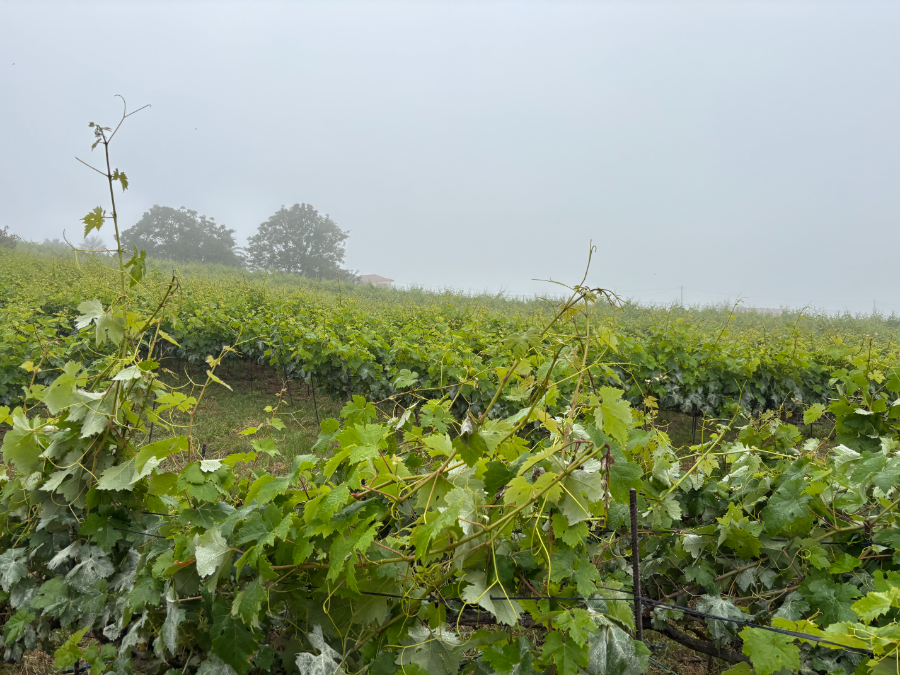
While growers in the north have to cope with fungal disease in one of the wettest seasons in recent years, vineyards in the south face intense solar radiation, tempered by the cooling effect of elevation. The Los Frontones plot, owned by Bodega Piedra Fluida and lying at an elevation of 1,687 m in the village of Granadilla de Abona, is currently the highest vineyard in Spain – and in Europe.
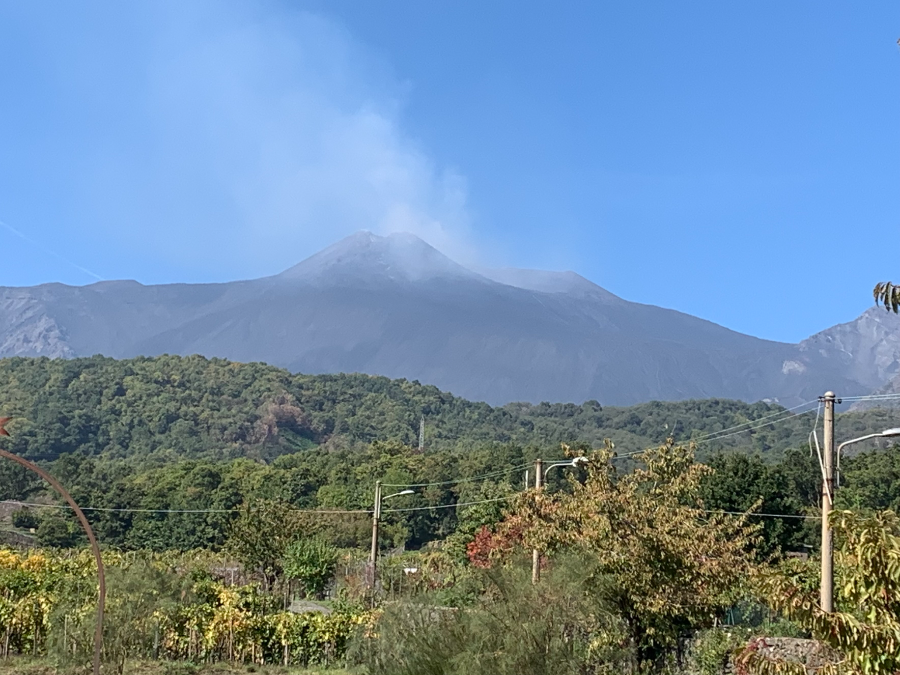
Across the volcanic islands of Macaronesia —from Cape Verde and the Canary Islands to Madeira and the Azores— landscapes remain in a constant state of geological evolution. Ancient soils coexist with newly formed lava flows left by successive eruptions. Perhaps the most extreme example is Mount Etna in Sicily, where the frequent eruptions of “a muntagna”, as locals call the volcano, dramatically reshape the landscape, the crops and the lives of those who inhabit its slopes. This fascination with volcanic terroirs was explored by Canadian Master Sommelier John Szabo in his 2016 book Volcanic Wines: Salt, Grit and Power, a work cited repeatedly throughout the summit. Szabo argues that volcanic soils impart greater acidity, as well as pronounced minerality and salinity.
Minerality or the absence of fruit
According to British wine writer with a scientific background, Jaime Goode, minerality is a relatively modern term, entering the wine lexicon in the 2000s. It is often used to describe various sensory attributes (texture, aroma and flavour) that fall into three main categories: stone-related terms (hot or wet stone, gunflint), sensations associated with acidity and freshness, and seashore-related terms (saltiness, algae, iodine, shellfish).
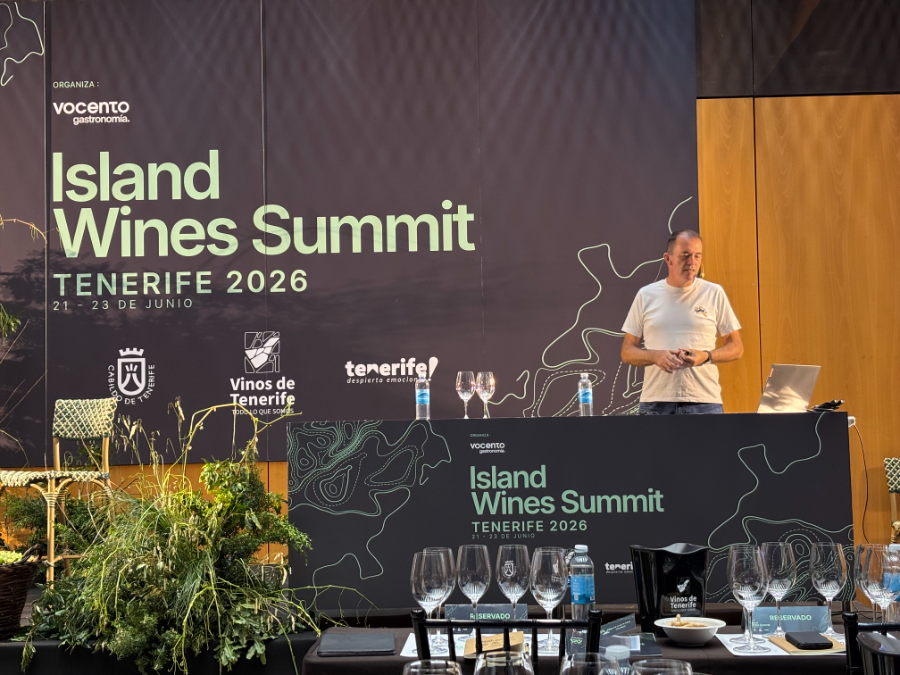
Goode explained that these perceptions are linked to the way in which soil can affect grape composition (it has been proven that “rocks do not impart flavour” to wine). Nutrient deficiencies in yeasts can cause the production of mineral compounds such as matchstick and flint, which are common in many island wines, whilst volatile sulphur compounds causing reduction may also play a role.
When it comes to identifying these aromas and textures, what we perceive in the glass obviously play a role, but so do the taster’s experience, expectations, and flavour memory. As François Chartier, an authority on aromas and molecular harmonies, pointed out, perception is key.
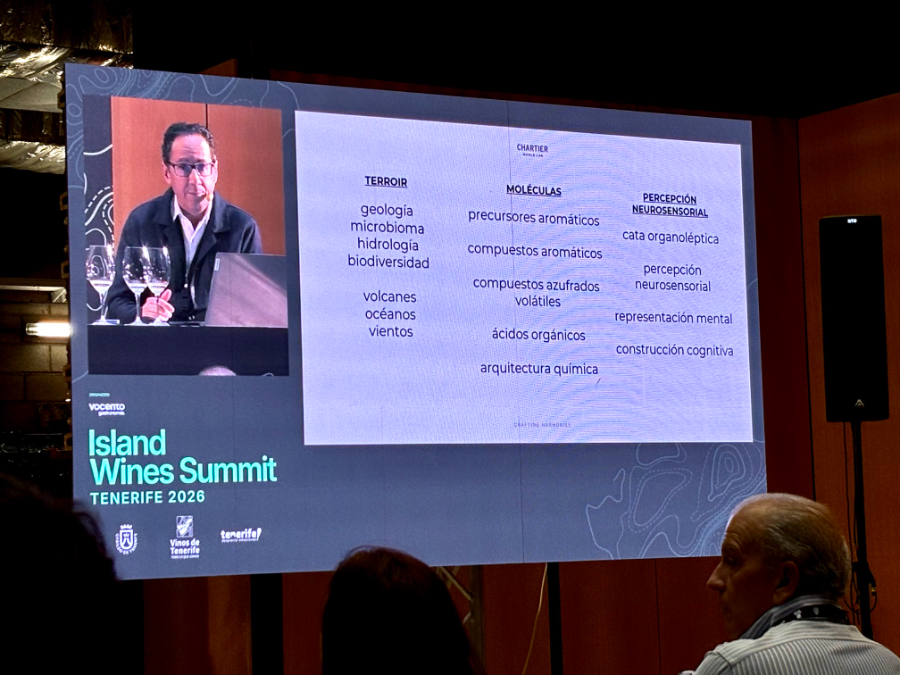
Chartier structured his presentation around three main aspects: terroir (comprising geology, microbiome, biodiversity, climate and topography); molecules (which include precursors and aromatic compounds, as well as volatile sulphur compounds, etc.); and neurosensory perception. He also explored the relationship between the geochemical composition of wine and human perception. Referring to research carried out by the Centre National de la Recherche Scientifique in Lyon, he explained that scientists have identified 40 stable minerals in wine, allowing them to establish a chemical fingerprint linked to the wine’s geological origin. For Chartier, however, it is essential to distinguish between mineralisation (the measurable presence of dissolved minerals in wine) and minerality, which he defines as the sensory perception created through a combination of chemical, tactile, and cognitive cues. The challenge, he argued, is understanding how the compounds present in the glass are transformed by the brain into what we perceive as minerality. This is why he considers island and coastal vineyards to be among the world’s best natural testing grounds for studying this process.
Despite this intricate complexity, island wines continue to captivate thanks to their distinctive identity. “We wine geeks love minerality,” said Goode. “We give higher scores to wines that we recognise as having it, which is why we’re so interested in them. There has been a clear shift in winemaking, and the world of wine is now much more interesting than it used to be.” For Goode, the contrast is particularly evident in wines dominated by ripe fruit, where this mineral dimension is largely absent.
Practice confirmed the theory. The wines tasted at the summit had distinct saline and savoury notes and were often enhanced by a juicy sensation and mouth-watering acidity. There were also reductive and gunflint nuances. We could speak of an absence of fruit or say that fruit takes a back seat, allowing the mineral sensations described by Goode to come to the fore. The British wine writer also recommended using specific descriptors and avoiding the term 'mineral', which he considers ambiguous and imprecise.
From the Mediterranean to the wider world
Aside from scientific questions, much of the fascination surrounding island wines lies in their history. For centuries they were shaped by maritime trade, supplying ships crossing the Mediterranean and, following the discovery of the Americas, into the New World.
Josep Roca, sommelier and co-owner of the three-Michelin-starred Celler de Can Roca restaurant, captured this spirit by opening his presentation with an excerpt from Wagner's opera The Flying Dutchman. It served as a fitting introduction to a talk about multiculturalism, mixed cultures, heroic viticulture, and how grape varieties have travelled across continents to develop distinct identities. “Islands are a floating refuge,” he noted. “Places where travellers replenish their supplies and continue their journey. They are guiding lights and beacons of opportunity.”
Roca also referred to La Bataille des Vins, a 13th-century poem that offers a glimpse into the wines of medieval Europe, including several from the Mediterranean, particularly Cyprus. Other historical references included Alexander von Humboldt's expedition to Tenerife — the German naturalist widely regarded as the father of modern geography — and the popularity of Tenerife wines at the court of Versailles in the 18th century.
Bernat Voraviu, sommelier at Barcelona’s Alkimia restaurant and founder of the import and distribution company Ithaca Wines, described the Mediterranean as a region of extraordinary diversity, united by a shared cultural thread despite its many languages, landscapes and traditions. “Islands are not museums; they are repositories of memory that provide invaluable insights into the refinement of wines, far more than we realise,” he noted.
In line with this idea, the wines he selected for his tasting showcased the work of a new generation of producers working with traditional or recovered local grape varieties and focused on very specific regions, often in mountainous areas, which allow them to produce fresh wines from late-ripening varieties. This is a compelling demonstration of how the Mediterranean's natural resources can adapt to climate change.
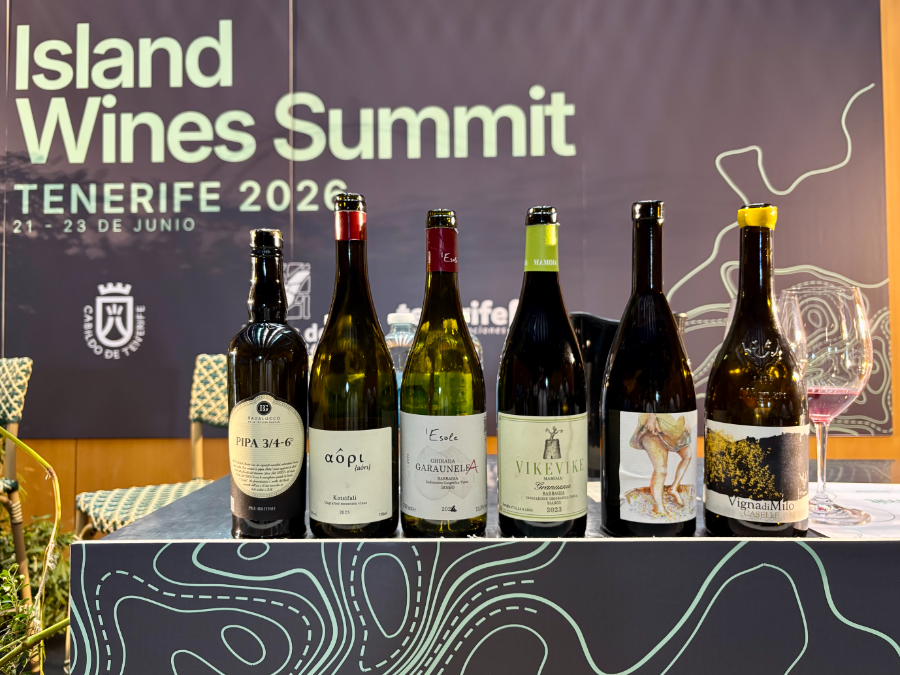
Under his guidance, we tasted wines from Sicily, notably I Vigneri in Milo, the wettest and coldest area of Mount Etna; the historic region of Mamoiada in Sardinia, represented by the young producers Vikevike and Esole; Vouni Panayia in Paphos, Cyprus, which harvests grapes from limestone soils between late September and early November; and Aôri Winery in Chania, Crete, where slate-dominated vineyards can get covered in snow. Presented by the producers themselves, the tasting also celebrated local grape varieties. In order of appearance: Carricante (white), Granazza (white), Cannonau (Garnacha Tinta), Morokanella (white) and Kotsifali (red).
A firmly established category
Pascaline Lepeltier, Master Sommelier and co-owner of the New York restaurant Chambers, emphasised that the market is a key factor in the success of island wines. Importers and distributors, she argued, have played a decisive role in creating and promoting the category. Her presentation traced the gradual emergence of island wines as a recognised segment, contrasting this relatively recent development with historical works such as André Julien's 19th-century compilation Topographie de tous les vignobles connus, which already mentioned Sicily, the Greek islands, the Azores, Madeira and Mallorca.
Drawing on nearly two decades of experience as a wine buyer in New York , Lepeltier traced the movement’s origins in the Greek islands during the mid-1980s. Tourism introduced visitors to the Mediterranean lifestyle and its food culture, while Santorini’s dramatic landscapes, saline wines and distinctive Assyrtiko grape varietycaptured the imagination of wine lovers abroad. For the French sommelier, Corsica followed a similar path. Beginning in the 1980s, producers revived local grape varieties as a reaction against industrial, mass-produced viticulture, while dedicated importers introduced and championed Greek and Corsican wines on the US market.
The real breakthrough, however, came around the turn of the century with the international success of Etna wines. Much of the credit, Lepeltier argued, belongs to visionary outsiders who recognised the area’s potential, including Italian fine wine exporter Marco Grazia and Belgian natural wine champion Frank Cornelissen. A similar story unfolded in the Canary Islands. Their wines became symbols of what was then dubbed the “New Spain”, helped by US importers such as José Pastor, who recognised their originality and gave them visibility in the US market. "These wines speak for themselves," Lepeltier said. “They fit perfectly into the New York wine market, which is more interested in "what’s going to happen tomorrow. People often come to Chambers and say, 'I like Burgundy, but I want to try something different'."
On the brink
Over the last decade, new island regions have emerged on the international wine scene, such as the Azores and Porto Santo in Portugal, as well as Japan, known as the land of 14,000 islands. However, according to Lepeltier, the growing popularity of these destinations has also exposed the tensions between tourism and the preservation of their valuable natural heritage. "The islands show us the problems that the continents will have to face," she said.
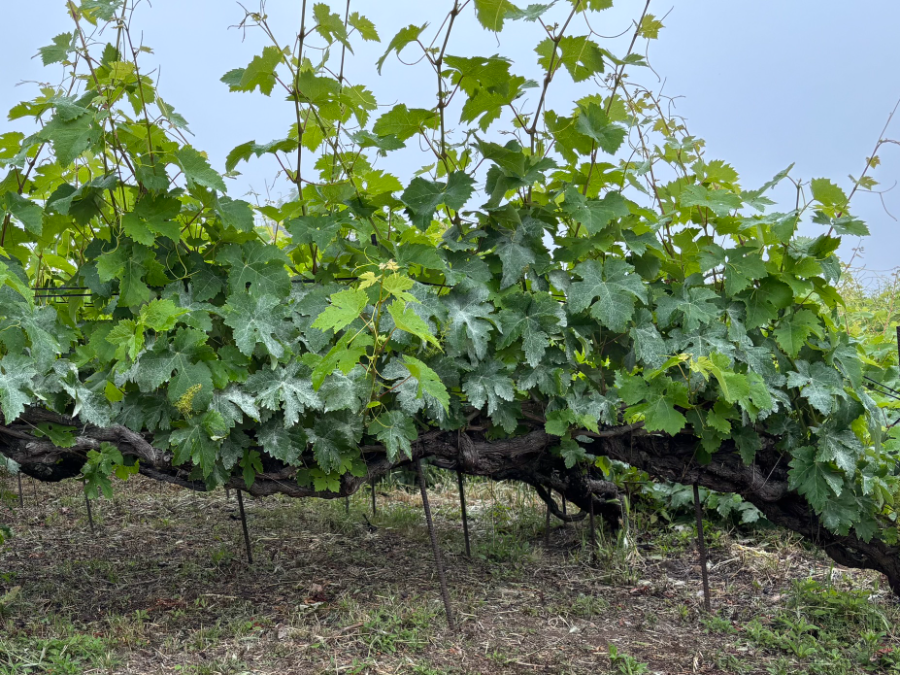
Fernando Mora MW, the Aragonese producer who acted as content adviser to the summit, shared a similar view during a panel discussion with fellow winemakers. “A region’s cultural identity is sometimes defined by its vineyards,” he said, highlighting distinctive growing systems, such as the cordón trenzado (see photo below) in Tenerife and the dry-stone walls that protect each individual vine in the Pico vineyards in the Azores from Atlantic winds and sea spray. Antonio Maçanita of Azores Wine Company, whose family roots lie in this Portuguese archipelago, stressed that heritage survives only when people are prepared to invest in its recovery. “When we first arrived in Pico, grapes were paid for at €0.60 per kilo of grapes; today, they can fetch up to €7. The first task is creating value; the second is adding a social dimension to wine growing. We’ve managed to encourage people who’ve worked with us to start their own projects,” he explained.
Safeguarding these traditional island vineyards is a major challenge. In many places, winegrowing is a part-time activity carried out by an ageing generation, with few successors willing to take over. "If someone abandons a vineyard planted by their father, it is because it doesn't make any money," Mora explained.
One encouraging example is Bodegas Cráter, one of the wineries we visited during our stay in Tenerife. In the late 1980s, a group of friends from very different professional backgrounds (including a pharmacist, a solicitor and an engineer) acted as mediators between the local authorities and the winegrowers to help regulate viticulture in the surrounding area and lay the foundations for Tenerife’s appellation system. A few years later, they set out to make their own wine.
Today, under the direction of pharmacist Lourdes Fernández and with technical advice from the renowned Spanish oenologist Pepe Hidalgo, Bodegas Cráter produces around 15,000 bottles a year, primarily for the local market. Based in El Sauzal, within the DO Tacoronte-Acentejo in the north of Tenerife, the winery has made supporting local growers a central part of its philosophy, paying relatively generous prices for grapes —€3 per kilo for white grapes and €4.50 for reds. Alongside a fresh, spicy young red that captures the distinctive character of Tenerife’s wines, the estate also produces a range of barrel-aged reds with a more international profile, particularly popular among foreign residents and long-stay visitors.
During our visit, one image stood out: rows of empty bottle racks. Years of persistent drought have reduced production to just 2,000–3,000 bottles in recent years, leaving little wine to store. Fortunately, this growing season appears to have brought some relief.
A step forward
To preserve the extreme viticulture of stone walls, volcanic pits, cordón trenzado and steep slopes, island wines will need a broader base of quality producers. "A region truly comes into its own when there are different interpretations of the terroir," said Roberto Santana of Envínate.
For both Josep Roca and Fernando Mora MW, demonstrating the ageing potential of dry island wines is crucial in strengthening their reputation. This is why they included wines from past vintages in their respective tastings. Roca generously opened bottles from the cellars of El Celler de Can Roca for an audience of 180 people. “Wine needs time in bottle for the terroir to come through", he explained. "Minerality is expressed more through texture than aroma, and ageing helps bring that out".
Perhaps, the most striking example was Motor Gold 2014, an orange wine made from Premsal Blanc by Eloi Cedo during his time at 4 Kilos in Mallorca. More than a decade on, it had retained the acidity and wild edge typically associated with this style, while bottle age had softened its tannic grip.
Roca also presented an elegant and nuanced Vidonia VP 2016. This white wine had a Burgundy-like character thanks to its oak ageing, developing smoky and spicy notes.
In his presentation, Fernando Mora MW chose Ignios Marmajuelo 2013 —the wine’s second release—, produced by Borja Pérez in Ycoden-Daute-Isora, in north-west Tenerife. The wine has not been produced in recent vinatges because of the severe drought. Made from the aromatic Marmajuelo variety, it had evolved with remarkable restraint, gradually revealing notes of toast and sweet spices before exploding on the palate in a true celebration of salinity and concentration.
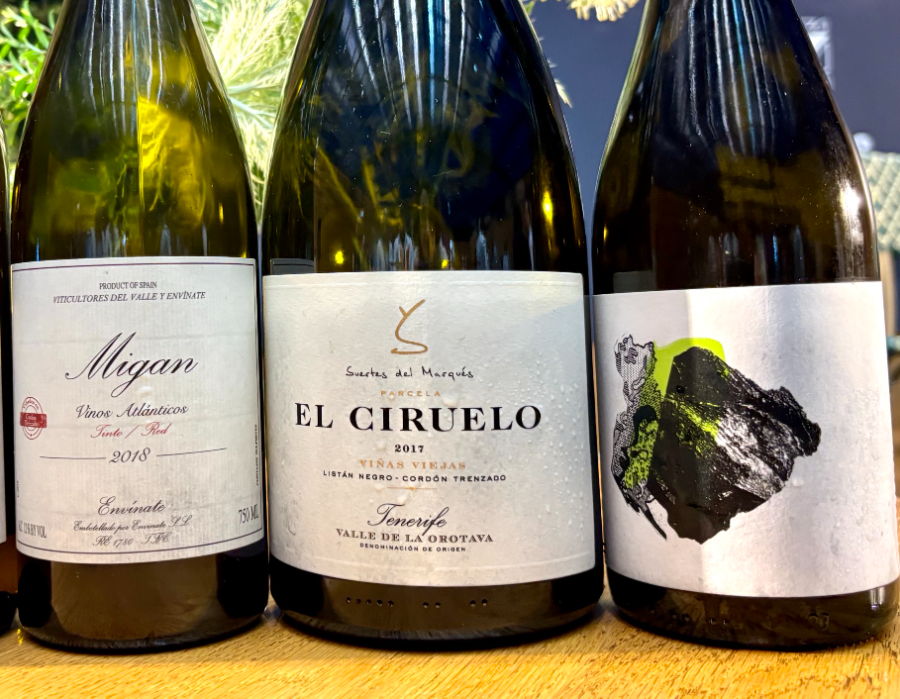
Among the reds, we tasted two wines from the Orotava Valley. The first was Migan 2018 by Envínate, whose inaugural vintage was 2016. Compared with younger releases, the nose was more refined (black pepper, petals, pumice, crisp herbal notes), while the palate retained its effortless flow, but finished with greater concentration and dark, earthy notes. This was followed by a 2017 Suertes del Marqués El Ciruelo, served from magnum. Now renmaed Las Suertes, the wine still felt very youthful. After an initial touch of reduction, it opened into generous fruit and spiced notes, with good volume and firm tannins.
Island ambassador
The summit also appointed the 2026 Guardian of Tenerife Wines, an honorary role intended to promote the island’s wines. The distinction went to sommelier Miguel Ángel Millán, who works at the Michelin-starred Emi restaurant in Madrid, where Canarian wines feature prominently on the wine list. Millán has worked at some of Madrid’s most celebrated restaurants such as Jockey, Santceloni, Kabuki Wellington and DiverXO, where he spent six years as head sommelier. In 2023, he received the World’s Best Sommelier Award.
Author
Amaya Cervera
A wine journalist with almost 30 years' experience, she is the founder of the award-winning Spanish Wine Lover website. In 2023, she won the National Gastronomy Award for Gastronomic Communication
Previous Post