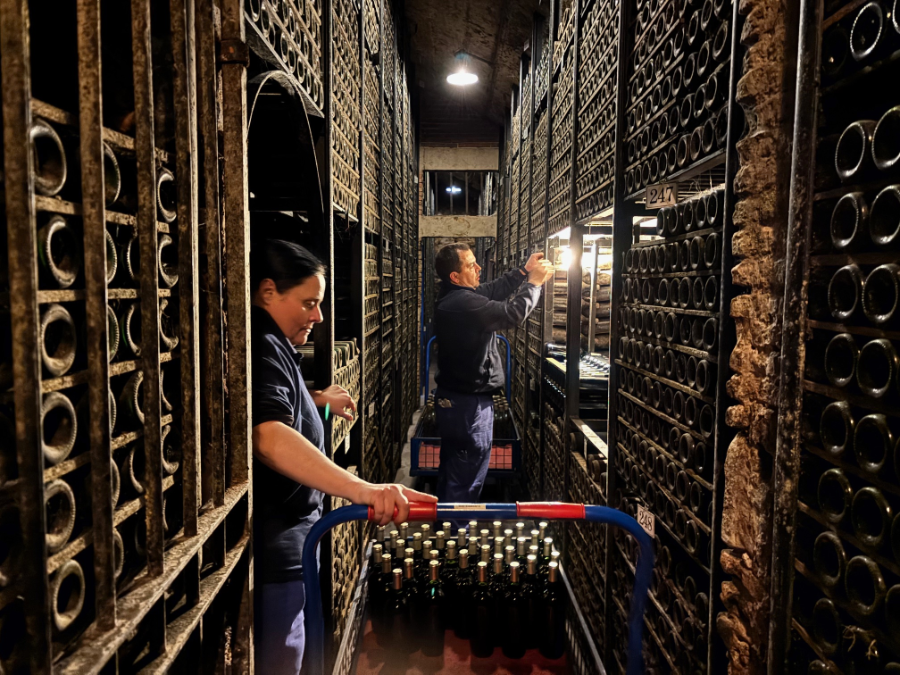
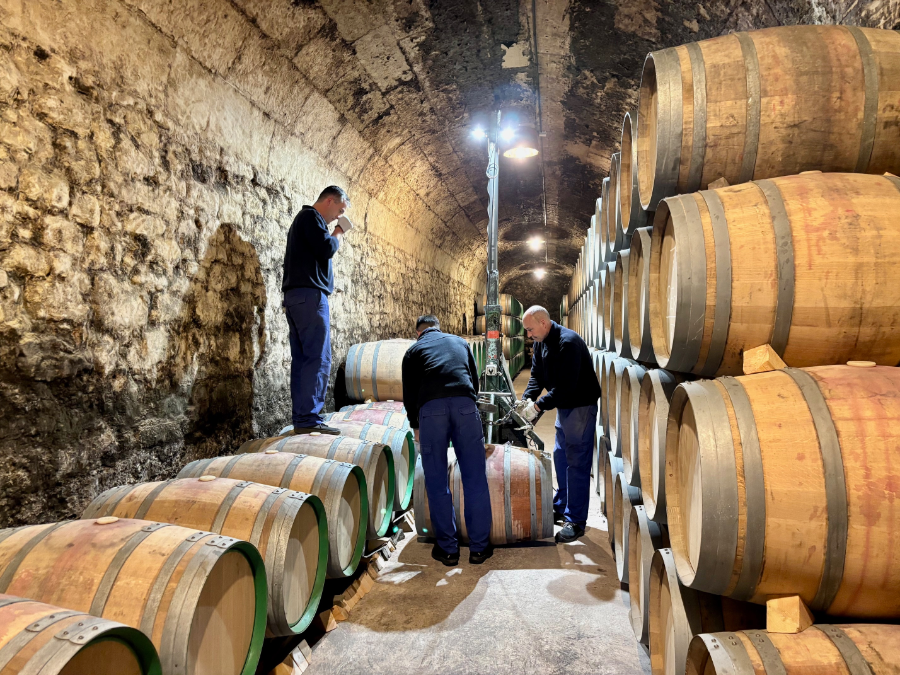
Home to more than 130,000 bottles dating back to 1862, Marqués de Riscal’s historic cellar (Botellería Histórica) in Elciego, Rioja Alavesa, is one of Spain’s greatest wine archives. When I visited recently, its normally silent, dimly lit corridors were unusually busy as a team recorked some of the estate’s oldest bottles.
This is a practice reserved for bottles with low fill levels. Working under nitrogen in an inert atmosphere, the team tops up each bottle with wine from the same lot. The process is supervised by officials from the Rioja Regulatory Council, who certify the wines once the work has been completed.
The importance of preserving this collection has taken on new significance since Ricardo Diéguez, the new managing director at Marqués de Riscal, unveiled plans for what he describes as “the world's most extensive programme of old vintages”. At Wine Paris, the winery offered a glimpse, uncorking bottles from 1938 and 1956 using heated tongs. Diéguez and his team are still deciding exactly how to present this historical legacy, but they intend to engage iconic restaurants, auction houses and collectors around the world.
Bottled history
The historic collection contains two distinct categories of red wines. The XR wines (short for ‘extra rouge’) were selected from the estate’s regular Tempranillo barrels, while Reserva Médoc was reserved for special vintages and included Cabernet Sauvignon in the blend. These wines were never intended for commercial release. Instead, bottles were set aside in the cellar, a tradition that continued until the mid-1960s.
Until recently, these bottles emerged only occasionally, usually for professional tastings such as the Masters of Wine symposium held in Logroño in 2018 and the celebrations marking Rioja’s centenary. A small selection is also available at the fine dining restaurant in Hotel Marqués de Riscal, while a handful of restaurants hold limited vertical collections. The most important historical tasting in recent years took place in 2022 to mark the release of Tapias through La Place de Bordeaux. Before an audience of leading international wine critics, three of the remaining 16 bottles from the inaugural 1862 vintage were opened alongside pre-phylloxera wines from 1870, 1876, 1886 and 1889. Yet it was the 1945 Reserva Médoc, made from Cabernet Sauvignon, that stole the show.
The presence of a grape variety that is not officially authorised under DOCa regulations is a legacy of the strong French influence that shaped the winery's origins and early decades. Founder Guillermo Hurtado de Amezaga spent part of his life in Bordeaux and became one of the driving forces behind the Médoc Alavés movement working alongside Álava Provincial Council to modernise local winemaking. At the estate he inherited from his sister in Elciego, he introduced Bordeaux techniques and hired a succession of French winemakers, starting with Jean Pineau, formerly of Château Lanessan, until the 1950s. In addition to growing Cabernet Sauvignon, Riscal became known for relatively moderate ageing periods of three to four years and for bottling red wines by vintage at a time when much of Rioja relied on broad blends sold according to the average time spent in the cellar, as second, third, fourth, fifth and sixth year wines.
A complete overhaul
The new management is drawing on the company's history. Launched just a few months after Diéguez took charge, the winery's latest advertising campaign plays on the phonetic similarity between Riscal and the slogan ‘Risk all’. The campaign references key moments in the estate’s history while celebrating its position at the top of the 2024 edition of The World’s 50 Best Vineyards. “Taking risks since 1858 has led us to become the best vineyard in the world”, reads the advert. However, the word “vineyard” is slightly misleading. Created in 2019 by media and events company William Reed following the success of The World’s 50 Best Restaurants, the ranking is essentially a measure of wineries as tourist destinations. Riscal fits the bill. Combining a rich historic heritage with the colourful titanium curves of the Frank Gehry-designed hotel, the estate welcomed 95,000 visitors in 2025.
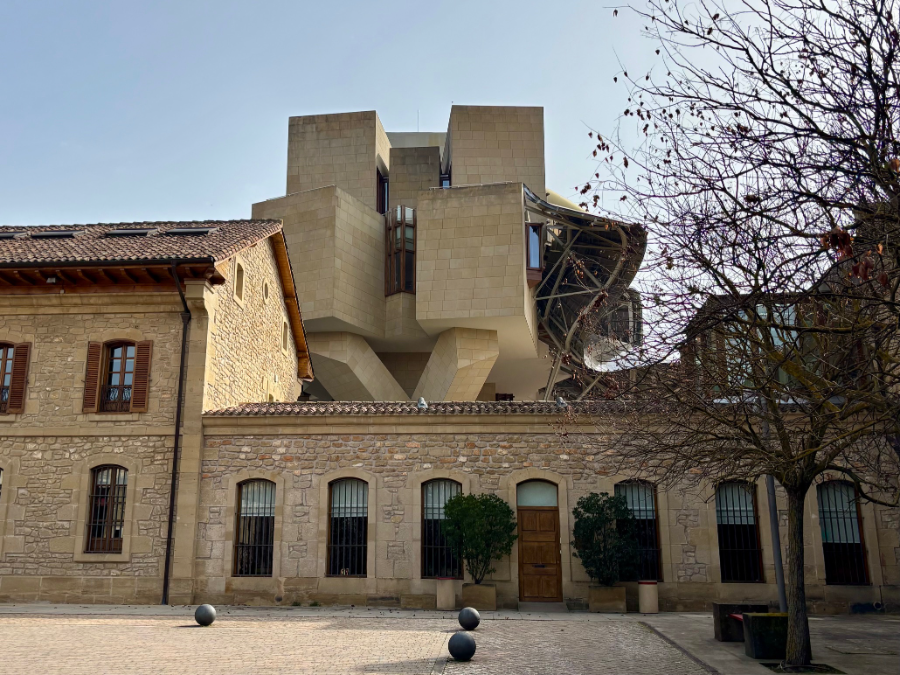
President Alejandro Aznar, who has served on the Board of Trustees of the Guggenheim Museum Bilbao Foundation since its creation in 1997, enjoys telling the story of how Canadian architect Frank Gehry was persuaded to take on the project. According to Aznar, he was simply offered a glass of 1929 Riscal, his birth year. Few clients can make quite a pitch.
Aznar remains the majority shareholder and, together with winemaker Luis Hurtado de Amézaga, the last active representative of the owner families within the executive leadership. The retirement of Fernando Salamero (CFO and chairman of the Rioja Regulatory Council from 2017 to 2021), José Luis Muguiro (sales director) and Francisco Hurtado de Amézaga, who handed over winemaking and production to his son Luis, marked the end of an era. All three, however, continue to sit on the board of directors.
The transition has brought a more professional management structure under Diéguez, a former L’Oréal executive who spent nearly three years at García Carrión. Alongside organisational changes comes an ambitious programme of new releases. The year 2026 will revolve around Barón de Chirel. Not only does it mark the 40th anniversary of the inaugural 1986 vintage, but it will also see the brand become exclusive to Rioja. Earlier this year, the company launched a new Barón de Chirel white that replaces the one previously produced from pre-phylloxera vineyards in Rueda.
Cabernet, a historic exception
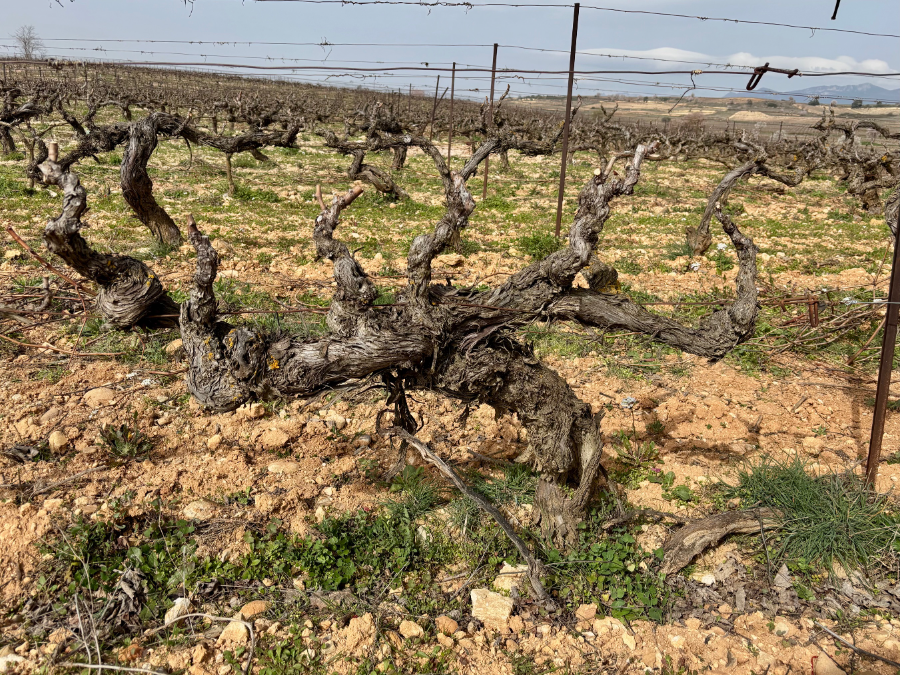
Barón de Chirel was the result of a joint effort by the then managing director, Luis Miguel Beneyto, and Francisco Hurtado de Amézaga, who drew inspiration from the style of the long-lived Reserva Médoc reds. A few years earlier, Hurtado de Amézaga had planted Cabernet vines using cuttings taken from a surviving vineyard rooted in sandy riverbank soils. “All the Cabernet we have comes from that plot, which I uprooted myself,” he recalls.
The new wine was conceived as a response to the growing commoditisation of Rioja during the 1970s, when production expanded rapidly, exports increased and major Sherry groups established a presence in the region. Widely regarded as Rioja’s first modern red —or, in the language of the time, a wine of “high expression”— Barón de Chirel helped redefine perceptions of the appellation and paved the way for a new generation of premium Rioja reds.
The Bordeaux connection remained intact through the consultancy of Guy Guimbertau, formerly the right-hand man of Émile Peynaud. Peynaud himself had taught Hurtado de Amézaga in Bordeaux and later played an important role in shaping the fruit-driven white wines of Rueda while championing Verdejo during the early 1970s.
In Barón de Chirel’s official tasting notes, Cabernet Sauvignon discreetly appears under the catch-all word “others”. Permitted in Rioja only as an experimental variety, the amounts used in each blend are not disclosed. Combined with the variety's uneven performance in Rioja’s vineyards, this has resulted in markedly different expressions throughout the brand's history.
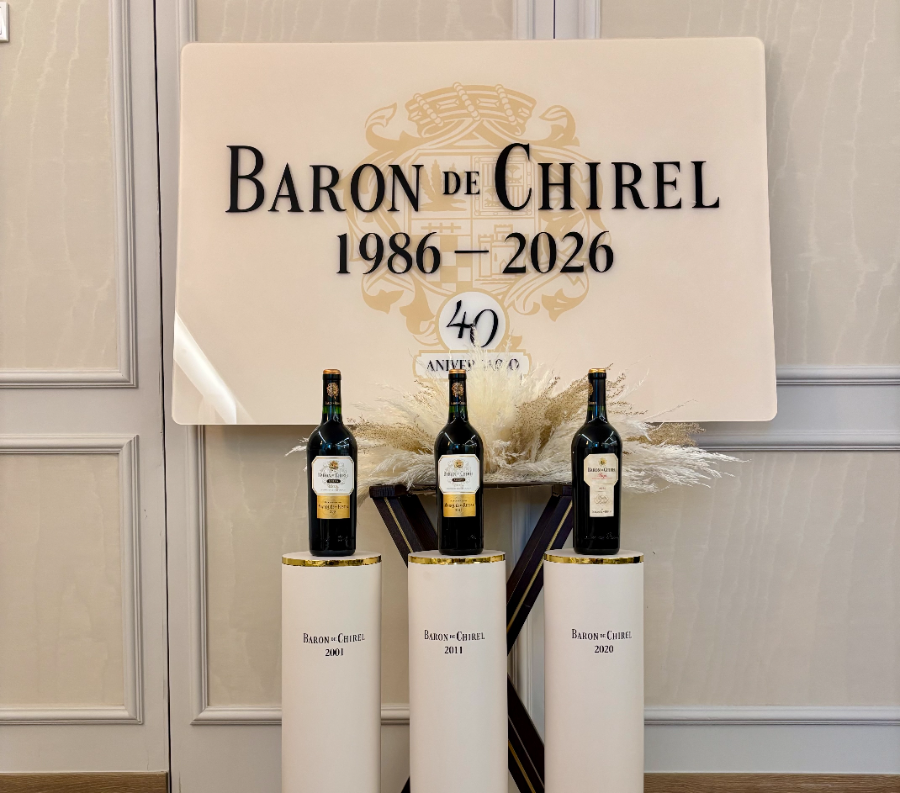
That variability became clear during a mini vertical tasting organised by the winery last year. The line-up included a 2001, which emphasised acidity over structure in a vintage known for its powerful tannins; a 2011 whose distinct Bordeaux-like character remained remarkably vibrant, youthful and taut; and a 2020, a vintage dominated by Tempranillo, with Cabernet accounting for less than 7% of the blend. The 2020 showed generous blackberry and plum fruit, supple yet substantial tannins and a touch of warmth from the alcohol. Of the three, the 2011 vintage was closest to the character of historic vintages such as 1925, 1945 and 1959 that I have tasted in recent years. The question is whether Barón Chirel should actively pursue this Cabernet profile as a defining stylistic feature.
Luis Hurtado de Amézaga points out that Cabernet struggles to ripen in cooler Atlantic-influenced vintages. “We don't use it if it has pyrazine notes,” he says. At the same time, he acknowledges that Cabernet has been one of the unexpected beneficiaries of a warming climate. Better ripening allows small proportions to be included in the blend of the Gran Reserva 150 Aniversario and, in some vintages, even the standard Gran Reserva. As an example of a cool vintage, I tasted the 2008 Chirel: less structured yet flavourful and persistent, with unmistakable notes of undergrowth and roasted red pepper. I also had the opportunity to taste a beautifully ripe sample of Cabernet from the 2025 vintage, showing impressive depth, concentrated fruit and well-defined aromas of redcurrant and black pepper.
The revolution is in the vineyard
The grapes for both Barón de Chirel and Tapias are sourced from the high terraces of Elciego. Elevated above the Ebro by a dramatic drop in the landscape, these sites are widely regarded as the crown jewels of the estate.
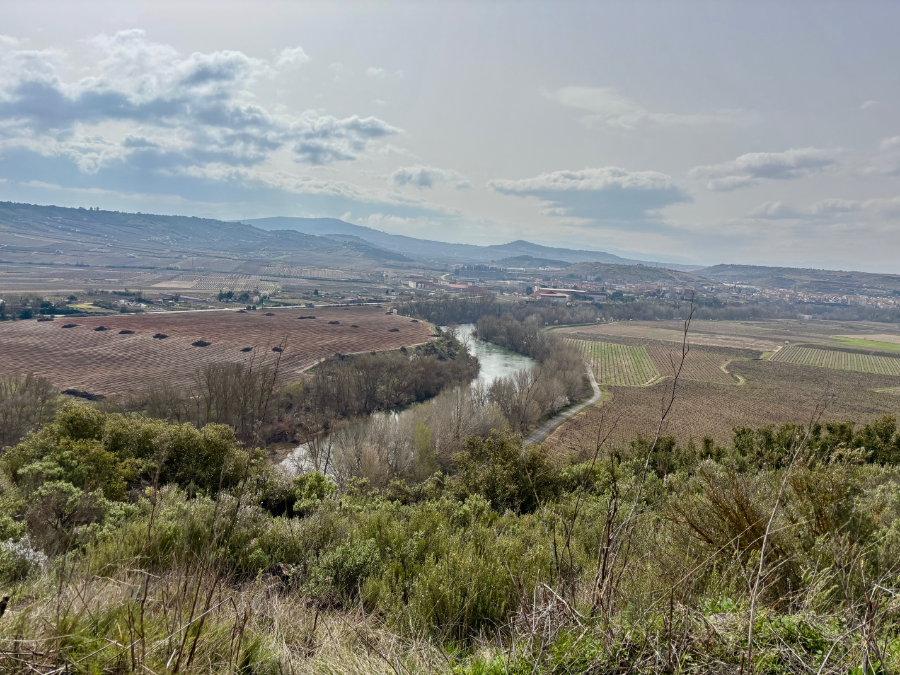
The Tapias vineyard, which covers 16 hectares, is part of the original property inherited by Guillermo Hurtado de Amézaga from his sister. Its Tempranillo vines, preserved through successive mass selections, have always been grafted onto Rupestris de Lot rootstock. The material is distinctive, producing loose bunches with thick-skinned, crunchy berries. According to Luis Hurtado de Amézaga, the vineyard was last replanted in the late 1960s. Compared with neighbouring sites, the soil contains higher proportions of clay and iron, enabling it to store water reserves for the summer. There is also a small section planted with the estate’s historic Cabernet grapes.
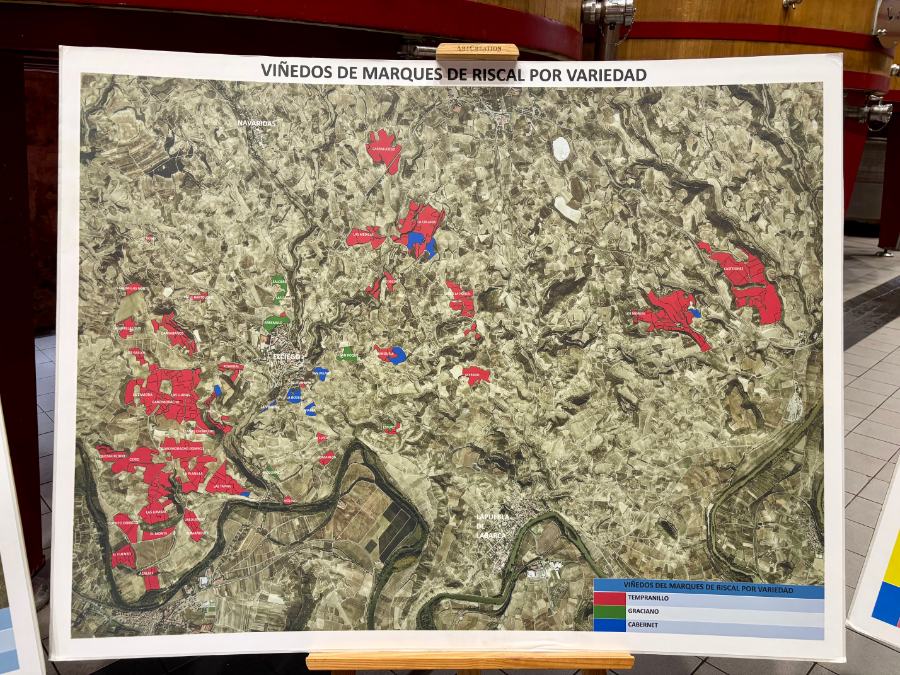
Professional tours to Riscal usually start at El Palomar winery, where the estate’s premium wines are made. Detailed maps trace the origin of the grapes currently sourced across Rioja. The map below shows the estate's own vineyards, sorted by variety. It highlights the specific locations of Cabernet and Graciano plantings, as well as the high concentration of vineyards on the upper terraces of the Ebro —the red patch in the bottom left-hand corner of the map.
Other maps focus on vine age and quality. The finest vineyards, whether owned by Riscal or sourced from suppliers, are classified internally as pata negra, —borrowing the term used in Spain for the finest Iberico ham. Yet the classification is far from fixed. Climate change is reshaping long-held assumptions about quality. As Luis Hurtado explains, grapes from Leza — once considered somewhat rustic — are now delivering markedly better results. By contrast, vineyards on the river's meanders that once enjoyed pata negra status are gradually being abandoned as increasing temperatures and heat-retaining stony soils place the vines under increased stress.
All of Riscal’s vineyards lie within Rioja Alavesa, stretching from Samaniego to Laguardia, with the largest concentration in Elciego, Navaridas, Leza and Laguardia. Despite increasing production significantly over the years, the company has remained faithful to a relatively small geographical area.
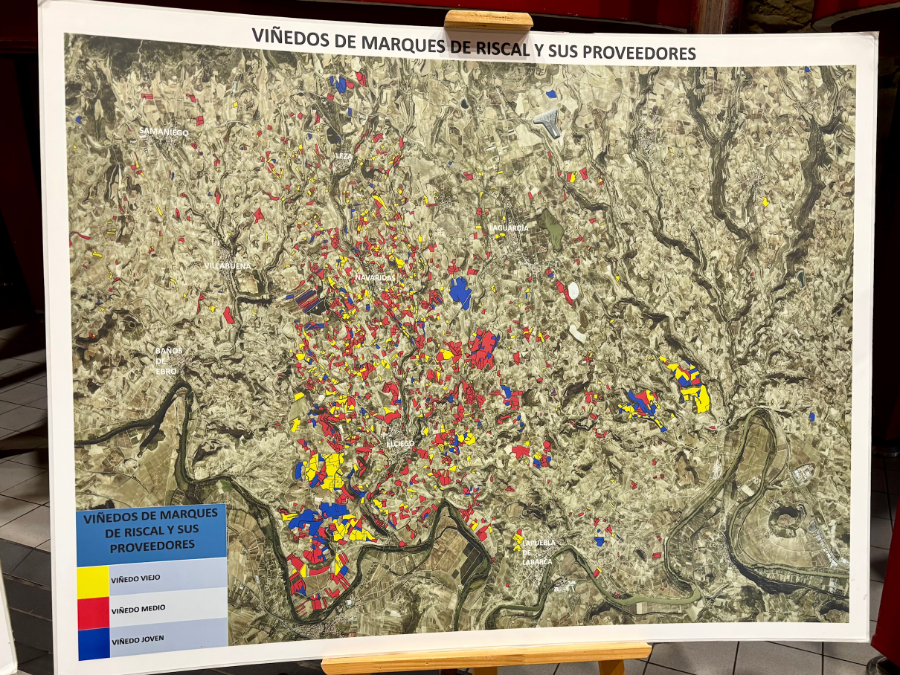
The purpose of this mosaic of vineyards is clear: to secure the high-quality needed to produce around four million bottles of Marqués de Riscal Reserva each year, the winery’s flagship red. This helps explain the purchase in 2010 of more than 300 hectares belonging to Marqués de Arienzo, the former Domecq estate in Rioja, from Pernod Ricard. The purchase increased Riscal's vineyard holdings to almost 450 hectares. However, not all of those acquisitions performed as expected. Francisco Hurtado de Amézaga's final major project before he retired was a large-scale regrafting programme, which has affected over 100 hectares.
“Plant material makes a huge difference,” says Luis Hurtado de Amézaga. “In vineyards planted before the 1970s, the plant material often matters more than the soil itself in explaining differences between villages.” At Riscal, much of the material used for re-grafting came from Tapias.
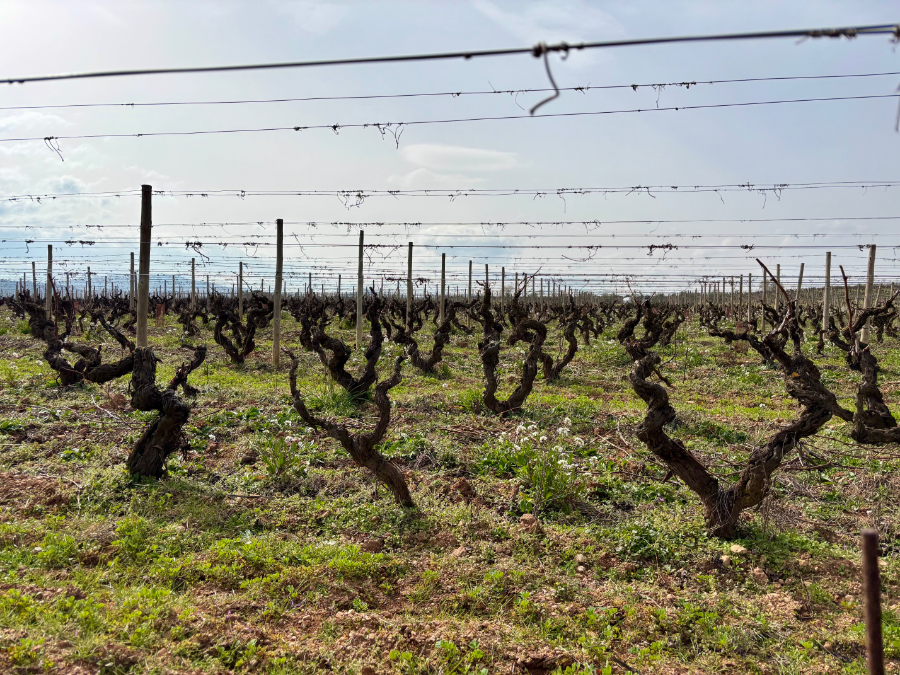
The estate now intends to extend its vineyard standards to its network of suppliers. From 2026 onwards, herbicides will no longer be permitted. To encourage this transition, the winery plans to finance the purchase of inter-row cultivation equipment designed to improve soil structure and restore the microbiota in the soil. Another initiative involves the regrafting of 150 hectares belonging to winegrowers whose vineyards show high-quality potential. Although this means sacrificing a year’s crop, farmers will be compensated with higher prices for their grapes. According to the winery, standard grapes currently command around €0.80 per kilo, compared with €1.65 for old-vine fruit and up to €2.50 for the finest pata negra plots .
Looking to the future
Ricardo Diéguez looks to groups such as Penfolds and Antinori, whose portfolios stretch from everyday wines to some of the world’s most sought-after bottles. This ambition may help explain the recent release of a Charmat-method sparkling wine made from Sauvignon Blanc grapes grown in Riscal’s Rueda vineyards.
“We don’t want to be a large winery; we want to be a great winery,” he said recently during a press lunch. He also pointed to Mercedes as an example of a brand that has successfully broadened its customer base without losing its prestige. However, for all its history and market presence, Marqués de Riscal does not currently command the same aspirational appeal as the German car manufacturer.
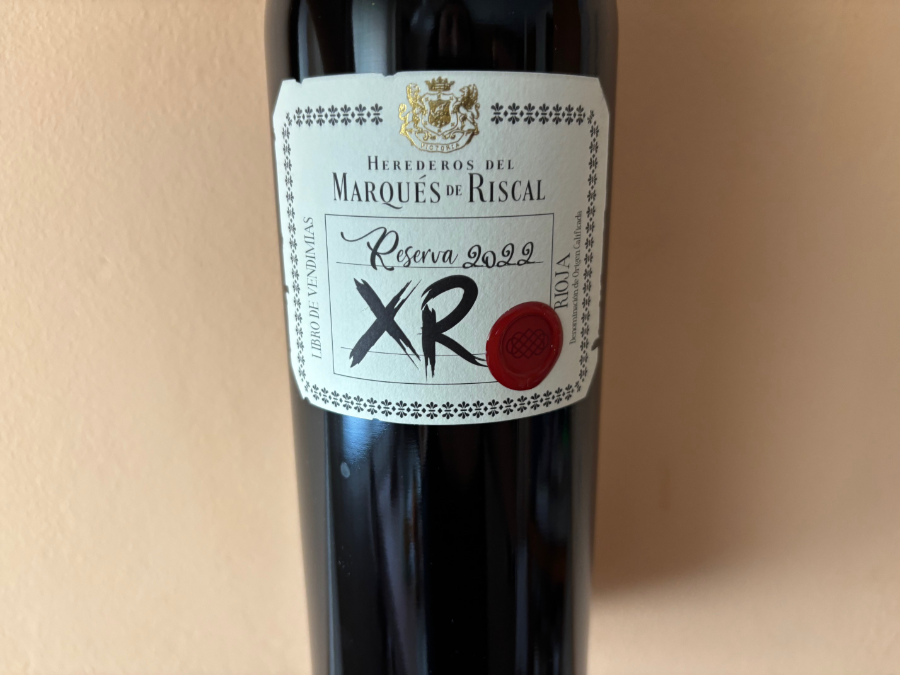
The launch of XR a few years ago formed part of an effort to strengthen the premium end of the portfolio and, more importantly, to offer the on-trade sector a French oaked-aged positioned above the widely available Marqués de Riscal Reserva, which is typically aged in American oak. "While the standard Reserva is blended from different lots, we taste every single barrel that goes into XR," explains Luis Hurtado de Amézaga. Produced from old-vine Tempranillo from Elciego and blended with Graciano, XR occupies a distinctive position within the range. "Graciano really brings the blend to life," he says.
Meanwhile, Finca Torrea, the estate’s contemporary Tempranillo made from the vineyards surrounding the winery, is now labelled as a village wine from Elciego. A greater emphasis on terroir seems a logical next step. Jean-Philippe Pélanne, who recently joined the winemaking team, believes this is one of the estate’s most underappreciated strengths. "Riscal is a far less industrial winery than I imagined before arriving here,” he says. “Perhaps its only shortcoming has been failing to communicate how traditional it really is. Our identity is rooted within a few kilometres of the winery. We don’t source grapes from the other end of Rioja.”
This year will also see the release of Barón de Chirel 40th Anniversary, a wine shaped by the outstanding quality of the 2021 vintage. Combining intense fruit concentration with Cabernet's crisp freshness and a firm structure, it promises considerable ageing potential. At the same time, the company is preparing the relaunch of its Gran Reserva. Slightly riper and creamier in style than Barón de Chirel, yet with a contemporary character thanks to its firm structure and French oak ageing, the wine will receive a new identity. "Marqués de Riscal Gran Reserva sounds rather generic. We're working on a new name and presentation to reflect the company's history," explains Ramón Román, marketing and communications director. All signs point to 1895, the year Riscal was awarded the Diploma of Honour at the Bordeaux Exposition.
There is little doubt that Marqués de Riscal is once again seeking the international spotlight. Tapias’ entry into La Place de Bordeaux, —despite difficult conditions in that large virtual marketplace— is a clear indication of the estate’s intention to reconnect with its past. In the 19th century, Riscal sold its wines through Bordeaux négociants and became the first non-French wine to receive a Diploma of Honour.
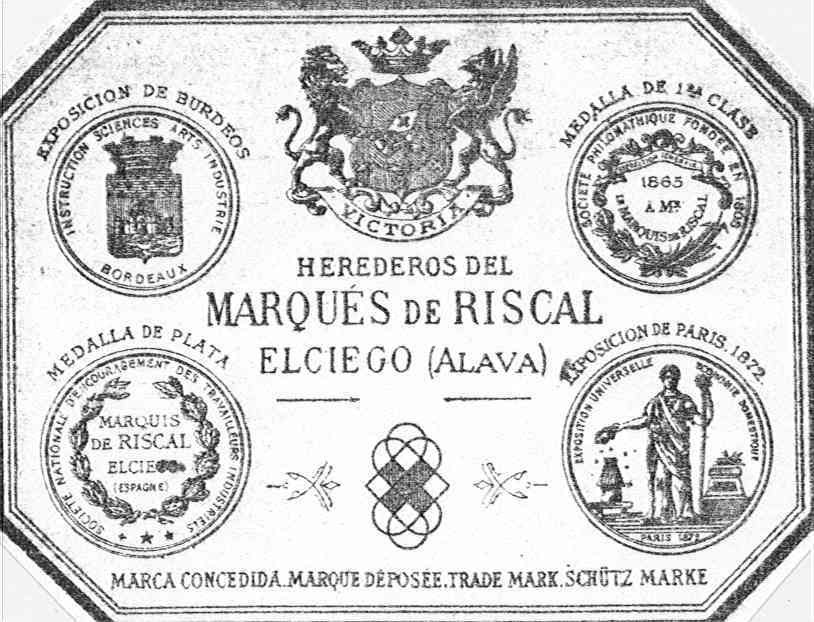
At the helm of the winery during those years was Juana Zavala y Guzmán, widow of Camilo Hurtado de Amézaga (1827–1888), who was Guillermo's son. She not only had to steer the business through the phylloxera crisis but also had the foresight to register the brand in the early 20th century. The image submitted to the Spanish Patent and Trademark Office at that time already featured the elements that would define Riscal's identity: the famous label displaying the Diploma of Honoour and the protective wire mesh intended to prevent counterfeiting. The mesh was finally removed in 2014 for sustainability reasons.
While nothing lasts forever, history remains Marqués de Riscal’s greatest asset. The challenge now is not simply to preserve that legacy, but to use it intelligently in order to build the future.

Author
Amaya Cervera
A wine journalist with almost 30 years' experience, she is the founder of the award-winning Spanish Wine Lover website. In 2023, she won the National Gastronomy Award for Gastronomic Communication
Previous Post
Next Post
Barco del Corneta 2024 White