Following our piece a few weeks ago on the “new Rioja”, we return to the DOCa’s centenary series. This instalment turns squarely to history, a central thread of the event held in Logroño last February for leading international critics and trade professionals.
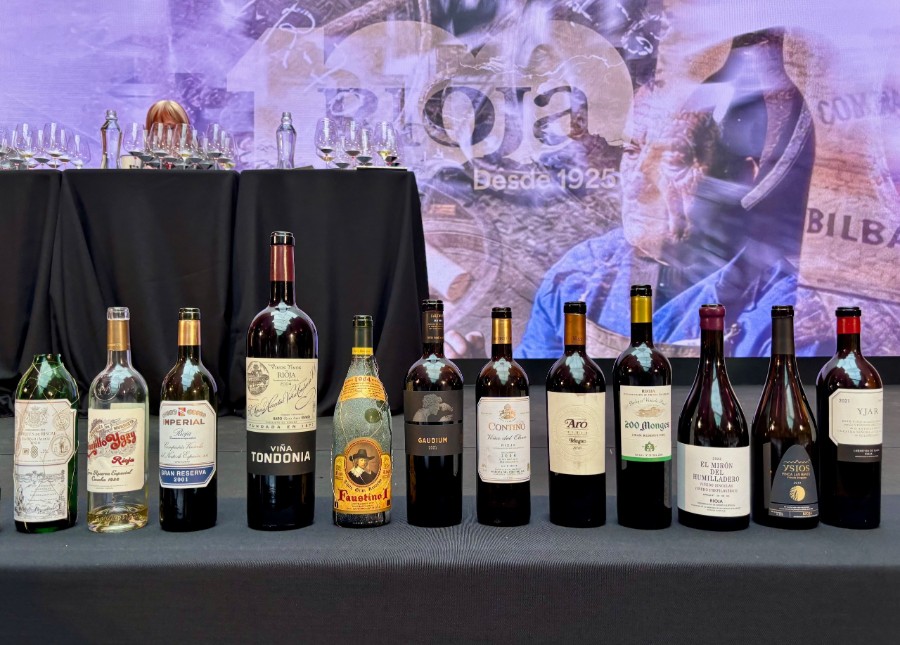
The advisory committee —Pedro Ballesteros MW, Juancho Asenjo and Elena Adell— devoted one tasting to Rioja’s major historical milestones. Their sweep spanned a long arc beginning before the region was first granted protected status in 1925, widely regarded as the appellation's founding date. From the two great pioneers, Marqués de Riscal and Marqués de Murrieta, and the rise of Haro’s Barrio de la Estación, the narrative moved through the landmark 1964 vintage and the industrial boom of the 1970s. More recent chapters included single-estate and 'alta expresión' wines, the renaissance of whites, the single-vineyard category, and a symbolic return to the origins via Rioja’s presence on La Place de Bordeaux. Also included here is the selection of old vintages and wines from century-old wineries that were served at the gala dinner.
Due to its length, this piece is published as two articles. This one covers the late 18th century, the whole of the 19th, and the first half of the 20th century, up to the late 1950s, when Franco's dictatorial regime began a gradual opening to the outside world. The second article will take the story from the 1960s to the present day.
In today’s testing climate —declining wine consumption, anti-alcohol sentiment and growing geopolitical uncertainty—, it is worth remembering that modern Rioja emerged amidst formidable obstacles and profound political and social upheaval as Spain moved from the Ancien Régime towards liberalism.
The 19th century in Spain was marked by a chaotic succession of governments, including a republican interlude and three Carlist wars, all of which directly affected Rioja. Market liberalisation and the disentailment of ecclesiastical and municipal property fostered a new social class that would play a prominent role in the wine industry and help finance major infrastructure projects, such as the railway, crucial in linking local wines to markets and seaports in northern Spain.
Learning from Bordeaux
Quality in Rioja was generally poor throughout the 18th century and much of the 19th. This is why the Marquis of Ensenada, an influential Enlightenment politician from Hervías in La Rioja, struggled to sell the wine in London. Early improvements were introduced by Manuel Quintano, canon and dean of Burgos Cathedral, who travelled to Bordeaux in the 1770s and applied its techniques at his family estate in Labastida, Rioja Alavesa. He replaced whole-bunch fermentation with destemming, introduced barrel ageing in place of wineskins, which imparted unpleasant flavours to the wine, and adopted racking to remove sediment. Despite his success, local growers resisted fiercely, ultimately pushing through protectionist measures that curtailed the Quintano family efforts.
Bordeaux-style winemaking was reintroduced in the mid-19th century by Luciano Murrieta, aide-de-camp to General Espartero. By 1850, he was bottling wine under the Duque de la Victoria brand at the winery of Jacinta Martínez de Sicilia, a wealthy landowner and Espartero’s wife. In following decade, the Médoc Alavés (1862–1867) was established with backing from the Provincial Council of Álava in the Basque Country with the aim of improving the quality of Rioja Alavesa wines. With the support of Guillermo Hurtado de Amézaga — Marquis of Riscal, then resident in Bordeaux— the project recruited winemaker Jean Pineau, of Château Lanessan.
In addition to earlier improvements, Pineau placed particular emphasis on the second year of ageing to ensure wines were stable enough for transport and capable of further bottle development. Almost as soon as early successes under Pineau emerged, shorter ageing times began to be used to adulterate wines, whilst the 1866 financial crisis curtailed investment and stock maintenance. Thus, the hoped-for transformation of Alava’s winegrowers into fully-fledged producers and merchants was thwarted, though Pineau’s influence endured after his appointment at Riscal in Elciego.
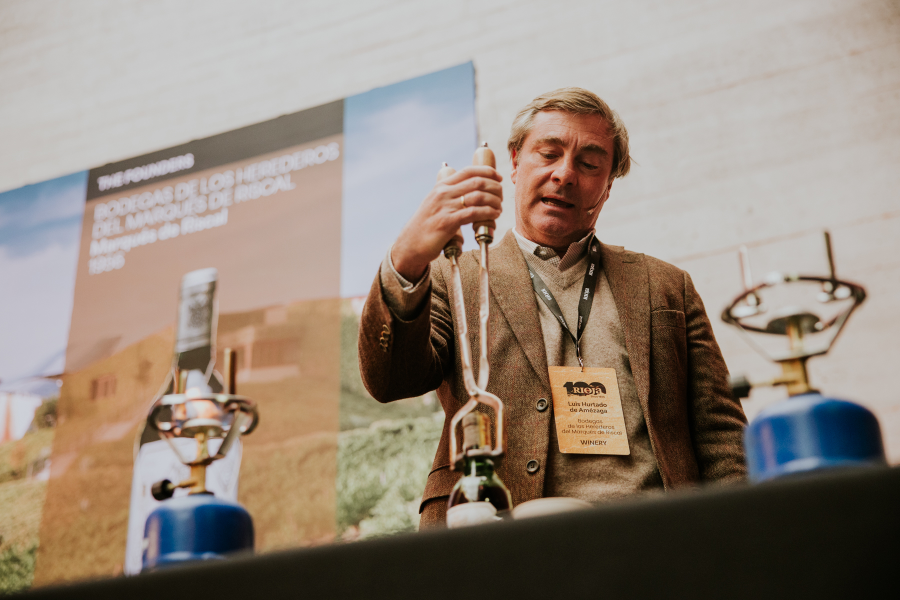
The historical tasting began with a ceremonial uncorking —using heated tongs—of a 1956 Rioja by Luis Hurtado de Amézaga, current technical director at Marqués de Riscal and a descendant of the founder. Riscal is unique in having preserved bottles from every vintage since 1862. French winemakers were employed until the mid-20th century, although, according to Hurtado de Amézaga, his grandfather produced the 1956 vintage. In keeping with the estate's tradition, the blend included Cabernet Sauvignon and is thought to have aged for three to four years in oak. With hints of dried herbs, smoke and spices, the defining feature of the wine was its deep umami-like sapidity, held in check by the acidity. Since its first release in 1986, Barón de Chirel has carried forward the legacy of those old Reserva Médoc wines with their generous dose of Cabernet. However, the proportion of French grapes now varies considerably by vintage. The 2020 vintage poured at the dinner, for example, contained no more than 7% Cabernet. It was one of the evening’s most robust and powerful wines, with rich, highly concentrated fruit and a meaty character. It showed good ageing potential, although the alcohol content was rather high.
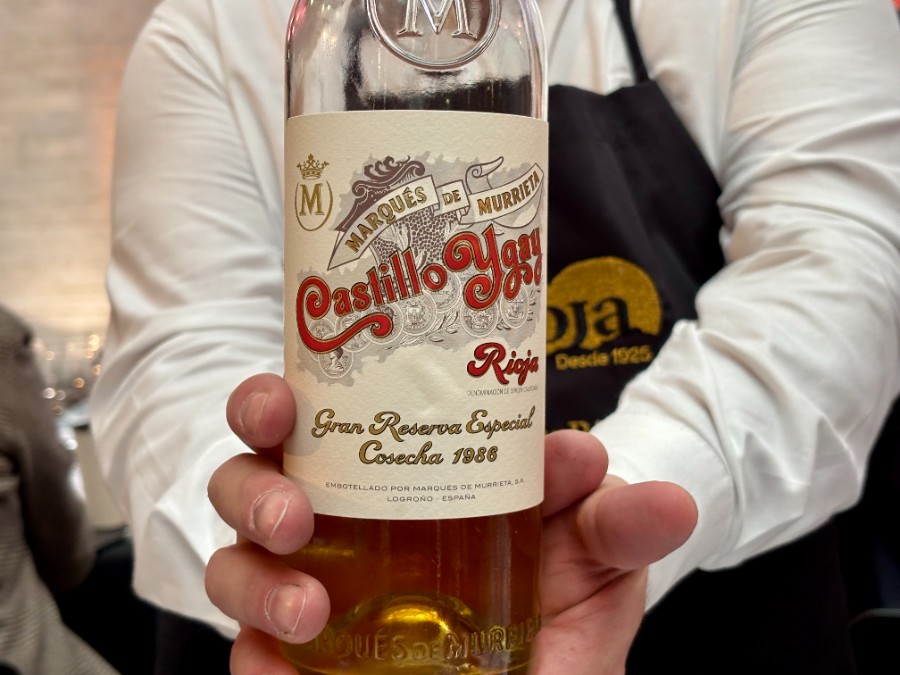
The other foundational bodega in Rioja, Marqués de Murrieta, arose from Luciano Murrieta's solo venture after his split from Espartero and his purchase, in 1877, of the Ygay estate on the outskirts of Logroño. The house became synonimous with extended ageing, in contrast to Riscal’s earlier bottlings. A striking modern example is the 1986 Castillo de Ygay White, released in 2016 after 20 years in oak vats and a further six in concrete. The wine was in great shape. On the nose, it retained the estate’s Mediterranean character (almond, dried herbs, nutmeg and stone fruit in liqueur), while the palate combined volume, elegance and acidity to create an extremely long and intense finish. This was compelling evidence of the ageing capacity of the finest white Rioja.
Frenchmen, railways and Basque investors
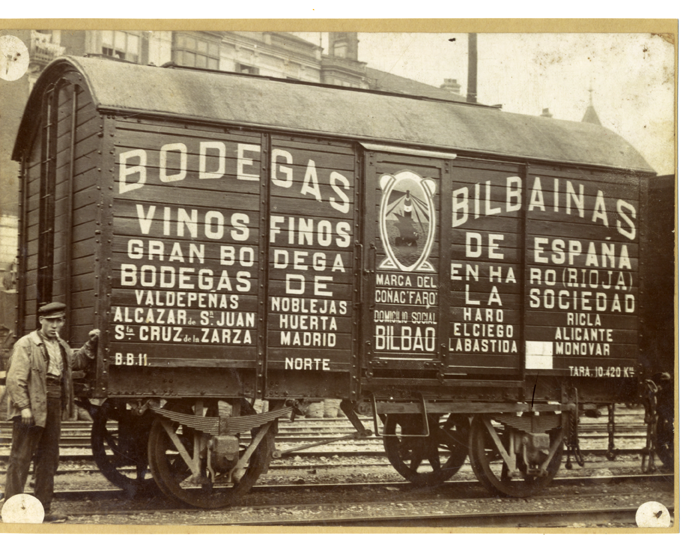
The plagues imported from America in the 19th century —first powdery mildew, then, more destructively, phylloxera— prompted many French wine merchants to settle in Rioja. The opening of the Tudela–Bilbao railway in August 1863 transformed Haro into a major wine hub. The century-old wineries of the Barrio del Estación trace their origins both to these merchants —Viña Tondonia was founded in 1877 following the purchase of Heff’s business, and Bilbaínas in 1901 after acquiring Sauvignon Frères & Cie— and to entrepreneurs from Bizkaia, as in the case of Bilbaínas and Cvne (founded in 1879). La Rioja Alta (founded in 1890) emerged from a partnership between Rioja winegrowers and Basque investors.
This industrial district largely followed the French model, blending grapes sourced from different parts of the region. It stood in contrast to the Médoc Alavés focus on individual villages and the estate-based model adopted by Murrieta. The district's long-established producers were well represented at the centenary celebrations.
The oldest wine poured was the 1978 Gran Viña Zaco Gran Reserva Red from the historic cellar of Bodegas Bilbaínas: classical in style, with spices and iron-like notes, and a refined palate reflecting the fresh flavour profile of Rioja Alta, as well as the moderate alcohol level typical of the period (12.5% abv).
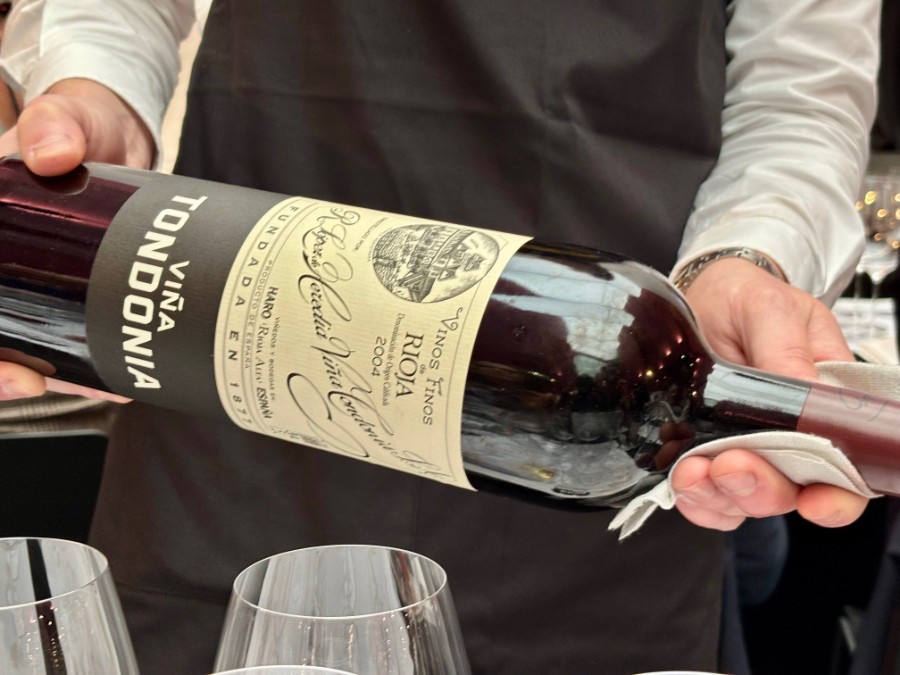
We tasted a 2004 Viña Tondonia Reserva Magnum Red from R. López de Heredia. It was minty with delicate tertiary aromas of leather and cedar, and had excellent acidity with a pure, almost crystalline texture resulting from its extended ageing. The 2014 Viña Tondonia Reserva White shared this vibrancy and texture, proving even more expressive, with aromas of petrol, nuts and green olives, and notable freshness despite its oxidative character. Both wines are blends aged for six years in oak barrels, with modest alcohol levels of 12.5%.
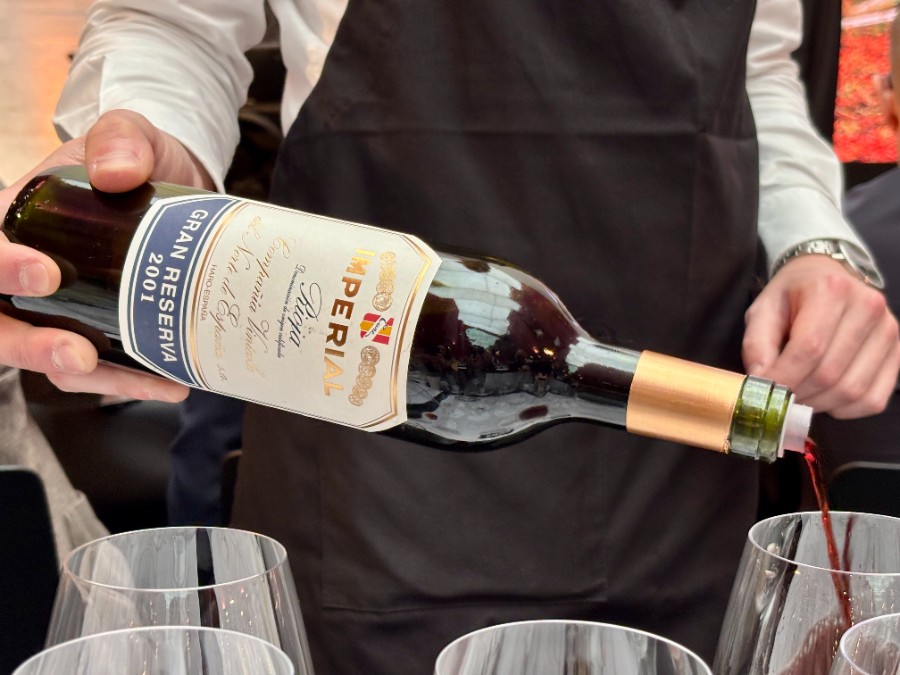
Equally long-aged, the 2011 Gran Reserva 890 Red from La Rioja Alta proved to be more robust and comforting (14% abv), with velvety tannins and plenty of life ahead. A very different Gran Reserva profile came from Cvne's Imperial 2001 Red: poised yet lively and refined, with pronounced minty notes, fine-grained tannins, and remarkable persistence —fully justifying the reputation of the the 2001 vintage. Ageing here totals 36 months, and unlike the previous wines, French oak is used alongside American oak. Cvne also brought a Monopole Clásico Gran Reserva 2018 White to the dinner. This wine has unmistakable toasty and oxidative notes, as well as sapidity and concentration derived from ageing in casks that have previously held Manzanilla.
With the exception of Monopole, which retained its original Rhin bottle, the wines were presented in Bordeaux-style bottles —the standard for Rioja's finest wines, reflecting the influece of French claret. Burgundy-shaped bottles were reserved for fuller-bodied styles such as Viña Bosconia, Viña Real, Viña Ardanza and Viña Pomal, often blended with Garnacha and showing higher alcohol. Historically, however, this dichotomy did not apply at Riscal or Murrieta.
The appellation and the dark years
The name Rioja first received legal protection during the Primo de Rivera military dictatorship (1923–1930). Interventionist and protectionist policies encouraged the organisation of wine-producing regions, benefiting export-oriented producers —the first Rioja exporters' association was established in 1907. On 6 June 1925, a Royal Order approved the creation and use of a Rioja collective trademark seal. By 1928, regulations were in place, and the first geographical demarcation followed in 1929. These developments were later aligned with the 1932 Wine Statute, enacted the following year, though political instability on the eve of the Spanish Civil War (1936–1939) severely hampered implementation. As historian José Luis Gómez Urdáñez recounts in El Rioja Histórico, published to mark the 75th anniversary of the DOCa, the 1933 Law technically remained in force until the end of Franco's dictatorship. However, when the Regulatory Board was re-established in 1945, it drew heavily on Primo de Rivera's earlier legislation.
During the early decades of Franco’s regime, Spain isolated itself from the rest of the world in an attempt to become self-sufficient. Although wine production continued, many bottles languished in the cellars for years, even decades, before release. In some cases, like Riscal, the wines set aside were never actually sold and are now of great historical value.
This article is based on a presentation by Juancho Asenjo for the centenary tastings, the book El Rioja Histórico, and information compiled over the years by Spanish Wine Lover.
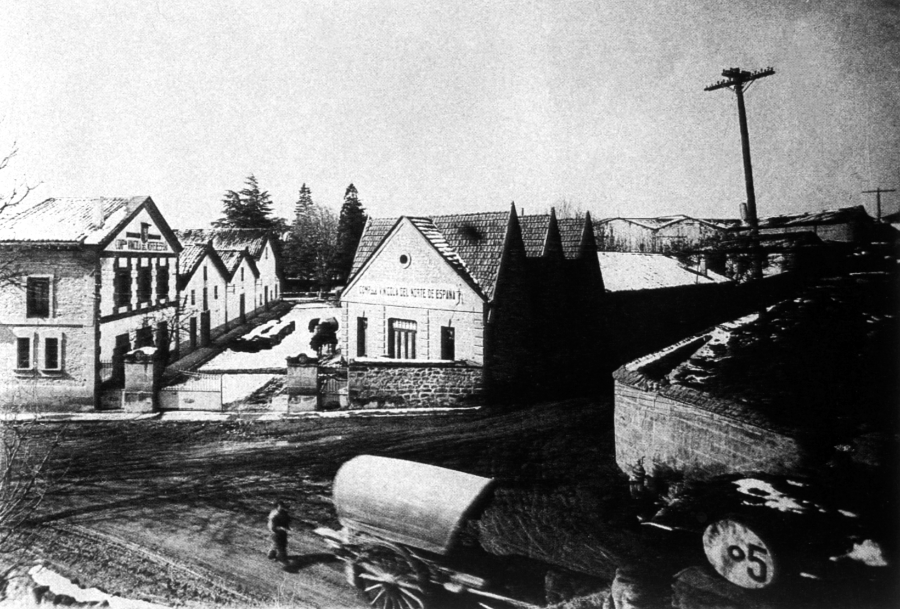
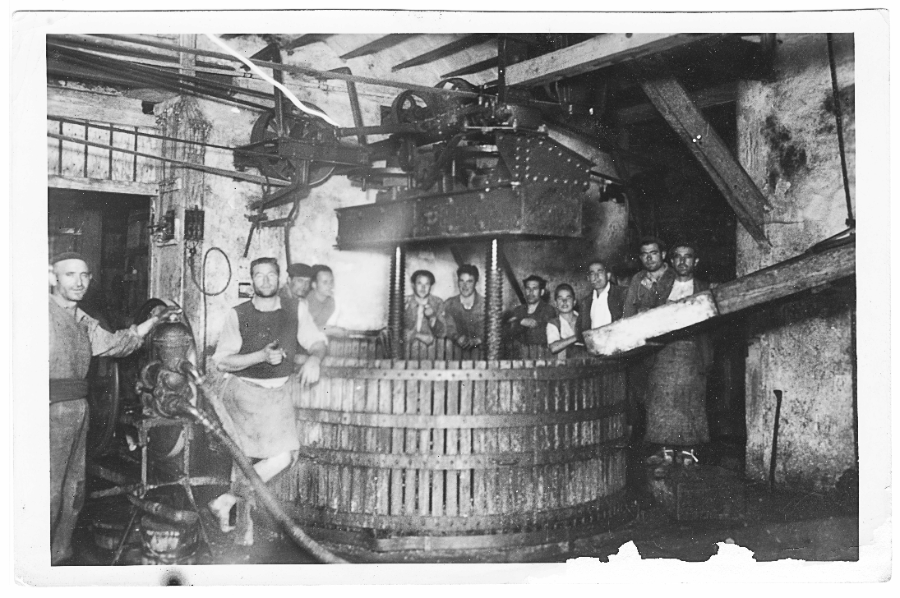
The first historical photograph shows the Cvne premises in Haro's Barrio de la Estación. The second shows a wine press at the Marqués de Murrieta estate.

Author
Amaya Cervera
A wine journalist with almost 30 years' experience, she is the founder of the award-winning Spanish Wine Lover website. In 2023, she won the National Gastronomy Award for Gastronomic Communication
Previous Post