Bodegas De Alberto in Serrada (Valladolid) is an ideal place to understand the history of Rueda. Not only has the winery existed since 1941, when the Gutiérrez family established it, but it has also preserved the various wine styles traditionally produced in the area.
Of the three wineries that have maintained these styles in the DO (the others being Cuatro Rayas and Félix Lorenzo Cachazo), De Alberto offers the most complete range. The winery produces a Pálido, a wine aged biologically under a veil of yeasts; a Dorado with extended oxidative ageing; a sweet version of the latter; and has recently released a very old Dorado from ancient soleras that remained untouched since 1999. It has been boldly named VORR (Very Old Rare Rueda).
Since January 2024, Rueda’s fortified wines have been permitted to use the term generoso. In many ways, this category is the heir to the whites of historic Tierra de Medina, which enjoyed great renown between the 15th and 17th centuries, flourishing alongside the rise of the Crown of Castile. The production of aromatic dry whites, however, only began to take shape in the 1970s, with the arrival of Marqués de Riscal and the realisation of Verdejo's potential for this style of wine. This ultimately led to the creation of the DO Rueda in 1980.
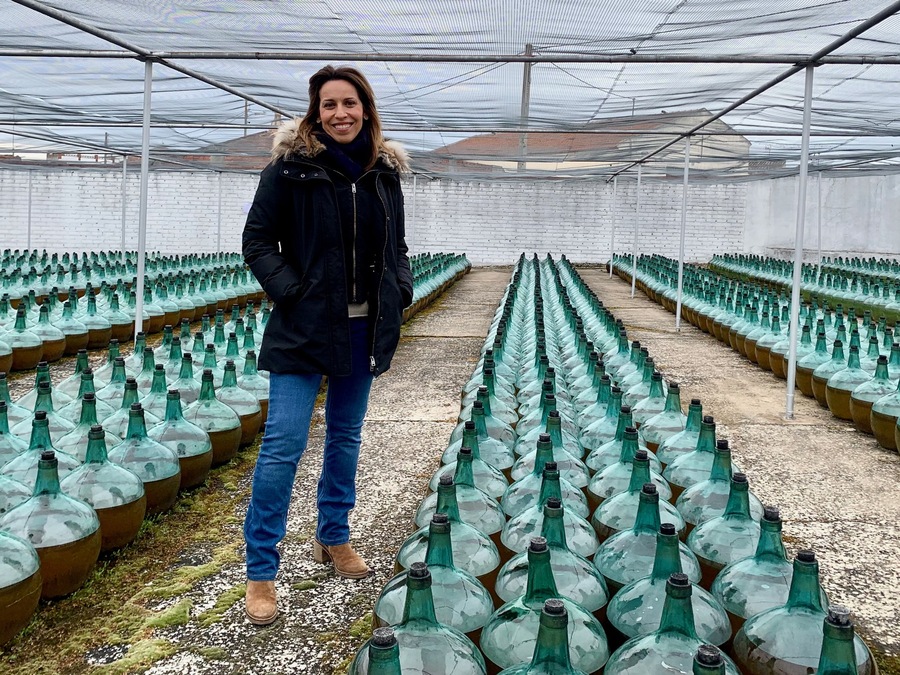
However, not all local producers embraced the change straight away. "We resisted," explains Carmen San Martín Gutiérrez (pictured below), the fourth-generation head of Bodegas De Alberto. "It took us three or four years to join the appellation. We grew our business by taking over the solera market from those who were abandoning it. Before we knew it, the world had changed and we had to adapt as quickly as possible. But it had worked really well for our grandparents in their day,” she recalls.
The Dominican monks’ winery
The family’s wine business actually began with Alberto Gutiérrez, Carmen’s great-grandfather. In the 1880s, Alberto's parents purchased the inn in Serrada, a meeting spot for merchants, wine brokers and muleteers. Before long, it also became a wine storehouse. Thus, Alberto grew up immersed in the wine and spirits trade. His marriage to María Martín, who came from a family of landowners and wine producers, further strengthened that connection. Thanks to his keen business instincts, he was able to sell wine even in difficult times. He started by buying stocks, blending wines and producing them in rented cellars, which soon proved too small. In 1919, he acquired the distillery next to his parents' inn. Then, in 1941, he bought the old Dominican winery in Serrada, complete with its picturesque underground cellars.
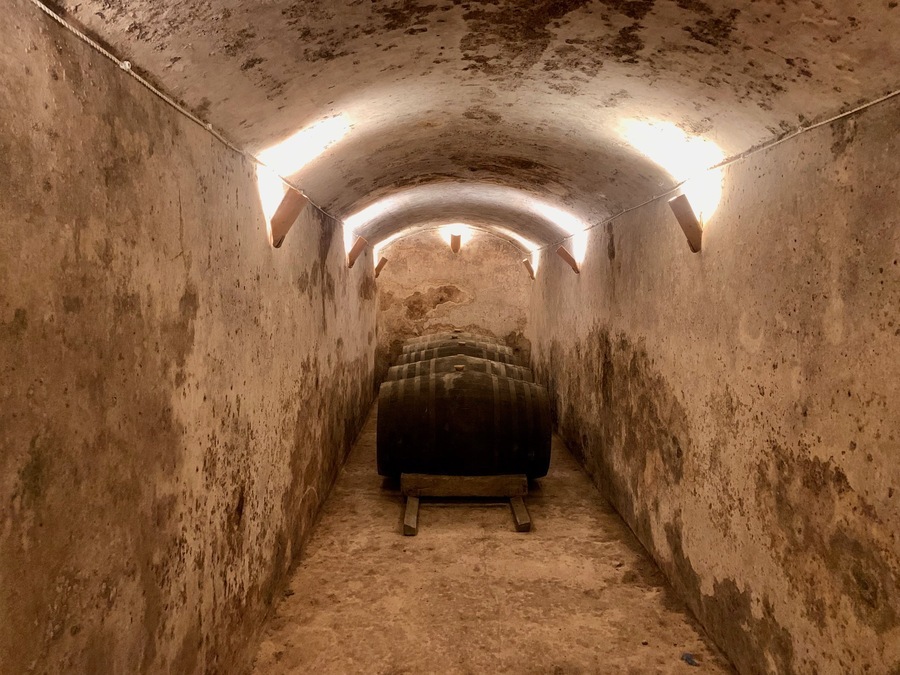
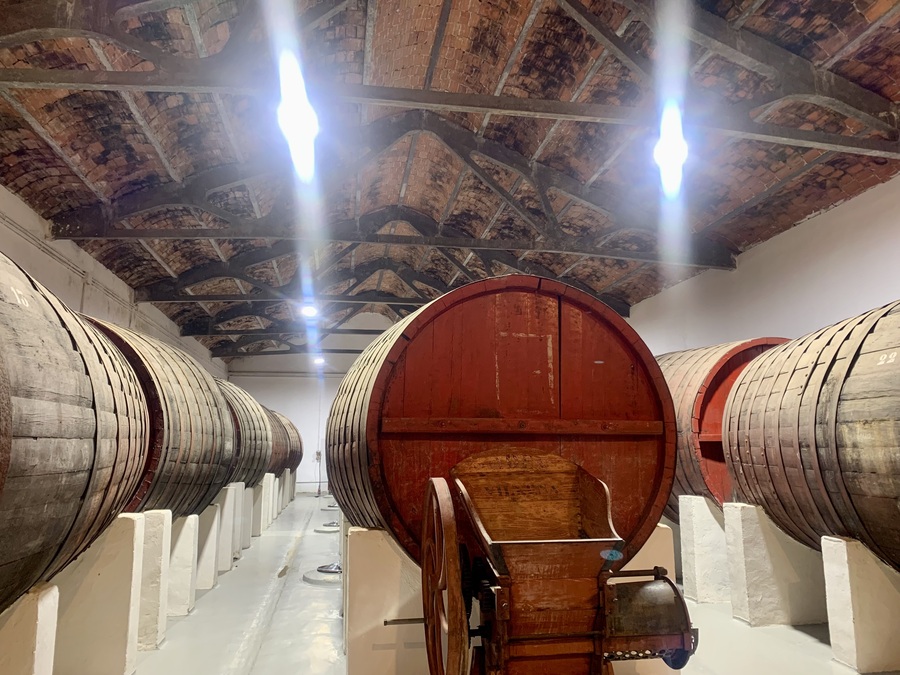
The monks had settled in the village in the second half of the 17th century, building a farmhouse and wine cellar to supply the powerful Convent of San Pablo in Valladolid with wine and food. They purchased land, planted vines and employed labourers both to cultivate the land and to excavate the underground cellars which now house the Gutiérrez family’s soleras.
According to research by Miguel Esteban de Íscar, a historian from Serrada, the convent acquired more than 200 aranzadas (around 90 hectares) of vineyards in the area during the first decades of the 18th century alone. In 1752, the Ensenada Land Registry recorded 42 vats with a total capacity of around 232,000 litres. The 19th century proved far less prosperous. Agrarian crises, the instability brought about by the Napoleonic invasion and, ultimately, Mendizábal's disentailment —which forced the transfer of religious properties into private hands — reshaped ownership. The estate first passed to the wealthy Rojas family of Valladolid and later to the Alonsos, who subsequently sold it to Alberto Gutiérrez.
Sherry connections
In those days, wine was sold either through local brokers or directly to muleteers from the mountains. After the railway arrived, it was transported from nearby Matapozuelos station. The region's white wines travelled well thanks to their high alcohol content. The French geographer Alain Huetz de Lemps noted this in his 1960s work Vineyards and Wines of Northwest Spain, in which he also emphasised the superior quality of the Verdejo variety: “The white wine made from Verdejo is fairly high in alcohol, ranging from 12 to 13% vol., sometimes reaching 14 or 15% vol. It is a high-quality wine with an esteemed flavour. In the past, it was highly regarded; when properly aged, it is reminiscent of sherry. However, the best wine comes from Verdejo, rather than Palomino, which was imported into the region and produces wines with a lower alcohol content.”
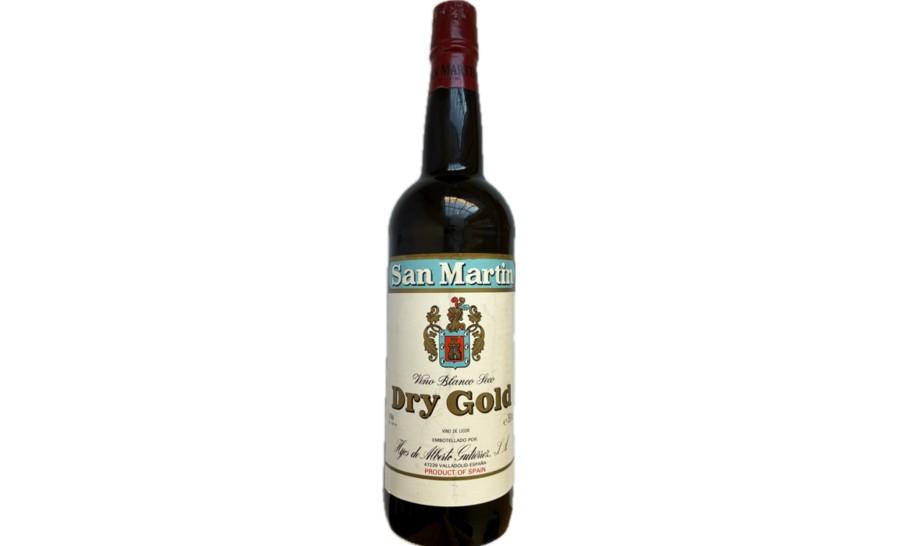
The links between Rueda and the wines of Andalusia were numerous. One example is San Martín Dry Gold (pictured below), a wine of 17% abv that could easily pass for a sherry. This brand was also produced as an Añejo (aged wine). Its name refers both to a site in Serrada and to a painting of the saint kept in the parish church of San Pedro in Serrada, which has been declared a cultural asset.
Huetz de Lemps was particularly sharp on this point: "Wines from Tierra de Medina bear a strong resemblance to those from Andalusia. From time to time, producers in Rueda or Nava buy Andalusian wines to top up their stocks [...] Conversely, it is common to see large southern wine producers buying wines from Medina that will be turned into excellent sherry and montilla.” This practice was common in the 1950s and 1960s, when regulatory controls were far less strict.
Bottling, meanwhile, wasn't the norm. It was reserved for long-aged wines of higher quality. The vast majority were lower-alcohol wines sold in bulk, consumed in taverns across large parts of Castilla y León and northern Spain. "Cantabria and the Basque Country were key markets for us," notes Carmen. These bulk wines were unlabelled, but based on their colour and alcohol content, they were given Sherry-inspired names such as Valdelaíno, Valdelaíno Pálido, Solera Moya or Solera Noé. Customers in the north often had their own soleras, topping them up with shipments from the Serrada winery.
A sea of glass demijohns
Production expanded steadily after the family acquired the Dominican winery. Output was still under 300,000 litres in the late 1940s, but by the end of the 1950s it had reached 800,000 litres and by the mid-1960s it exceeded 3.5 million. The growth led to numerous expansions, including further underground excavations.
During this period José Gutiérrez, the second generation of the family, alongside his siblings Dalmacio and Alberto, learnt the method of oxidising wine in glass demijohns in the south of France and introduced it to Rueda. Today, the practice may seem picturesque and artisanal, but it was originally intended to industrialise and accelerate the ageing process to meet growing demand. José realised that wine aged for six months in a demijohn and two years in wooden vats could rival a 10-year-old wine from Andalusia.
The change did not happen overnight. José's grandson, Ramón Ampudia Gutiérrez, now production manager at De Alberto, explains that numerous trials were conducted on the convent terrace to test different glass colours, fill levels and cork placements. The best results came from 16-litre green demijohns filled with 12 litres of wine at 13–15% abv, fortified to 18%. As Miguel Esteban de Íscar writes in his history of the winery: "Once transferred to wood, the wine develops such an extraordinary flor [a veil of yeasts] that, after a year, it produces a fortified wine with unrivalled sherry-like notes."
The corks were not sealed tightly, allowing greater oxidation. As a result, they would often pop out due to temperature changes, rainfall or the heat generated when sunlight reflected off the glass. Putting the stoppers back in became one of Carmen San Martín's childhood games.
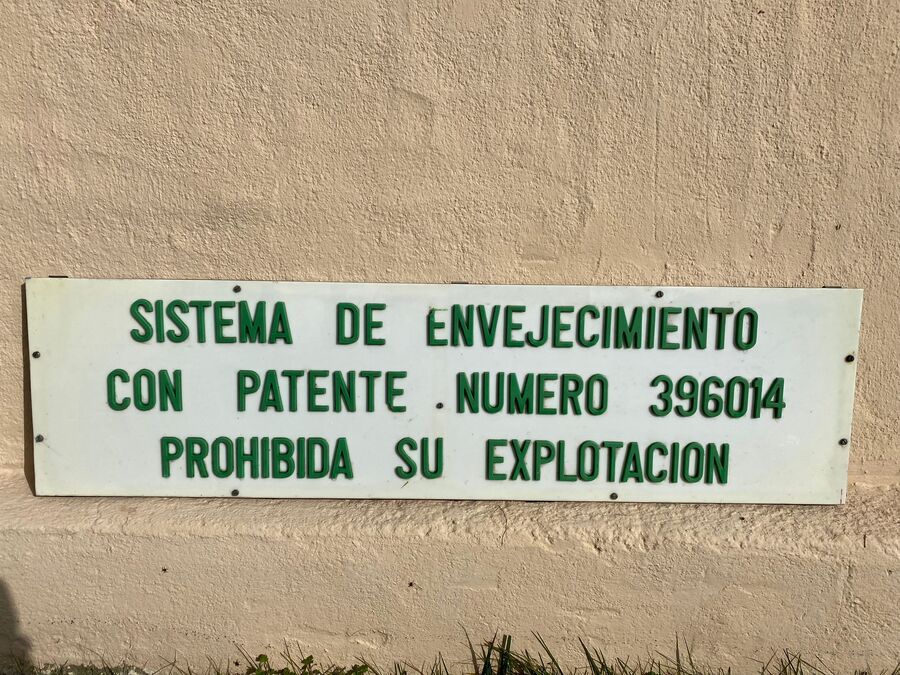
Drawing on this experience, José Gutiérrez devised a Method for accelerating the ageing of wines. He briefly registered it as a patent, but it was later overturned in court, partly because ageing wine in glass demijohns was already a well-known and widespread practice elsewhere.
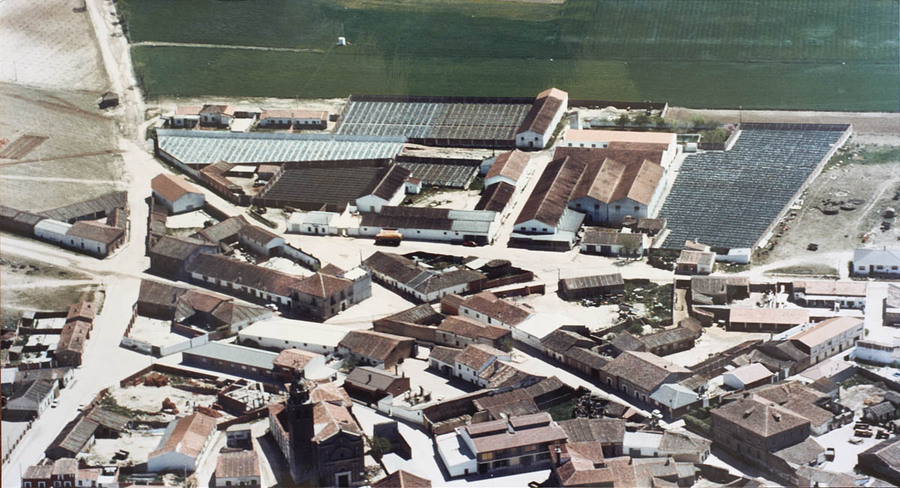
Nevertheless, the early 1970s marked a golden age for the winery. At its peak, around 100,000 demijohns were spread across vast courtyards (see image below). Production reached two million litres of fortified wine, made from Verdejo and Palomino —varieties that were mixed in the vineyards at the time. Carmen recalls her father explaining that much of the Palomino was eventually uprooted because it was high-yielding, less aromatic and produced inferior base wines.
A VORR against the tide
Today, only around 8,000 glass demijohns remain and fortified wines have declined sharply. "Everything pushes you to give up," says Carmen. Apart from the obligation to register for special excise taxes, taxation rules have become more onerous. "Previously, the tax was applied only to the amount of added alcohol, but now it's applied to the whole blend. In addition, VAT on wine has risen from 7% to 21%, and many countries have introduced duties on wines above 14% abv.”
Yet San Martín believes fortified wines have played a decisive role in building the winery’s reputation. De Alberto now produces around five million bottles a year, including private levels for distribution, as well as reds and rosés under the VT Castilla y León designation. The premium range of still wines under the De Alberto brand, which includes a barrel-fermented Verdejo and a Gran Vino de Rueda, among others, accounts for around 300,000 bottles.
The family is aware that demand for fortified wines is not growing. These are niche wines, aimed at professionals, sommeliers, and knowledgeable enthusiasts. “At trade fairs, people often come to taste the wines, only to say they’re too strong. That’s why we’ve adopted an ultra-premium approach,” San Martín explains.
That philosophy lies behind VORR —a limited release of 945 half-litre bottles drawn from the original soleras discovered by the family in the convent cellars in the 1940s. The cask from which these bottles were filled has not been replenished since 1999. Until then, the solera had been refreshed according to De Alberto's pre-ageing protocol using glass demijohns. The estate’s technical director, Beatriz González, explains that clearing the VORR cask took a week, as casks and barrels had to be moved through the labyrinth of underground cellars where most of the soleras are stored.
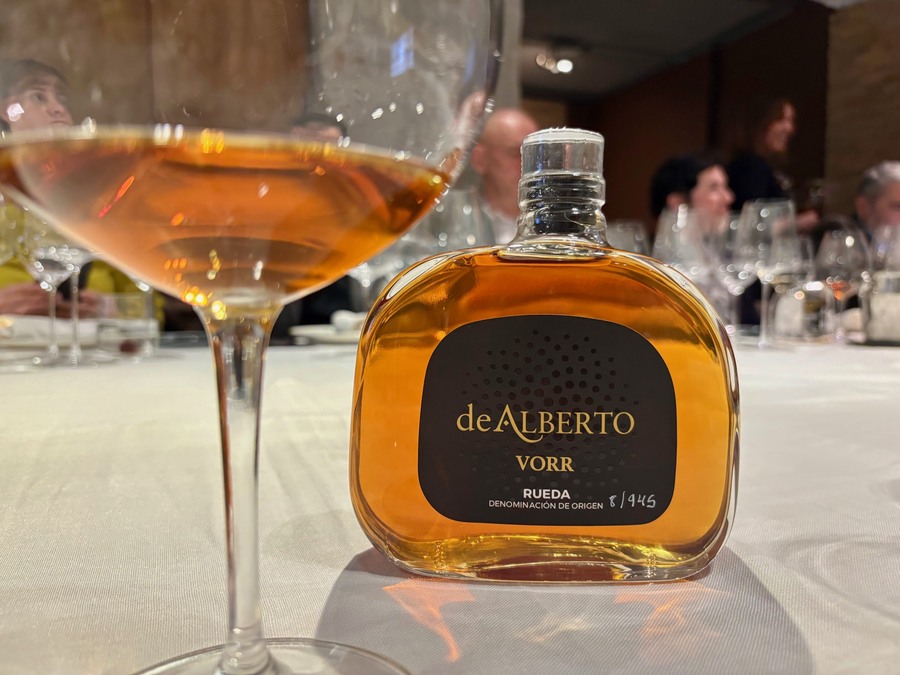
Without replenishment, the wine has developed remarkable concentration, reaching 21% abv. The wine recalls old sherry, but without its harsher edge and with less structure. It is complex and deep with alcohol and aldehydic notes present on the nose alongside creamy and woody tones. Full-bodied and enveloping, it is balanced by good acidity and delivers a truly impressive finish. Part of the fun lies in watching it evolve in the glass as it gradually reveals notes of cocoa, crunchy hazelnut and liquorice whilst the wine’s sapidity intensifies on the palate. It is a real treat and highly recommended for those who know and love the category. The price matches its rarity: €125 for a 50cl bottle.
Around 6,000 half-litre bottles of Dorado, the winery’s flagship fortified wine, are sold each year. When I visited the winery last year, I was invited to sample the wine at different stages of its development. After one year in demijohns, the wine is pale green, with the alcohol from fortification still very prominent. At the presolera stage, when it could already be released as a Dorado (regulations require four years of ageing, two of them in wood), the wine becomes creamier with nutty notes emerging more clearly. The real leap in complexity and depth, however, occurs in the final solera stage, from which only 10% is drawn for bottling.
Production is even smaller for the other fortified wines: just 1,400 and 1,200 half-litre bottles of the sweet De Alberto Dulce (€36) and the Pálido aged under flor (€42) are filled, respectively. The winery also produces two cooking wines under the Serradal brand —one at 15% abv (fewer than 3,000 bottles) and another at 17% abv (around 6,500 bottles)— both labelled as VT Castilla y León.
These wines are all that remain of a once-flourishing industry, now overshadowed by changing tastes, modern lifestyles and dramatic shifts in consumption. “We were the first, and we are the last still standing. We’re fortunate to have preserved these soleras despite moving them countless times over the years. These wines connect us to our history, our past and our region,” says Carmen.

Author
Amaya Cervera
A wine journalist with almost 30 years' experience, she is the founder of the award-winning Spanish Wine Lover website. In 2023, she won the National Gastronomy Award for Gastronomic Communication
Previous Post
Next Post
Paraje de la Virgen 2024 Red