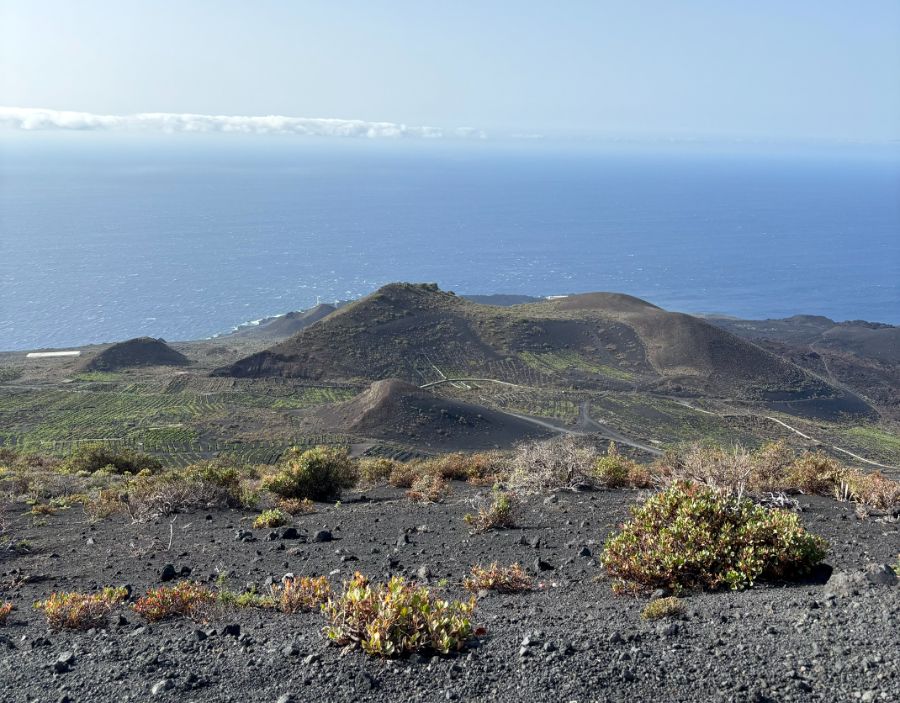
Declared a UNESCO Biosphere Reserve in 2022, La Palma is a haven for hikers, where there is no need to choose between the beach or the mountains. In a single day, you can go from fleece and hiking boots to swimming costume and flip-flops.
Although it is the fifth-largest island in the Canary Islands by area, La Palma is the second highest. At 2,426 metres, Roque de los Muchachos is one of the world's best stargazing sites and offers a privileged vantage point over the island’s rugged landscape. At its feet lies the Taburiente caldera, the world's largest emerged volcanic crater, measuring around eight kilometres across and with a vertical drop of up to 2,000 metres. The Cumbre Vieja volcanic range runs along the southern half of the island like a dorsal fin.
Along with El Hierro, La Palma is the youngest island in the archipelago and also the most volcanically active. The most recent eruption took place in 2021, burying part of the vineyards in Las Manchas. Today, visitors can drive through the lava flows and see the devastation caused by the Tajogaite eruption, alongside the ongoing work to rebuild and restore the affected areas.
Windward and leeward
The remarkable diversity of climate, vegetation and crops found within such a relatively small area is shaped by changes in elevation and the stark contrast between the island's two sides. The eastern, or windward, side is fully exposed to the trade winds, creating the famous sea of clouds that brings milder temperatures and higher humidity. The western, or leeward, side is sheltered from the wind and consequently drier and warmer.
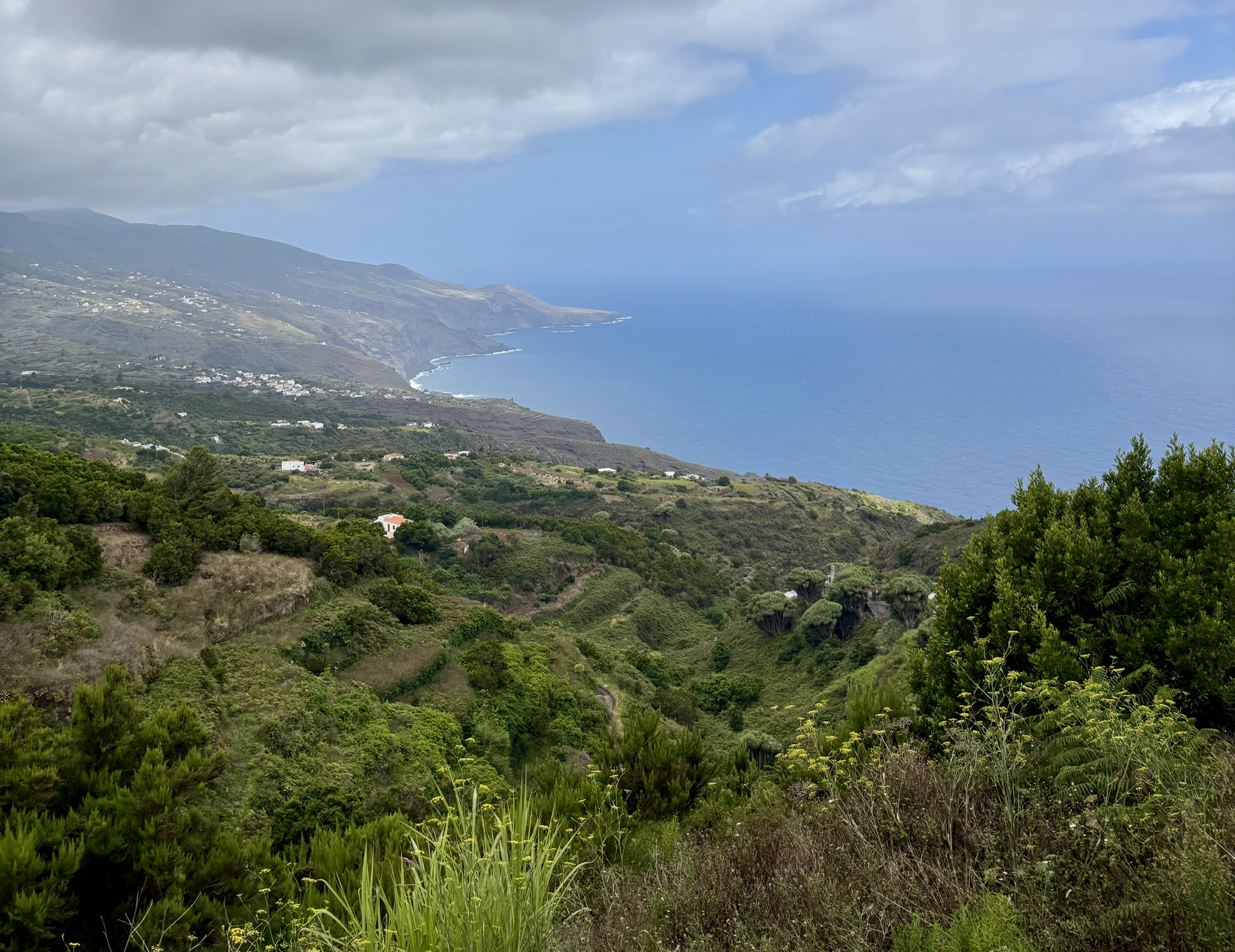
The north, with its many ravines, is green, lush and rugged (see image below), while the southern tip is barren and windswept. In the east, where the capital, Santa Cruz is located, the day often begins beneath a blanket of cloud. At the opposite end of the island, Tazacorte is considered the sunniest place in the Canary Islands. The steep road to Roque de los Muchachos leaves behind the vegetable gardens and mid-elevation farmland before climbing through the damp, luxuriant laurel and Canary pine forests, where temperatures are significantly lower. Once the trees disappear, only high-mountain scrub remains and the sunlight becomes more intense.
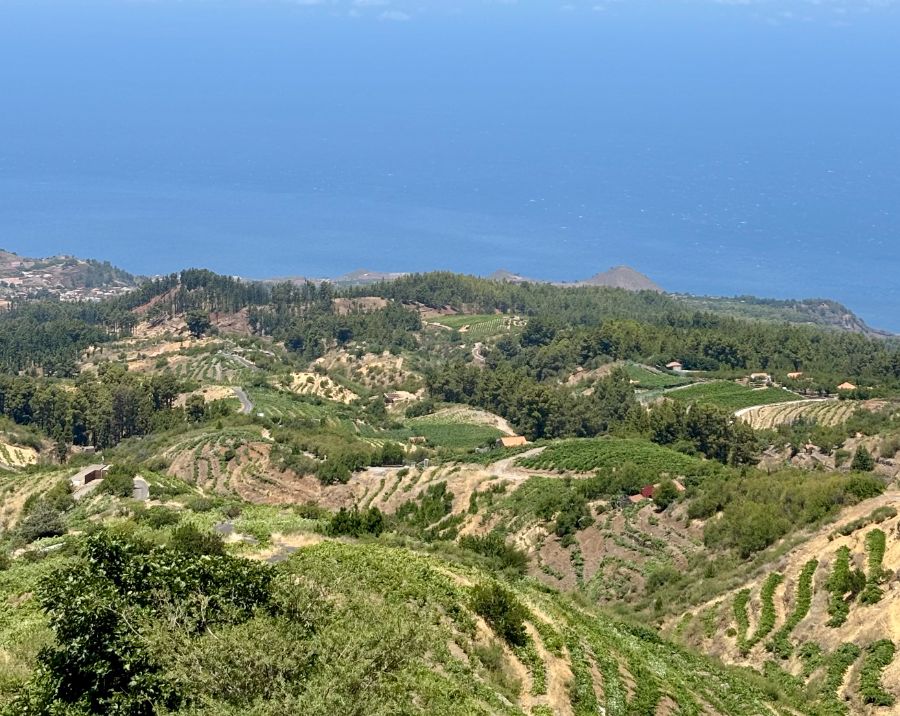
In this sort of miniature continent, vineyards are the crop best able to adapt. They stretch from 200 to 1,400 m above sea level, with a striking contrast between the high, terraced vineyards in the north, planted on the island’s oldest soils and without a sandy layer, and the vineyards in the south, where volcanic ash, or picón, can reach depths of up to two metres.
Vineyards at risk
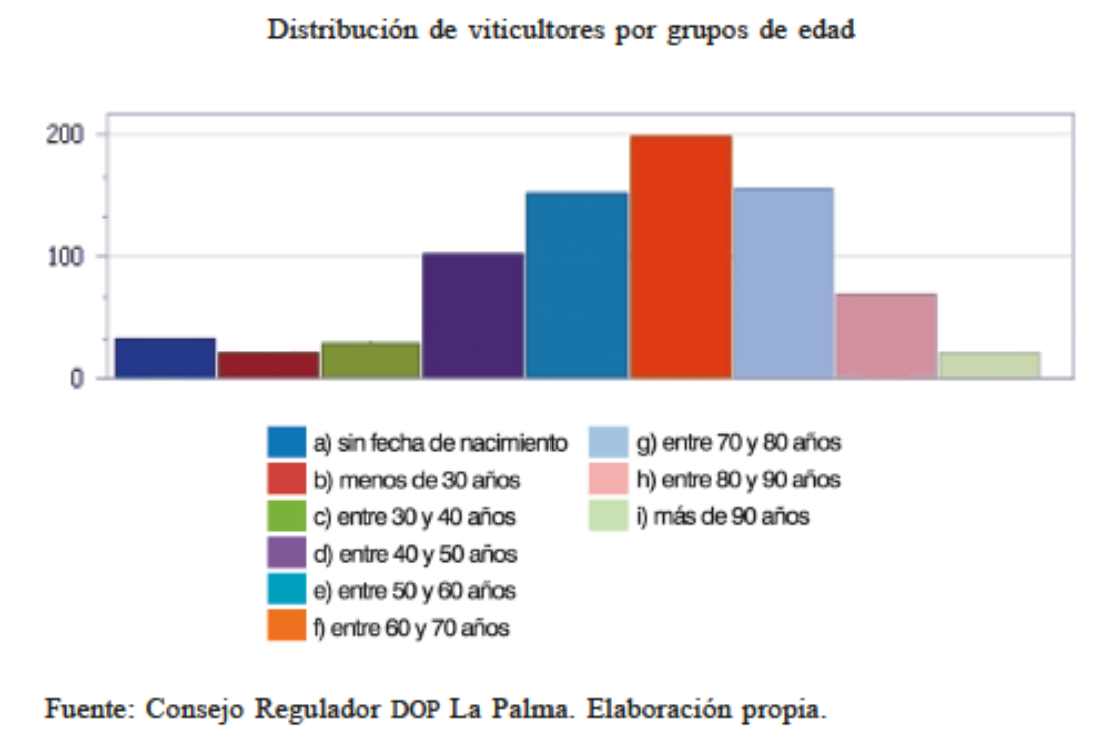
The beauty of the landscape is matched by the difficulty of farming it. "Winegrowers face persistent drought, the gradual abandonment of plots, a lack of generational renewal and the high costs of working on terraces, where mechanisation is virtually impossible. Added to all this is the constant pressure from wildlife, which threatens crops in every growing season," wrote Eva María Hernández Alonso, manager of La Palma's Regulatory Board, in a report on the island’s wines published by the Royal Cosmological Society of La Palma* in 2025. The graph included in her paper provides revealing data on the age of the island’s growers. The largest group is aged 60–70, followed by those aged 70–80 and 50–60. According to Hernández Alonso, "farming here is, first and foremost, an act of resilience and a commitment to the land."
Significantly, while the number of wineries has remained more or less stable over the past 25 years —there are currently 19 registered with the Board—, the number of growers has steadily dropped. For Carlos Lozano, who has been technical director of Bodegas Teneguía, the Llanovid cooperative in Fuencaliente, for more than 30 years, the main problem lies in the south, in what he calls “the tough dryland”, where rainfall is becoming increasingly scarce and, when it does come, tends to be heavy and out of season. "In 2000, La Palma recorded the harvest of the century. Since then, it's been all downhill," he says.
That year set all-time records for production (2,268,386 kilos were certified) and vineyard area (1,050 hectares). Today, only 441 hectares are registered with the Regulatory Board, and there are fewer than 780 growres in contrast with 1.155 in 2013. During the 2010s, only three vintages exceeded one million kilos. Since then, this has happened only once more, in 2022, and all signs point to it happening again this year.
Dramatic events such as the major fire that affected Mazo and Fuencaliente in 2009, followed a few months later by flooding, marked a turning point and led to the abandonment of vineyards. Drought and its consequences —low yields, exhausted vines and, in the worst cases, plant death as well as pressure from local wildlife— remain a constant threat.
The biggest losses of vineyard have occurred in the eastern sub-region of Hoyo de Mazo, known for its traditional cultivation of crawling vines on soils mulched with volcanic stones or picón. “Farming here is extremely difficult because of oidium and wildlife,” explains Hernández Alonso. "When a plot becomes isolated, the pressure is so intense that it eventually ends up being abandoned because the grapes fail to complete their ripening cycle — they're eaten by birds and lizards. Abandonment leads to further abandonment." The leading winery in this area, SAT Hoyo de Mazo –a founding member of the DO alongside Teneguía and Carballo– has not harvested grapes for several years.
Problems often extend beyond viticulture itself. When the Mexican cochineal pest arrived in 2010 and the prickly pears on which birds fed disappeared over the following decade, further pressure was placed on the vineyards. "The ecosystem is so fragile that anything can affect us," says the manager of the Regulatory Board.
The south, particularly Fuencaliente, has also suffered vineyard losses, mainly in high-elevation areas bordering pine forests, such as El Tión, which were badly affected by wildfires. According to Lozano, viticulture has increasingly become concentrated in the Llanos Negros and Machuqueras areas, "because there is acces to irrigation water and the slopes are accessible."
Heading north
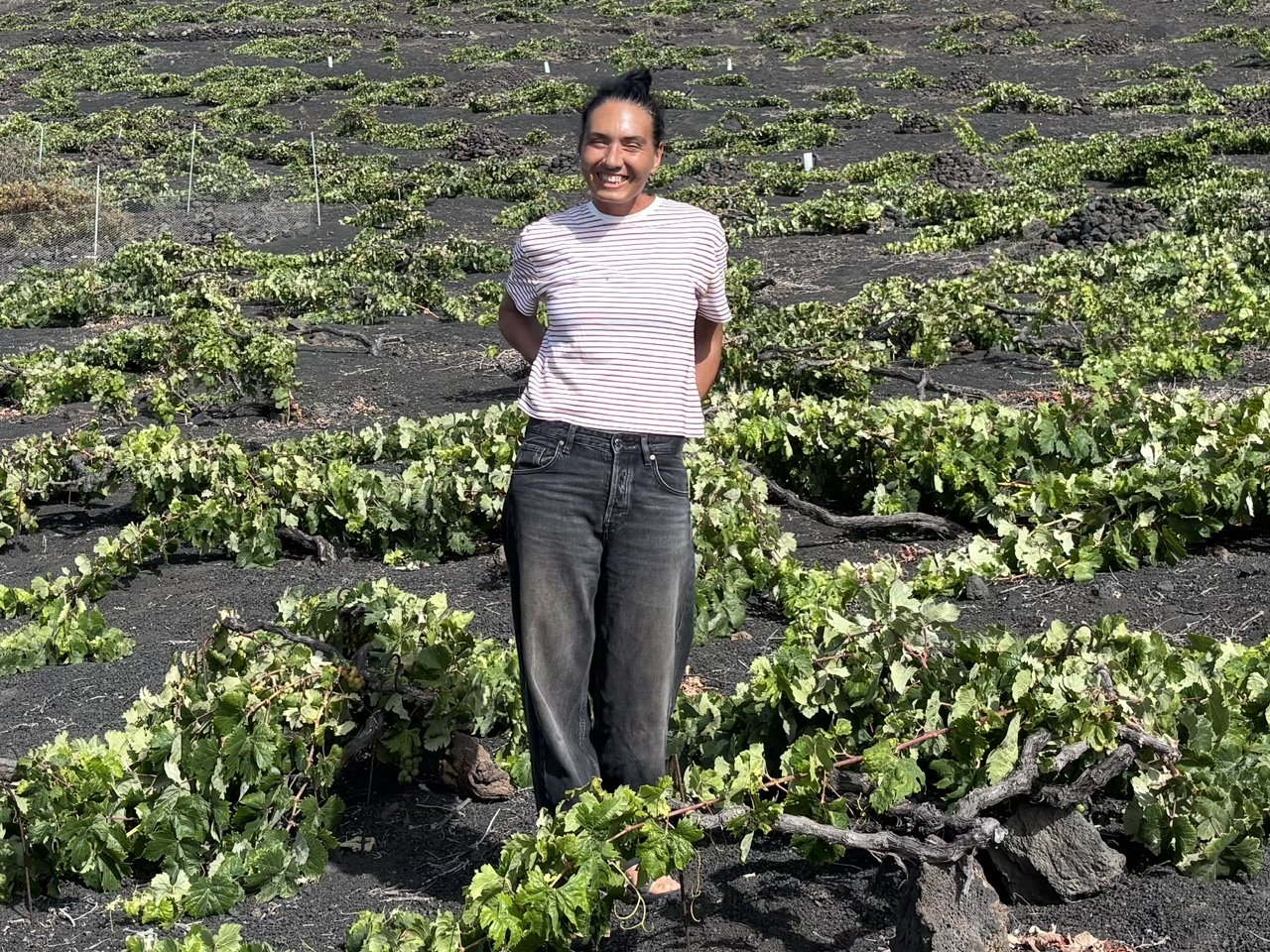
Victoria 'Vicky' Torres Pecis (pictures below) the island’s most internationally renowned producer, has built her reputation on dry and sweet Malvasia wines from Llanos Negros and Listán Blanco from Las Machuqueras. In recent years, she has turned to vintage blending to compensate for low yields or imbalances between vintages, producing wines of greater depth and complexity as a result. She has also been working with grapes from the northern sub-region for several years. There, she farms three vineyards spread across the villages of Tijarafe, Puntagorda and Garafía. The greater presence of clay makes these soils more fertile, allowing for higher planting densities and yields between 7,000–8,000 kg/ha. One notable example is a north-facing slope planted with Listán Blanco, Listán Prieto and Negramoll next to the Garome ravine, where she obtains grapes with excellent acidity and freshness.
The northern part of the island has seen a noticeable surge of activity in recent years. With wines on the market since the 2023 vintage, twenty-something Michael Candelario is La Palma’s new rising star. He works with family vineyards in Puntagorda and counts on the help of his good friend Iñaki Garrido of Las Toscas in Tenerife. His production is tiny —just 8,000 bottles comprising two cuvées, a red and a white field blend under the Candelario brand— but the wines have reached international markets, are increasingly sought after and are now almost impossible to find.
More readily available are the wines made by Patricia Perdomo, who took over the family winery in Garafía, with her sister Lucía in 2018. Patricia has retained the Piedra Jurada brand, which is well established in the local market, while significantly expanding the range to include more complex wines. Particularly noteworthy are her wines made from the Albillo Criollo variety, including Ideas Etéreas, aged on its lees in oak barrels, the original pét-nat La Cicla, and El Cántaro, a field blend featuring Listán Blanco. El Cántaro is part of a low-intervention range sourced from old vines, and it also includes an orange wine.
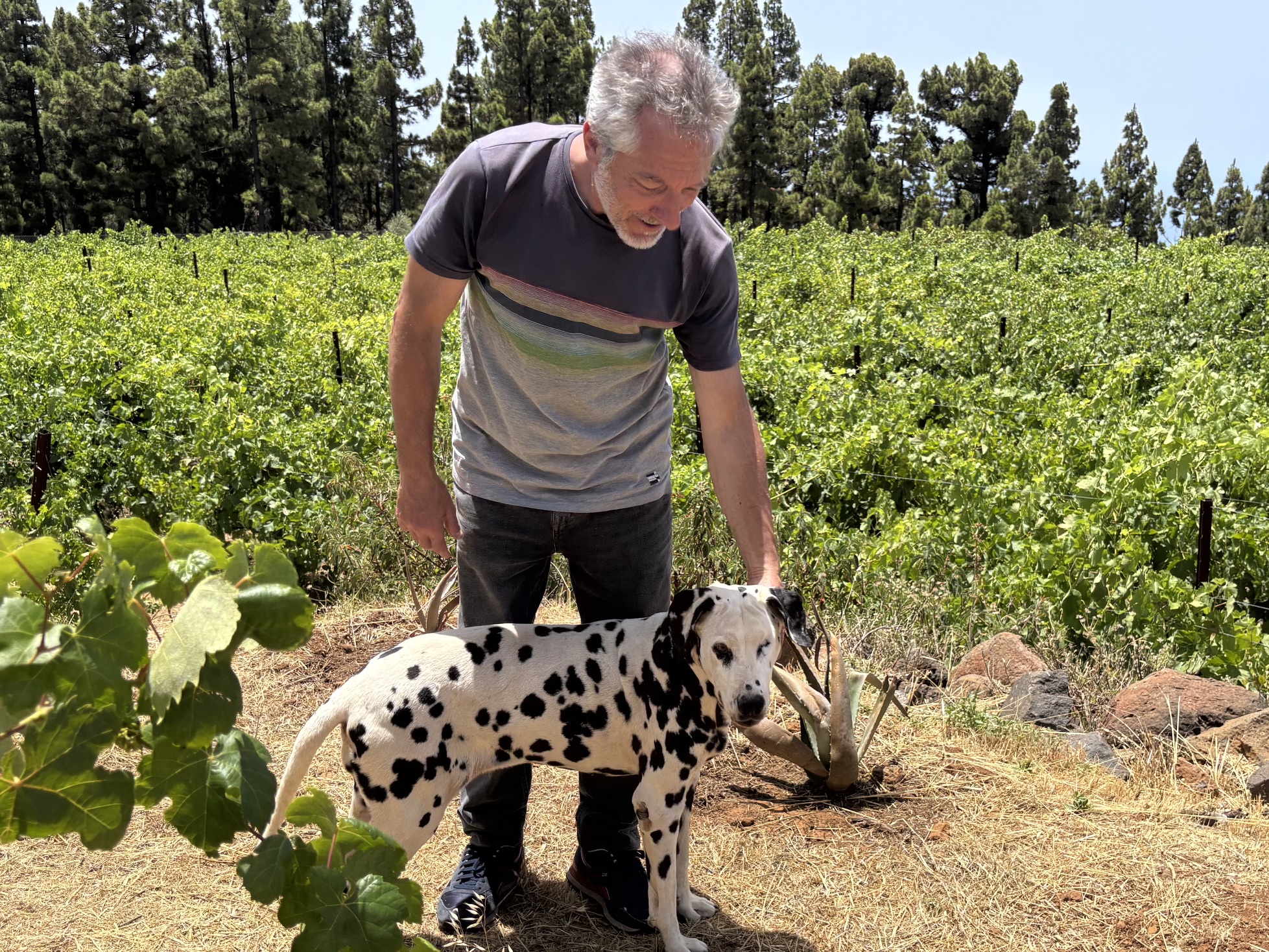
Another notable recent project is Montaña del Arco, run by Diego de Lorenzo (pictured below) an Italian with extensive experience in hospitality. Through considerable effort, he has brought together 40 abandoned plots that once formed part of an estate in Puntagorda. His aim is to recreate the casina, the traditional agricultural estate found around Milan. The property covers five hectares, including two hectares of vineyards, with scope for further planting in the future. It also includes and old vine plot of Listán Blanco, olive trees, a vegetable garden, all farmed organically, and livestock. His wines include highly original bottlings such as Chubasco, a lively Negramoll pét-nat, and Amagante, an energetic and expressive Vijariego Negro fermented and aged in ceramic amphorae.
Despite the increased activity —helped by the fact that the high-elevation vineyards are less exposed to humidity and undergo vegetative dormancy—, the north is not entirely free of problems. The DO warns of a shortage of people to look after vineyards planted under restructuring schemes in the early 2000s. Drought is also an issue, albeit less severe than in the south, alongside extreme natural events. In 2023, wildfires affected a significant number of producers, including Michael Candelario in his first year and Vicky Torres, who lost a vineyard to fire days before harvest.
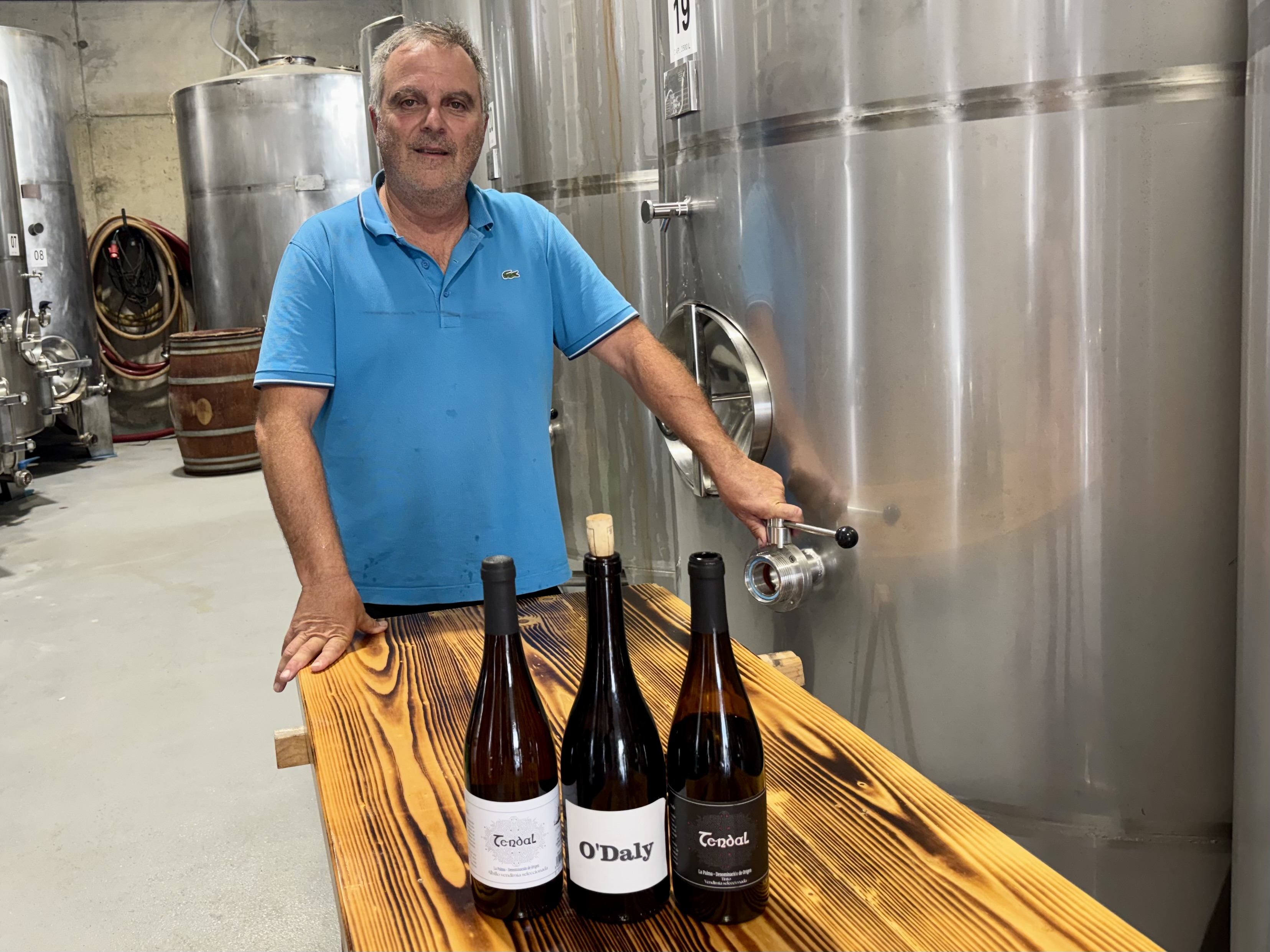
By far the worst affected winery was Tendal in Tijarafe, whose premises were destroyed by fire. Since then, it has been making its wines in municipal warehouses intended to accommodate local businesses. In 2025, it produced 87,000 bottles, bringing it increasingly close to the100,000-bottle level it reached before the disaster. Most of its production is red wine for the local market, though the winery is also known for its Albillo whites. Constancio 'Constan' Ballesteros (pictured below), originally from La Mancha, where his nephew runs Llámalo X, gives free range to his imagination with the experimental O'Daly range. It includes everyhing from an orange wine made from Malvasía grapes to a whole-bunch fermented Tintilla. We loved the spicy, lively Negramoll aged for a year in tank and destined for the American market. Most unexpected of all is a cider project that takes advantage of the island’s wetter, windward coast, within the influence of the laurel forest, to grow apples.
Finding the next generation
Can the passion of a group of vignerons alone keep the flame of La Palma’s wines alive and halt the loss of vineyards?
For several years, the Regulatory Board has been putting growers who can no longer farm their vineyards in touch with growers who are still active, allowing them to enter into lease agreements. "This has increased the capacity of wineries to produce their own grapes, but the reality is that more land is being abandoned than can be reallocated," explains Hernández Alonso.
For the Teneguía cooperative, the priority now is not simply recovery, but making viticulture economically viable. As Carlos Lozano puts it, the aim is "to convince winegrowers that they can make a living from their vineyards." The cooperative has purchased 1.5 hectares of land and, for the past two years, has been comparing three training systems as part of a study into the profitability of Malvasía: traditional, low pergola and trellis (see image below). The project assesses costs, yields and labour requirements and it is being carried out in collaboration with the Biosphere Reserve. There is also an initiative in partnership with the Alma Carraovejas group to study the soil microbiota in areas where organic matter is practically non-existent.
So far, there are pros and cons. “Trellising requires more water in drought conditions. Low pergola is more labour-intensive, but winegrowers are familiar with it and it helps keep the threat of rabbits at bay,” explains Lozano. In the case of Malvasía, which requires long pruning, the trellis system allows more buds than traditional vines, which can spread over 10–15 square metres.
Teneguía’s technical director also sees potential in immigrants who have settled on the island and are beginning to recover vineyards or buy land to plant vines. “Our membership has grown over the past two years,” he explains. The priority, in his view, is to professionalise viticulture in an area where, as recently as the 2025 harvest, the cooperative processed 12,000 kilos from members who each brought in less than 100 kilos.
For Vicky Torres, the viticulture and oenology training course offered in Puntagorda —“although it focuses more on oenology than viticulture”— is a valuable initiative for encouraging young people to become involved in wine.
A wealth of grape varieties
These green shoots are welcome, even as market conditions become increasingly challenging. The decline in demand for red wine, for example, is already being felt by many wineries in La Palma. Fortunately, the island has some strong white cards to play.
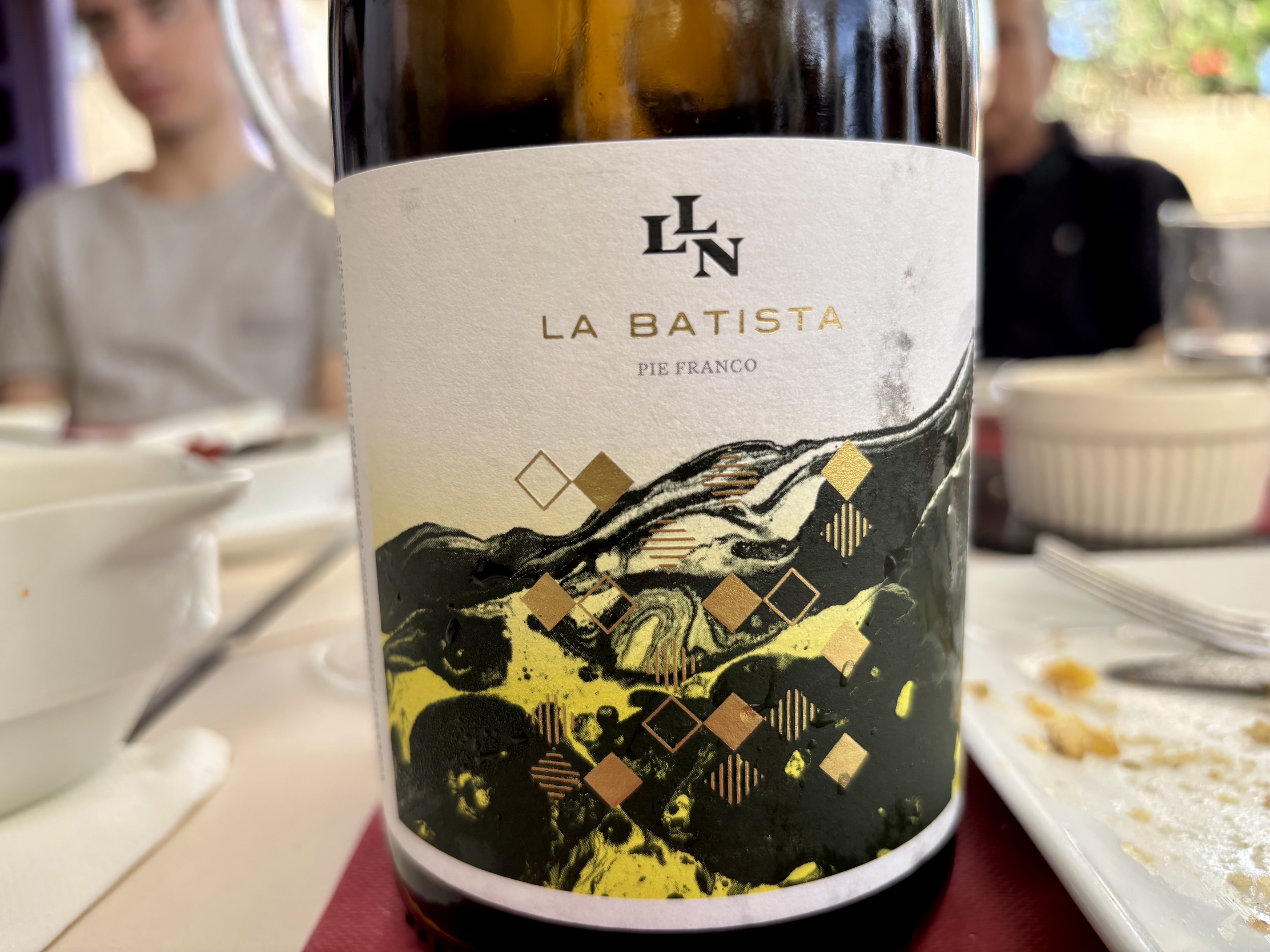
Though scarce, Malvasía sits at the top of the quality pyramid, accounting for less than 3% of the island’s harvested grapes. The finest dry whites have tremendous character and structure, while the sweet wines are a historic treasure that must be preserved, although they need to be valued as they deserve. Despite the challenges associated with long pruning, the variety has its own grand cru in Llanos Negros. The cooperative produces a range of limited-production wines under this name, featuring different varieties grown on the site, including the dry Malvasía La Batista and the complex vintage blend Los Tabaqueros.
Albillo Criollo has become La Palma’s signature white wine. During the 2025 harvest, it overtook all other varieties for the first time, accounting for 154,418 kg out of a total of 696,631. Although susceptible to powdery mildew, Albillo Criollo thrives in the north of the island, at elevations above 1,000 metres, and its fresh, aromatic character makes it particularly well suited to current tastes. Beyond young whites, it is showing good potential for ageing on lees, and is also versatile in blends, as well as sparkling or orange wines.
Listán Blanco (20% of the 2025 harvest) is more austere and shows greater variation in quality, but it captures the essence of the terroir well and is firmly established among Canary Island wines. The greatest interest lies in exploring its distictive expressions in La Palma.
The connection with La Palma is much stronger in the case of the red grape Negramoll. It is, however, a variety prone to poor budburst and, particularly at high elevations, can sometimes struggle to develop colour. Negramoll is the only red variety in Teneguía's Llanos Negros range, but it is not released every year. Vicky Torres recently told us that the variety is disappearing from coastal and mid-elevation areas. Despite this, Negramoll remains one of the island’s flagship varieties and is frequently found in field blends. It is also well-suited to rosé production.
New vignerons who have recently planted vines, such as Diego de Lorenzo, have also shown an interest in less common varieties, such as Vijariego Blanco and Negro (“I’ve planted a lot of Vijariego Negro in view of climate change”), Listán Prieto and Baboso Negro. The cooperative, meanwhile, has chosen Gual for one of its new vineyards.
With more than 20 approved grape varieties, the possibilities for blending are almost endless. There are still a few aces up the island’s sleeve, judging by the results of prospecting studies carried out there and presented by Professor María Francesca Fort, a researcher at Rovira i Virgili University in Tarragona. The study uncovered three previously unknown varieties: Aromática Eufrosina, Cagarruta de Oveja (literally, sheep shit) and Viñarda Rosada. The names may not be particularly appealing, but they add unique elements to the island’s bittersweet story, which seems perpetually poised between fascination and adversity.
* La Cosmológica takes its name from Cosmos, a work by the German naturalist and explorer, Alexander von Humboldt, who visited the Canary Islands in 1799.

Author
Amaya Cervera
A wine journalist with almost 30 years' experience, she is the founder of the award-winning Spanish Wine Lover website. In 2023, she won the National Gastronomy Award for Gastronomic Communication
Previous Post
Next Post
Finca CQ 2024 Red