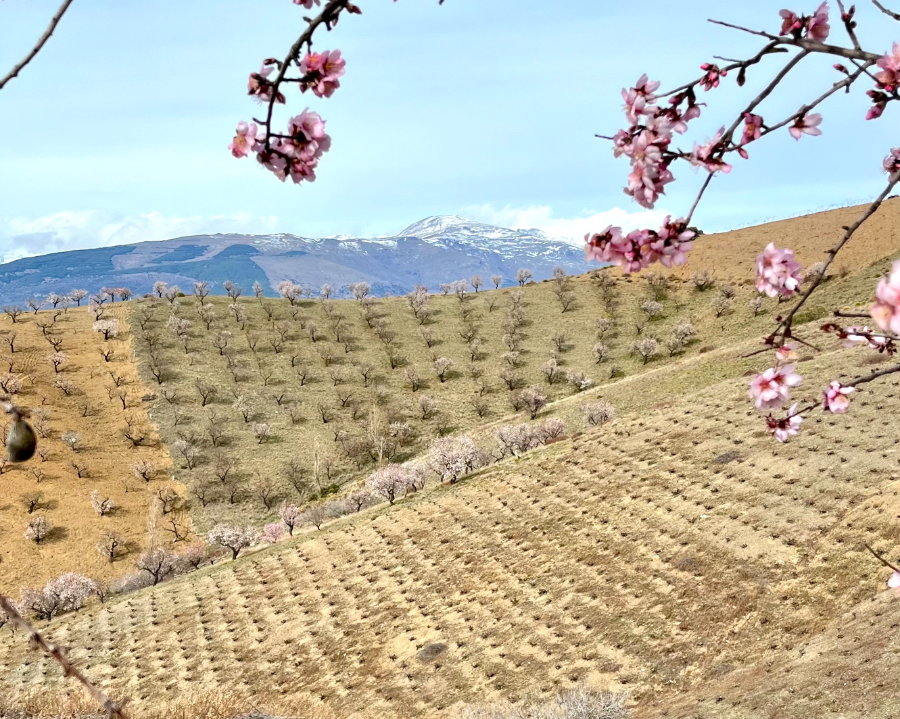
Granada and Almería are hardly the first places that come to mind when talking about Spanish wine. Eastern Andalucía is more readily associated with Granada’s Alhambra and the Sierra Nevada ski resorts, or with Almería’s greenhouses and the Tabernas Desert, a filming location since the 1950s for numerous film productions, including the famous Spaghetti Westerns. Yet this corner of southern Spain is also home to some of the country’s most distinctive terroirs, with slate soil vineyards climbing to 1,400 metres, the highest on the Iberian Peninsula.
One of the most striking areas is the Sierra de la Contraviesa, a mountain range stretching from Granada into Almería, dramatically wedged between the snow-capped Sierra Nevada to the north and the Mediterranean coast to the south. “You don’t get those jammy, marmalade-like flavours here,” says Argentinian winemaker Alejandro Vignapiano of Bodegas La Divisa, who farms 10 hectares between 1,200 and 1,380 metres. “The conditions are ideal: the elevation brings tension and freshness, while the southern latitude ensures excellent ripening.”
Before moving into winemaking, Vignapiano worked as an architect and ran a wine bar in Buenos Aires from 2008 to 2010. He then set out in search of a Mediterranean region with mineral soils and the freedom to leave his mark —something the isolated, little-known Contraviesa offers. Today, he produces around 20,000 bottles annually across 19 different wines, sold almost exclusively to high-end restaurants such as Aponiente in El Puerto de Santa María, Angelita in Madrid and Bar FM in Granada.
High elevation, high acidity
Among his range, the Contraviesa’s high elevations are strikingly expressed in the super-fresh, juicy Gualicho 2023 (2,650 bottles, around €25). Sourced from old-vine Garnacha at 1,320 metres, it delivers a mouthwatering acidity of 8.6 g/l —remarkable for a wine from a latitude comparable to Algiers. Like all wines from Bodegas La Divisa, it is fermented spontaneously, with sulphites added only at bottling.
Elevation is equally key to the precise, linear Azhar White 2025 (1,100 bottles, around €20), produced from 75-year-old Vijiriega vines grown on slate soils at 1,300 metres. Made from free-run juice and fermented in stainless steel, it combines a pronounced mineral edge with a vibrant acidity of 7.4 g/l. Thanks to this freshness and its textural depth, the indigenous Vijiriega has gained traction among producers across the region. The variety descends from the Arabic table grape Heben (Gibi), as do Airén, PX and Viura, which tend to be more austere than overtly aromatic. Vijiriega is no exception to this, as Vignapiano (pictured below) notes: “While it offers notes of citrus and apple, its profile is distinctly mineral.”
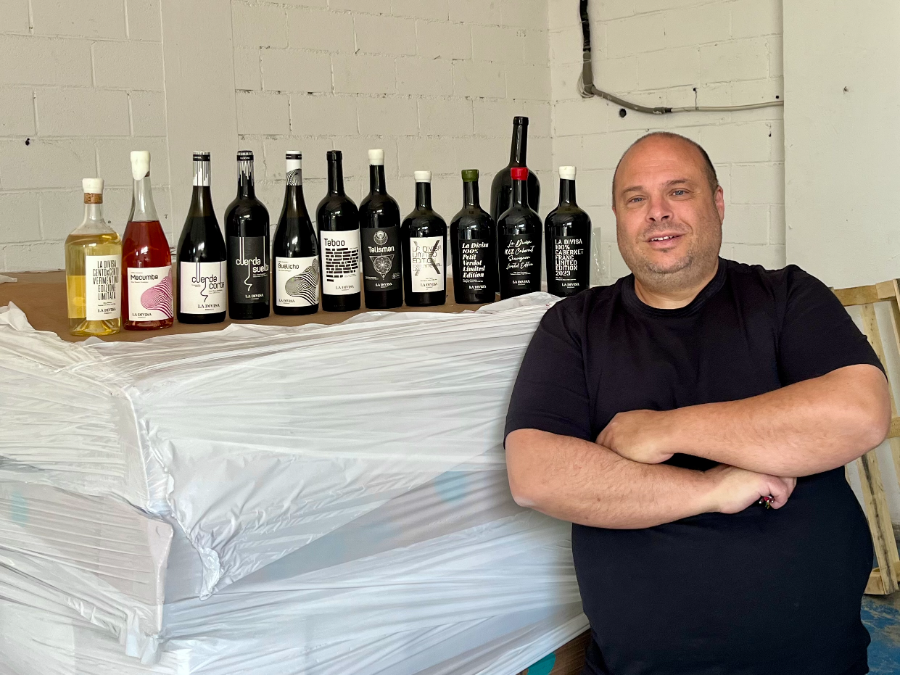
All La Divisa wines are labelled as Vino de España, including the sappy, amphora-aged Azhar Black 2024 (450 bottles, around €20) from the indigenous Jaén Negro. It has a distinct herbal profile, which seems to be a general feature of the Jaén Negro grape. The range includes powerful and structured yet balanced and fresh reds made from international varieties such as Petit Verdot and Cabernet Franc.
Contraviesa: From 90,000 to 500 hectares under vine
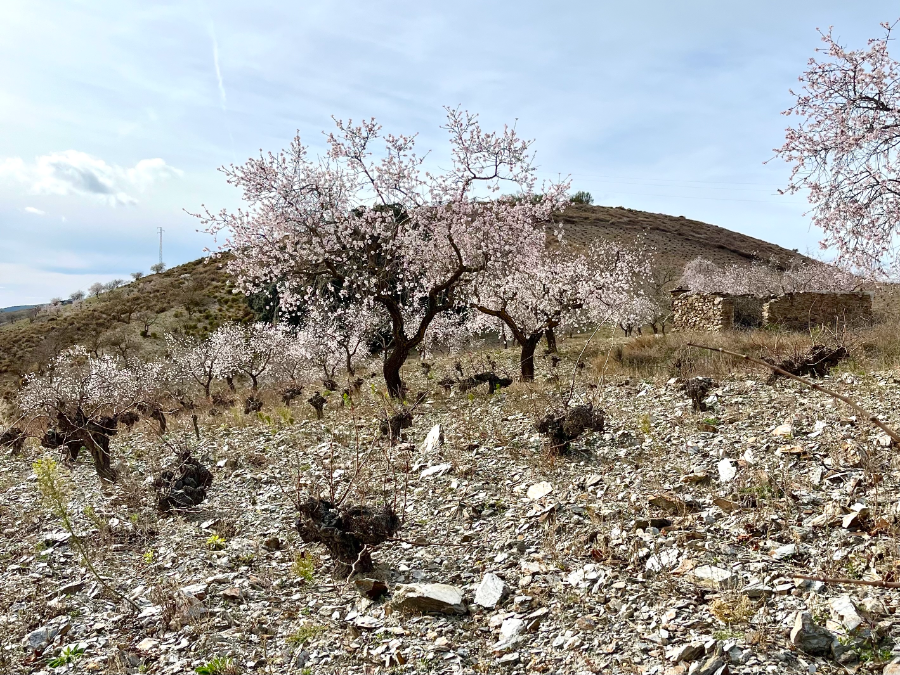
The Contraviesa story is not only about elevation and slate soils. Historically, it was the viticultural heart of eastern Andalucía. Before phylloxera, vineyards covered more than 90,000 hectares. By the late 1970s, the figure had fallen to 7,000; today, barely 500 remain —a familiar story in many Spanish wine regions. Almond trees have gradually replaced vines, offering growers a more profitable and less labour-intensive crop. They now dominate the landscape, especially in February, when their blossoms briefly transform this arid region, which usually receives less than 400 mm of annual rainfall.
“In the past, it was all vineyards,” says Alberto García, a 43-year-old vigneron whose family has been making wine here since the 19th century. He runs Bodega García de Verdevique with his younger brother Alejandro and their father Antonio. The winery lies in a remote hamlet surrounded by mountains, with vineyards reaching 1,360 metres. Most plots are steep, slate-based and so inaccessible they can only be ploughed by mule. “It takes us three days to plough one hectare,” García notes.
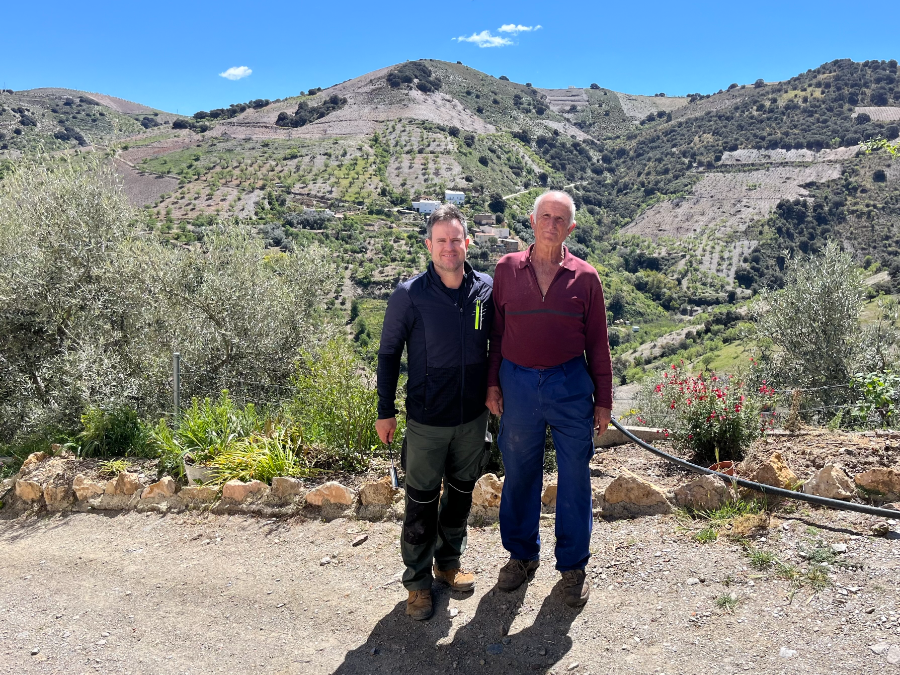
The family farms 11 hectares organically, producing around 35,000 bottles annually. “The typical old vineyard is planted with about 50% Jaén Blanco and 30% Jaén Negro, with the remaining 20% made up of varieties such as Perruno, Vijiriega, PX, Montúa, Tinta Requena (Bobal) and Tinto Varetuo,” García explains. The latter is a locally adapted Tempranillo clone with very small clusters and thick skins.
Costa, the Contraviesa clarete
From 80- to 130-year-old field blends, the Garcías produce a traditional clarete known locally as costa. El Costa de Verdevique 2024 (3,000 bottles, around €7) is fermented with native yeasts and aged in an old chestnut vat. With raspberry and onion skin colour, it has a mineral nose and a structured palate. The family also guards a few treasures in its old cellars, where some costas have been aged oxidatively as rancios; some barrels date back to the 1940s and are occasionally released as special editions.
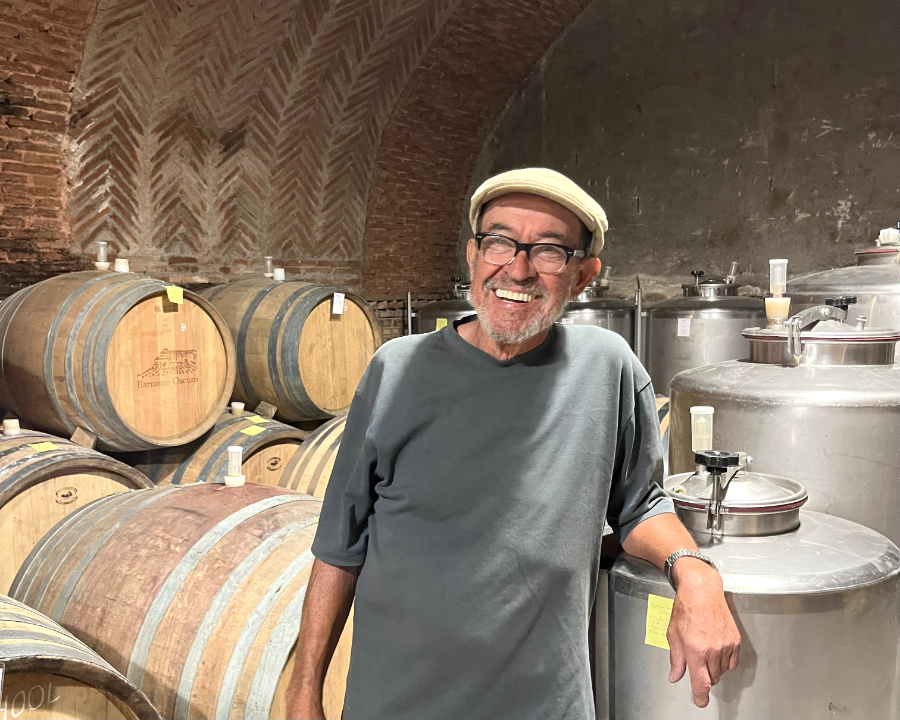
According to Alberto García, costa has long been the region’s traditional wine, with red and white styles only becoming common in the 1980s. One of the first to produce them was Manuel Valenzuela (in the photo below) of Bodega Barranco Oscuro, who also introduced French grape varieties to the area. His flagship red 1368 Cerro Las Monjas —a blend of Cabernet Sauvignon, Cabernet Franc, Syrah, Garnacha and Merlot— comes from vineyards planted up to 1,368 metres elevation. Now 84 and still active, Valenzuela is widely regarded as Spain’s first natural winemaker and remains a major influence on Granada’s wine scene, setting an example for many of the region’s natural wine producers.
A return to indigenous varieties
Like Valenzuela and most producers in eastern Andalucía, the Garcías also planted international varieties, but they have always preserved their old vineyards of indigenous grapes. Today, Alberto García is more convinced than ever of their importance. “They have been here for hundreds of years and are well adapted, particularly in the context of climate change,” he says. New plantings therefore focus on Garnacha, Tinto Varetuo and Vijiriega, using massal selections from the oldest vines. The latter variety plays a central role in the estate’s portfolio, used for still and traditional-method sparkling wines, as well as for the orange Mil Pieles 2024 (2,000 bottles, around €12). With one month of skin contact, it combines grip with an appealing herbal edge.
The drought-resistant Jaén Blanco —known elsewhere as Cayetana Blanca— adds an expressive dimension. “It is more aromatic than Vijiriega, with floral notes, hints of peach and a fuller body,” García explains. He uses it mainly for dry whites, but in years when misty autumn mornings are followed by warm, dry afternoons, the grapes can develop botrytis. The result is Laero 2018 (980 bottles, around €40), an unfortified sweet wine balancing 80 g/l of residual sugar with striking freshness and notes of bitter almond rather than the honeyed profile typically associated with botrytis.
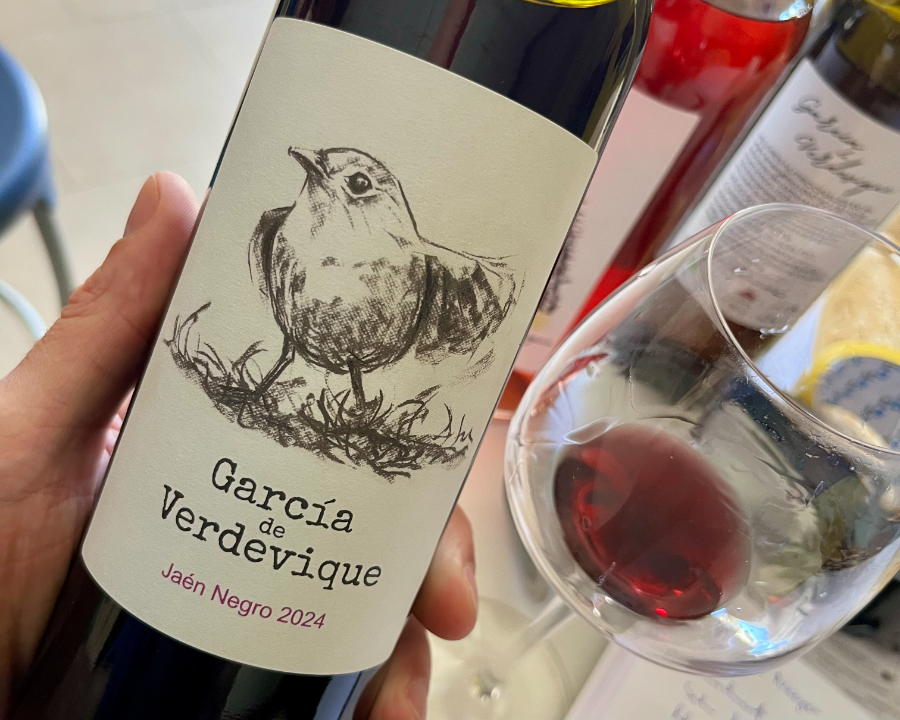
Among the reds, the standout is the varietal Jaén Negro 2024 (2,000 bottles, around €12). Made from vines up to 130 years old and vinified in stainless steel, it prioritises freshness and drinkability, with red cherry fruit and subtle herbal notes. Despite its thick skins, the variety’s large berries naturally limit colour and tannin extraction. “Jaén Negro is the only variety here that produces lightly coloured reds, which is why it is rarely used on its own,” García notes. All his wines are labelled under the Cumbres del Guadalfeo designation, a Vino de la Tierra region with just 43 hectares registered.
Alpujarra Alta: Hidden potential
Understanding the true scale of viticulture in eastern Andalucía is difficult because many producers operate outside appellation systems. DO Granada, which covers the entire province, accounts for just 260 hectares of vineyards. Alongside it are four Vino de la Tierra (VT) designations in Granada and another four in neighbouring Almería. Together, these eight VTs cover around 250 hectares, meaning that only around 510 hectares across both provinces are officially registered under either DO or VT classifications.
The real area under vine is larger. One example is Alpujarra Alta, one of Andalucía’s most striking yet least developed wine regions. Here, vineyards reach over 1,400 metres and still preserve old bush vines on slate soils, planted with local varieties such as Jaén Blanco, Jaén Negro, Vijiriega, Romé, Montúa, PX and Garnacha, often mixed together in the field. The plots are tended by local families —carpenters, masons, electricians— and winemaking remains largely informal, geared towards domestic consumption. Some growers sell small quantities, typically costa clarete, to local bars for around €1.50 per litre in bag-in-box. What the region still lacks are professional, quality-focused wineries.
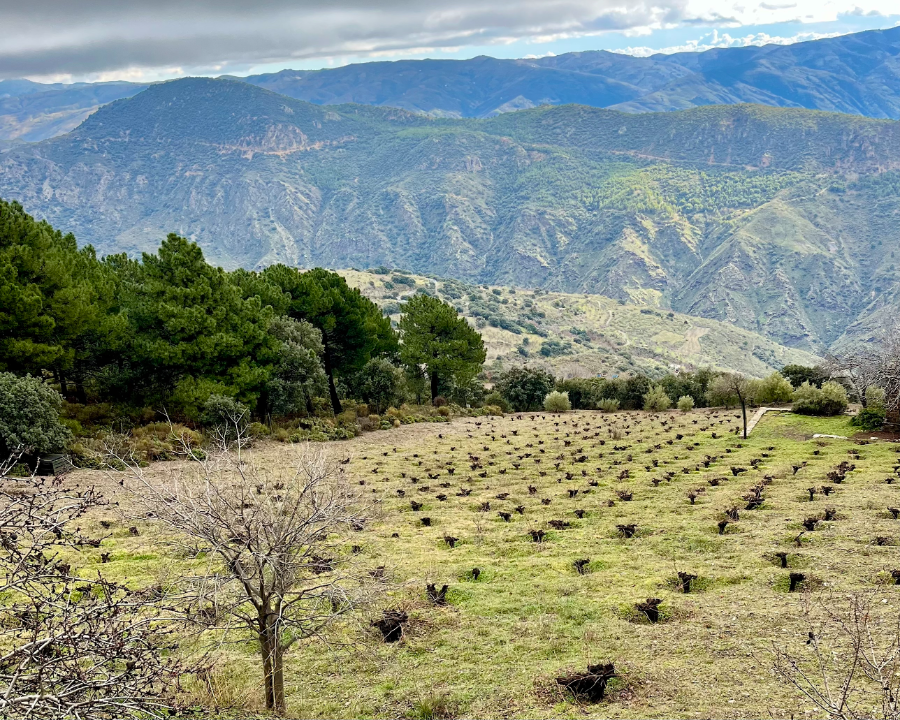
This raises the obvious question: what might happen if a new generation of ambitious, terroir-driven vignerons arrived here, as they did in Sierra de Gredos in the early 2000s? For now, however, Alpujarra Alta is a reminder of how much of Spain’s wine potential is still hidden and unexplored.
Fine wine culture has never fully taken root in eastern Andalucía, and international recognition has been minimal. No wine from Almería has ever been reviewed by The Wine Advocate, while in Granada only one estate —Dominio de Buenavista— has appeared. Its 2006 to 2010 vintages, reviewed by Jay Miller, reached a maximum of 90 points, reflecting a style typical of the time: (over)ripe, generously oaked wines based on Tempranillo and French varieties. Many producers in Granada and Almería still follow that template today.
A telling perspective comes from La Tana, a celebrated wine bar in Granada. “You have to drink fine wine if you want to make fine wine,” says owner Jesús González. His list features 2,400 labels, including 100 available by the glass. Yet when asked whether local producers use the bar as a place to taste, learn and explore, his answer is blunt: “hardly anybody.”
Altiplano de Sierra Nevada: Extreme conditions
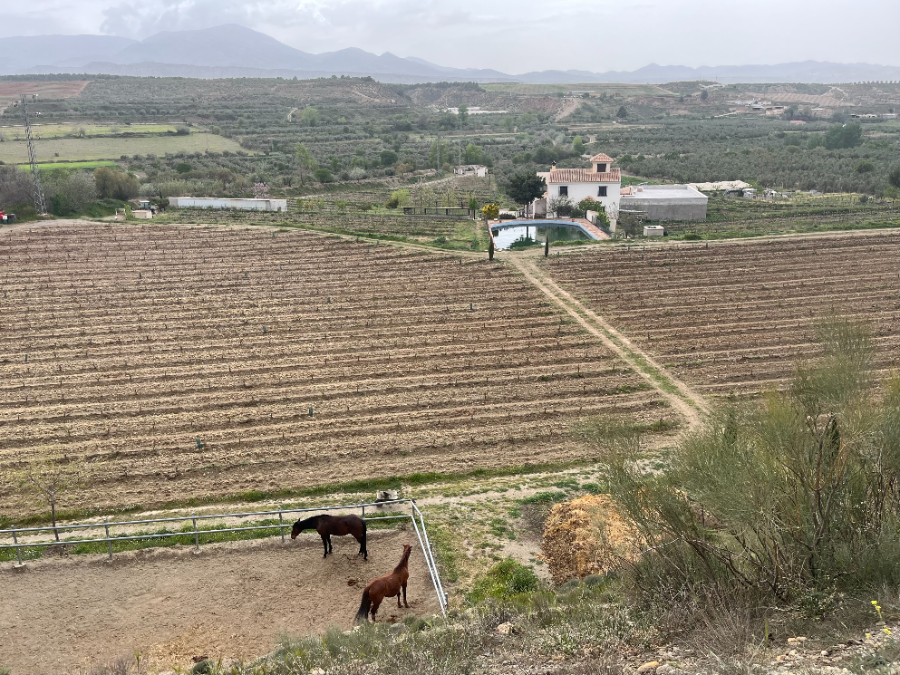
One of the few younger producers broadening his horizons through such places as La Tana is 32-year-old vigneron Joan Vilaplana (pictured below). His Andalusian grandfather was a winegrower, while his father Luis, originally from Catalunya, founded Bodegas Vilaplana in Caniles, eastern Granada, in 1996. Their region, Altiplano de Sierra Nevada, lies on the northern side of the mountain range, cut off from Mediterranean influence. As a result, the climate is markedly continental, with very hot summers, cold winters and little rainfall, punctuated by occasional heavy downpours that can cause flooding.
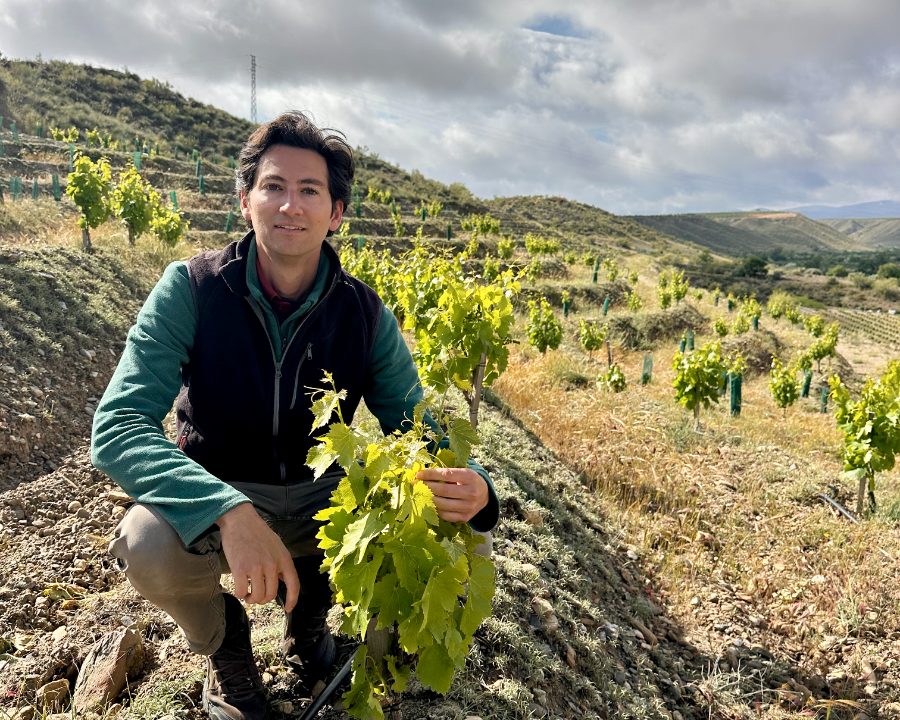
Vines are planted at 930 to 1,120 metres on poor gravel, clay, sand and limestone soils. Luis and Joan Vilaplana farm 13 hectares organically and source grapes from a further seven. “Eighty per cent of our work is to ensure high-quality grapes in the vineyard,” says Luis Vilaplana. In the cellar, intervention is minimal, with total production around 45,000 bottles, all sold as Vino de España.
Their main white variety is Jaén Blanca, which produces the floral, aromatic Uclías 2025 (2,000 bottles, €20). Fermented with natural yeasts and without temperature control, it delivers crisp acidity and elegant layers of texture. “This variety is like a gift for me,” says Joan Vilaplana. “Many Jaén Blanca vineyards disappeared in our area, but my father and I discovered a very old plot in the Mincal valley, which we recovered.” Since then, they have replanted the variety through massal selection and intend to expand plantings.
A blend of Jaén Blanca and Macabeo, Diez Días de Marzo 2025 (15,000 bottles, around €14) offers citrus, floral notes, very good freshness and a silky texture. Joan Vilaplana is also optimistic about a young parcel of Garnacha Tinta that he planted in gobelet a few years ago on poor calcareous terraces. The first vintage of Mincal 2025 (950 bottles, around €20) shows promise, with fresh red fruit and a fluid style.
“When it comes to wine, our area is totally off the radar,” says Luis Vilaplana. However, his son Joan believes this can change. “At first, I didn’t think it was possible to make exceptional wines here,” he says. “But after tasting with knowledgeable people, I changed my perspective. Now I’m convinced we have the elevation, varieties and soils to make great wines.”
A cool-climate outpost in Almería
Another believer is José Berruezo, a fine wine lover and owner of petrol stations and hotels in Granada. Originally from Tíjola in Almería, he owns hundreds of hectares of forest in the surrounding mountains, where he founded Dominio de Cascaire in 2021. Carlos Cerdán of Bodega Cerrón (Jumilla) works with him as consultant and technical director.
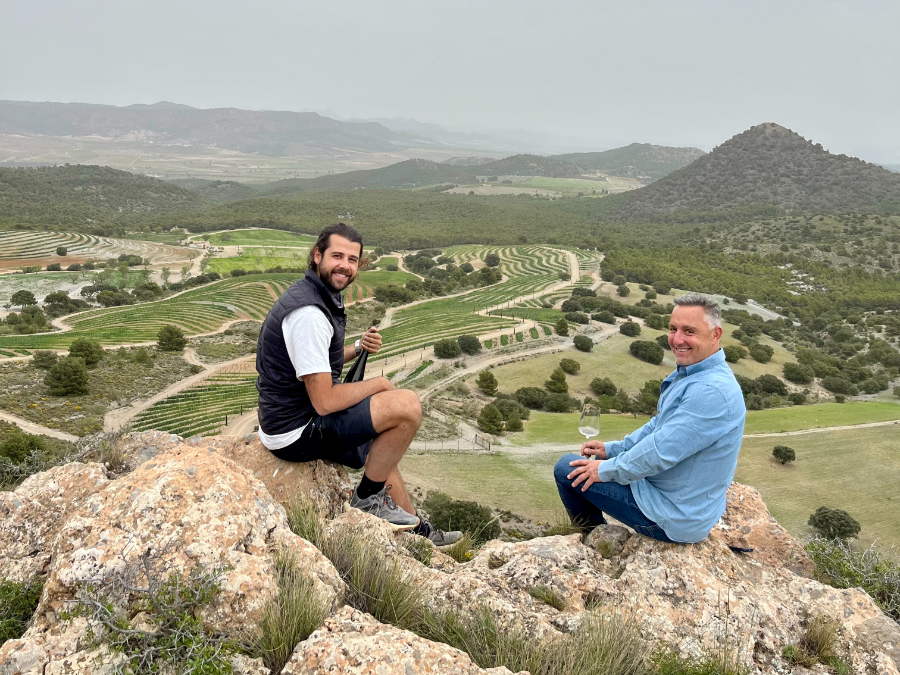
The remote, spectacular estate spans 425 hectares at elevations between 1,240 and 1,320 metres. Surrounded by pine and oak forests, and sheltered by the Sierra de las Estancias and Sierra de los Filabres, it enjoys a surprisingly cool climate for Almería. “This mountain is the key to everthing,” says Berruezo, pointing towards a 2,200-metre peak to the west. “It blocks the afternoon sun, so the vineyards receive two hours less sunlight each day.” According to a weather station on the estate, temperatures in 2025 never exceeded 31°C, even during heatwaves that pushed much of Andalucía beyond 40°C. Snow in winter is not uncommon, while annual rainfall reaches 500-600 mm, which is significantly more than in other parts of Almería.
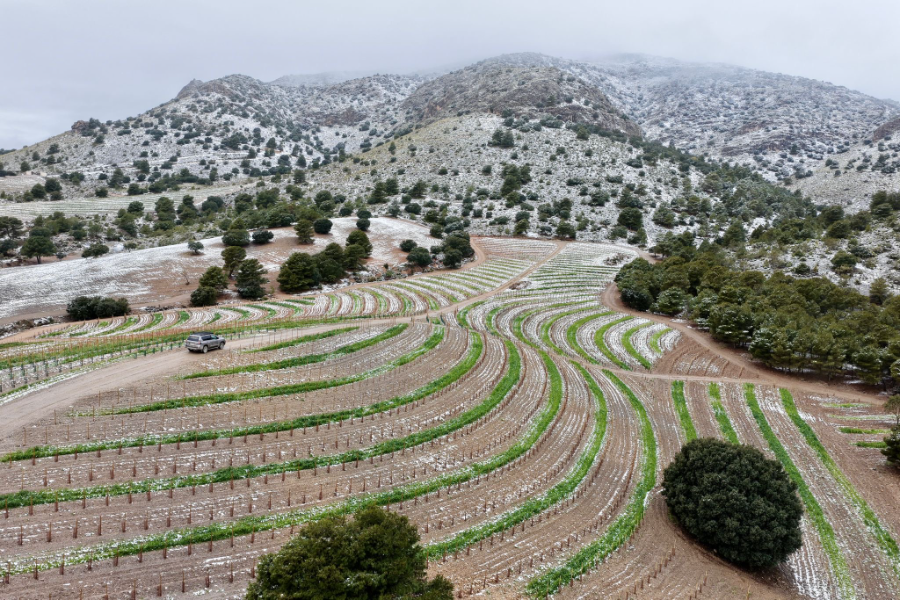
To date, they have planted 22 hectares of gobelet-trained vines, mainly on slate soils, with some calcareous and loamy sections. Around 70% are white varieties —Xarel.lo and Vijiriega Blanca— while the remaining 30% is planted to Garnacha Tinta, Monastrell and Vijiriega Tinta. Plant material comes from renowned vineyards in Jumilla, Catalonia and Jerez. “It is a Mediterranean project built around Mediterranean varieties,” explains Cerdán, who is enthusiastic about the site’s terroir and elevation. Early results are promising, with Xarel.lo and Vijiriega reaching up to 9 g/l of natural acidity.
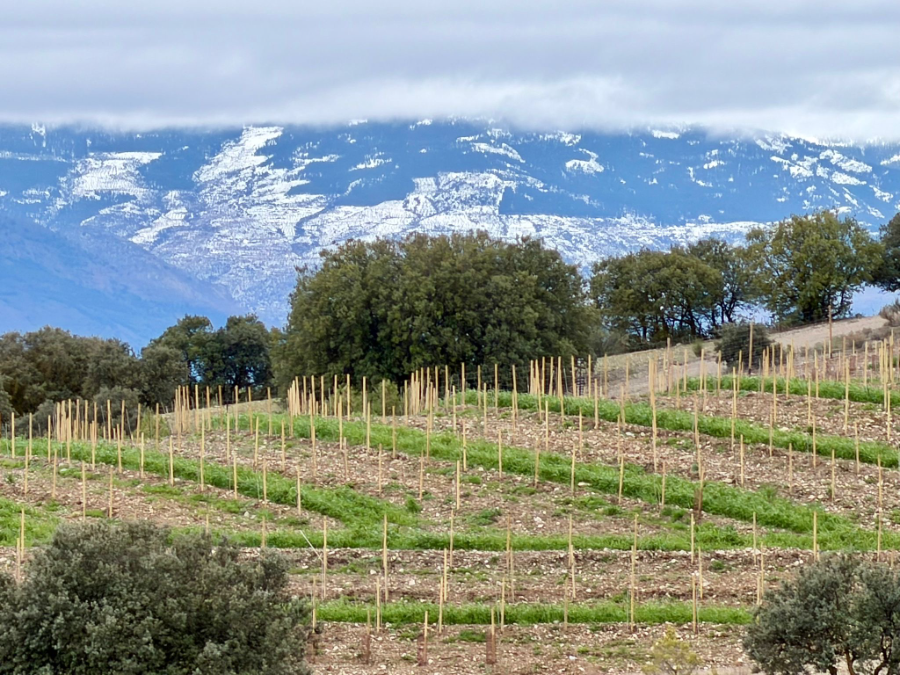
The project has no wines on the market yet, so we drink César Márquez’s El Val 2021 while overlooking the estate from a nearby viewpoint. From there, Dominio de Cascaire already feels like one of the Mediterranean’s most ambitious new projects —not least because of its approach to sustainable viticulture. Cover crops are used to increase organic matter in the soils, while keyline planting plays a central role in preventing erosion and improving water management. “One day we had 190 litres of rainfall, yet there was no erosion at all,” says Cerdán.
So far, investment has focused entirely on the vineyards. Construction of a functional winery is set to begin soon, with completion planned for 2028 and a target production of around 80,000 bottles annually. “We are not in a hurry,” notes Cerdán. “We want to do things properly, and when we release a wine, it will be of high quality.”
Time moves differently in Andalucía, where some wines spend decades ageing in barrel before release. What matters is that Dominio de Cascaire finally brings together the ambition, expertise and long-term vision capable of unlocking the extraordinary potential of eastern Andalucía’s high-elevation terroirs. The question is no longer whether it will happen, but when.

Author
Thomas Götz
Thomas Götz is a wine journalist, blogger and educator based in Spain and Germany. He has been writing about Spanish wines for various German wine magazines since 2016.
Previous Post