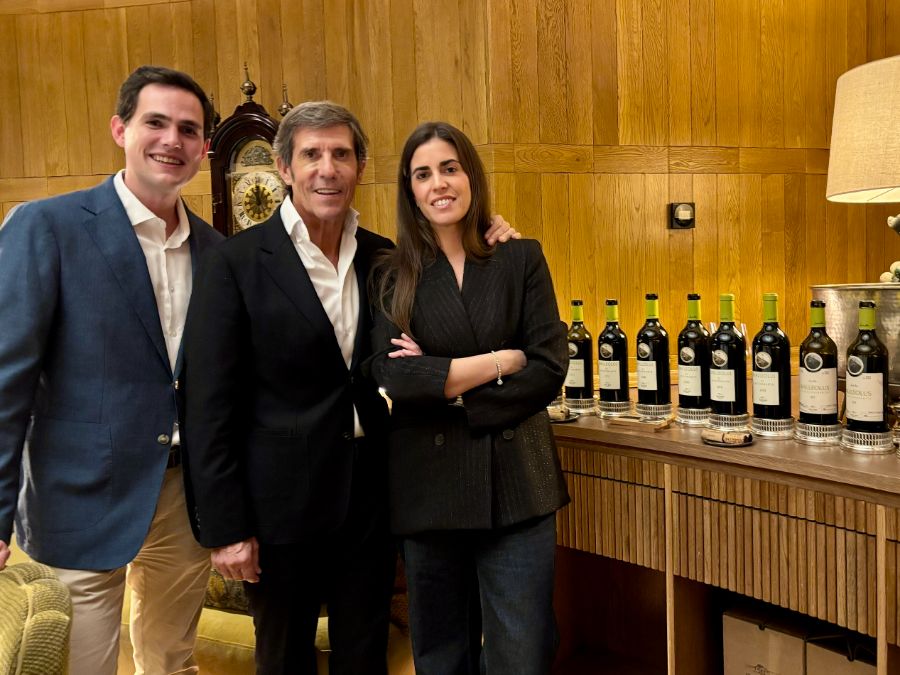
The vertical tasting held at Madrid's Club Metrópolis last week was led by Javier Moro, the current president of Bodegas Emilio Moro. It also offered an opportunity to meet some of the fourth-generation family members now holding senior positions at the winery. They include managing director Patricia Sánchez Moro and her cousin Héctor Medina Moro, who heads up marketing. Both are pictured above with their uncle Javier. The event also provided an updated on the family’s latest projects.
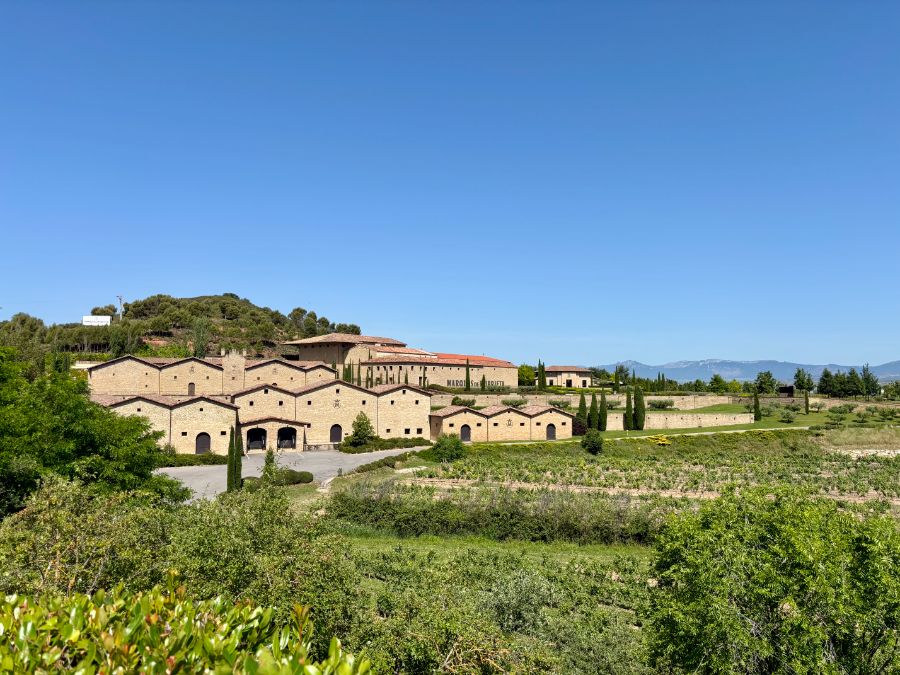
The family is currently undertaking a comprehensive refurbishment and modernisation of its facilities in Ribera del Duero, with competion expected by 2029 or 2030. The €40 million investment also includes an automated warehouse and an expanded wine tourism offering.
Originally from Ribera del Duero, the group has been producing white wines in Bierzo for a decade. In 2024, the family opened its own winery in the area and launched its first red wine. In 2025, combined production across both regions reached 3.65 million bottles, generating a turnover of €46.3 million, with an average price per bottle of €29–30.
The first-generation vineyards
Despite its long wine-growing tradition and a reputation for producing fine reds in Pesquera de Duero, the Moro family was forced to grub up most of the vines planted by the patriarch, Emilio, during the economic crisis of the 1970s. His son Emilio and grandchildren resumed planting in the late 1980s, following the creation of DO Ribera del Duero in 1982.
Sanchomartín is the lowest-yielding wine in the Malleolus range. The brand was launched in 1998 as a single, premium-quality red, at the same time as the family revamped the range and dropped the traditional ageing terms Crianza and Reserva. In the 2000 vintage, the oldest majuelo (the Latin word malleolus means a small plot of vines), which was planted in 1924 on clay soils, was removed from the blend to create Malleolus de Valderramiro, a super-premium single-vineyard wine, that sells for around €105 in Spain. Two years later, in the 2002 vintage, Sanchomartín was born. This vineyard lies at the highest point of Pesquera de Duero's plateau, at almost 900 metres. Planted in 1964 on white limestone soils, the wine retails at around €145.
Javier Moro selected the vintages for the tasting. As well as the 2022 release, we tasted the fresh, lighter 2018 vintage and two powerful, full-bodied examples: 2011 and, particularly, 2004. The DO's Regulatory Board rated the two older vintages as excellent and the more recent pair as very good. Here are our impressions.
Malleolus de Sanchomartín 2022. 15% abv. After a cold winter and a dry spring, summer was extremely hot. That year saw record-breaking high temperatures and early harvest dates in many areas, although both records were comfortably surpassed in 2026. There has also been a significant change in the winemaking approach compared to older vintages, with the introduction of foudres and 500-litre barrels to minimise the influence of oak.
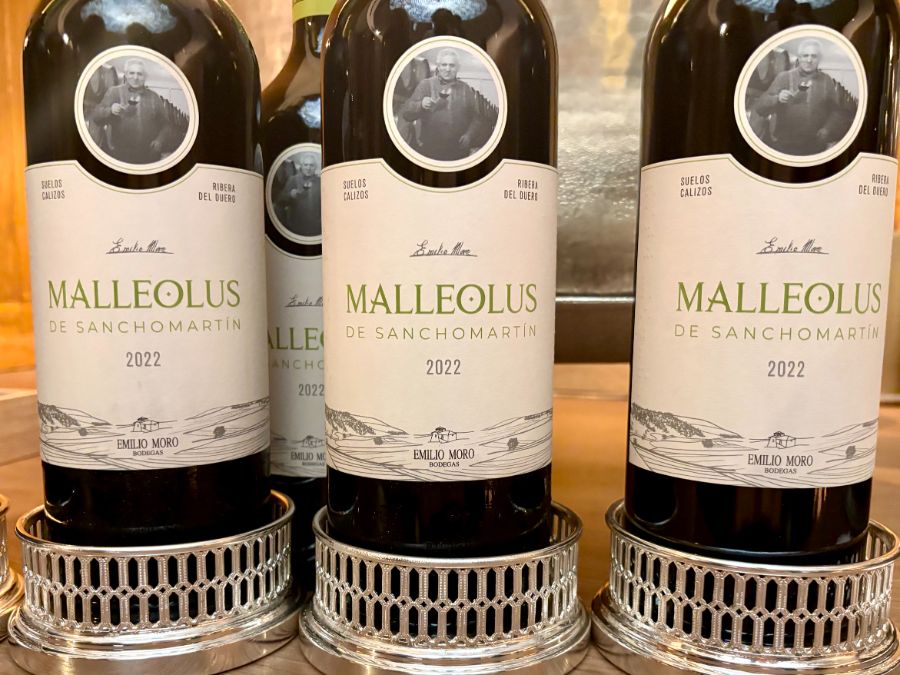
The resulting wine was surprisingly expressive and minty on the nose, with ripe fruit and underlying dairy notes. It is a more contemporary take on Ribera, with firm tannins and controlled extraction, resulting in a more finely tuned mid-palate and greater persistence. I would give it a few more years in bottle before opening.
Malleolus de Sanchomartín 2018. 14,5% abv. The elegance of cooler vintages in Ribera del Duero is a blessing, often producing wines that can be enjoyed earlier. The herbal character emerges again, this time with hints of undergrowth and a subtle green pepper note, all well integrated with the fruit. Less structured than the 2022, this wine is fresh and vibrant, with an enticing aromatic complexity. It may not be the Ribera most people expect, but it proves that the region can also produce wines of greater subtlety. This is a wine with plenty of life ahead, in its own distinctive style.
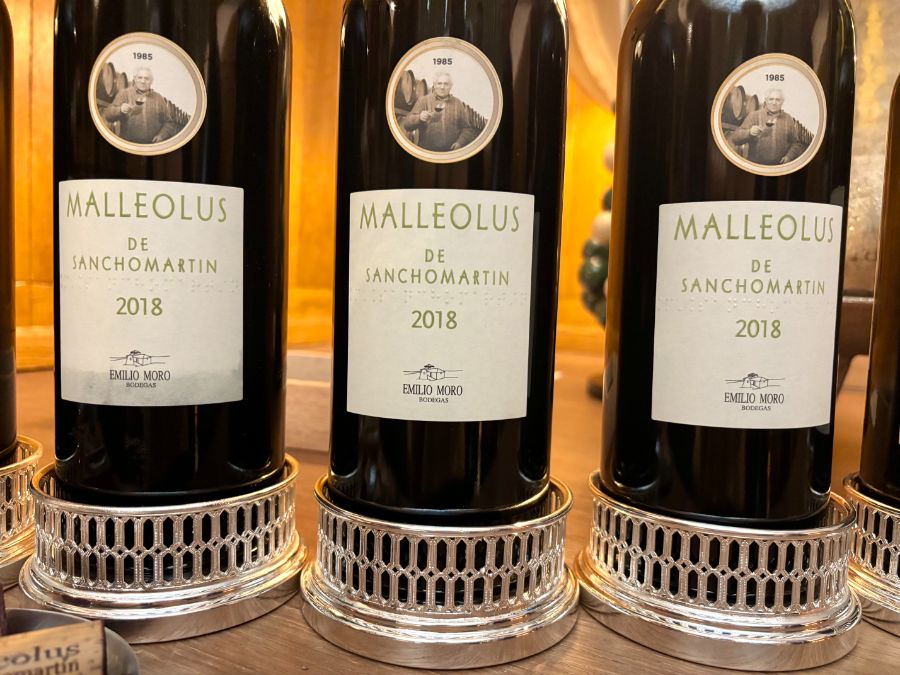
Malleolus de Sanchomartín 2011. 15% abv. Of three consecutive excellent vintages in Ribera del Duero – 2009, 2010 and 2011 – José Moro has no doubt that 2011 is his favourite. I sometimes find myself leaning towards 2010, but this 2011 has all the hallmarks of a great vintage, with every element in its place and beautifully balanced. Ripe fruit, spices, hints of liquorice and an enveloping, comforting texture. It is full-bodied, but has also benefited from time in bottle, which has softened its tannins. An exuberant red and the standout of the tasting.
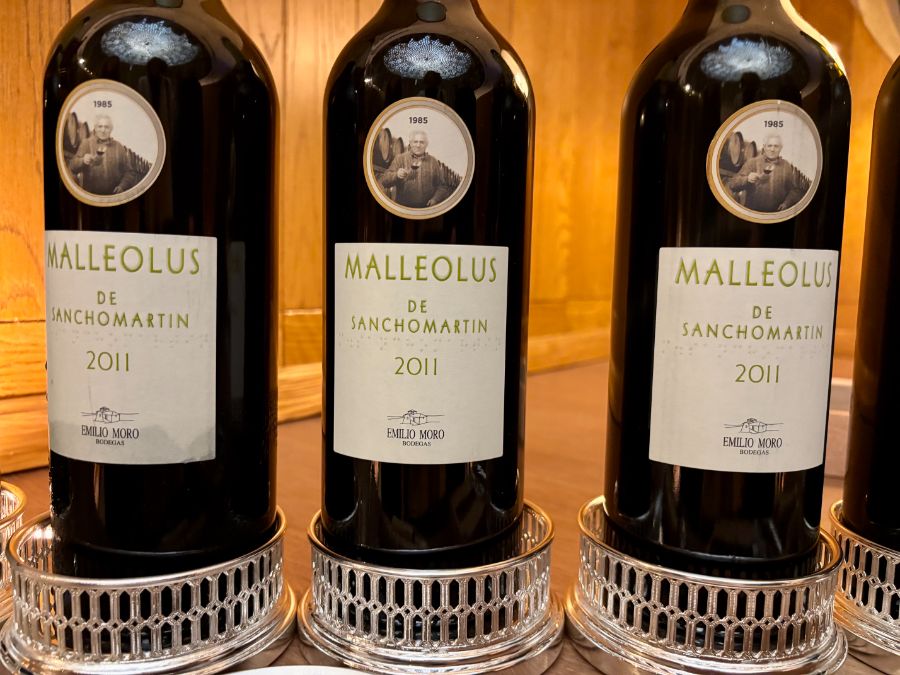
Malleolus de Sanchomartín 2004. 14,5% abv. This was a powerful, concentrated vintage in Ribera del Duero, with an abundance of everything and an intense burst of fruit. The greater ripeness of the fruit comes through in notes of blueberries, plums and prunes. It was reminiscent of the generous extraction commonly favoured at the time. On the palate, however, it revealed a polished, almost silky character and the savoury juiciness that was the hallmark of Emilio Moro's wines.
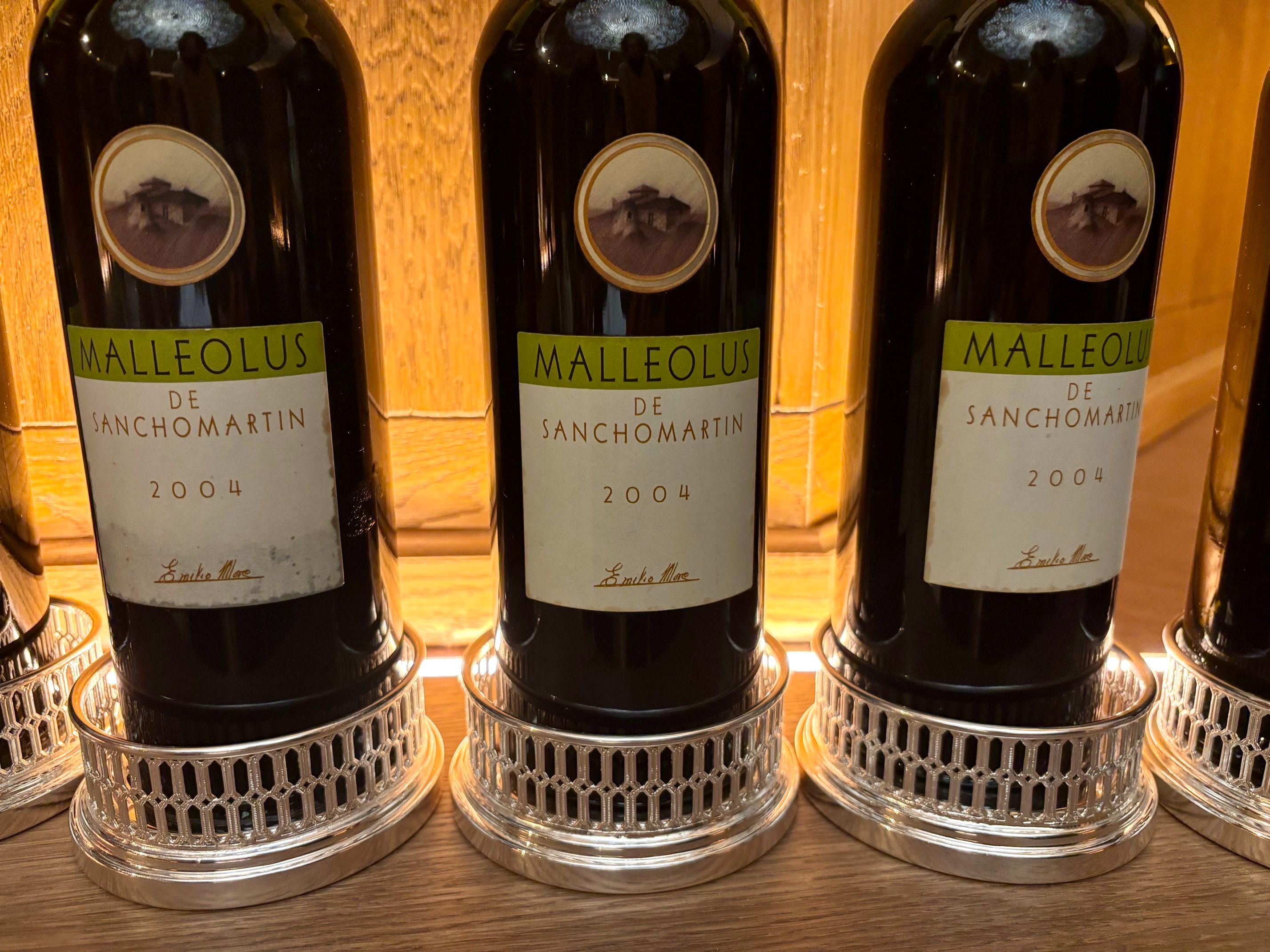
None of the bottles showed the slightest sign of fatigue. All retained their deep colour, with barely any development at the rim. This prompted me to revisit an interview I did with José Moro, Javier’s brother, in 2006, when he was the winery’s chief executive, long before leaving the family business in 2022 to focus on Cepa 21. At the time, he said: "Our wines must be ready to drink from the moment they are released. In the past, people sought out old vintages. Now it’s the opposite; people seek out the latest vintage to see what new elements it brings.” He added: "If I wanted to make wines to be drunk in 20 years' time, the winemaking process would be completely different, although this doesn't mean they won't age well."
In my experience, high-quality Ribera begin to display remarkable complexity and a refined texture after a decade in bottle. They also tend to integrate the oak notes that are so often criticised when the wines are young. Anyone who has kept bottles of Malleolus de Sanchomartín in their cellar has little to worry about —at least as far as the 2018, 2011 and 2004 vintages are concerned.

Author
Amaya Cervera
A wine journalist with almost 30 years' experience, she is the founder of the award-winning Spanish Wine Lover website. In 2023, she won the National Gastronomy Award for Gastronomic Communication
Previous Post