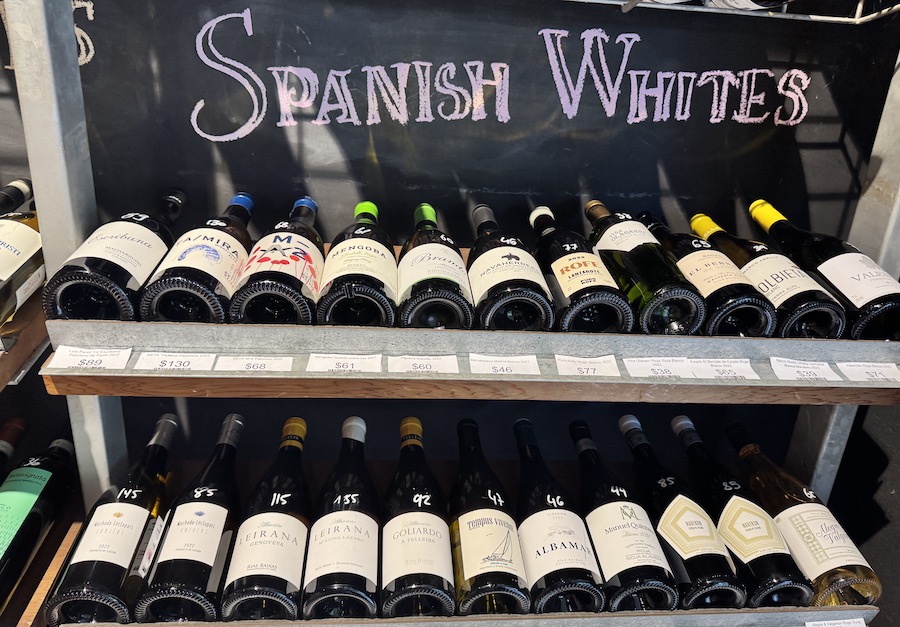
More than a decade ago, Elisa Errea wrote in Spanish Wine Lover that it seemed "impossible to move around Australia without bumping into a bottle of Spanish wine." It was a genuinely electric moment. In 2012, Sydney saw the opening of Tapavino, the country's first dedicated Sherry bar, two years before International Sherry Week gained global traction. In Melbourne, MoVida, the Spanish restaurant group founded by Barcelona-born chef Frank Camorra, was at the height of its cultural influence, its cookbooks flying off the shelves. Specialist importers were multiplying; Spain felt visible. So what's the picture for Spanish wine Down Under today? And does that early energy still linger?
Few people have had a clearer view of Spain’s trajectory in Australia than Scott Wasley (pictured below), founder of Iberian specialist importer The Spanish Acquisition. Established in 2001 with names such as Sara Pérez, Álvaro Palacios and Telmo Rodríguez, the portfolio helped introduce Australian drinkers to modern, premium Spain. "Today, if I were an ordinary importer of very ordinary Italian wine, I would certainly be making more money,” he says candidly. “Spain is often underrepresented in hospitality: some restaurants will only stock one Tempranillo and one Garnacha, and sometimes the whole country just pops up under 'Others'." His glass, however, is half full: "More restaurants in Australia identify now as Mediterranean, whether it's Greek, Spanish or from southern France."
A similar perspective comes from Franck Moreau MS, Burgundy-born and now group general manager of Beverage at Merivale, one of Australia’s largest hospitality groups. “With the continued rise of Mediterranean-style cuisine across Australia, I believe we will see a greater presence of Spanish wines on wine lists in the coming years,” he says. “In my 20 years at Merivale, I’ve seen a significant evolution in our Spanish wine offering. While Spain still represents a relatively small portion of our overall wine programme, the range and depth have grown considerably.” Today, Merivale’s venues list wines well beyond Rioja and Sherry to include Rías Baixas, Priorat, Ribera del Duero, Toro, and multiple Rioja styles, and it has also expanded into fresher, drier whites made with Viura, Txakoli and Verdejo.
Emma Farrelly, wine judge and director of wine and beverages at State Buildings in Perth, senses that Spain’s relative position has shifted. “Ten years ago, I would say Spanish wine was a little more popular, but the higher demand of Italian wines, along with larger importations of Greek, German, Austrian and Portuguese wines has most likely affected this.” While Italy and sparkling wines still dominate the offering across the venues of this high-end hospitality, retail, accommodation and wellness hub, Farrelly makes a point of stocking hard-to-find small producers in the group’s retail store and wine bar. At the time of the interview, the rotating roster featured Spanish bottlings like Corta y Raspa La Charanga, Trenzado by Suertes del Marqués and La Bruja de Rozas by Comando G.

The numbers tell their own story
Australia, the world's fifth-largest wine producer in 2025, remains emphatically domestic in its consumption: more than 80% of wine drank by volume is locally made —a higher proportion than in either the US or France. Imports have lost ground after a decade of growth, according to Wine Australia, while ICEX data tells the rest: France commands nearly 46% of the imported market share, followed by New Zealand, Italy and the US, the latter having doubled its sales since 2020. Spain, by contrast, saw exports to Australia fall by 33% between 2020 and 2024. This can partly be explained by Australia's somewhat marginal role in Spanish exports. According to Begoña Olavarría, of OIVE’s Economic Intelligence Unit, it accounts for just 0.3% of the value and 0.1% of the volume of Spanish wine exports in the year to November 2025.
Virginia Maroto Nieto, from the Economic and Trade Commission of the Spanish Embassy in Australia, describes the situation. “Several importers specialise exclusively in Spanish wine, and a broad range of Denominations of Origin have found their way onto lists, particularly in restaurants. Yet, compared to France or Italy, Spanish wine still occupies a smaller space than one might expect, given its quality and diversity. For many Australian consumers, it remains largely undiscovered. Often, it is relegated to Spanish or Mediterranean-inspired restaurants.” To widen that exposure, there are efforts like Eat Spain, Drink Spain, a Spanish government-backed initiative. Launched in Australia for the first time in 2026, it aims to drive retail and on-trade activity through special menus, purchase incentives and more. Meanwhile, Eat Spanish —a not-for profit association founded by Spanish chefs in 2018— champions Spanish gastronomy at trade and consumer events (picture below).

Australia may be a small market for Spanish wine, but it punches above its weight in terms of selection, according to Beth Willard, a leading Australian wine expert based in Spain. “Spanish wine still occupies a very small niche, but the range of imported names is very interesting. Unlike more mature markets like the UK or Germany, which tend to focus on the 3 ‘Rs’ –Rioja, Rías Baixas and Rueda– and Reserva/Gran Reserva styles, Australia imports a far wider mix of regions and varieties. I have seen Spanish bars with lists centred on Galician reds that sit alongside modern, premium wines from Aragón and Jumilla.”
Barrica Wines illustrates that trend. Founded in 2013 to service Tapavino bar and now a major Spanish beverage importer with three restaurants in Sydney, its catalogue includes the likes of La del Terreno, Escocés Volante and Bodegas Frontonio. "Today, the under‑heralded or 'next wave' Spanish wines we see gaining traction in Australia include new‑generation producers working with indigenous varieties, regions such as Ribeira Sacra, Bierzo, and Valdeorras and grapes like Mencía, Godello, Garnacha Blanca, and Bobal," explains Barrica Wines director Dean Simmons.
Education and the lighter red moment
For Tapavino’s owner, Frank Dilernia, consumer education is key. “If someone tells you they love Barossa Shiraz, it is a good chance to introduce them to a fruit-driven Monastrell from Jumilla, or even a Priorat.” At Balcón by Tapavino, in Sydney's CBD, reds dominate, driven by a largely male business clientele, with "the trend definitely towards lighter reds from Gredos and Ribeira Sacra," reveals Dilernia. Albariño and Verdejo lead white sales, their bright acidity and citrus profile a natural fit, while white Rioja, interestingly, is also making its mark.
Helena Edgerton, wine educator at Sydney Wine Academy and Certified Rioja Educator, has witnessed a clear shift. “Ten years ago, you might see one or two Spanish wines on a list in Sydney. Even five years ago, Spain was the poor cousin. Today, people want to learn.” She points to both value-driven Tempranillo from La Mancha and Valdepeñas in major retail chains such as Dan Murphy’s, and to sommelier-favoured “crunchy” Mencía on contemporary lists.
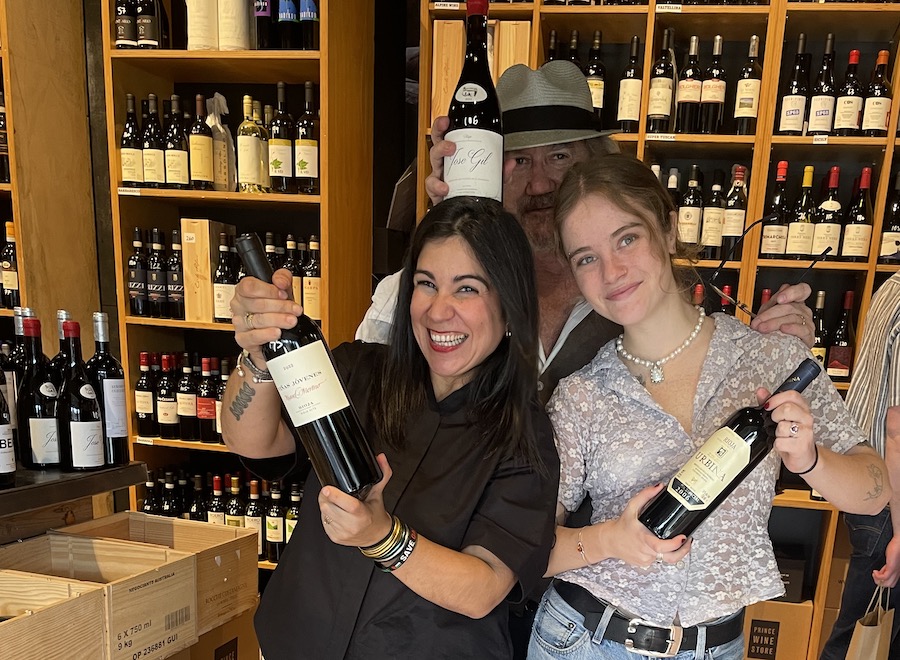
Mencía, in particular, has become shorthand for Spain’s lighter-red revolution. Sara Torres of the premier wine merchant Prince Wine Store (pictured above) with outlets in Melbourne and Sydney, describes it as sitting “somewhere between Shiraz and Pinot Noir, with its graphite notes, sometimes venturing into Beaujolais territory.” Bierzo and Ribeira Sacra are among her best-selling regions, alongside Rioja, Rías Baixas and Ribera del Duero.
Not everyone is convinced, though. Wasley cautions that Mencía can lack the acidity some Australians seek in lighter styles. For Pinot-like elegance, he looks instead to refined Garnacha, or to lesser-known varieties such as Mandó, Moristel or Callet.
Saline whites, ‘Grenaissance’ and the Iberian thread
If there is untapped potential, it may lie with whites. Tom Robertson of Alimentaria, MoVida’s import arm with over 400 wines in its portfolio, argues that Spain is uniquely positioned in the sub-A$20 wholesale bracket. "Few Old World countries can offer wines under €4.50 ex-works with great quality. There is high demand there, yet this price range is not represented very well." Beyond value, Robertson says that distinctive styles like what he calls “salty Spanish whites” are driving sales: think herbal and zesty examples like Viña Somoza Godello, salinity-driven Envínate bottlings from the Canary Islands, or energetic wines from Raúl Moreno in Jerez, all in Alimentaria’s portfolio. Like Wasley, Robertson also highlights a structural issue: on-trade clients may list only three to five Spanish wines, while retail shelves can display 20 or more. The result is stronger sales value and distribution in off-trade than in restaurants.
White Rioja, Godello and unfortified Palomino are performing strongly in retail, acknowledges Torres, but Garnacha from Gredos is increasingly part of the conversation. Australia’s own “Grenaissance” —a revival of Grenache after decades in Cabernet’s shadow— offers fertile ground. The traditional workhorse variety of GSM blends, Grenache represents only around 1% of current plantings, but it commands strong prices and renewed critical attention.
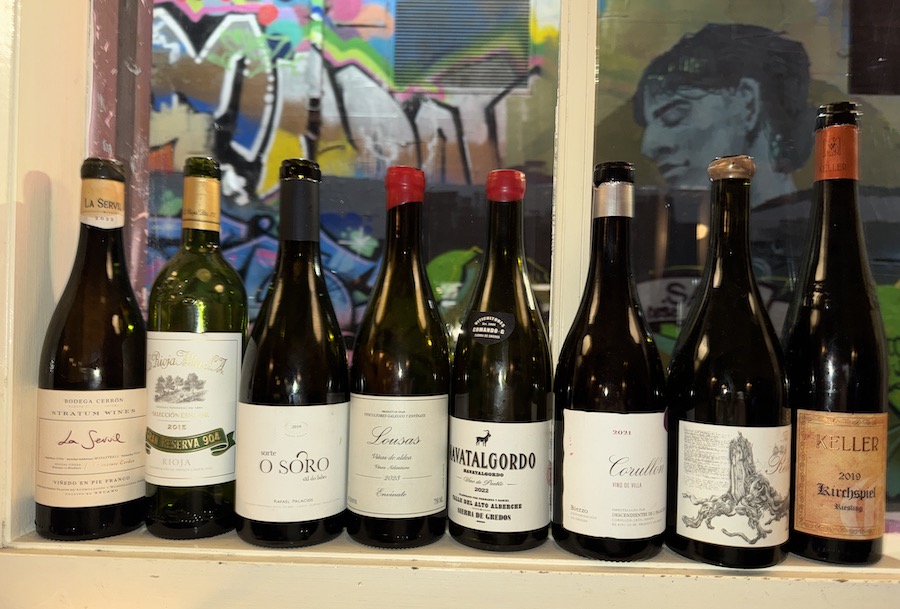
Iberian grapes have long been naturalised in Australia. Garnacha/Grenache and Monastrell/Mataro are so embedded that their Spanish connection is often forgotten. Tempranillo, however, anchors what Peter Leske of Adelaide Hills producer La Línea calls the “new Iberian focus”. Albariño and Mencía show promise, but Leske, who specialises in Spanish varieties, tempers expectations. As he says, Italy and Greece benefit from stronger migrant communities and deeper culinary familiarity. "Just about everyone I know in Adelaide would personally know someone with Italian heritage. Contact with Spanish migrants is much rarer."
The big picture from the big retail
Wine retail structure in Australia is fairly diversified, from large-format liquor stores and supermarket alcohol sections to independent specialists. Two major groups accounted for 80% of off-trade sales value in 2023, led by Endeavour, home of the nation’s go-to liquor stores Dan Murphy's and BWS.
Markuz Patz, WSET educator and wine merchant at Endeavour Group, paints a picture of rapid evolution. “When I joined in 2018, Spain often shared shelf space with Portugal and South America, and the range was narrow. Over the past seven to eight years, however, the Spanish portfolio has evolved dramatically." Patz highlights a shift from established names like Marqués de Murrieta and Emilio Moro towards "smaller, terroir-driven producers, reflecting both consumer curiosity and global trends." Two examples he mentions are Lagravera in Lleida and Ego Bodegas in Jumilla. The regional footprint has also expanded, notes Patz, from the traditional strongholds of Rioja and Jerez to Green Spain including Rías Baixas, Bierzo and Ribeira Sacra, eastwards to Campo de Borja and south-east towards Murcia, notably Jumilla. "In just five years, both the number and volume of Spanish bottles sold have more than doubled, and there is a far broader representation of grape varieties, styles and regions."
Looking back, Errea’s sense of “significant excitement” in 2014 feels less like a peak and more like a prologue. Beth Willard is unequivocal about the next chapter: "Spanish wines should enjoy much broader distribution in Australia as they offer a point of difference for the Australian consumer while still presenting recognisable cues. In my mind, they are much more suitable to the Australian palate than many other wines from Europe." The excitement was always justified. It just needs rediscovering.

Author
Nika Shevela
A multilingual wine professional, Nika Shevela holds a WSET Diploma, with her research centred on no- and low-alcohol wines. She works across education, translation and copywriting and promotes wine culture and evolving drink trends through her Wine Alphabet and Lagom Somm projects respectively.

Previous Post