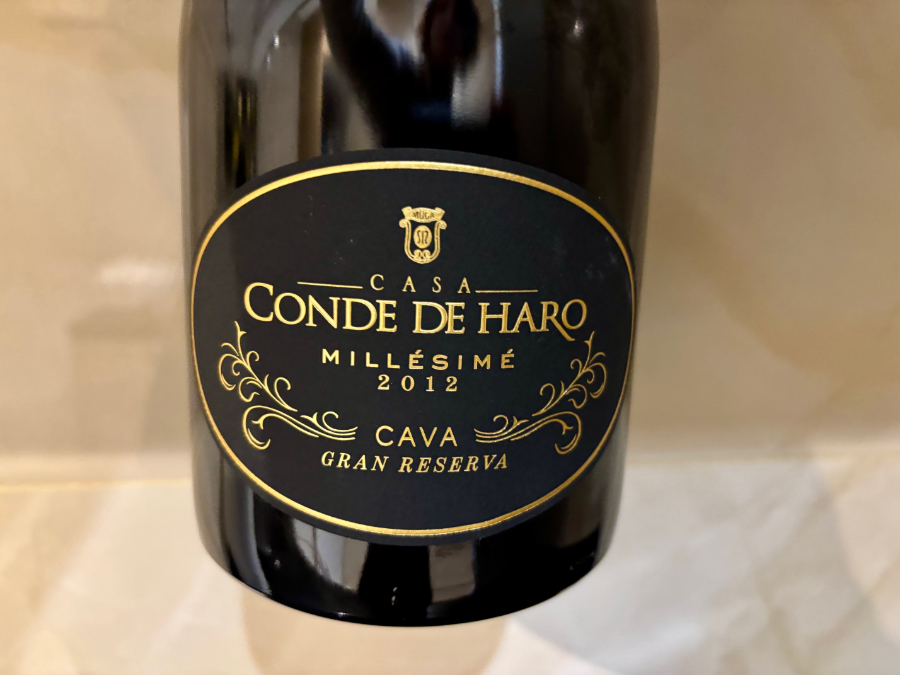
This is our final wine recommendation of the week for 2025, and we are marking the occasion with bubbles, though not quite the kind you might expect. Our choice is a cava produced outside Catalonia by one of Rioja’s leading red wine producers: Muga.
Based in Haro's Barrio de la Estación, this renowned winery has been producing sparkling wines for several decades. Its first cava debuted in the 1977 vintage, followed by a sparkling rosé from the 2019 harvest. Both are Brut styles, aged for over 24 months and positioned in the mid-price segment.
Behind the scenes, however, the Muga family has long been experimenting with extended ageing. For years, they have systematically set aside a substantial number of bottles from each release to monitor their evolution over time.
Drawing on this experience, the winery has now launched two Cavas with significantly prolonged ageing. The first is a 2018 Blanc de Blancs made entirely from Chardonnay. The second is the Gran Reserva Millésimé 2012, a blend of Viura and Chardonnay, which is our wine of the week.
Chardonnay was authorised in Rioja DOCa in 2008, alongside local white varieties such as Maturana and Tempranillo Blanco, and other, more commercially popular grapes like Verdejo and Sauvignon Blanc. Prior to that, it could be grown in the region in vineyards registered under the DO Cava appellation. In Muga’s sparkling wines, Chardonnay is used alongside Viura for its naturally high acidity and ageing potential. Garnacha, on the other hand, is the variety of choice for their sparkling rosés.
The grapes for the Gran Reserva are sourced from two of Rioja's coolest areas: the Oja Valley, in the westernmost part of the region, and Alto Najerilla, which stretches south of the Ebro River towards the Sierra de la Demanda mountains. The wine is fermented in wooden vats, where it remains until the following spring. Tirage —the addition of yeast and sugar — then triggers the second fermentation in bottle. The ageing process continues for at least 122 months, although the disgorgement date is not shown on the label.
The wine has benefited from its slow evolution in the 1.5-litre bottle, retaining remarkable freshness for a sparkling wine approaching 15 years of age. The palate is wrapped in creamy, enveloping bubbles, with generous notes of baked bread and toast layered over ripe citrus nuances. Its firm structure makes it the perfect match for many festive main courses; poulard is the first pairing that comes to mind.
The price is high, but it is worth bearing in mind that a magnum typically costs a little more than two standard 75cl bottles. In effect, this places the wine at just over €45 per bottle, broadly in line with the entry-level cuvées of the major Champagne houses.
12% abv
795 bottles
€95
Score: 93

Author
Amaya Cervera
A wine journalist with almost 30 years' experience, she is the founder of the award-winning Spanish Wine Lover website. In 2023, she won the National Gastronomy Award for Gastronomic Communication
Previous Post