


Within the broader Penedès wine landscape, Casa Jou is one of those quietly promising projects that has grown outside the media spotlight, yet with a firm focus on vineyard and origin. Behind it are Laia Esmel, a winemaker from a cava-producing family in Sant Sadurní d’Anoia, and Jaume Vilaseca, a wine photographer from nearby Piera. They live and craft their sparkling wines in Sant Jaume Sesoliveres, a small village set between the two towns, home to just 260 souls, 180 hectares of vines and 16 growers.
The winery is housed in a modest family property in the centre of the village. In Laia’s grandparents’ day, the ground floor served as both grocer’s shop and butcher’s, whereas today it accommodates stainless steel and wooden vessels, with the front section reserved for ageing. The couple live upstairs.
It is here that they have been making garage wines since 2020, although commercial releases only began in 2022. They see the Anoia river valley as an ideal setting, not least for its wealth of old bush vines and its distance from the more trodden parts of Penedès.
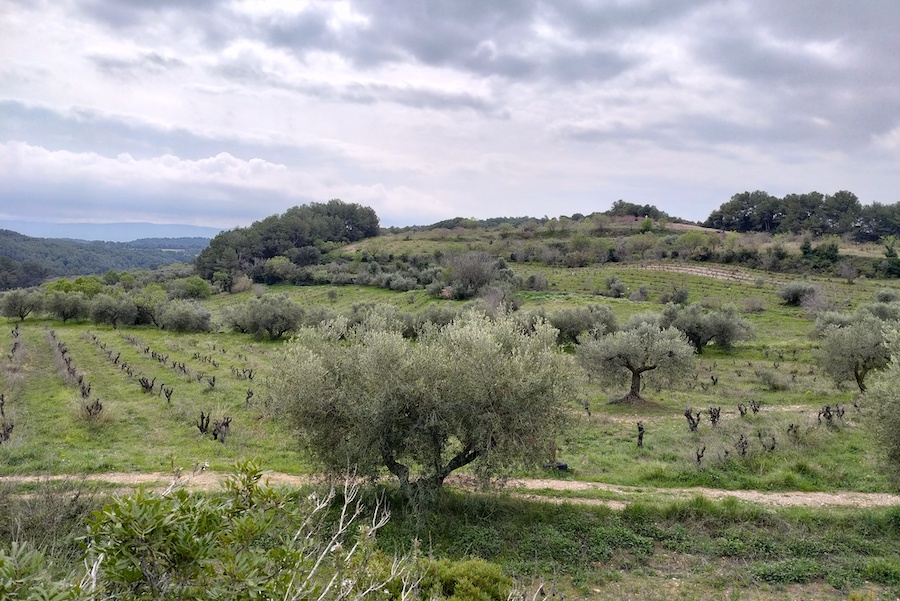
Casa Jou works six hectares across three leased plots within Sant Jaume Sesoliveres, at elevations between 150 and 280 metres. The soils are varied, ranging from clays near the Anoia river to stonier, calcareous sites in the Serra de Sant Jaume. In addition, they purchase grapes from three other local vineyards for their village wine.
Xarel·lo forms the backbone of their production, prized for its resilience to heat and drought, its ability to retain acidity and its suitability for Mediterranean-style sparkling wines. Their work is defined by a preference for old bush-trained vines with small clusters and close relationships with growers. All manual vineyard work is carried out by the couple themselves, while mechanised tasks are arranged in collaboration with the growers.
Their philosophy revolves around what they describe as a “purism of origin”. They aim to produce wines with energy and personality that speak clearly of place, with fruit at the forefront and minimal intervention in the winery. In this context, they question certain conventions associated with sparkling wine in warm climates. As Laia puts it, there is little logic in relying on autolysis or adding sugar when Mediterranean musts already deliver natural fruit and ripeness.
They farm organically, albeit without certification, and do not use commercial yeasts or dosage. Instead, they rely on fresh must from the following vintage —sourced from the same vineyards— for the second fermentation, a practice intended to preserve freshness, acidity and primary aromatics. All wines are bottled in August, just ahead of the harvest, to free up space in the cellar.
The wines
The current range comprises two traditional-method sparkling wines and one pet-nat, all bottled as brut nature and outside any appellation. Sant Jaume Sesoliveres (1,990 bottles; €20), their village wine, debuted with the 2023 vintage, which remains the current release. It blends Xarel·lo from vines aged between 20 and 50 years across several parcels —Vinya Lluny, La Pega, Ple del Nord and Perdigot— fermented separately and assembled in winter. Made from whole-bunch pressing with a yield limited to around 40%, it incorporates fresh must from the following harvest, resulting in a lively, dry sparkling wine with well-integrated mousse, savoury depth and a finely textured palate.
Els Talls (2,945 bottles; €24.50) is an ancestral wine derived from gentle pressings of all their Xarel·lo vineyards and, until 2023, also included Garnacha from the La Teixonera parcel. It is immediate and expressive, with a fine, creamy bead, notes of white fruit and citrus, a broader texture from skin contact and a subtle toasted almond finish. Completing the trio is La Caldereta (1,400 bottles; €28), Casa Jou’s first single-vineyard wine. It comes from a 1.5-hectare plot of Xarel·lo planted in 1963, with clay-limestone soils and pebbles, located near Sant Sadurní d’Anoia. After pressing to obtain only the free-run juice, the base wine ferments and ages for a year in a mix of new and used oak and chestnut barrels, before undergoing second fermentation in bottle with indigenous yeasts and fresh must from the same vineyard, followed by more than 30 months on lees. The result is a taut, serious sparkling wine with pronounced white fruit and citrus character.
Their vineyard work continues to evolve as they deepen their understanding of the area. From Ple del Nord —a vineyard planted in the 1980s on a small calcareous slope with exposed bedrock and interspersed olive trees— they have already produced an initial wine (around 600 bottles) due for release in 2027. At the same time, they are restoring Les Llaunes, a beautiful vineyard in the upper part of the village that had been abandoned for nearly three years, with the aim of releasing a wine between 2028 and 2029 that balances freshness and ripeness while retaining a strong sense of place.
Parallel projects
Their commitment to transparency is reflected in the back labels, where rhetoric is kept to a minimum in favour of detailed information: soil types, parcel names, bottle numbers, bottling and disgorgement dates, and, in the case of the village wine, even the names of the growers behind the fruit. Among them is Aurora Carafí of María Casanovas, who also assists in the cellar.
Alongside Casa Jou, Laia and Jaume are involved in several parallel ventures. Following her father’s retirement, they have taken over the vinification of base wines at Cava Esmel, the family winery in Sant Sadurní, reducing production from 30,000 to 10,000 bottles while maintaining the house style, notably its distinctive dosage made from fortified rancio wines. Since the pandemic, they have also been part of Dumenge, a joint project with Penedès grower Oriol Roig, producing three ancestral sparkling wines —Xarel·lo, Xarel·lo Vermell and Sumoll— with a more immediate, fruit-driven profile. In addition, they are members of Vida Penedès, a young collective advocating for a fairer and more sustainable model of viticulture.
Casa Jou’s wines are primarily sold in Catalonia and the Basque Country, with export markets including the United States and Japan, where their pet-nats have found a particularly receptive audience.